
Pick the wrong electronic door strike for a door opening and you will find out at the worst possible time. The intercom panel triggers its relay, power flows to the strike, and the door stays completely shut. This is not a hypothetical failure scenario. A mismatch between a strike’s electrical expectations and the access control system driving it is one of the most consistently repeated mistakes in retrofit projects. Whether you manage a 40-unit apartment building, oversee a commercial office campus, or are specifying hardware for a single controlled entry point, getting the specification right the first time saves money, avoids callbacks, and keeps occupants safe.
Table of Contents
- What Is an Electronic Door Strike?
- How Electronic Door Strikes Work
- Fail-Secure vs. Fail-Safe: The Decision That Matters Most
- Types of Electric Door Strikes by Lockset Compatibility
- Electric Door Strike vs. Magnetic Lock: Which to Use When
- How to Spec an Electronic Door Strike Correctly
- Electric Door Strike Installation: What Installers Must Know
- Frequently Asked Questions
- References
What Is an Electronic Door Strike?
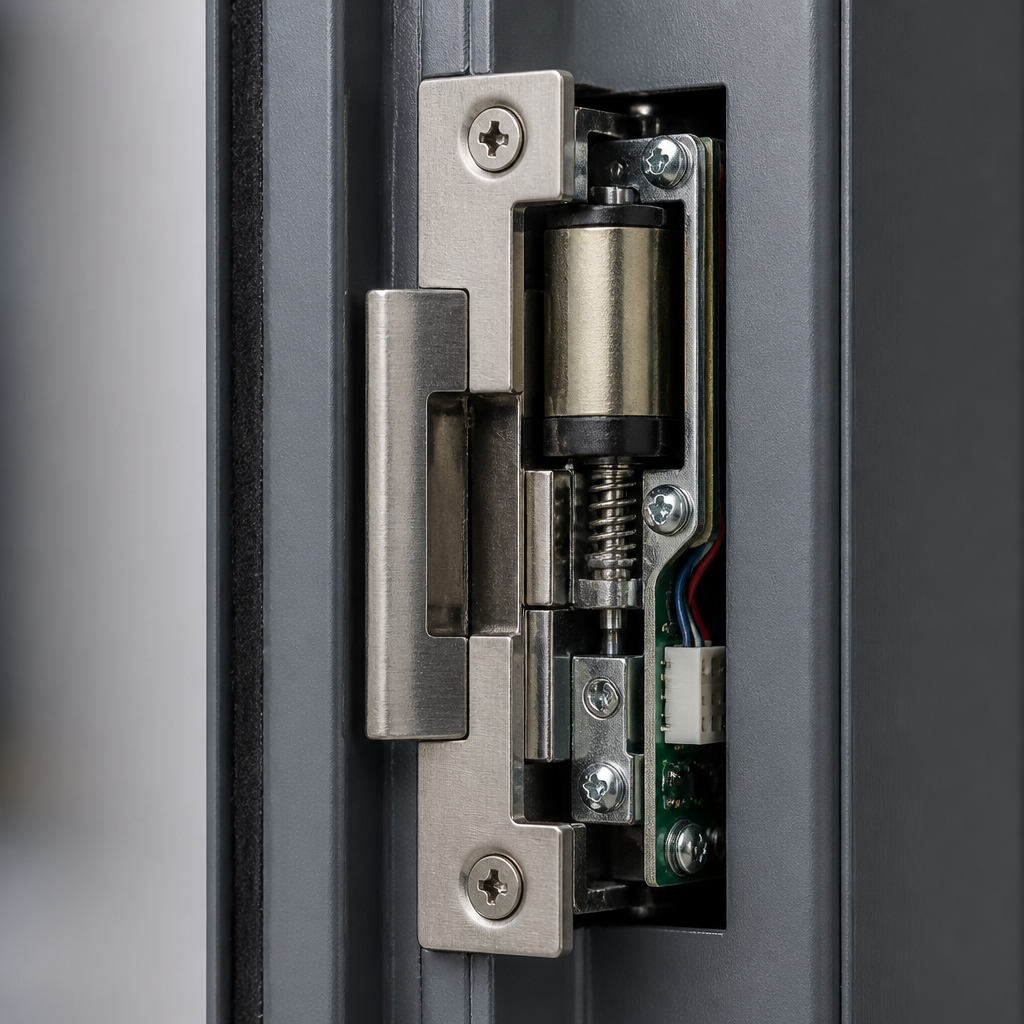
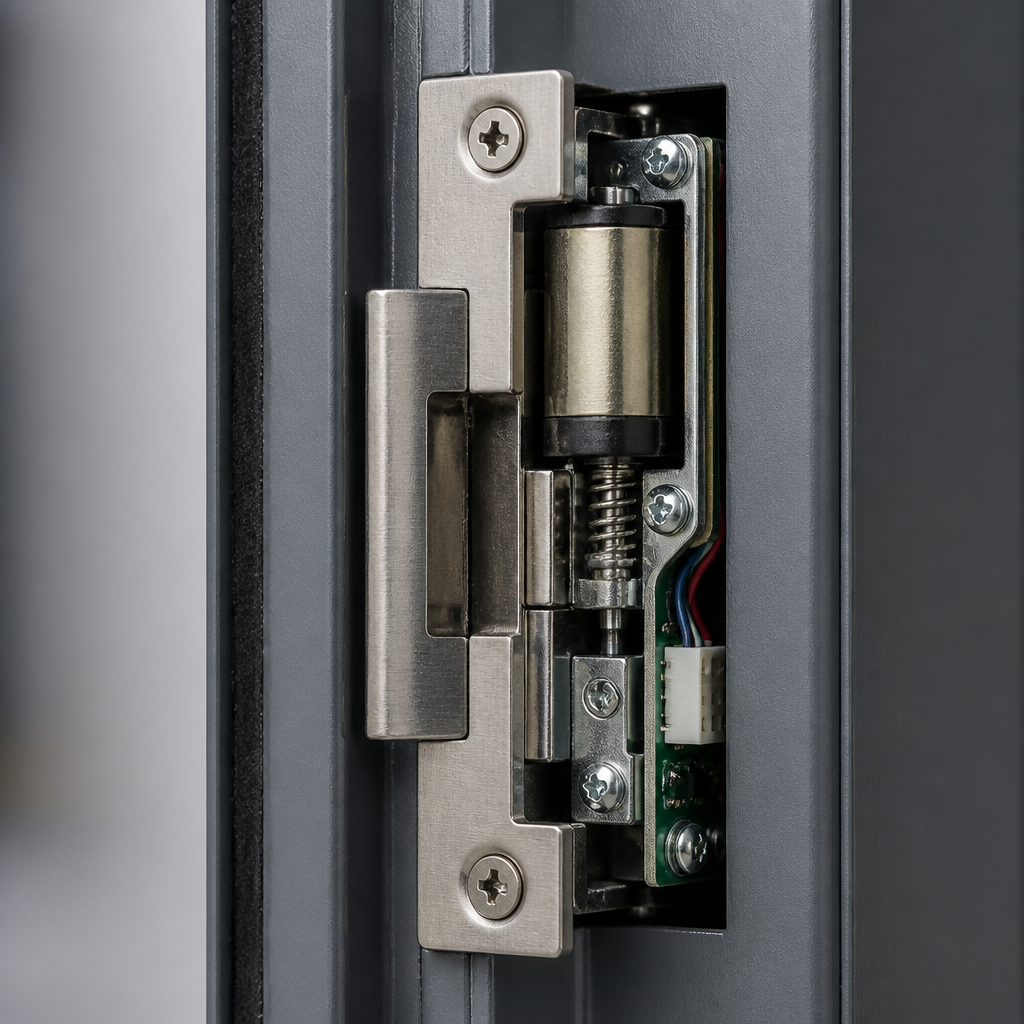
An electronic door strike is an electromechanical device installed in the door frame that replaces the standard fixed strike plate. Where a conventional strike plate is a passive piece of metal with a hole for the latch bolt, an electric strike has a pivoting keeper, also called a latch retainer, that can swing open on command.
The result is that a door with a perfectly ordinary mechanical lock handle can be released remotely. The occupant inside does nothing extra. The person arriving at the door does not turn a key. They present a credential to the reader – a key card, a PIN, a fob, or an intercom call – and the strike releases the keeper long enough for the door to be pulled open.
Electric strikes were originally designed for industrial and commercial applications with heavy traffic, but property managers and facility operators across all building types now use them as the backbone of modern access control systems. Their strength is that they work with existing mechanical hardware, making them the most practical retrofit option in most situations.
How Electronic Door Strikes Work
The core mechanism is a solenoid, which is a small electromagnetic coil that moves a plunger when current passes through it. That plunger movement either holds the keeper in place or releases it, depending on how the strike is wired.
The Access Control Signal Chain
Understanding the sequence helps you diagnose problems and spec components correctly. A credential reader at the door captures input from the user and sends it to an access control panel or controller. The controller authenticates the credential and, if access is granted, sends a voltage signal to the power supply wired to the strike. The power supply then either applies or removes power to the strike solenoid, depending on whether the strike is fail-secure or fail-safe.
The electric strike connects to the output side of that signal chain. The reader handles authentication input. The strike handles the physical release output. These two roles are distinct, and treating them as interchangeable creates wiring errors that are frustrating to debug.
What Happens Mechanically at the Door
When the solenoid actuates, the keeper inside the strike pivots away from the door frame. The hinged keeper swings similarly to a small saloon door, moving out of the path of the latch bolt. The person on the outside pulls the door open without needing to turn the handle or use a key. Once the door closes again, the latch pushes the keeper back into position, and the strike returns to its locked state automatically.
The person exiting from the inside is never blocked by the strike. Mechanical free egress through the lever or exit device from the egress side of the door is maintained regardless of whether the strike is powered or not. This is a fundamental safety requirement and a point worth confirming during any specification review.
A mismatch between voltage, current, or duty cycle between the strike and its power source can create binding, weak release, or outright failure. Treat the strike and its power supply as a matched pair, not two independent components.
Fail-Secure vs. Fail-Safe: The Decision That Matters Most
This is the single most important specification decision you will make for any door opening, and it is also where the most costly errors occur. Getting it wrong creates either a security gap or a life-safety violation, depending on which direction you err.
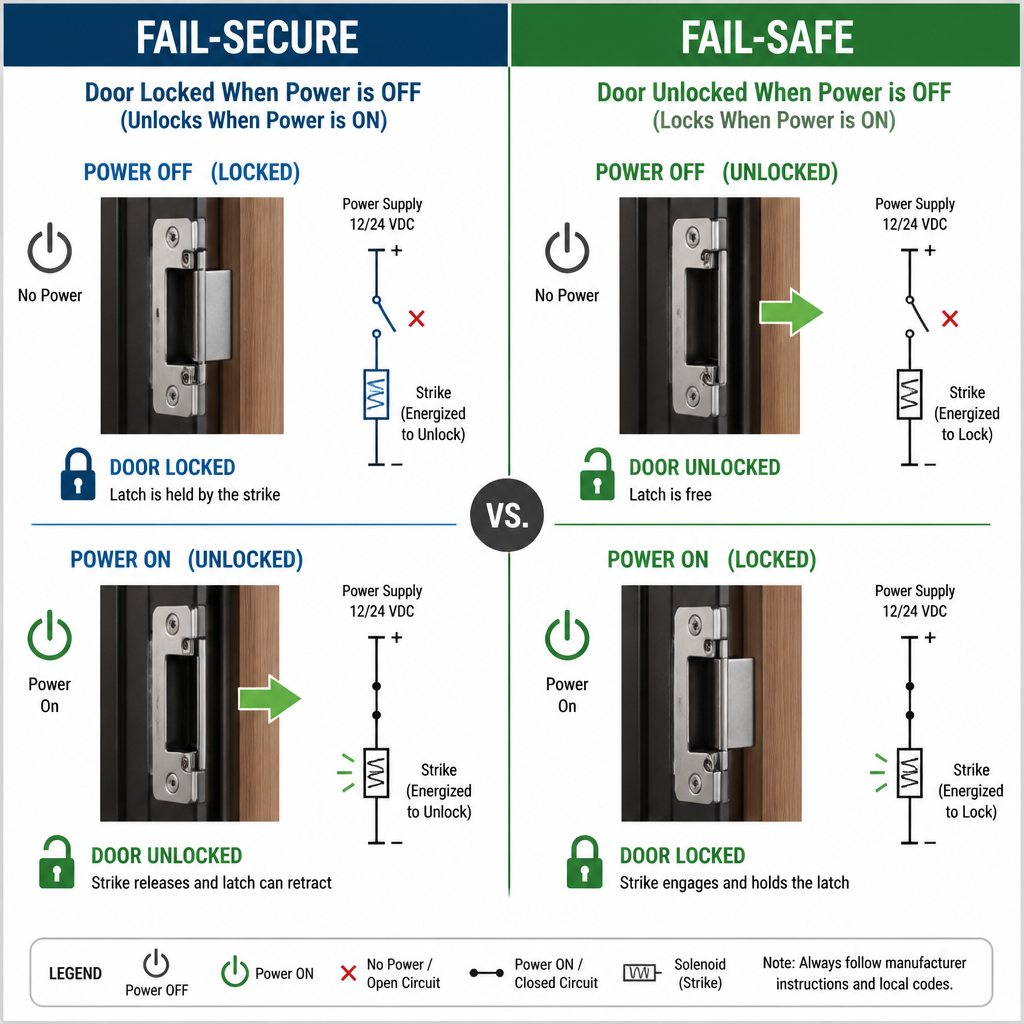
Fail-Secure Operation
A fail-secure electric strike requires power applied to the solenoid in order to unlock. When power is removed, either intentionally or due to an outage, the keeper stays latched and the door remains locked. This configuration is used on doors where maintaining security during a power failure is the priority, such as restricted utility rooms, server rooms, secondary building entries, and gate access points.
Fail-secure is also the correct configuration for fire-rated doors. Fire code requires fail-secure electric strikes on critical fire-rated doors so that when power is lost, the keeper remains in place. This prevents a fire from spreading through an open door that lost its hold during the event.
Fail-Safe Operation
A fail-safe strike works the opposite way. Power is applied continuously to hold the keeper in the locked position, and a power loss releases the door. This is required on doors that serve as part of the means of egress where the Authority Having Jurisdiction requires free egress at all times. In a fire or emergency evacuation, losing power automatically unlocks the door.
Specifying fail-safe on restricted-access doors, or fail-secure on egress doors, are both code violations in most jurisdictions. The correct answer depends entirely on the door’s function in the building, not on personal preference or cost considerations.
Pro tip: When specifying hardware for apartment building entry systems, pair fail-safe strikes on all primary egress doors and fail-secure strikes on utility rooms, mail rooms, and parking garage entries. If you are integrating with an intercom system, confirm the intercom panel’s relay output voltage matches the strike’s operating voltage before ordering either component.
Types of Electric Door Strikes by Lockset Compatibility
The type of mechanical lockset already on the door determines which electric strike body style you need. Specifying the wrong body style means the strike will not properly engage the latch bolt, and the door will either fail to hold or fail to release cleanly.
Cylindrical Lockset Strikes
These are the most commonly specified strikes in commercial and multifamily residential buildings. They work with cylindrical (tubular) locksets, which are the standard knob or lever-handle locks found on most interior and secondary doors. The strike is designed to accept a standard cylindrical latch bolt profile.
Mortise Lockset Strikes
Mortise strikes are deeper and designed to work with mortise locksets, which have both a latch bolt and a deadbolt in a single mortised body. These are common on main building entries, particularly in older commercial and multifamily buildings. The faceplate must be specified to keep the deadlatch in its depressed state, which is a detail frequently missed in field specifications.
Rim Exit Device (Panic Bar) Strikes
Surface-mounted strikes are necessary when the door has a panic bar, also called a crash bar or push bar. These strikes mount to the surface of the door frame rather than being recessed into it, because the panic bar hardware geometry does not allow for a standard flush-mount installation. If you are specifying a strike for an exit door with a panic bar, this is the configuration you need.
Surface Mount vs. Flush Mount
Beyond lockset type, electric strikes come in surface mount and flush mount profiles. Flush mount strikes sit inside a routed pocket in the door frame and present a clean aesthetic. Surface mount strikes bolt directly onto the frame face and are easier to install in retrofit situations where routing the frame is not practical or where the frame material does not allow it.
Electric Door Strike vs. Magnetic Lock: Which to Use When
Both devices solve the same problem: controlled entry through an electrified locking mechanism. They solve it in fundamentally different ways, and the correct choice depends on the door type, traffic pattern, and egress requirements.
| Factor | Electric Door Strike | Magnetic Lock (Maglock) |
|---|---|---|
| Default failure mode | Fail-secure (configurable on some models) | Fail-safe (always unlocks on power loss) |
| Power requirement | Intermittent (pulse to unlock) or continuous duty | Continuous power required to stay locked |
| Best door types | Standard framed doors with cylindrical or mortise locks | Glass doors, aluminum frame doors, automatic doors |
| Egress control | Locks one side only; free mechanical egress from inside | Locks both sides until access is granted |
| Installation complexity | Requires frame prep; more complex retrofit | Surface mount; easier to retrofit |
| Intercom system integration | Direct relay output connection; very common pairing | Also relay-driven; requires REX sensor for egress |
Electric strikes are the dominant choice for manual-use doors with standard hardware, particularly in multifamily residential and commercial office applications. Magnetic locks are better suited for glass storefronts, automatic sliding doors, and openings where there is no frame cavity to house a strike body.
In practice, many larger buildings use both. The main lobby entry gets a maglock for its aluminum frame glass doors, while every interior office, utility room, and secondary stairwell entry uses an electric strike. The access control platform driving both can be identical.
How to Spec an Electronic Door Strike Correctly
Correct specification requires confirming several parameters before ordering. Missing any one of them produces a product that physically cannot do its job at that opening.
Voltage and Duty Cycle
Most commercial electric strikes operate on 12VDC or 24VDC. Some models accept both AC and DC voltage, which offers flexibility in retrofit situations where the existing power supply cannot be changed easily. Universal models that are field-selectable for voltage and duty cycle, such as 12VDC or 24VDC with fail-secure intermittent or fail-safe continuous duty, exist and can simplify procurement on projects with mixed door types.
Duty cycle matters as much as voltage. A fail-secure strike in intermittent duty mode receives a brief pulse of power to unlock and then returns to the de-energized locked state. A fail-safe strike in continuous duty mode is powered constantly. Using a continuous-duty product in an intermittent-duty application, or the reverse, will cause premature solenoid failure or unpredictable behavior.
Frame Material and Prep
The door frame material and existing prep determine whether the strike physically fits. For fire-rated frames, the electric strike prep must be factory-cut as part of the original frame fabrication. Field-cutting a fire-rated frame voids the fire label and violates building code. This is a non-negotiable constraint that must be addressed at the design or ordering stage, not on the job site.
Handed Configuration
Electric strikes are frequently handed, meaning they are configured for left-hand or right-hand door swing. Many current models are reversible in the field, but confirm this before ordering. Showing up to a job with the wrong-handed strike creates unnecessary delay.
Electrical Compatibility with the Access Control System
Before finalizing the strike specification, confirm the access control panel or intercom system’s relay output voltage. Many intercom systems used in apartment buildings output a specific voltage at the door release relay. If that voltage does not match what the strike is rated for, the strike will not actuate correctly. This is, consistently, one of the most common installation problems encountered in retrofit projects across multifamily and commercial applications.
Pro tip: Always verify the voltage, inrush current, and holding current requirements of the specific strike model before specifying the power supply. The inrush current on strike actuation can be several times the holding current, and an undersized power supply will produce erratic release behavior that is very difficult to diagnose without proper test equipment.
Holding Force
Electric strikes are rated for holding force, which describes how much physical force is needed to push past a latched strike without actuating the solenoid. Higher-traffic or higher-security openings warrant higher holding force ratings. Products in the 500 to 1,200 pound holding force range are common in commercial applications. Do not over-specify holding force for every door without reason, as higher-rated products consume more power and are physically larger, which may not fit every frame prep.
Electric Door Strike Installation: What Installers Must Know
The mechanical installation of a flush-mount electric strike is straightforward once the frame prep is confirmed. The electrical side is where most problems originate.
Wiring Runs and Wire Gauge
The wire gauge used for the run from the power supply to the strike must account for both the distance of the run and the current draw of the strike. Longer runs with undersized wire create voltage drop that reduces the strike’s actuation force. Refer to the manufacturer’s installation instructions for wire gauge recommendations based on run distance, and always test the actual voltage at the strike terminals, not just at the power supply output.
Connecting to the Access Control Output
The electric strike connects to the output side of the access control panel, not the input side. The card reader or intercom panel connects to the input side. These two connections are separate. Wiring either component to the wrong terminal type is a common error during first-time installations.
Door Position Sensors and Monitoring
Many electric strikes are available with an integrated latch position sensor. This sensor sends a signal back to the access control panel indicating whether the door is properly latched and closed. For building managers who need audit trails and real-time door status monitoring, latch position sensors are worth specifying from the start. Adding them after the fact often requires replacing the strike body entirely.
Integration with Intercoms and Smart Access Systems
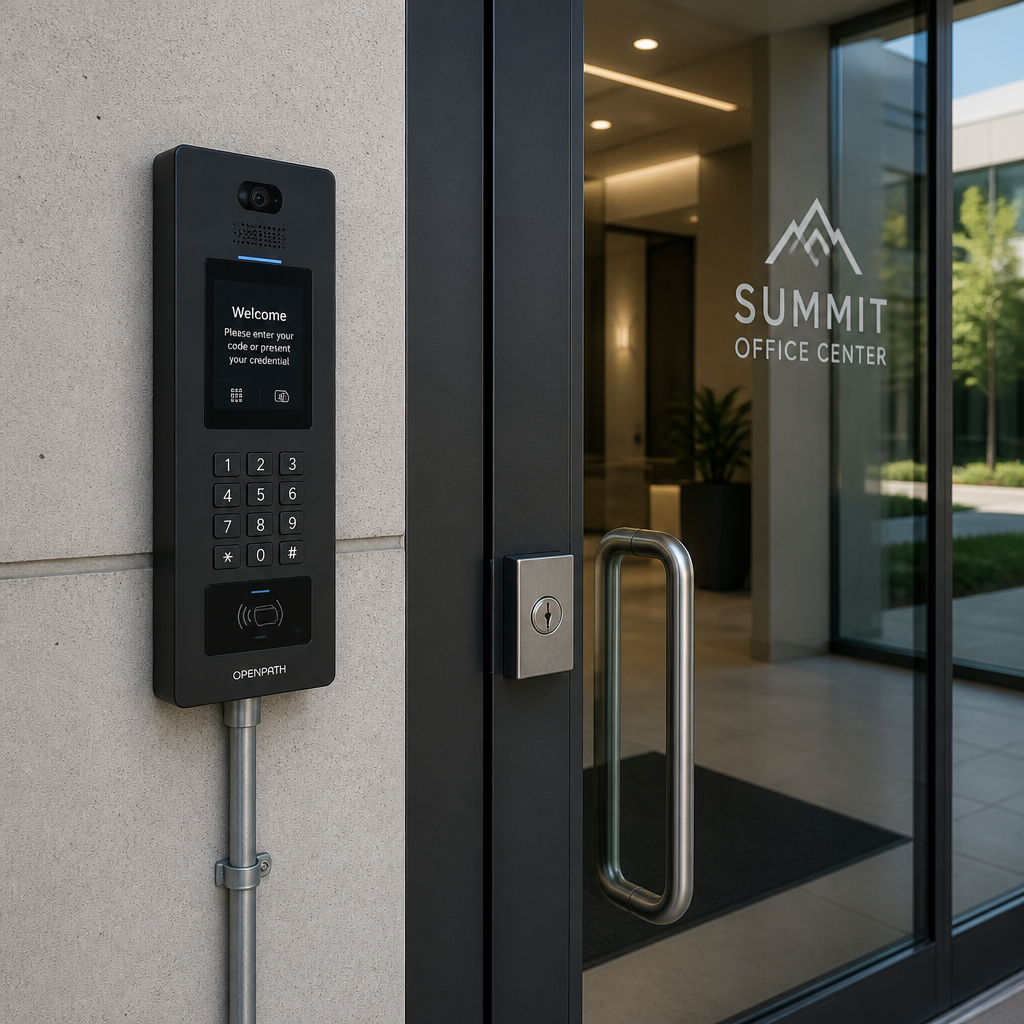
When the electric strike is part of an intercom-controlled entry system, the intercom panel’s door release relay drives the strike directly. The wiring from the panel’s lock output terminals connects to the strike and its local power supply. For multi-door or multi-building installations, confirm that each door’s strike is individually addressed and that the controller can manage simultaneous credential events on different doors without relay conflicts. This becomes particularly relevant in apartment buildings where the lobby entry, garage entry, and secondary building entries may all be on the same intercom platform.
If the building already uses biometric access readers, smart locks, or card readers at secondary doors, the intercom and electric strike system should integrate with the same access control platform. Running parallel, disconnected systems for different entry points creates management overhead and credential duplication that grows increasingly expensive over time.
Frequently Asked Questions
What is the difference between an electric strike and an electromagnetic lock?
An electric strike replaces the strike plate in the door frame and works with the door’s existing mechanical latch. It locks one side of the door and allows free mechanical egress from the other side. An electromagnetic lock, or maglock, uses a magnetic holding force applied across both door and frame and locks both sides simultaneously. The correct choice depends on door type, frame material, and egress requirements for that specific opening.
Can an electric door strike work with any intercom system?
An electric strike works with any intercom system that has a door release relay output, but the relay output voltage and current must match the strike’s operating specifications. Before combining any intercom panel with an electric strike, confirm that the panel’s relay output voltage matches the strike’s rated input voltage. This is one of the most frequently missed compatibility checks in retrofit projects.
What does fail-secure mean on an electric strike?
A fail-secure electric strike remains locked when power is lost. The keeper does not release unless power is actively applied to the solenoid. This configuration is used on restricted-access doors and fire-rated doors where maintaining security during a power outage is required. It is not appropriate for primary egress doors unless specifically approved by the Authority Having Jurisdiction for that jurisdiction.
Do electric door strikes require professional installation?
The mechanical installation can be completed by a skilled tradesperson, but the electrical integration with an access control system requires understanding of low-voltage wiring, relay outputs, and voltage requirements. For any installation involving fire-rated frames, egress doors, or integration with an existing access control platform, professional installation ensures code compliance and system reliability. Incorrect wiring is the leading cause of strike failures in the field.
How do I know which electric strike fits my door frame?
You need to identify the lockset type on the door (cylindrical, mortise, or rim exit device), the door handing (left or right swing), the frame material, and whether the frame is fire-rated. You also need to know whether the frame has an existing electric strike prep or needs a new one cut. For fire-rated frames, the prep must be factory-cut, not field-modified. Matching all of these factors to the strike’s specifications before ordering prevents the most common compatibility issues.
What voltage do most commercial electric strikes require?
Most commercial electric strikes operate on 12VDC or 24VDC. Some models accept both AC and DC voltage, which adds flexibility in retrofit situations. Universal models that are field-selectable for voltage and duty cycle are available and can simplify procurement across projects with different power supply configurations. Always verify the specific model’s requirements, including inrush current, before sizing the power supply.
Have you encountered a specific door strike specification challenge in a building you manage or are installing? Share what the opening type was and what solved it, because real-world scenarios help everyone in this industry spec more confidently.
References
- Electric Strike Installation Guide covering fail-safe, fail-secure, voltage, and fire-rated frame requirements
- Complete guide to understanding how electric strike locks work and their commercial applications
- Electric strike selection guide covering lockset compatibility, mounting types, and access control wiring
- Overview of electric door strike hardware history, voltage standards, and duty cycle considerations
- Camden Electric Strikes Installer Guide covering duty cycle, solenoid operation, and fire code requirements


 No products in the cart.