
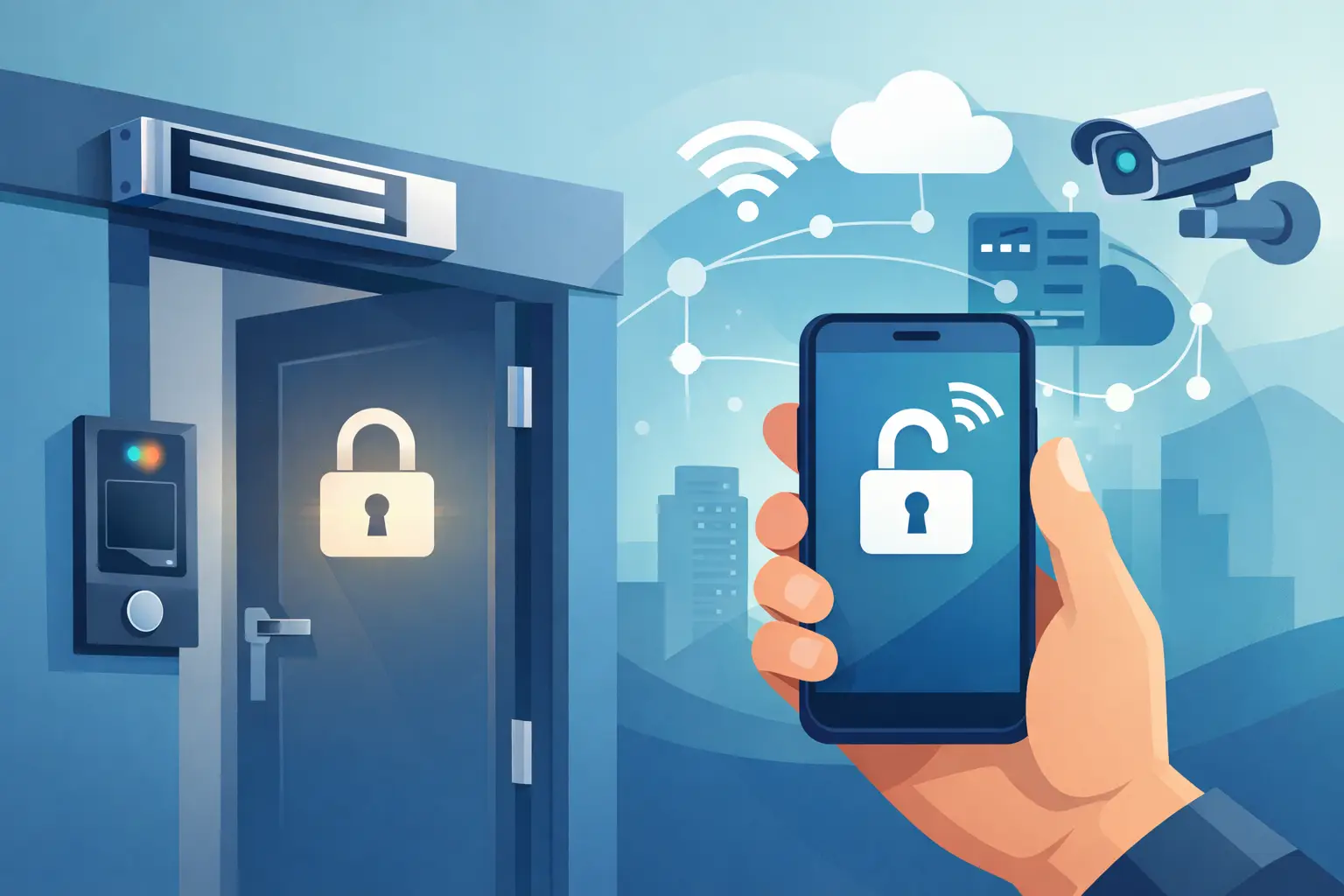
A visitor presses an intercom call button at a locked front door. The property manager answers from an office, verifies who is there, and releases the door without leaving the desk. That is the practical question behind can maglocks unlock remotely: yes, provided the lock is part of a properly designed access-control system.
A magnetic lock does not make its own decisions. It holds a door closed while power is applied, then releases when its power circuit is intentionally interrupted. Remote operation comes from the equipment controlling that circuit – typically an access controller, intercom relay, request-to-exit device, or supervised relay connected to a networked system. The right method depends on the building, door use, life-safety requirements, and how much visibility and audit control the owner needs.
How a maglock releases from a remote command
Maglocks are fail-safe locks. When energized, the electromagnet bonds to an armature plate mounted on the door and provides holding force. When power is removed, the magnetic field stops and the door can be opened. This operating principle makes remote release straightforward, but it also means the installation must be planned around power loss, egress, and code requirements.
In a standard controlled-opening setup, the maglock receives DC power through an access-control power supply. The controller or intercom provides a relay output – often a dry contact – that tells the power supply to interrupt power to the maglock for a set period. A receptionist pressing a release button, a tenant using a video intercom monitor, or an administrator selecting a door command in access-control software can all initiate that same relay action.
The actual release may last three to 10 seconds, depending on traffic flow and the door closer. At the end of the programmed time, power returns to the lock. If the door is closed and aligned, the magnet secures it again.
Common ways to release a maglock remotely
The most appropriate remote-release method is determined by how the site is staffed and whether the door needs event records, schedules, video verification, or mobile administration.
Intercom or video door entry release
For apartment entrances, offices, small commercial buildings, and gated pedestrian doors, an intercom system is often the most direct approach. A visitor calls a station or mobile app, the resident or staff member speaks with the visitor, and the indoor station or app activates the door-release relay.
The intercom relay should be wired to the maglock power circuit through the correct relay connection or a compatible access-control power supply. The relay is not generally used to carry lock current directly unless its electrical rating supports that load. For larger locks or multiple doors, a dedicated relay or controlled power supply is usually the cleaner and more serviceable design.
Access controller and credential system
A card reader, keypad, mobile credential reader, or biometric reader normally works through an access controller. The controller validates the credential and commands the lock relay to release the door. If the controller is networked, authorized personnel can also issue a remote door-release command from management software.
This method is well suited to schools, warehouses, offices, multifamily properties, and facilities with several controlled openings. It can provide door schedules, credential permissions, event history, held-open alerts, and forced-door notifications when door contacts are included. A simple remote relay can open a door, but it cannot provide the accountability that a properly configured controller can.
Remote push button or desk station
At a reception desk, guard station, or loading office, a hardwired momentary button is often the most dependable option. Pressing the button activates a relay or power-supply input that drops power to the maglock. It is simple, fast, and not dependent on an internet connection.
This arrangement works well when staff can see the entrance directly or through CCTV. For a door that is not visible, pair the release button with an intercom or camera system so staff are not releasing people based only on a voice call.
Network relay or mobile-managed system
Networked relays and cloud-managed access-control platforms allow authorized users to release a door from a browser, workstation, or mobile device. This can be useful for distributed properties, after-hours deliveries, managed offices, and sites where administrators are not always physically present.
Remote administration adds convenience, but it also adds network and account-security responsibilities. Use unique user accounts, role-based permissions, multi-factor authentication where available, and a documented process for removing access when employees or vendors no longer need it. The ability to release a door remotely should be limited to people with a clear operational reason to have it.
A remote command is not the same as cutting power
Because a maglock releases when power is removed, some installers assume any remote power switch will do the job. That approach can create avoidable problems. A lock circuit should be controlled through equipment designed for access control, with the correct voltage, current capacity, enclosure, fusing, and fire-alarm interface.
A professional installation separates the low-voltage control signal from the lock power path where appropriate. The controller, intercom, or push button triggers a relay. The relay then controls the lock output through a power supply or relay module rated for the connected equipment. This protects controller relays from excessive current and makes troubleshooting much easier.
It also prevents one poorly planned power interruption from affecting unrelated doors. In a multi-door system, each opening should have a clearly identified circuit and a serviceable means of isolating the equipment when maintenance is needed.
Door hardware and life safety still control the design
Remote release is only one part of a maglock installation. The door must allow people to exit safely without needing a card, code, app, or staff intervention. Maglocks are commonly used on controlled egress doors, but the required components vary by occupancy, local code, and the authority having jurisdiction.
A typical installation may require a request-to-exit motion sensor, a push-to-exit button, a door position switch, a fire-alarm release connection, and emergency power considerations. Some applications use listed emergency exit devices designed specifically for electromagnetic locking systems. A delayed-egress or controlled-egress opening has additional requirements and should never be treated as a basic remote-release project.
The key point is that remote control cannot interfere with free egress. If a building loses power or the fire-alarm system activates, a fail-safe maglock normally releases. That may be the correct behavior for the opening, but the property owner needs to understand the security trade-off. Doors that must remain secured during an outage may require a different locking approach, backup power, or a combination of hardware selected for the specific application.
Design details that determine whether it works reliably
A maglock may be rated at 600 pounds, 1,200 pounds, or more, but holding force is only useful when the door and frame are properly prepared. The armature must contact the magnet squarely. A misaligned door closer, loose armature hardware, warped frame, or binding weatherstrip can prevent consistent locking and create service calls that appear to be electrical issues.
Power planning matters just as much. Confirm the lock voltage and current draw, then size the power supply with capacity for all connected locks, controllers, readers, annunciators, and accessories. Account for voltage drop on long cable runs. A lock that receives insufficient voltage may chatter, release intermittently, or fail to provide expected holding force.
Door status monitoring is strongly recommended for remotely managed doors. A magnetic door contact tells the system whether the door actually closed after a release command. Without it, an operator may see that the system sent the command but have no confirmation that the opening secured again. Bond sensors can add another layer of verification by confirming the maglock has achieved magnetic bond.
Choosing the right setup for the site
For a single office entrance, a video intercom with a properly rated release relay and maglock power supply may be all that is needed. For an apartment building, each tenant may need call capability while management needs master release and door-status awareness. For a school or industrial site, an access controller with credential rules, schedules, monitoring, and documented emergency interfaces is usually the more appropriate solution.
Before selecting equipment, define who will release the door, where they will be located, whether they can verify visitors by audio or video, how long the door should remain released, and what should happen during a power or network outage. Also confirm the existing door type, frame material, fire-rating conditions, available power, cable path, and local code requirements.
For installers and property managers, the practical answer is simple: a maglock can be released remotely, but the reliable solution is not the magnet alone. It is the complete system around it – properly rated power, controlled relays, verified door status, safe egress, and hardware matched to the way the property actually operates. When those pieces are specified together, remote release becomes a useful daily function rather than a recurring service issue.


 No products in the cart.