
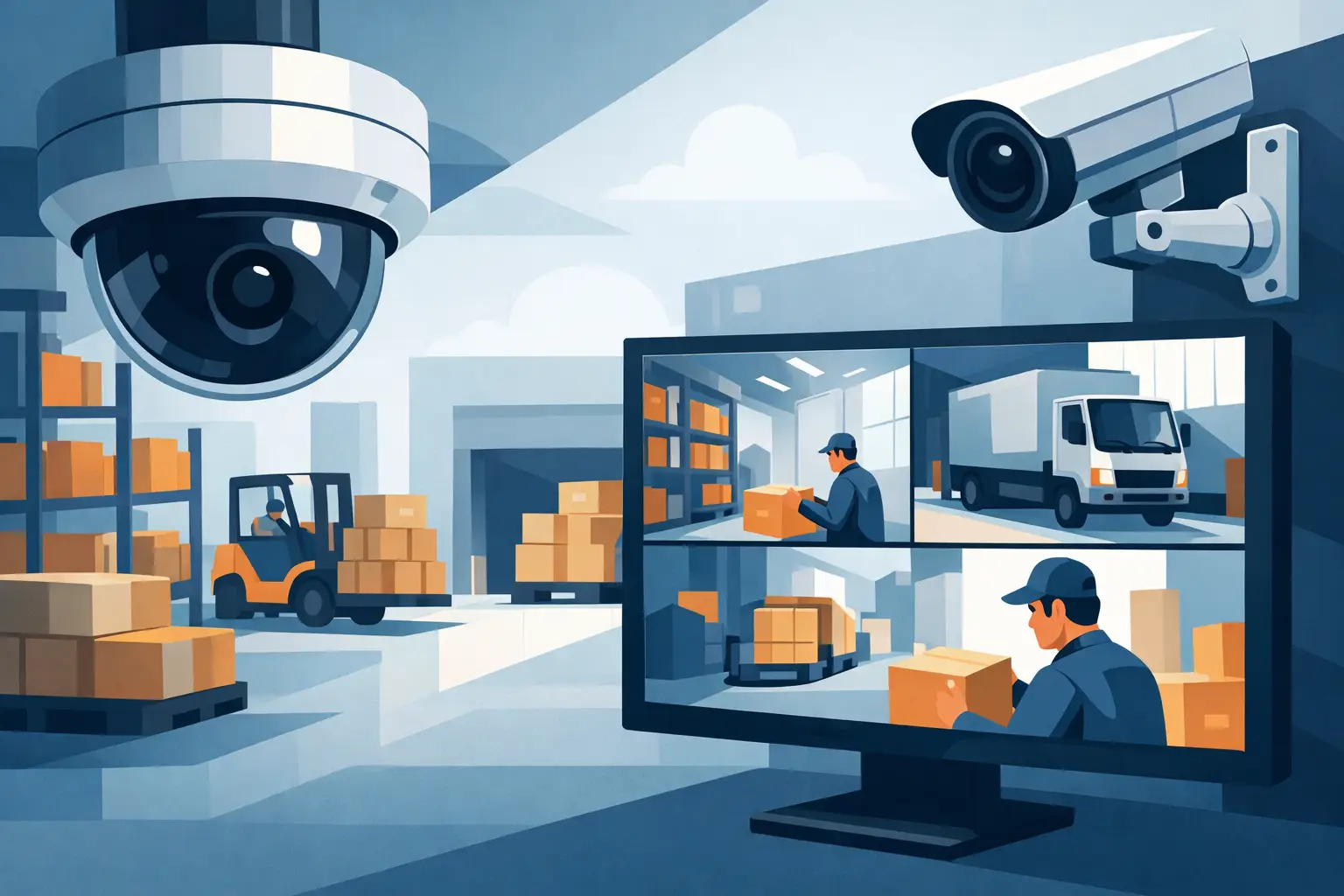
A warehouse camera system usually fails in the same place it matters most – the loading dock at dusk, the back aisle with poor lighting, or the rack row where a wide-angle camera looked fine on paper but cannot identify a face, badge, or box label. Choosing the best CCTV camera system for warehouse operations is less about buying more cameras and more about matching coverage, image detail, recording, and durability to how the building actually runs.
Warehouses create a different set of surveillance problems than offices or storefronts. You have long sight lines, forklift traffic, shipping activity, limited natural light, overhead doors opening all day, and constant movement between interior and exterior zones. If the system is not designed around those conditions, you end up with footage that shows motion without giving useful evidence.
What makes the best CCTV camera system for warehouse facilities?
The right system starts with the risk profile of the building. A small single-tenant warehouse with two dock doors has different requirements than a multi-zone distribution center with cage storage, employee entrances, trailer yards, and integrated access control. That is why there is no single camera package that fits every warehouse.
What does stay consistent is the need for a commercial-grade system built around four basics: coverage, identification, retention, and reliability. Coverage means no major blind spots in receiving, shipping, aisles, entrances, and exterior approaches. Identification means the camera can capture enough detail to confirm who did what and where. Retention means footage is stored long enough to investigate claims, losses, safety incidents, or internal issues. Reliability means the recorder, network, power, and cameras are built for continuous operation, not occasional residential use.
In practice, the best warehouse systems are usually IP-based NVR systems rather than older analog setups. IP cameras give you better resolution, more flexible placement, analytics options, and easier scaling when the facility grows. Analog still has a place in budget-conscious retrofits, but most professional warehouse buyers are better served with an IP platform that can support mixed camera types and future expansion.
Start with the warehouse zones, not the camera catalog
A good system layout begins by dividing the property into operational zones. In most warehouses, those zones include receiving docks, shipping docks, overhead door lines, pallet storage aisles, pick-and-pack areas, employee entrances, parking areas, perimeter points, and any restricted inventory or high-value cage areas.
Each zone has a different surveillance job. At the dock, you need to see trailer approach, door activity, pallet movement, and sometimes plate or vehicle identification. In aisle coverage, the goal may be tracking movement, verifying picks, or reviewing damage events. At employee doors, you need face-level identification tied to access events. In parking and yard areas, wider situational awareness matters, but wide views alone are not enough if you also need recognition at gates or pedestrian entry points.
This is where many systems get overgeneralized. A buyer sees a high-resolution turret camera and assumes it can do every job in every location. It cannot. The camera that works well over a personnel door may be the wrong choice for a 200-foot aisle or a dim exterior dock.
The camera types that usually make sense
For most warehouse interiors, turret or dome IP cameras are a practical starting point. They work well in general coverage areas, can provide strong image quality, and are less likely to collect the same glare issues common with some older dome housings. In active indoor spaces with dust, changing light, and frequent motion, a well-placed turret camera often delivers cleaner real-world performance than a spec sheet alone would suggest.
Bullet cameras are commonly used outside and around loading areas because they are easy to aim and work well for longer directional views. They are useful for dock lines, building sides, fence lines, and parking approaches. If the site needs visible deterrence, bullets also tend to be more noticeable.
Varifocal cameras are especially useful in warehouses because they let the installer fine-tune the field of view. That matters when one dock bay needs broader coverage while another needs tighter identification at a door or staging area. Fixed-lens cameras are simpler and often cost-effective, but they leave less room for adjustment if the initial design changes.
PTZ cameras can help in larger yards or high-clearance interiors, but they should not replace fixed cameras in critical areas. A PTZ can only look in one direction at a time. For evidence capture at entrances, docks, and internal choke points, fixed cameras are still the backbone.
Resolution matters, but placement matters more
Many buyers jump straight to 4MP, 8MP, or 4K as the deciding factor. Higher resolution is useful, especially in large spaces, but it does not solve poor mounting height, bad angles, weak lighting, or over-wide coverage. A camera mounted too high over a warehouse door may record the top of a person’s head in excellent resolution and still miss the face.
A better approach is to define what each camera must capture. If the goal is general movement review, moderate resolution may be enough. If the goal is identifying employees, confirming package handling, or supporting a liability claim, the camera needs to be positioned for that specific level of detail.
That usually means combining overview cameras with identification cameras. One gives context. The other gives evidence. In warehouse design, that pairing is often more effective than relying on a small number of ultra-high-resolution cameras trying to cover everything.
Low light, glare, and wide dynamic range are not optional
Warehouse lighting is rarely consistent. You may have bright skylights, dark rack aisles, sodium or LED fixtures, dock doors opening to daylight, and exterior transitions that change by the hour. A system that looks good at noon can perform poorly at shift change.
That is why low-light capability and wide dynamic range should be treated as core requirements. Cameras near dock doors and personnel entrances benefit from WDR because they are constantly dealing with bright backlight and darker interior foregrounds. Exterior cameras need dependable night performance, whether that comes from infrared illumination, low-light sensors, or supplemental white light where appropriate.
If the site has reflective shrink wrap, polished floors, or frequent headlights at night, ask how the camera handles those real scenes. Warehouse surveillance is full of lighting trade-offs, and the best answer is often proper camera selection plus careful testing during installation.
Recording, retention, and bandwidth planning
The recorder is where many otherwise solid projects get undersized. Warehouses often require longer retention than small commercial sites because disputes may not surface right away. A shipping claim, inventory discrepancy, or injury report may come days or weeks after the event.
That means storage planning needs to account for camera count, resolution, frame rate, compression, and actual retention targets. Thirty days is common, but some facilities need longer, especially where shrink, chain-of-custody, or compliance concerns exist. If footage from key cameras is mission-critical, RAID-capable NVRs and health monitoring are worth considering.
Bandwidth matters too, especially for multi-building properties or sites with remote viewing requirements. A camera system should not overload the business network or become unstable when multiple users review footage. Separating surveillance traffic, sizing PoE switching correctly, and matching recorder throughput to the camera load are all part of a professional warehouse deployment.
Integration is often where the value increases
The best CCTV camera system for warehouse security is often the one that works with the rest of the site infrastructure. Camera footage becomes more useful when tied to access control events, intercom calls, gate activity, and door status.
For example, if a manager can review video associated with a specific door transaction, it becomes much easier to investigate tailgating, unauthorized entry, or after-hours access. If dock doors, gate operators, or employee entrances already use controlled hardware, the camera system should be selected with that environment in mind.
This is also where commercial buyers benefit from working with a supplier that understands more than just cameras. In many warehouse projects, surveillance is one part of a larger security layout, and system compatibility affects the long-term result just as much as image quality.
How to judge whether a system is actually the right fit
A warehouse camera system is usually the right fit if it answers practical questions before purchase. Can it identify a person at the employee entrance? Can it verify loading activity at each dock bay? Can it show product movement in the aisles where losses occur? Can it keep recording through the retention period you need? Can it expand if the warehouse adds another area, office, or exterior gate?
If those answers are vague, the system is probably being sold as a general package instead of designed for your operation. That is where experienced distribution support matters. A serious supplier can help map camera types to zones, size storage correctly, account for lighting conditions, and avoid the common mistake of overspending in low-priority areas while underserving high-risk ones.
For warehouse buyers, the strongest system is rarely the one with the biggest marketing claims. It is the one that fits the building, captures useful evidence, and keeps working under daily operating conditions. If you are evaluating options, start with your floor plan, traffic patterns, and incident history. The right camera system becomes easier to identify when the design follows the warehouse instead of the brochure.
 No products in the cart.