
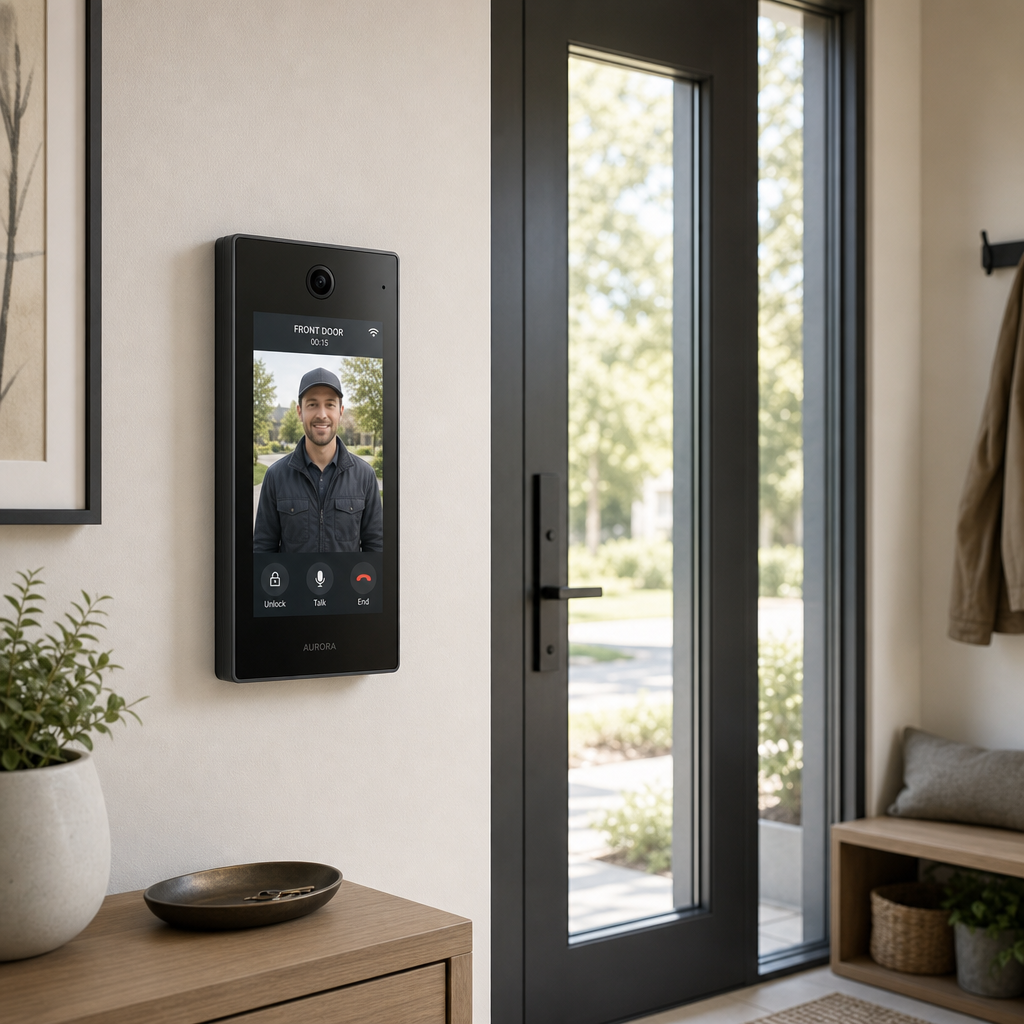
Most homeowners only think about intercom systems twice: when they move into a new property and when the current system fails them at the worst possible moment. If you are standing at the front door in the rain, unable to buzz in a guest because the wired panel shorted out, you understand the problem firsthand. The debate between a wireless intercom system and a wired intercom is not abstract. It comes down to your property layout, your budget, and how much disruption you can tolerate during installation. This guide cuts through the marketing noise and gives you a direct, side-by-side look at both options so you can make the right call before spending a dollar.
Table of Contents
- Quick Takeaways
- How Each System Works
- Installation Requirements and Complexity
- Sound and Video Quality
- Cost Breakdown: Upfront and Long-Term
- Security and Reliability
- Best-Fit Scenarios for Each System Type
- Full Comparison Table
- Frequently Asked Questions
- References
Quick Takeaways
| Key Insight | Explanation |
|---|---|
| Wired systems offer superior audio consistency | A hardwired connection eliminates radio frequency interference, making wired intercoms more reliable in signal-dense environments like apartment buildings. |
| Wireless systems install in hours, not days | No cable runs means most wireless intercom installations are completed without cutting walls or hiring electricians, reducing total installation time dramatically. |
| Battery dependency is the real weakness of wireless units | Many wireless intercom units rely on rechargeable or replaceable batteries. Neglecting them leads to dead entry points at critical moments. |
| Wired systems add measurable resale value | A professionally installed wired home intercom system is considered a permanent fixture, which can add to property value in the same category as structured wiring. |
| Wireless intercoms suit renters and retrofits best | If your property has existing walls you cannot open, or if you rent and cannot modify the structure, a wireless system is the only practical option. |
| Modern wireless systems now support video and app control | Higher-end wireless intercom systems include HD cameras, two-way video, and smartphone integration that rivals wired counterparts from five years ago. |
| Hybrid installations are increasingly common | Some properties use wired backbone infrastructure at main entry points and wireless satellite units in secondary rooms or outbuildings for flexibility. |
How Each System Works
Understanding the underlying technology of each type prevents expensive mistakes during the buying process. A wired intercom system uses dedicated copper or coaxial cable runs between a master station and one or more substations. The signal travels through physical wiring, which means latency is effectively zero and the connection is not subject to interference from neighboring Wi-Fi networks or Bluetooth devices.
A wireless intercom system transmits audio and video data over radio frequencies, typically operating at 1.9 GHz (DECT), 2.4 GHz, or 5.8 GHz. Higher-end units designed for property entry and access control use encrypted DECT protocols specifically because DECT is less congested than standard Wi-Fi bands. In practice, the signal quality of a good DECT-based wireless unit in an open-plan home is virtually indistinguishable from a wired connection.
What happens at the entry point
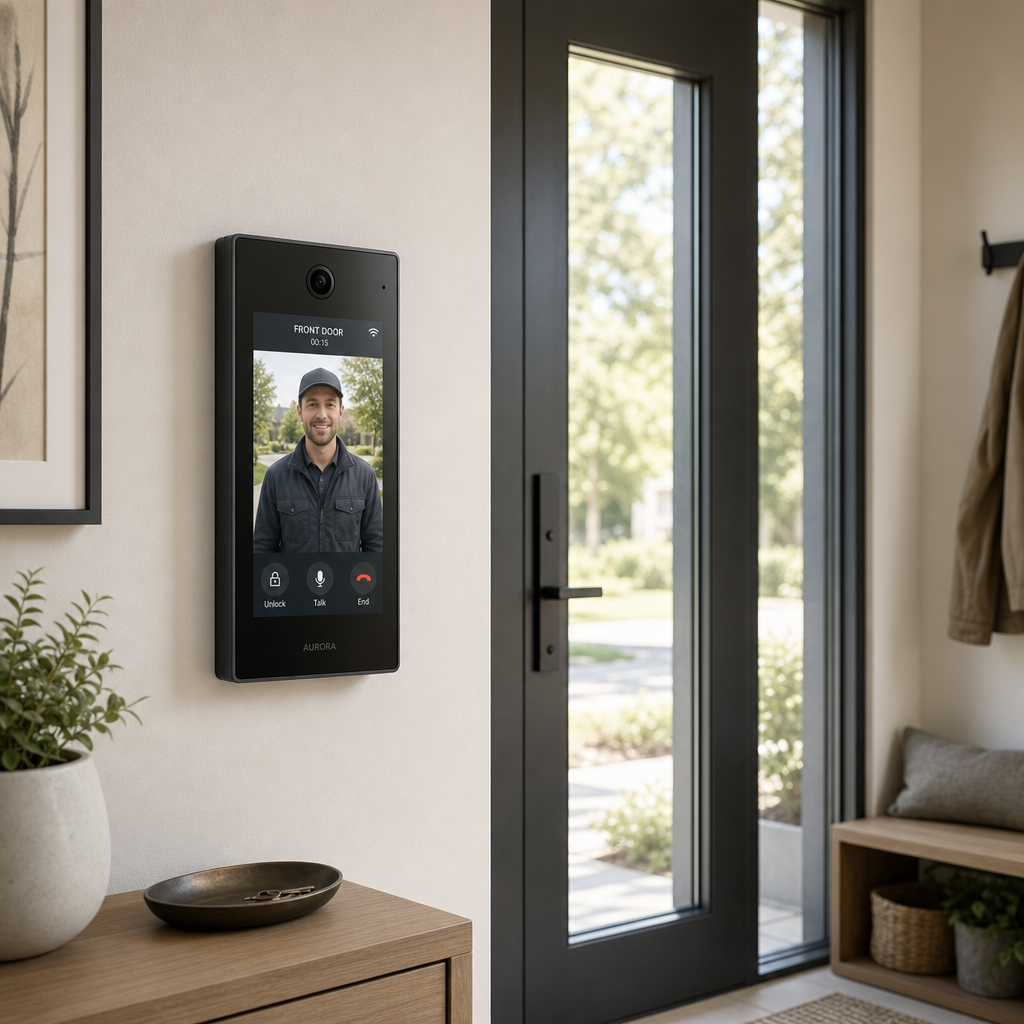
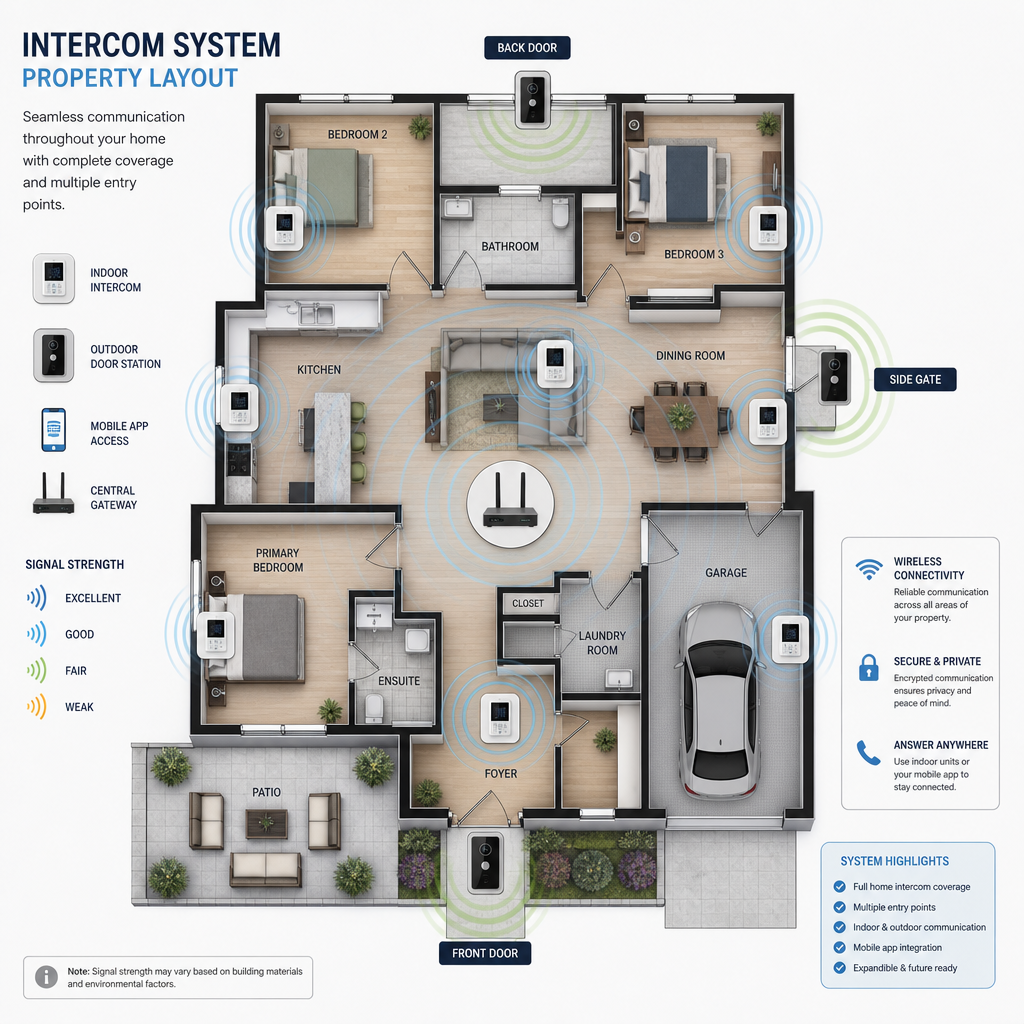
In a wired system, the outdoor panel connects via cable directly to an indoor master unit. Power is supplied through the cable run itself in low-voltage systems, or through a separate power transformer. In a wireless system, the outdoor panel typically has its own power source, either hardwired to a doorbell power supply or battery-operated, and communicates to indoor units or a smartphone app via radio signal or Wi-Fi.
At UnikCCTV, the product range covers both categories, including models like wireless intercoms that pair with existing gate access controls and wired panels designed for multi-tenant apartment buildings. The key is matching the system architecture to the property, not defaulting to whichever technology sounds more modern.
Installation Requirements and Complexity
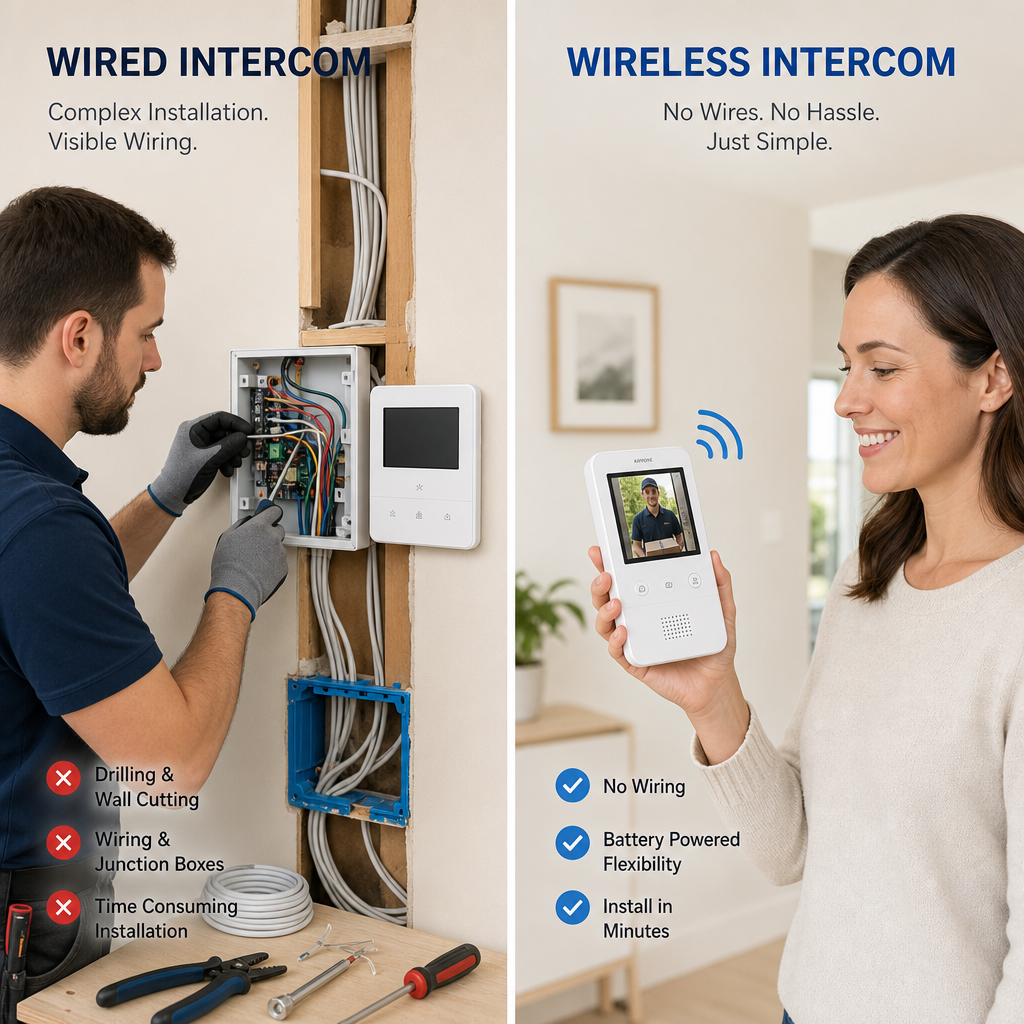
This is where the two systems diverge most sharply, and where most homeowners underestimate the real cost of a wired intercom. Installing a wired home intercom system in an existing building requires routing cable from the outdoor entry panel through walls, ceilings, or conduit to each indoor station. In a single-family home, that typically means one to three cable runs. In an apartment building or multi-unit property, it can mean dozens.
A common mistake is assuming that because a property was built with intercom wiring pre-installed, any new wired unit will connect easily. In practice, older wiring standards often do not support modern video intercom signals, requiring partial or complete rewiring. The National Electrical Code (NEC) governs low-voltage wiring installations in the United States, and any work behind walls should comply with local jurisdiction requirements.
DIY feasibility for each type
Wireless intercom installation is genuinely DIY-friendly for the average homeowner. Most systems require mounting a bracket, connecting a power supply (often the existing doorbell wiring), and syncing the outdoor unit with the indoor stations using a pairing button sequence. Total time for a single-entry, two-station setup: two to four hours.
Wired intercom installation, by contrast, is almost always a professional job unless the homeowner has experience running low-voltage cable. Fishing wire through finished walls without visible damage is a skill that takes experience to develop. Attempting it incorrectly leads to visible conduit runs along baseboards or, worse, drywall damage that costs more to repair than the installation itself.
Pro tip: Before purchasing any wired intercom system for an existing home, get a cable routing estimate from a licensed low-voltage technician. The labor cost alone frequently pushes the total project budget 40 to 60 percent higher than the hardware cost, and that number surprises almost every first-time buyer.
Sound and Video Quality
Five years ago, wired systems had a clear advantage in both audio clarity and video resolution. That gap has narrowed significantly. Modern wireless intercoms, including those in the UnikCCTV catalog, now support 1080p video at the entry panel and full-duplex audio communication that eliminates the half-duplex walkie-talkie feel of older wireless units.
That said, wired systems still hold the advantage in one specific scenario: high-density residential environments where multiple Wi-Fi networks and wireless devices create significant radio frequency congestion. In a 200-unit apartment complex, a wireless intercom operating on the 2.4 GHz band will experience interference that a wired system simply does not encounter.
Night vision and weather performance
For outdoor panels, both wired and wireless units from reputable manufacturers include infrared night vision rated for entry-level to professional performance. The more important differentiator is IP weather rating. Look for outdoor panels rated at IP54 or higher, which indicates protection against dust ingress and water splashing from any direction. This rating applies to both wired and wireless outdoor units and is independent of the signal transmission method.
“The performance gap between wired and wireless audio-video intercoms has effectively closed for most residential applications. The remaining differences are architectural, not technological.” – Security Industry Association, Technical Standards Overview
The data consistently shows that audio dropout complaints in wireless intercom systems are almost always traceable to one of three causes: excessive distance between units, thick concrete or masonry walls, or radio frequency interference from a nearby device. All three are diagnosable before purchase if you assess the installation environment carefully.
Cost Breakdown: Upfront and Long-Term
A basic two-station wireless intercom system for a residential entry point starts at approximately $80 to $150 for audio-only units and rises to $200 to $600 for video-capable models with smartphone integration. These numbers reflect hardware only.
A comparable wired video intercom system runs $150 to $400 for the hardware, but adds $300 to $800 in professional installation labor for a standard single-family home. In a new construction project where wiring is run before drywall is installed, installation labor drops to $100 to $200, making wired systems significantly more competitive in that context.
Long-term maintenance costs
Wired systems have essentially zero ongoing consumable costs once installed. The cable does not degrade under normal conditions, and indoor master stations rarely fail before the 10 to 15 year mark. Wireless systems introduce battery replacement costs (for battery-powered outdoor units) and are more susceptible to obsolescence as communication protocols evolve. A wireless unit purchased in 2018 may not support 2024 smartphone app integrations without a firmware update or full hardware replacement.
For property managers overseeing multiple units or facilities, the total cost of ownership calculation shifts. Wired systems require a larger upfront investment but lower recurring maintenance cost per entry point. Wireless systems allow faster deployment across a campus or multi-building property but may require periodic hardware refreshes.
Pro tip: If you are managing a property with more than four entry points, request a lifecycle cost comparison from your security equipment supplier covering a 10-year window. The per-entry-point cost difference between wired and wireless systems often disappears when labor and hardware refresh cycles are included in the calculation.
Security and Reliability
Security professionals often have a reflexive preference for wired systems, and the reasoning is sound: a wired intercom cannot be jammed by a radio frequency blocker. Signal jamming devices are illegal in most jurisdictions but are available and have been used in residential burglaries. A wired system is immune to this attack vector entirely.
That said, the practical threat model for most homeowners does not include sophisticated RF jamming. The more realistic security vulnerabilities are physical, such as a damaged outdoor panel, a forced entry point, or an intercom system that fails due to power loss. On the power-loss front, wired systems connected to a central low-voltage transformer will go offline during a power outage unless a battery backup is incorporated into the system design.
Encryption and data security in wireless models
Modern wireless intercom systems that use DECT 6.0 encryption or WPA2-secured Wi-Fi transmission are not easily intercepted by off-the-shelf equipment. The encryption protocols in commercial-grade wireless intercoms, including those paired with biometric access systems and facial recognition locks available through UnikCCTV, provide practical security for residential and light commercial use. The risk of signal interception is theoretical for most residential applications and should not be the primary decision factor.
Reliability is a different question. In practice, wired systems fail less often because they have fewer components exposed to environmental variables. The outdoor panel on a wireless system faces temperature extremes, moisture, and physical impact that can affect the radio module over time. Quality-built wired outdoor panels, properly weatherproofed during installation, tend to outlast wireless counterparts by several years.
Best-Fit Scenarios for Each System Type
Stop treating this as a universal choice. The right system depends entirely on your specific property and use case. Here is a direct breakdown of which type wins in each scenario.
When wireless intercoms are the clear winner
Wireless systems are the right choice for renters who cannot modify walls, for retrofit installations in older homes with finished interiors, for outbuildings and garages that are not structurally connected to the main house, and for homeowners who want smartphone-based remote access and app-controlled entry. If your property already has CCTV surveillance infrastructure from a provider like UnikCCTV and you want to integrate intercom functionality without a full rewire, wireless is the practical solution.
When wired systems are the right investment
Wired systems belong in new construction projects, major renovations where walls are already open, multi-tenant apartment buildings where long-term reliability is non-negotiable, and commercial or industrial facilities where radio frequency environments are unpredictable. If you are a property manager responsible for a building where the intercom system is the primary access control mechanism, the additional installation cost of a wired system is justified by its durability and resistance to environmental interference.
Full Comparison Table
| Category | Wireless Intercom System | Wired Intercom System |
|---|---|---|
| Installation complexity | Low. DIY-friendly in most cases. | High. Typically requires a licensed low-voltage technician. |
| Upfront hardware cost (residential) | $80 to $600 depending on features. | $150 to $400 for hardware alone. |
| Total installed cost (residential) | $80 to $600 (DIY) or up to $900 with professional help. | $450 to $1,200 including professional labor. |
| Audio and video quality | Excellent in low-interference environments. | Consistently excellent regardless of RF environment. |
| Signal reliability | Subject to RF interference and range limitations. | Immune to RF interference. Limited only by cable quality. |
| Power source | Battery or doorbell wiring. Backup options vary. | Low-voltage transformer. Backup requires UPS or battery. |
| Scalability | Easy to add stations without new cabling. | Adding stations requires additional cable runs. |
| Best for | Renters, retrofits, outbuildings, smart home integration. | New construction, multi-tenant buildings, commercial use. |
| Typical system lifespan | 5 to 8 years before hardware refresh. | 10 to 15 years with minimal maintenance. |
Frequently Asked Questions
Can I add a wireless intercom system to my home without any wiring at all?
Yes, fully battery-operated wireless intercom systems exist and require no existing wiring whatsoever. However, for video-capable outdoor panels with continuous recording or live streaming features, connecting to an existing doorbell power supply (typically 8 to 24 volts AC) is strongly recommended. Pure battery operation on a video unit drains batteries within weeks under normal use, creating maintenance headaches that undermine the convenience benefit of going wireless.
How far can a wireless intercom signal reliably travel?
Most residential wireless intercom systems are rated for 300 to 1,000 feet in open-air conditions. In a typical home with multiple walls and floors between the outdoor panel and indoor stations, effective range drops to 100 to 300 feet. Concrete and masonry walls cause the most significant signal degradation. If your property has thick exterior walls or long distances between entry points and living areas, request a site-specific range assessment before committing to a wireless system.
Is intercom installation considered a DIY project or a professional job?
Wireless intercom installation is genuinely DIY-accessible for most homeowners with basic tool skills. Wired intercom installation in an existing finished home is a professional job in almost every case. Running low-voltage cable through finished walls without damaging surfaces requires specialized tools and experience. In new construction or during a renovation where walls are open, a motivated DIYer with some electrical knowledge can handle the cable run, but the termination and programming of multi-unit systems still benefits from professional setup.
Do wireless intercoms work with existing gate access control systems?
Many wireless intercom systems can integrate with gate access controls, particularly if both products are from the same manufacturer ecosystem or support standard relay output connections. UnikCCTV offers wireless intercom units specifically designed to pair with gate access control hardware, allowing visitors to trigger gate entry from the intercom panel. Before purchasing, confirm that the relay output specifications of the intercom match the trigger voltage requirements of your gate controller.
What is the biggest mistake homeowners make when choosing between wired and wireless?
The biggest mistake is choosing based on price alone without accounting for installation cost. A wired system that appears cheaper on paper becomes significantly more expensive once professional labor is factored in. Conversely, a wireless system that seems convenient can become frustrating if the property has thick walls that kill the signal or a large footprint that exceeds the rated range. Always assess the installation environment and total installed cost before comparing sticker prices.
Can a wired intercom be upgraded to include video without replacing the entire system?
It depends entirely on the cable type already installed. Older audio-only wired intercom systems typically use two-wire or four-wire configurations that do not carry enough bandwidth for video signals. Upgrading to video on an existing audio wired system usually requires running new coaxial or Cat5e cable alongside the existing wiring, which effectively means a partial reinstallation. Some modern video intercom systems, however, use two-wire technology that can transmit video over the same cable used for older audio systems, making this upgrade possible without full rewiring in certain cases.
Have you installed either type of intercom system in your home or property? Share what worked, what did not, and what you wish you had known before starting the project.
References
- Statista: Global smart home device market data and residential security adoption statistics
- Forbes: Home security technology buying guides and consumer cost analysis
- NFPA: National Electrical Code standards for low-voltage wiring and intercom installation compliance
- U.S. Department of Energy: Smart home integration standards and low-voltage system efficiency guidelines
- Ahrefs Blog: Consumer search behavior data for home security and intercom system research trends

 No products in the cart.