
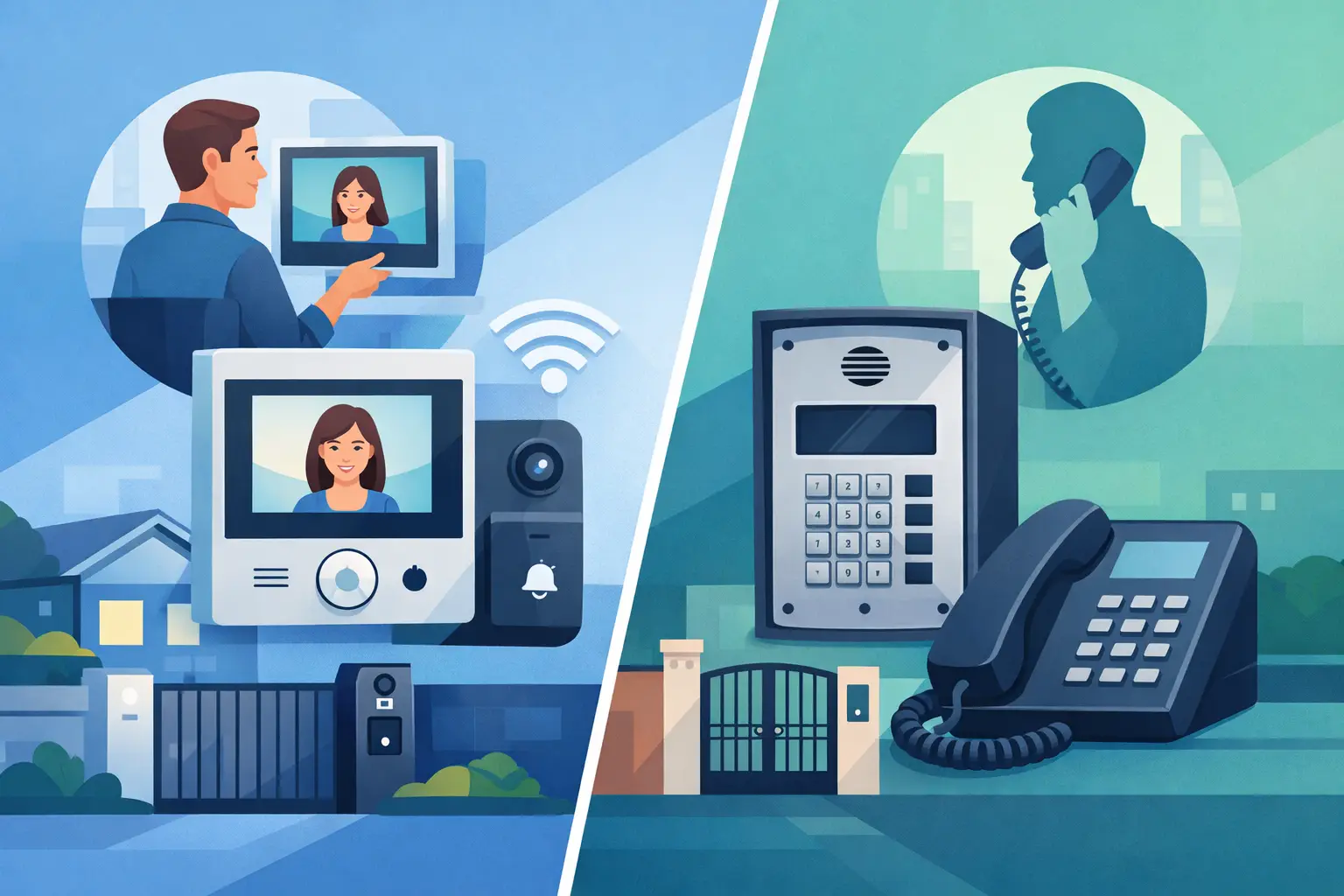
A visitor arrives at a multifamily building after hours, a delivery driver pulls up to a gated facility, or a contractor needs access to a school office. The decision between a video intercom vs telephone entry system determines what the person inside can verify, how they respond, and what infrastructure the property must support. Both can release a door or gate remotely. The better choice depends on the entry point, the number of users, the wiring and network available, and the security policy behind the opening.
For property managers, installers, and facilities teams, this is not simply a question of whether video is better than audio. Telephone entry can be an efficient, durable solution for many applications. Video intercoms add identity verification and visual context that can materially improve decision-making at higher-risk or more active entrances.
Video Intercom vs Telephone Entry: The Core Difference
A telephone entry system allows a visitor to call a resident, tenant, office, or designated contact from a door or gate station. The called party speaks with the visitor through a phone line, cellular connection, or IP-based calling service, then releases the strike, maglock, gate operator, or other connected access device if authorized. Many systems include a directory, keypad, access codes, and resident database management.
A video intercom system combines two-way audio with a camera feed. The person receiving the call can see who is at the entrance before granting access. Depending on the system design, calls may go to an indoor monitor, a master station, a mobile device, or a security desk. Systems may also support multiple doors, recording, card readers, PIN codes, and integration with broader access-control hardware.
The practical distinction is verification. Telephone entry tells staff or residents who the visitor claims to be. A video intercom gives them another way to confirm that claim. That matters when a visitor is unfamiliar, when packages are involved, or when tailgating and unauthorized entry are ongoing concerns.
When Telephone Entry Is the Right Fit
Telephone entry remains a strong option for properties that need reliable remote release without the cost or complexity of video endpoints. It is common at apartment entrances, vehicle gates, parking areas, small offices, storage facilities, and properties where calls need to reach residents or staff wherever they are.
Its biggest advantage is reach. A visitor can call a tenant’s existing phone number instead of relying on someone to be at an interior monitor. For a building with many residents, this can be more practical than installing and maintaining a dedicated video station in every unit. At a commercial gate, the system can call a receptionist, dispatcher, or manager on duty.
Telephone entry also makes sense when the access decision is straightforward. A tenant expecting a guest may only need a short conversation before pressing a release code. A warehouse with known vendors arriving on a schedule may value dependable calling and gate control more than live video at every lane.
There are trade-offs. Audio alone does not confirm whether the person at the station is the person being described. It also provides less useful information when someone is delivering a package, trying to enter with a group, or standing at an entrance with damaged equipment or an obstructed lock. Cellular and cloud-connected telephone entry systems can reduce the need for traditional phone lines, but recurring service costs and local signal quality must be evaluated before deployment.
Where Video Intercom Provides Better Control
Video intercom is usually the stronger choice where staff need to make a visual access decision. Schools, medical offices, managed commercial buildings, high-traffic apartment lobbies, industrial facilities, and secured side entrances are typical examples. Seeing the visitor lets the receiver confirm identity, assess whether the entrance area is clear, and identify delivery vehicles or additional people waiting outside the camera frame.
At a school, for example, an office employee can see whether a visitor is at the correct door, carrying identification, or accompanied by children. At a commercial facility, a security desk can verify a contractor before releasing an exterior door. At a multifamily property, a resident can distinguish an expected guest from a person attempting to use a name from the directory.
Video also improves incident review when the system supports recording or ties into the site’s surveillance platform. This should not be confused with a replacement for a dedicated CCTV system. Intercom cameras are aimed at communication and entry verification, while surveillance cameras should be selected for coverage, retention, lighting conditions, and evidentiary needs. Used together, they give a property better context at its most sensitive access points.
The added capability comes with planning requirements. Camera placement must account for backlight, nighttime conditions, face height, weather exposure, and approach angles. IP video intercoms require network capacity, power planning, and cybersecurity controls. Mobile-app operation can be convenient, but it should not be the only method for releasing a critical entrance when internet service is unavailable or a phone is not monitored.
Installation Factors That Change the Decision
The entry hardware and building layout often matter more than the product category. Before selecting either system, identify what is being controlled: an electric strike, electromagnetic lock, electrified panic hardware, automatic gate operator, or another release device. Confirm the relay type, voltage, current draw, request-to-exit requirements, fire alarm interface, and local code obligations. An intercom is only one part of the opening.
Existing Wiring and Network Infrastructure
A retrofit property with usable telephone wiring may favor telephone entry, especially if the objective is to upgrade an aging call box without rebuilding the entire entrance. A site with structured cabling, Power over Ethernet, and an established network may be better positioned for an IP video intercom.
Wireless or cellular options can help at remote gates and detached buildings, but they should be treated as engineered solutions rather than quick fixes. Test signal strength at the actual mounting location, determine who manages the service account, and provide a plan for outages. Long gate driveways may also need separate cameras, antennas, or network extensions to achieve dependable operation.
Number of Doors and Call Destinations
A single entrance serving a small office has different needs than a campus with several buildings, loading doors, pedestrian gates, and after-hours access points. Video intercom systems can centralize calls at a reception desk or security station, while telephone entry can efficiently distribute calls to many residents or employees.
For larger properties, ask who answers each call during business hours, after hours, and during staff absences. A system is only as effective as the response plan behind it. If the answer is “any employee can open the door from a personal phone,” establish clear policies for credentials, visitor verification, and employee turnover.
Environment and Vandal Resistance
Outdoor stations must match the environment. Gate-mounted equipment may face rain, temperature swings, vehicle vibration, dust, and direct sun. Apartment lobby stations may face heavy use and intentional damage. Select appropriate enclosures, weather ratings, mounting hardware, and protective housings. Consider camera illumination and a readable directory or keypad under low-light conditions.
A lower initial equipment cost can become expensive if the station is poorly protected or difficult to service. For high-use entrances, availability of replacement handsets, camera modules, power supplies, directory parts, and compatible access hardware deserves attention during product selection.
A Practical Way to Choose
Choose telephone entry when the main requirement is to call authorized people and remotely release an entrance, particularly where residents or staff need to answer from ordinary phones. It is often an efficient fit for apartment buildings, smaller offices, and gates where visual verification is helpful but not essential.
Choose video intercom when the person approving entry needs to see the visitor before acting, or when the entrance is exposed to frequent deliveries, public traffic, safety concerns, or identity disputes. It is generally the better fit for controlled commercial entrances, schools, security desks, and properties that need a clearer record of visitor activity.
Some properties benefit from both approaches. A video door station can route calls to indoor monitors during staffed hours and to mobile devices or designated phone numbers after hours. A gate may use telephone entry for residents while a nearby CCTV camera provides the security team with a wider vehicle view. The correct design follows the operating workflow, not a preference for one technology label.
Before ordering equipment, document each door or gate, the locking hardware, available power and cabling, call destinations, user count, and expected visitor traffic. Bring those details to a qualified installer or equipment specialist. UnikCCTV can help match professional intercom, access-control, locking, and supporting hardware to the conditions at the actual opening. The best entry system is the one your staff and occupants can operate consistently, maintain confidently, and use to make better decisions at the door.
 No products in the cart.