
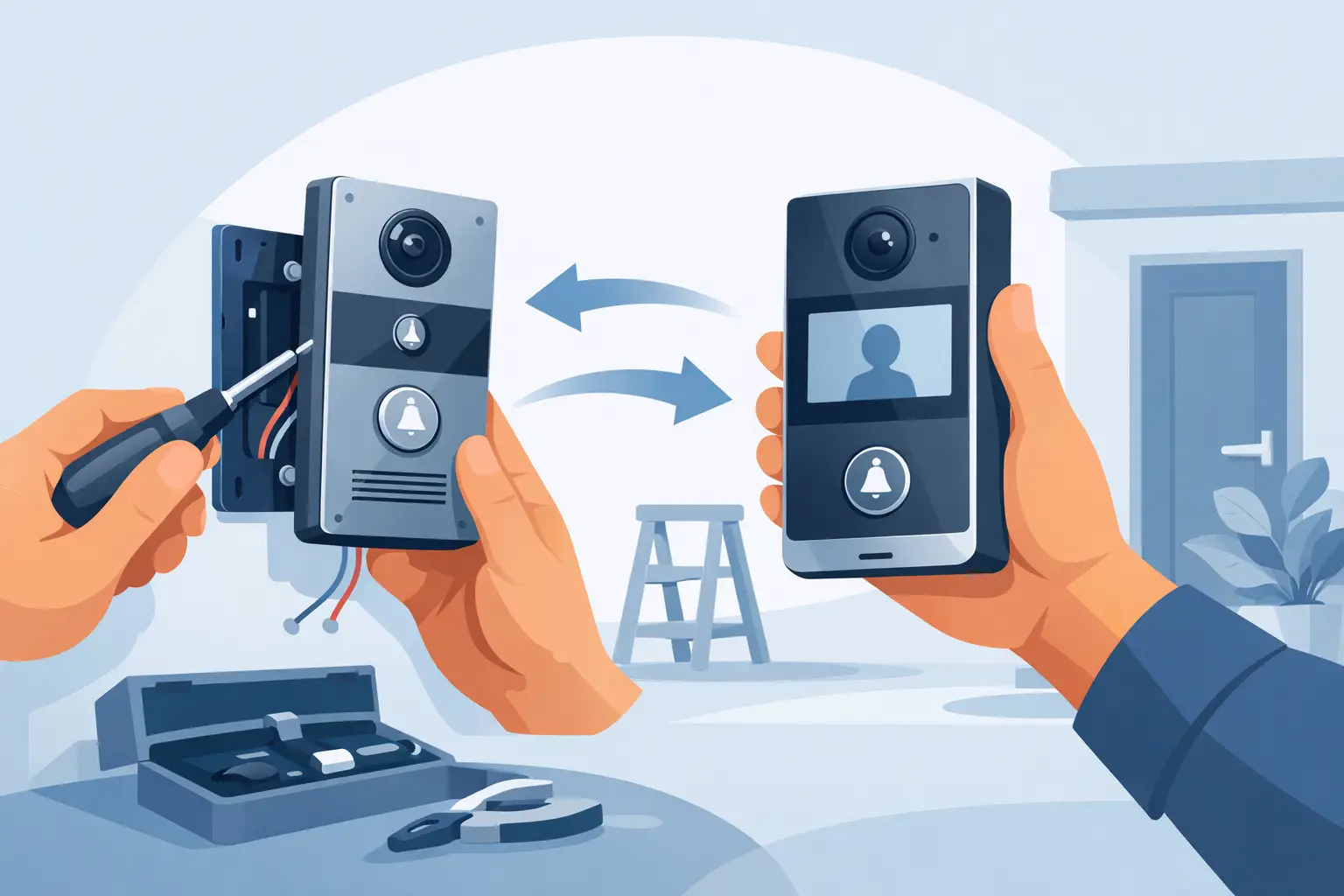
A failed entry station usually shows up at the worst time – tenants cannot call in deliveries, office staff cannot see who is at the door, or a gate entrance stops communicating with the inside monitor. In most cases, video door station replacement is not just about swapping a broken faceplate. It is about keeping the entire entry system working with the wiring, power, locks, monitors, and access-control equipment already in place.
That is where many replacements go off track. The old station may look simple from the outside, but behind it there may be analog video, 2-wire communication, IP networking, relay outputs, or a proprietary connection to indoor stations. Before ordering anything, it helps to treat the replacement as a system decision, not a single-part purchase.
When video door station replacement makes sense
Some door stations fail in obvious ways. The camera image is gone, the call button stops responding, audio becomes distorted, or the unit has visible weather damage. In those cases, replacement is usually straightforward if the rest of the system is still supported and the replacement model is known to be compatible.
Other situations are less clear. A station may still function, but the image quality is poor, night visibility is weak, or replacement parts are no longer available. Property managers often reach this point in older apartment and mixed-use buildings where one failed component exposes a larger issue: the system is aging, and every service call takes more time because parts are harder to source.
Replacement also makes sense when the entry point itself has changed. A new lock may require different relay behavior. A front lobby renovation may require a flush mount instead of surface mount. A commercial site may need directory capability, keypad access, or integration with an access-control platform that the older station cannot support.
Start with system type, not appearance
For any video door station replacement, the first question is not what looks similar. It is what the existing system actually is.
A station may belong to a single-door residential intercom, a multi-tenant apartment entry system, a small office visitor station, or an IP-based enterprise platform. Each of those categories has different expectations for wiring, programming, and compatibility. Two units can have the same camera-and-button layout and still be completely incompatible.
Analog, 2-wire, and IP are not interchangeable
Many older installations use analog or brand-specific 2-wire systems. These may carry power, audio, video, and call signaling over a limited conductor set. Replacing that station with an IP device because it has better features will not work unless the rest of the system is also being changed.
IP door stations offer flexibility and can be a strong fit for larger or newer deployments, but they require the right network design, power method, monitor compatibility, and programming support. In a retrofit, that can be either a smart upgrade or an unnecessary rebuild. It depends on the site and the budget.
Brand family matters
Some manufacturers build systems around closed ecosystems. Indoor monitors, entry stations, concierge stations, and power supplies are designed to work only within that product line. If the original model is discontinued, the correct replacement may be a newer generation unit from the same series, or it may require swapping additional components.
This is why model numbers matter more than visual comparison. If possible, check the old station label, the master station or monitor model, the power supply, and any control board in the backbox or equipment room.
What to check before buying a replacement
A good replacement decision usually comes down to six practical checks: wiring, mounting, power, communication type, door release method, and user interface.
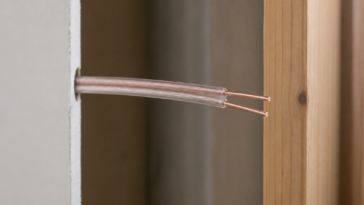
Wiring is first because it determines what options are realistic. If the existing cable run is limited and difficult to replace, the best path may be a station designed for that wiring rather than a feature-rich unit that demands a new cable pull.
Mounting is often overlooked until the installer reaches the wall. The old station may be flush-mounted in masonry, installed in a narrow mullion, or attached to a gate pedestal with a specific footprint. Even when electronics are compatible, the housing dimensions may create extra fabrication work.
Power requirements need a close look. A replacement that draws different voltage or current can create intermittent failures that look like camera or audio problems. The same applies to communication type. If the system expects a proprietary bus, standard analog or network hardware is not a drop-in substitute.
Door release also needs verification. Some stations trigger a simple electric strike relay. Others coordinate with maglocks, request-to-exit devices, gate operators, or access controllers. The relay rating, output type, and programming behavior should match the application.
Finally, think about how the site is used. A small office may only need one call button and clear two-way audio. A multi-tenant property may need directory support, multiple call destinations, and better visitor identification after dark. The right replacement should solve the operational need, not just restore basic power.
Video door station replacement in older buildings
Older properties create the most replacement challenges because the original system may have been installed decades ago, often with incomplete documentation. Apartment buildings are a common example. The entry station may be weathered, tenant turnover may have changed monitor conditions unit by unit, and maintenance staff may only know that “the front panel is bad.”
In these cases, replacing only the door station can be the right move if the rest of the system is healthy and supported. But there are times when a partial repair only delays a bigger problem. If indoor stations are failing, if video quality is poor throughout the building, or if parts have become inconsistent across phases of previous repairs, a more coordinated upgrade may save labor and repeat visits.
Commercial sites have a different pattern. The station may still work, but access requirements have changed. A business that once used the station only for visitor calls may now want camera verification, mobile answering, timed unlock schedules, or integration with existing access credentials. Here, replacement becomes part of a broader entry-control strategy.
Repair or replace depends on parts and downtime
Not every failed station needs full replacement. If the problem is limited to a speaker module, camera board, button assembly, or cosmetic vandal damage, a repair may be faster and more cost-effective. That is especially true when the station belongs to a larger installed base and replacing it would force programming changes or tenant coordination.
The problem is parts availability. Once a model is discontinued, repair can become unpredictable. Labor costs rise when technicians have to troubleshoot aging boards or search for hard-to-find modules. For sites where entry uptime matters, replacement often makes more commercial sense than repeatedly servicing obsolete equipment.
That is why buyers should weigh downtime as much as hardware price. A cheaper repair is not really cheaper if the entrance fails again in three months or if the property cannot secure the opening consistently.
How to avoid costly mismatches
The most expensive video door station replacement is the one that almost fits. It mounts after field modification, powers up, and then fails to communicate correctly with the monitor, release the lock reliably, or provide acceptable audio.
A better process is to collect the exact system information before ordering. Photos of the old station front and back, terminal labels, monitor model numbers, power supply details, and the lock hardware can answer most compatibility questions. For professional installers and property teams, that documentation saves truck rolls and return delays.
It also helps to be honest about whether the goal is like-for-like replacement or functional improvement. Those are different projects. If the site needs better video, added access features, or expansion to additional doors, it may be smarter to plan around the full system rather than force a legacy match.
For buyers working through that decision, an experienced distributor such as UnikCCTV can usually help narrow the field quickly because the discussion starts with system type, application, and compatibility, not just a product photo.
The right replacement keeps the whole entrance working
A door station sits at the front end of the entry system, but it affects everything behind it – communication, security, tenant access, staff workflow, and visitor control. The best replacement is the one that fits the site technically, installs cleanly, and supports how the building is actually used day to day.
If you are evaluating a failing station, gather the system details first. That extra step usually saves more time than any rush order ever will.
 No products in the cart.