
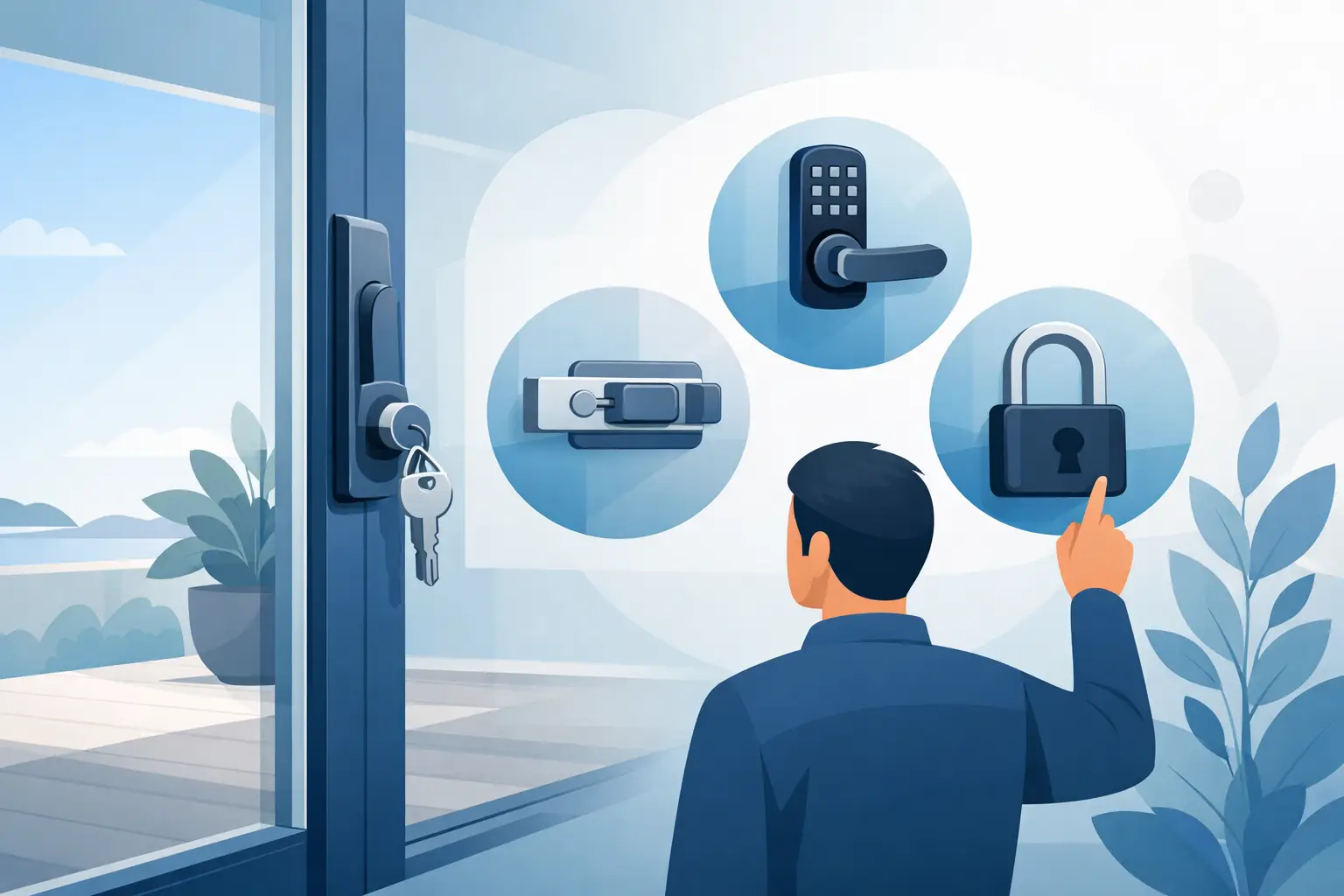
A sliding patio door that looks closed is not always secure. That gap between glass and frame, the condition of the latch, and the way the panel rides in the track all affect how much protection you actually have. When buyers start comparing sliding glass door locks, the real question is not just which lock fits the door – it is which lock fits the opening, the traffic level, and the security risk.
That matters in more places than a backyard patio. Sliding doors show up in apartment units, office break areas, schools, enclosed vestibules, and mixed-use properties. Some are lightly used residential openings. Others are high-cycle doors that need better hardware, better tamper resistance, and in some cases a way to coordinate with broader access-control planning.
What makes sliding glass door locks different
A swinging door locks into a jamb. A sliding door secures by preventing horizontal movement, lifting, or panel separation. That sounds simple, but it creates a different set of vulnerabilities. If the latch is weak, if the keeper is misaligned, or if the rollers allow too much play, the door may be forced open even when it appears locked.
The frame material also changes the hardware decision. Vinyl, aluminum, wood, and thermally broken commercial frames do not all accept the same mounting method or lock body dimensions. Door thickness, stile width, and the relationship between the active panel and fixed panel all need to be checked before selecting replacement hardware.
This is where many buyers lose time. They start with brand names or general lock styles, when the better starting point is the door itself – who made it, how the existing latch engages, and whether the issue is truly the lock or a worn track, bent keeper, or sagging panel.
The main types of sliding glass door locks
The most common option is the mortise-style latch used on many patio doors. This lock installs inside the door stile and works with an interior handle set and keeper. It is common because it is compact and clean, but replacement requires accurate measurements. The faceplate length, screw-hole spacing, backset, and hook configuration must match or be intentionally adapted.
Surface-mounted locks are another category. These are often used where the original hardware is damaged, where retrofitting is easier than cutting into the stile, or where secondary security is needed. They can be practical on older doors, though appearance and mounting strength depend heavily on the frame condition.
Then there are keyed systems and double-bolt or foot-bolt style add-ons. These are not always the primary locking mechanism, but they can improve resistance against forced movement. In a residential setting, a secondary lock can be a useful upgrade. In commercial or managed property environments, that decision depends on code considerations, emergency egress, and who controls the space.
Track locks and security bars also have a place, but they should be treated as supplemental hardware, not a substitute for a sound primary latch. They are inexpensive and fast to add, yet they do not correct alignment problems or degraded door hardware.
How to choose sliding glass door locks by application
For a single-family residence, the priority is usually straightforward – improve basic resistance to forced entry without creating a daily nuisance. Homeowners often want a lock that feels more substantial than the factory latch, especially on older patio doors. In that case, a properly matched replacement mortise lock plus a secondary security device often makes more sense than a cosmetic handle upgrade.
For apartments and multi-unit properties, consistency matters as much as lock strength. Property managers need replacement parts that can be identified, ordered, and installed without repeated guesswork. If a site has multiple door models, standardizing service parts where possible reduces maintenance friction. It also helps when turnover work has to happen quickly.
Commercial settings introduce another layer. A sliding glass opening in an office, leasing space, or enclosed access area may need hardware that tolerates higher use cycles and aligns with broader building security planning. That may include keyed access, monitored status, or coordination with nearby access-control devices. Not every sliding opening should be electrified, but every opening should be evaluated in context rather than treated like a residential patio door.
Schools and facilities managers usually focus on controlled use, durability, and serviceability. If a sliding door is part of a staff area, courtyard, or partitioned learning space, the lock needs to support the operating pattern of the site. A lock that is secure but constantly misused or propped open solves very little.
Fit first, then security level
The most secure lock on paper will fail in the field if the dimensions are wrong or the door is not mechanically sound. Start by checking the existing lock type, faceplate size, latch style, and keeper position. Measure carefully. If the lock engages poorly because the panel drags or the keeper sits too high, replacing hardware alone may not fix the problem.
Door condition is part of lock selection. Worn rollers, debris in the track, bent frames, and loose handles can all mimic lock failure. Installers know this, but end users often do not. If the panel has to be lifted, shoved, or pulled hard to engage the latch, the problem is larger than the lock body.
Security level should also match realistic exposure. A ground-floor residential patio door with limited visibility may justify a stronger secondary restraint than an interior sliding office partition. A managed property with recurring break-in concerns may need a more tamper-resistant hardware package and better inspection intervals, not just a quick replacement latch.
Common buying mistakes
One common mistake is ordering by appearance only. Many sliding door handle sets look similar from the room side, but the internal lock dimensions vary. A visible match does not guarantee a functional match.
Another mistake is ignoring handedness and latch style. Some hooks are designed differently, and keeper compatibility is not universal. If the hook profile does not engage correctly, the lock may partially catch but fail under pressure.
A third issue is treating secondary devices as the whole solution. A bar in the track can help, but if the primary latch is damaged, the keeper is loose, or the panel can be lifted, the opening still has weaknesses. Good security on a sliding door is usually layered.
The last major mistake is overlooking life safety. In some occupancies, adding keyed hardware or nonstandard restraints to a sliding glass door can create egress problems. That is especially important in commercial, educational, and managed residential settings where codes and operational policies matter.
Installation and maintenance realities
Sliding glass door locks do not operate in isolation. They depend on alignment, panel movement, and keeper engagement. That means installation should include more than swapping parts. Check roller condition, clean the track, confirm that fasteners are holding in sound material, and test engagement under normal door movement.
Maintenance is not complicated, but it is often skipped. Doors exposed to weather, dust, or frequent use can drift out of adjustment over time. If a lock starts requiring extra force, address it early. What begins as stiffness often becomes bent hardware, stripped screws, or a failed keeper.
For property managers and service teams, this is where having a reliable source for replacement parts matters. Identifying the right hardware quickly saves labor, reduces return visits, and avoids installing temporary fixes that create another service call later. That practical support model is one reason professionals work with specialized suppliers like UnikCCTV instead of trying to piece together door security hardware from generic retail channels.
When to upgrade instead of replace
If the existing door is structurally sound and the hardware is simply worn out, replacement is usually enough. If the opening has repeated failures, visible frame wear, loose mounting points, or poor original hardware, an upgrade is the better move.
An upgrade may mean a better mortise lock, a reinforced keeper, a secondary lock, or a more serviceable hardware set with stronger components. In higher-risk environments, it may also mean looking beyond the lock itself and reviewing lighting, surveillance coverage, door contact monitoring, and access procedures around the opening.
That broader view is often the difference between buying a part and solving a security problem. A sliding glass door is a system made up of glass, frame, rollers, latch, keeper, and user behavior. The lock is central, but it is not the whole story.
The best sliding glass door locks are the ones that fit the door correctly, hold up to the way the space is actually used, and support the level of control the property requires. If you start with those three factors, you are far more likely to end up with hardware that works in the field instead of just looking right in the box.

 No products in the cart.