
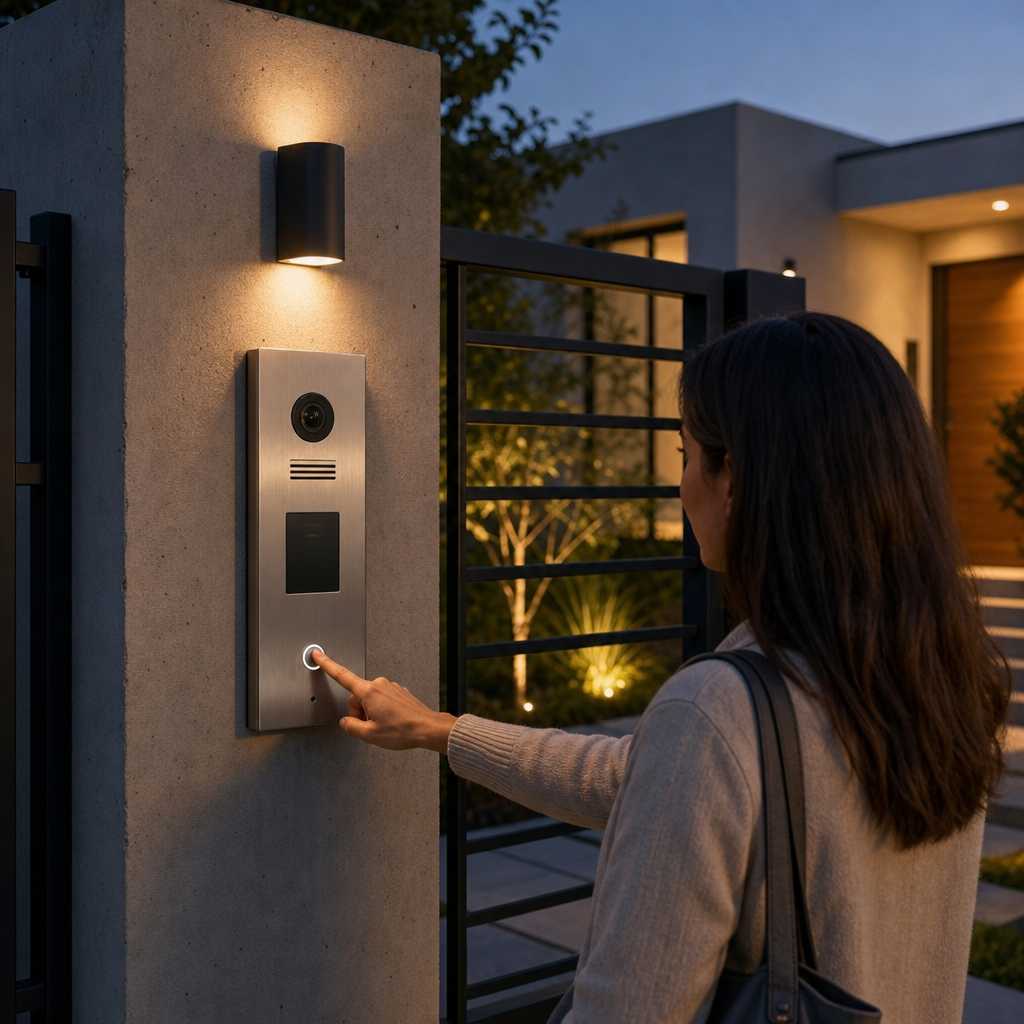
Choosing between a gate intercom system and a video entry system is not a trivial decision. The wrong choice costs you money, creates security gaps, and frustrates residents or staff every single day. Property managers running multi-tenant buildings report that poorly chosen entry systems are among the top three sources of tenant complaints. This guide breaks down exactly how these two categories of gate entry systems differ, where each one excels, and what specific property types should be installing what. No hedging, no generic advice – just a direct comparison grounded in real deployment scenarios.
Table of Contents
- Quick Takeaways
- What Is a Gate Intercom System?
- What Is a Video Entry System?
- Key Differences That Actually Matter
- Comparison Table: Gate Intercom vs Video Entry
- Which Property Types Need Which System?
- Gate Keypad Access and Hybrid Solutions
- Installation and Total Cost of Ownership
- Property Security Outcomes: What the Data Shows
- Frequently Asked Questions
- References
Quick Takeaways
| Key Insight | Explanation |
|---|---|
| Audio-only intercoms are sufficient for low-traffic single-family gates | If your gate serves one household and visitors are pre-screened by phone, a standard audio intercom handles the job at a fraction of the cost of a video system. |
| Video entry is non-negotiable for multi-tenant residential buildings | Tenants cannot be expected to buzz in visitors without visual confirmation. Buildings with video door entry report significantly fewer unauthorized access incidents. |
| Gate keypad access alone is not a security solution | A keypad without intercom or camera backup creates a single point of failure. Shared PIN codes leak within weeks in most residential settings. |
| Wireless intercom systems reduce installation costs by 30-50% in retrofit projects | Running new cable through finished walls or long driveways is expensive. Wireless transmitters eliminate that cost while maintaining reliable communication. |
| Facial recognition and biometric access pairs best with video entry systems | Biometric locks require a camera-capable front end to function. An audio-only intercom cannot support facial recognition gate access. |
| IP-based video entry systems allow remote management across multiple properties | Facility operators managing more than one site benefit from cloud-connected video entry that lets them grant or deny access remotely without being on-site. |
| Hybrid systems combining video entry with gate keypad access deliver the best coverage | Keypad entry for known users, video intercom for visitors, and CCTV backup for incidents creates a layered property security architecture that holds up under scrutiny. |
What Is a Gate Intercom System?

A gate intercom system is a two-way communication device installed at a gate or perimeter entry point that allows a visitor to announce their presence and receive a voice response from an occupant or operator. The occupant can then trigger an electric gate release or door strike without physically approaching the entry point. Traditional gate intercoms are audio-only and operate over a wired connection between the gate panel and an indoor receiver unit.
In practice, audio gate intercoms have been the backbone of residential and commercial entry control for decades. They are reliable, straightforward, and cost-effective when visual identification is not required. Where they fall short is in scenarios where occupants cannot verify who is actually speaking – a legitimate concern in higher-density or higher-risk properties.
Modern gate intercom systems from providers like UnikCCTV now include wireless intercom options that use radio frequency or Wi-Fi transmission, eliminating the need for buried cable runs on long driveways or large commercial sites. This matters significantly for retrofit installations where trenching costs would otherwise make the project uneconomical.
What Is a Video Entry System?
A video entry system adds a camera to the intercom equation. The visitor still presses a call button, but the occupant now receives both audio and a live video feed of whoever is standing at the gate or door. The occupant can see, speak, and release the lock or gate from a monitor, a dedicated handset, or increasingly, a smartphone app.
Door video entry has become the standard expectation in apartment buildings, gated communities, and commercial office lobbies. The visual confirmation component fundamentally changes the access decision – an occupant who can see a delivery driver’s uniform and vehicle is far more likely to grant access confidently than one relying on voice alone.
Video entry systems also create a visual record. Even without a separate CCTV system, a video intercom that stores call snapshots provides basic forensic capability – you know who rang the bell and when. This passive documentation is a meaningful property security asset that audio-only intercoms simply cannot provide.
Key Differences That Actually Matter
The marketing around both categories tends to blur the real distinctions. Here is what actually separates these two system types when you move past the spec sheets.
Visitor Verification Capability
Audio intercoms require occupants to make access decisions based on voice alone. This works when your visitor list is small and familiar. It fails when you have a building with hundreds of tenants, delivery traffic, maintenance personnel, and strangers who have been given access codes by other residents. Video entry creates an identification layer that audio cannot replicate.
A common mistake is assuming that a strong gate keypad access PIN eliminates the need for visual verification. Codes get shared. A video entry system catches cases where someone is using a legitimate code but is not an authorized user – particularly relevant for apartment complexes and commercial facilities with shift changes.
System Integration Depth
Video entry systems integrate naturally with CCTV camera networks, access control platforms, and facial recognition hardware. Audio intercoms integrate primarily with electric lock releases and gate operators. If your property security roadmap includes biometric access, time attendance logging, or centralized access management, video entry is the only viable starting point.
UnikCCTV’s product range illustrates this clearly. Their biometric access systems and facial recognition locks require a camera-enabled entry point to function at all. Pairing a biometric reader with an audio-only intercom creates a hardware mismatch that no amount of configuration can fix.
Remote Access Management
IP-based video entry systems allow property managers and facility operators to manage gate and door access remotely through a web interface or mobile application. Audio intercoms, even modern ones, typically require someone to be physically present at the indoor receiver to grant access. For a property manager overseeing multiple sites, that distinction determines whether remote management is operationally possible at all.
Comparison Table: Gate Intercom vs Video Entry
The table below compares three specific configurations that property managers and homeowners commonly consider when evaluating gate entry systems for their properties.
| Feature | Audio Gate Intercom System | Video Door Entry System | Hybrid: Video Entry + Gate Keypad Access |
|---|---|---|---|
| Visitor Identification | Voice only | Visual and voice | Visual, voice, and credential-based |
| Remote Access Granting | Limited (requires indoor unit) | Yes, via app on IP systems | Yes, plus keypad self-service for known users |
| Biometric Integration | Not supported | Supported (facial recognition capable) | Fully supported |
| Installation Cost | Low to moderate | Moderate to high | High (but best ROI for multi-tenant or commercial) |
| Best For | Single-family homes, small offices | Apartments, commercial buildings, gated communities | Large residential complexes, warehouses, campuses |
| Access Logging | None (standard units) | Call snapshots and event logs | Full audit trail with user and timestamp data |
| Maintenance Complexity | Low | Moderate | Moderate to high |
Which Property Types Need Which System?
The data consistently shows that property type is the single most reliable predictor of which gate entry system will perform well. Budget matters, but deploying the wrong category of system on the right budget still produces a poor outcome.
Single-Family Residential Properties
For a standalone home with a driveway gate, a wireless audio intercom system is often the most practical and cost-justified solution. Visitor traffic is low, residents know most of their visitors by voice, and the operational overhead of a video system may exceed the actual security benefit.
That said, homeowners who regularly deal with package deliveries, contractors, or household staff benefit meaningfully from a video entry system. The ability to see who is at the gate before releasing it – and to do so from a phone while away from home – is a genuine quality-of-life and security improvement for these use cases.
Multi-Tenant Residential Buildings and Apartment Complexes
This is where video entry systems are not optional – they are the only responsible choice. Tenants in a shared building should not be expected to make access decisions for the entire property based on a voice exchange. A video intercom at the front gate or lobby door, integrated with individual unit call buttons, provides each tenant with visual confirmation before they release the common entrance.
Multi-tenant intercom systems from UnikCCTV support exactly this architecture, with panel units at the entrance connected to individual apartment monitors or tenant smartphones. This setup reduces unauthorized access incidents while giving property managers a centralized platform for managing tenant access credentials.
Commercial Facilities, Warehouses, and Office Buildings
Commercial properties typically need both visitor management and employee access control running simultaneously. A gate keypad access system handles routine employee entry efficiently. A video entry component handles visitor and vendor access with visual verification. CCTV integration documents everything. This is not overengineering – it is the minimum viable security architecture for any site with more than 20 regular users.

Gate Keypad Access and Hybrid Solutions
Gate keypad access is frequently misunderstood as a standalone security solution. It is not. A keypad provides convenience and basic access control, but it does not verify identity – it only verifies that someone has the correct code or credential. The moment a code is shared outside its intended user group, the keypad provides no meaningful security barrier.
When Keypads Work Well
Keypads work extremely well as the secondary access method in a hybrid system. Regular employees or residents use their PIN or card credential to enter without triggering a full intercom call. Visitors and unknown parties go through the video intercom workflow. This reduces call volume to the management office or individual units while maintaining visual verification for unfamiliar visitors.
Pro tip: Set keypad PINs to expire on a 90-day cycle for commercial properties. Expired codes from terminated employees or former contractors are one of the most common access control vulnerabilities in facilities with staff turnover.
Biometric and Smart Lock Integration
Facial recognition locks and biometric readers represent the most secure form of gate keypad alternative. Unlike PINs, biometric credentials cannot be shared, forgotten, or stolen in the traditional sense. UnikCCTV’s biometric and facial recognition product lines are designed to operate as the primary access credential at a gate or door entry point, with video entry serving as the visitor management layer alongside them.
The combination of facial recognition at the primary entry and video intercom for visitor calls creates a layered access environment that addresses both the routine access and the visitor management scenarios without compromise.
Installation and Total Cost of Ownership
Installation cost is where many property owners make decisions they regret. The upfront price of an audio intercom looks attractive until you account for the cost of replacing it with a video system two years later when tenant complaints or a security incident makes the upgrade unavoidable.
Wired vs Wireless Installation
Wired systems are more reliable and preferred for permanent installations in new construction. The cable run from gate to building is a fixed infrastructure investment that lasts the life of the system. On existing properties, however, trenching a cable run across a 200-foot driveway or through finished common areas can add $1,500 to $4,000 to installation costs depending on site conditions.
Wireless intercom systems using RF or Wi-Fi transmission eliminate that cable run entirely. In practice, this makes wireless the default recommendation for retrofit projects on existing properties, particularly for residential homes and small commercial sites where the infrastructure investment is hard to justify.
Ongoing Maintenance and Upgrade Path
IP-based video entry systems built on open standards are significantly easier to upgrade incrementally. You can add a camera module, expand to additional entry points, or integrate with a new access control platform without replacing the entire system. Proprietary systems from some competitors lock you into their ecosystem and their pricing for every subsequent upgrade.
“Access control failures are rarely about the technology itself. They are almost always about deploying a system that was appropriate for a different property type or a different threat model.” – Security Industry Association, Best Practices for Electronic Access Control
Pro tip: When budgeting for a video entry system, add 20% to the hardware cost for installation and commissioning, and budget for annual firmware updates or subscription costs if the system uses cloud-based access management. Many property managers underestimate the total cost of ownership by ignoring these ongoing expenses.
Property Security Outcomes: What the Data Shows
According to the Electronic Security Association, properties with monitored access control systems experience 60% fewer unauthorized entry incidents than those relying on locks alone. The addition of video entry specifically has been shown to reduce tailgating incidents – where unauthorized individuals follow authorized ones through a gate – by creating a visual deterrent and audit trail that discourages opportunistic intrusion.
The FBI’s Uniform Crime Report consistently notes that residential burglary targets properties with visible access vulnerabilities. A gate intercom system signals occupancy and active monitoring, which is itself a deterrent. A video entry system with visible camera hardware amplifies that deterrent effect significantly, particularly when combined with exterior CCTV signage.
For commercial properties, access logging from gate entry systems provides documentation that is increasingly required for insurance purposes and for regulatory compliance in sectors like healthcare, finance, and education. An audio-only intercom that leaves no access log fails this requirement entirely, creating liability exposure that property owners in these sectors cannot afford to ignore.
Frequently Asked Questions
What is the main difference between a gate intercom system and a video entry system?
A gate intercom system uses audio-only two-way communication between the visitor at the gate and the occupant inside, while a video entry system adds a live camera feed so the occupant can see the visitor before deciding to grant access. Video entry systems also typically include access logging and smartphone remote access features that audio intercoms do not provide.
Can I upgrade my existing audio gate intercom to a video entry system without replacing the entire installation?
It depends on the existing wiring and panel configuration. Some audio intercom systems can have a camera module added to the outdoor panel, while others require a full replacement. Wireless video intercom systems are often the most practical retrofit option because they do not require existing cable infrastructure. UnikCCTV’s range of wireless intercom and video entry products is specifically designed to minimize installation disruption on existing properties.
Is gate keypad access secure enough on its own for a small commercial building?
No. A keypad alone is not adequate security for a commercial property. PIN codes get shared among employees, leaked to former staff, or simply observed by someone watching from nearby. A keypad should always be paired with either a video entry system for visitor management or a biometric reader that verifies the identity of the credential holder rather than just confirming they know a number.
How does a video entry system support remote property management across multiple sites?
IP-based video entry systems connect to cloud platforms or local network servers that facility operators can access from any location via web browser or mobile app. A property manager overseeing multiple buildings can review access events, grant temporary visitor access, and troubleshoot entry issues remotely without visiting each site. This is a major operational advantage over traditional audio intercom systems that require physical presence at the indoor receiver to function.
What is the best gate entry system for an apartment building with 50 or more units?
A multi-tenant video intercom system with a lobby panel, individual unit call capability, and smartphone integration is the right baseline for a building of that size. Adding gate keypad access or a smart card reader for residents eliminates the need for residents to use the intercom for their own daily entry, reducing call volume and improving convenience. Biometric readers at the main gate provide the highest level of access control for buildings where security is a priority.
Do wireless gate intercom systems have the same reliability as wired systems?
Modern wireless intercom systems using dedicated RF channels or enterprise Wi-Fi operate reliably in most residential and commercial environments. Signal interference is a real consideration in dense urban areas or properties with thick concrete construction, but current wireless intercom hardware from reputable suppliers includes frequency-hopping and signal redundancy features that address most interference scenarios. For mission-critical applications in large commercial facilities, wired systems remain the more robust choice for primary entry points.
How does facial recognition gate access compare to keypad access in terms of security?
Facial recognition access is significantly more secure than keypad access because the credential is biometric – it cannot be shared, written down, or passed to an unauthorized user. The tradeoff is higher upfront hardware cost and the need for proper lighting and camera positioning to ensure reliable recognition. For high-traffic commercial entrances or residential buildings with persistent unauthorized access issues, the security improvement justifies the additional investment.
If you are currently evaluating gate intercom systems or video entry solutions for your property, share what specific challenge is driving the decision in the comments below – whether it is managing visitor traffic, dealing with access code sharing, or planning a full security upgrade, the specifics shape which system architecture will actually solve your problem.
We would love your feedback and any insights you would share with others. What perspective would you add?
References
- Statista: Security industry market data and access control technology adoption statistics
- Forbes: Property security technology investment trends and smart building access control coverage
- NIST: Federal guidelines on physical access control systems and electronic entry security standards
- FBI: Uniform Crime Report data on residential and commercial property intrusion statistics
- Ahrefs Blog: Research and data on property security and smart home technology search behavior trends

 No products in the cart.