
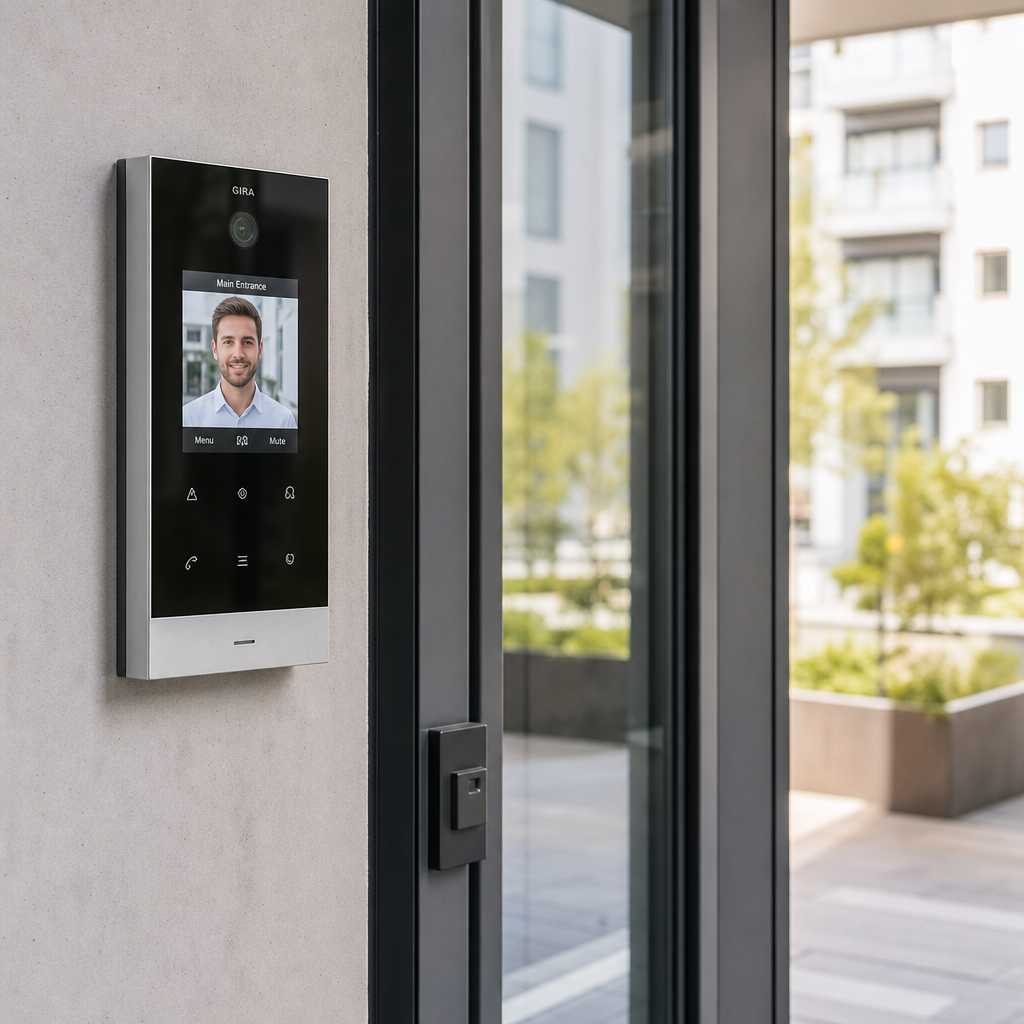
Most property managers and homeowners shopping for a door entry system walk into this decision backwards. They compare prices first and figure out the technology second. That approach almost always leads to a system that either underperforms or costs far more to maintain than expected. Choosing between an IP intercom system and an analog intercom is a foundational decision that affects installation complexity, long-term scalability, remote access capability, and total cost of ownership. This guide gives you the direct comparison you need to make the right call for your specific property.
Table of Contents
- What Is an IP Intercom System?
- What Is an Analog Intercom?
- Quick Takeaways
- Key Technical Differences Between IP and Analog Intercoms
- Video Intercom System Capabilities: IP vs. Analog
- Installation and Wiring Requirements
- Cost Comparison: Upfront vs. Long-Term
- Best Use Cases by Property Type
- Integration with Access Control, Smart Locks, and CCTV
- Side-by-Side Comparison Table
- Frequently Asked Questions
- References
What Is an IP Intercom System?

An IP intercom system transmits audio and video data over an Internet Protocol network, the same infrastructure used for standard computer networking and internet connectivity. It uses your existing Ethernet cables or Wi-Fi to carry communication signals between door stations and indoor monitors or smartphones.
Because it runs over IP, every device on the network has a unique address. This means a single system can support dozens of entry points, hundreds of apartments, and remote access from anywhere in the world through a mobile app. In practice, this architecture is what makes IP intercoms genuinely scalable rather than just theoretically expandable.
Modern IP intercoms also support SIP (Session Initiation Protocol), which means they can integrate with existing VoIP phone systems. For commercial buildings and multi-tenant properties, that compatibility eliminates a separate phone line cost entirely.
What Is an Analog Intercom?
An analog intercom sends audio and video signals over dedicated copper wiring using traditional electrical signals rather than data packets. Each station is hardwired directly to a central control unit or to the indoor handset it serves. The system is self-contained and does not require a network connection to operate.
Analog systems have been the default for residential buildings and gated communities for decades. The technology is proven, the hardware is straightforward, and any experienced electrician can install or service one without specialized IT knowledge.
The limitation is structural. Adding a new entry point, extending coverage to a new floor, or enabling remote access all require physical rewiring. There is no software update that changes this. The ceiling on what an analog system can do is built into the cable runs themselves.
Quick Takeaways
| Key Insight | Explanation |
|---|---|
| IP intercoms run on your existing network | No need for dedicated copper wiring runs. A PoE switch and Cat5e or Cat6 cable are sufficient for most installations. |
| Analog intercoms have zero network dependency | They work during internet outages and are immune to cyberattacks, making them a reliable fallback for critical entry points. |
| Video quality is not comparable | IP video intercom systems routinely deliver 1080p or 2MP resolution. Most analog video intercoms top out at 420 to 700 TV lines, roughly equivalent to standard definition. |
| Remote access is exclusive to IP systems | Analog intercoms cannot natively support smartphone apps or remote door release. IP systems do this out of the box. |
| Analog is cheaper to install in small, static properties | For a single-family home with one entry point, analog wiring costs less than deploying a full IP network infrastructure. |
| IP systems integrate with biometrics and CCTV | An IP intercom can share a network with facial recognition access systems, smart locks, and NVR-based CCTV, creating a unified security platform. |
| Scalability favors IP by a wide margin | Adding a new entry station to an IP system is a software and short cable task. Adding one to an analog system may require running new wire across the building. |
Key Technical Differences Between IP and Analog Intercoms
The core difference between these two technologies is not just how they look on the wall. It is how they transmit, process, and store information. Understanding this distinction protects you from buying a system that cannot grow with your property.
Signal Transmission and Network Architecture
Analog intercoms use point-to-point electrical signals. Every connection requires a physical wire run between two specific endpoints. IP intercoms use packet-based data transmission over a shared network, meaning one cable run to a network switch can serve many devices simultaneously.
In practice, this means an IP system installed in a 50-unit apartment building uses a fraction of the cabling an analog system would require. According to a 2023 infrastructure analysis published by industry research groups, IP-based building communication systems reduce cabling labor costs by 30 to 45 percent in multi-unit deployments compared to equivalent analog installations.
Power Delivery
IP door stations typically receive power through Power over Ethernet (PoE), which delivers both data and electrical power through a single Cat5e or Cat6 cable. This eliminates the need for a separate power supply at each door station. Analog systems require a separate low-voltage power wire to each unit, adding material and labor to every installation.
Pro tip: When evaluating IP intercom hardware for a multi-entry property, confirm that the door stations are PoE-compatible at 802.3af or 802.3at standard. This determines which PoE switches you need and directly affects your infrastructure budget.
Video Intercom System Capabilities: IP vs. Analog
If you are comparing a video intercom system in either category, the resolution gap is the most immediate practical difference. IP video intercoms deliver digital video streams, typically at 1080p Full HD or higher. Analog video intercoms deliver composite video signals measured in TV lines (TVL), with most residential-grade units offering 420 to 600 TVL, which is noticeably blurry by modern standards.
Night Vision and Wide-Angle Coverage
IP door cameras routinely include infrared night vision and wide-angle lenses at 120 to 180 degrees. High-end analog video intercoms do offer IR night vision, but the fixed-resolution limitation of the signal format makes low-light footage significantly less useful for identification purposes.
For apartment buildings and commercial properties where tenant security and liability documentation matter, the image quality difference is not cosmetic. It is the difference between footage that clearly identifies a visitor and footage that shows a blurry silhouette.
Recording and Storage
IP intercoms can record visitor snapshots or video clips directly to a connected NVR (Network Video Recorder), cloud storage, or a local SD card. A common mistake with analog video intercoms is assuming they automatically record. Most do not. Adding recording capability to an analog system requires a separate DVR and additional wiring, which often costs more than the intercom itself.
“The shift from analog to IP in building communication mirrors exactly what happened in CCTV surveillance a decade ago. Properties that held onto analog longer than necessary paid for it twice: once in missed functionality and again in rip-and-replace costs.” – Security Industry Association, Building Technology Trends Report
Installation and Wiring Requirements
This is where the analog vs. IP decision gets practical for property managers who are managing real budgets and real timelines. Neither system is universally easier to install. The answer depends on what infrastructure already exists at your property.
New Construction and Gut Renovations
For properties being built from scratch or undergoing a full renovation with walls open, IP intercom installation is straightforward. You run Cat5e or Cat6 from a central network closet to each entry point. The same cable run that serves your IP cameras can serve your intercom door stations. There is no duplication of effort.
Retrofit Installations in Existing Buildings
Retrofitting an IP system into a finished building requires either running new Ethernet cable or using a powerline adapter or Wi-Fi extension where cable runs are not feasible. Analog systems can sometimes reuse existing two-wire telephone wiring, which gives them a retrofitting advantage in older residential buildings that still have legacy phone infrastructure in place.
Pro tip: Before committing to either system for a retrofit project, have a technician map your existing wiring. Properties built before 2000 often have usable two-wire runs that support certain analog intercom systems without any new cabling. Properties built after 2010 are likely to already have Cat5e or Cat6 in place, making IP the default practical choice.
Cost Comparison: Upfront vs. Long-Term
The upfront hardware cost for a basic analog intercom system is lower than a comparable IP intercom system. A single-family home analog intercom with one door station and one indoor monitor can be sourced and installed for $150 to $400 all in. An entry-level IP intercom system for the same application typically runs $300 to $700 installed, depending on whether the property already has network infrastructure.
The long-term picture reverses this comparison for any property with more than one entry point or any expectation of future expansion. Every analog expansion requires physical rewiring. Every IP expansion requires a short cable run to the nearest switch and a software configuration. Over five years, the maintenance and expansion cost differential in a 20-unit apartment building routinely reaches four to five figures in favor of IP.
There is also a hidden cost in analog: technician dependency. Analog systems require a specialized AV or low-voltage technician for every repair. IP systems can often be diagnosed and partly resolved remotely, which reduces service call frequency and cost significantly.

Best Use Cases by Property Type
The right system depends on property size, existing infrastructure, and how the property is managed. Below is a direct breakdown based on real-world deployment patterns.
Single-Family Homes
Analog intercoms remain a reasonable choice for single-family homes with one or two entry points, no plans to expand, and no need for remote access. If the homeowner travels frequently or wants to manage deliveries and visitors from a smartphone, an IP intercom system is clearly the better fit. The premium is modest at this scale and the functionality gain is immediate.
Apartment Buildings and Multi-Tenant Properties
IP is the correct choice for multi-tenant buildings, full stop. The ability to assign individual tenant credentials, send visitor calls directly to a resident’s smartphone, generate access logs, and manage the system remotely from a central dashboard makes analog look like the wrong tool entirely at this scale. Property managers who oversee multiple sites benefit especially from IP systems because the entire access management process can be handled without a physical site visit.
Commercial Office Buildings
Commercial properties typically require integration between the intercom, access control panels, biometric readers, and CCTV cameras. IP intercom systems connect to all of these through the same network. Analog systems require separate control infrastructure for each component, which multiplies both installation cost and ongoing maintenance complexity.
Gated Communities and Large Campuses
For gated communities or large industrial or educational campuses with multiple vehicle and pedestrian entry points, IP is the only architecture that scales without prohibitive rewiring costs. A gated community with four entry gates managed by an analog system requires four independent wiring runs to a central office. An IP system uses the same network switch that handles every other connected device on the property.
Integration with Access Control, Smart Locks, and CCTV
This is the area where IP intercoms pull decisively ahead of analog for any property owner who thinks about security as a system rather than a collection of independent devices. IP intercom systems share a common network protocol with smart locks, biometric access systems, facial recognition terminals, and NVR-based CCTV cameras. That shared protocol enables genuine integration: one platform, one access log, one remote management interface.
At UnikCCTV, customers can pair an IP intercom door station with biometric access readers, time attendance systems, and IP CCTV cameras into a single unified security infrastructure. The result is that a visitor’s entry attempt is simultaneously captured as a video snapshot, logged in the access control system, and can trigger a smart lock release, all from one coordinated platform.
Analog intercoms exist in isolation. You can add a CCTV camera nearby, but the camera and the intercom operate on completely separate systems with no shared logging, no coordinated response, and no unified management. For a homeowner with a single door, this may be acceptable. For a facility manager responsible for a 200-person office building or a 60-unit apartment complex, that isolation is a genuine operational liability.
Side-by-Side Comparison Table
| Feature | IP Intercom System | Analog Intercom |
|---|---|---|
| Video Quality | 1080p Full HD or higher (up to 4MP on premium models) | 420 to 700 TVL, equivalent to standard definition |
| Remote Access via Smartphone | Yes, native app support on most models | No, requires additional third-party gateway hardware |
| Scalability | High: add stations via network switch, minimal new cable | Low: every new station requires a dedicated wire run |
| CCTV and Access Control Integration | Full integration via shared IP network | Limited, requires separate parallel infrastructure |
| Power Supply | PoE (single cable for power and data) | Dedicated low-voltage power wiring required |
| Network Dependency | Requires network infrastructure to function | Fully standalone, no network required |
| Upfront Cost (single entry point) | $300 to $700 installed | $150 to $400 installed |
| Best For | Apartments, commercial buildings, gated communities, smart homes | Single-family homes, static low-complexity entries, budget retrofits |
Frequently Asked Questions
Can an IP intercom system work without internet access?
Yes, with an important distinction. An IP intercom communicates over a local area network (LAN), not necessarily over the internet. It will function normally for calls between the door station and indoor monitors as long as both are on the same local network. Remote access via smartphone and cloud-based features do require an active internet connection. If your building’s internet goes down, local door-to-monitor communication continues uninterrupted.
Is it possible to upgrade an existing analog intercom system to IP?
In most cases, yes, but it is effectively a replacement rather than an upgrade. The analog wiring, control unit, and indoor monitors are not compatible with IP protocols. You would install new IP door stations, replace indoor monitors with IP units or configure a smartphone app, and connect everything to your existing network. The good news is that if your building already has Ethernet infrastructure, the new installation cost is primarily hardware, not labor-intensive rewiring.
What is the difference between a video intercom system and a standard audio-only intercom?
A standard audio intercom transmits voice communication only between the door station and the indoor unit. A video intercom system adds a camera at the door station that streams live video to the indoor monitor or smartphone so you can see the visitor before releasing the door. For security purposes, video is strongly recommended over audio-only, especially for multi-tenant and commercial properties where identifying visitors before entry is a baseline safety requirement.
How many entry points can a single IP intercom system support?
This depends on the specific system architecture, but commercial-grade IP intercom platforms routinely support 500 to 1,000 or more door stations on a single system, with individual tenant or unit assignments, access logs, and remote management for each. Entry-level IP systems designed for small office or residential use typically support 4 to 32 stations. The scalability ceiling for analog systems is typically 32 stations maximum, and reaching even that figure requires extensive cabling infrastructure.
Do IP intercoms require ongoing subscription fees?
Some IP intercom brands, particularly those marketed as cloud-managed smart building platforms, do charge monthly or annual subscription fees for remote access, cloud storage, or advanced management features. However, many commercial-grade IP intercom systems, including those available through UnikCCTV, operate entirely on your local network without mandatory subscriptions. Cloud features may be optional add-ons. Always confirm the licensing model before purchasing, particularly for large deployments where per-unit subscription fees can compound significantly over time.
Can an IP intercom integrate with biometric access control systems?
Yes, and this is one of the strongest arguments for choosing IP for any property beyond a basic single-family home. IP intercoms and biometric access systems, including fingerprint readers, facial recognition terminals, and card-based systems, share the same IP network infrastructure. They can be managed from a unified platform, share a common access log, and trigger coordinated responses such as unlocking a door when a facial recognition match is confirmed. This level of integration is simply not available with analog intercom systems without expensive and complicated middleware hardware.
Have you recently replaced an analog intercom with an IP system, or are you weighing this decision right now for your property? Share what factors matter most to you in the comments below.
References
- Forbes coverage of smart building technology trends and IP-based security infrastructure investment
- Statista data on global access control and video intercom market size and growth projections
- NIST guidelines on physical access control systems and network security standards for IP-connected devices
- U.S. Department of Energy resources on building automation and integrated security systems for commercial facilities
- Ahrefs analysis of search behavior around home security and access control technology research patterns

 No products in the cart.