
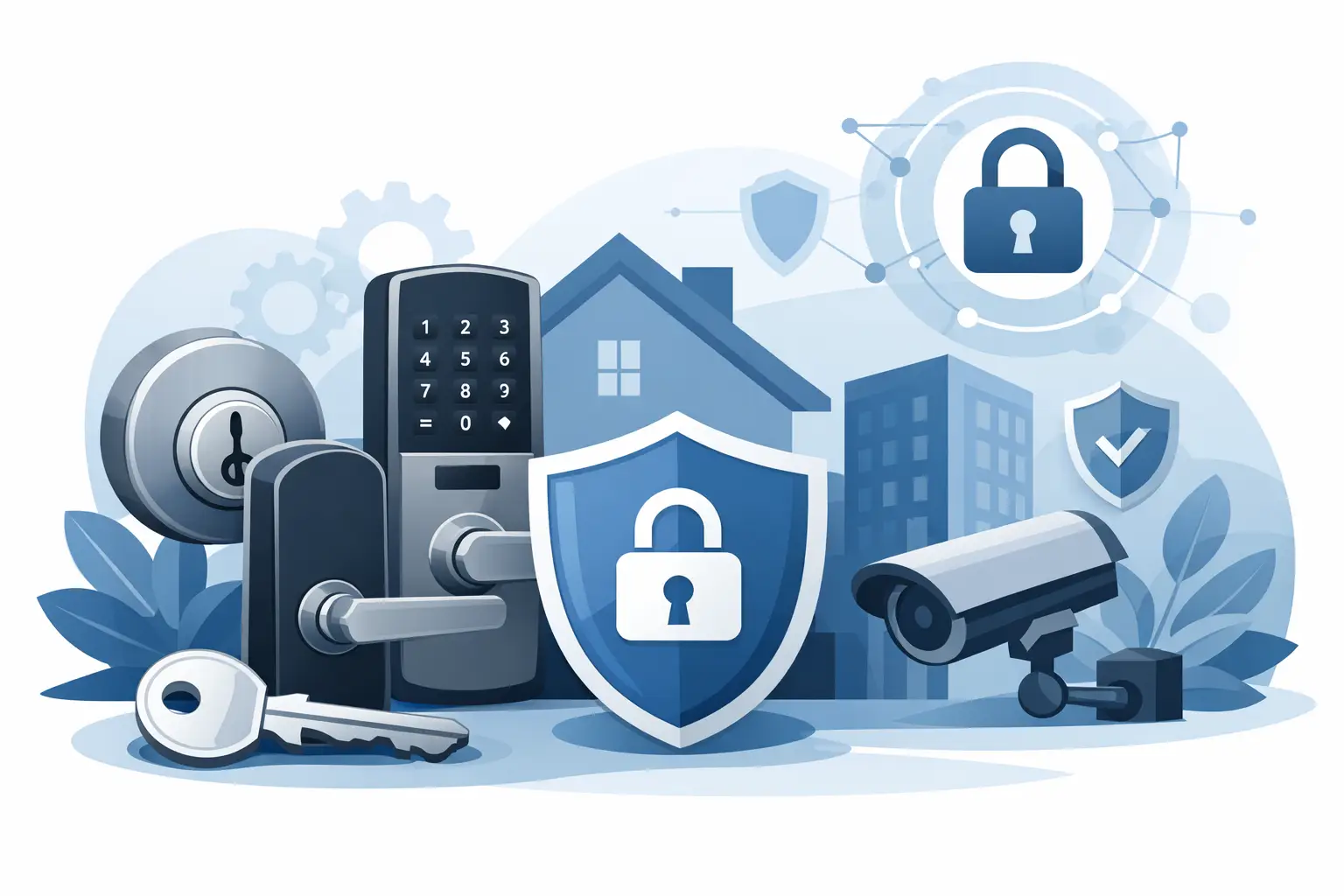
A lock failure rarely happens at a convenient time. It shows up as a tenant locked out at 6 a.m., a side office that never latches properly, a gate that needs controlled access, or a school door that must stay secure without slowing authorized entry. That is why door locks should be chosen as part of a working security plan, not as an afterthought at the end of a project.
For professional buyers, property managers, and serious end users, the right lock is less about shelf appeal and more about matching hardware to traffic, door construction, code requirements, user behavior, and the rest of the access setup. A good-looking lock that does not fit the opening, the credential method, or the duty cycle will create service calls fast. A properly matched lock tends to disappear into daily operation, which is exactly what most facilities want.
What door locks actually need to do
At a basic level, door locks control who enters, when they enter, and how that access is managed over time. In the field, that can mean very different things. A storefront may need free egress from the inside, scheduled access for staff, and audit visibility. An apartment building may need unit privacy, common-door access, and compatibility with intercom or vestibule entry hardware. A warehouse may need stronger perimeter protection at a hollow metal door while also giving staff a fast way out during an emergency.
This is where buyers sometimes oversimplify the category. The question is not just, “Do I need a lock?” The question is whether the opening needs keyed access, keypad control, card or fob credentials, remote release, fail safe or fail secure behavior, or integration with a door closer, exit device, intercom, or access controller. Each choice affects installation, user management, and long-term maintenance.
Mechanical vs electronic door locks
Mechanical locks still make sense in a wide range of openings. They are familiar, cost-effective, and often easier to service in smaller properties or standalone applications. Cylindrical locks, mortise locks, deadbolts, and narrow stile options all have their place depending on the door type and use level. For low-complexity access points, mechanical hardware can be the right answer.
Electronic door locks add control that mechanical hardware cannot offer on its own. That includes credential-based entry, timed schedules, remote release, audit trails, and easier changes when users come and go. In offices, schools, multifamily buildings, and managed commercial sites, that flexibility usually becomes the deciding factor. If a key is lost in a purely mechanical system, rekeying may be necessary. In an electronic environment, a credential can often be deleted and replaced with less disruption.
The trade-off is that electronic locks require more planning. Power, wiring path, controller compatibility, credential type, weather exposure, and door condition all matter. Wireless options can reduce labor in some retrofit situations, but they are not automatically the best choice for every opening. High-traffic or high-security doors often justify a harder-wired approach.
Where mechanical hardware is still the better fit
Not every opening benefits from electronics. A low-use storage room, a single interior office, or a basic residential side door may be better served by quality mechanical hardware. Simpler hardware can mean fewer failure points and easier service, especially where remote management is not needed.
That said, “simpler” should not mean underspecified. Grade, latch strength, cylinder quality, handing, and door material still matter. A cheap lock on a busy opening usually turns into a replacement job, not a savings.
Where electronic locking earns its cost
Electronic locking is usually justified when access changes often, multiple users need credentials, or an opening is tied to an intercom or access-control system. Apartment common doors, office entries, school doors, and gated pedestrian or vehicle access points all benefit from centralized control. The more a site needs documentation, time-based access, or remote management, the more electronic hardware makes operational sense.
Matching the lock to the opening
This is where many purchasing mistakes happen. A lock is not chosen in isolation. It has to match the door, the frame, and the use case.
Wood, aluminum storefront, and hollow metal doors all present different installation conditions. Glass doors may require specialty hardware or a different access strategy altogether. Narrow stile aluminum doors often limit what can physically fit. Outswing and inswing configurations affect strike and latch planning. Exterior doors introduce weather exposure, corrosion concerns, and in some regions significant temperature swing.
Door preparation also matters. If the opening is already prepped for cylindrical hardware, moving to mortise may add labor that was not budgeted. If the frame is out of alignment or the door is sagging, even a high-quality lock may perform poorly until the opening is corrected. Hardware cannot compensate for a bad door condition forever.
For commercial openings, code and life safety requirements should be considered from the start. Free egress, fire-rating compatibility, and ADA-related usability are not side issues. They shape what hardware can be used and how it must function. A lock choice that looks fine on paper can become a problem if it interferes with required exit behavior.
Key questions before you buy door locks
The fastest way to narrow the field is to define the opening before you define the product. Start with who uses the door, how often, and what level of control is actually needed. A facility with constant staff turnover has different needs than an owner-occupied office. A school vestibule has different requirements than a rear maintenance door.
Then look at integration. Will the lock work with an intercom, card reader, keypad, request-to-exit device, maglock setup, electric strike, or access controller already in place? Hardware compatibility is where projects either move smoothly or stall. Voltage, relay behavior, credential format, and door status monitoring should be reviewed early, especially in retrofits.
Environmental conditions should also be part of the decision. Exterior gates, pool entries, and industrial sites can expose hardware to moisture, dust, freezing conditions, or heavy use. Indoor residential openings do not face the same stresses. The lock should fit the environment, not just the access method.
Common deployment scenarios
In multifamily properties, the lock strategy usually needs to cover unit entry, common doors, vestibules, package areas, and sometimes gates. The best setup often combines different hardware types instead of forcing one model everywhere. Common entries may need electronic credentials and intercom release, while unit doors stay mechanical or use standalone electronic hardware.
In office buildings, the main concern is usually balancing convenience and accountability. Front doors may require timed unlock schedules with card access after hours. Interior offices, server rooms, and storage areas may need selective restriction. This is where door locks become part of workflow, not just perimeter security.
Schools and institutional sites face a different pressure. The hardware must support controlled entry without creating confusion in daily operation or emergency response. Fast lockdown capability, code-compliant egress, and durability under heavy use matter more than cosmetic features.
Industrial and warehouse locations often need stronger perimeter protection and hardware that tolerates rough treatment. Forklift traffic, shift changes, outdoor exposure, and larger employee counts can stress both mechanical and electronic systems. In these settings, reliability usually matters more than feature depth.
Serviceability matters more than buyers think
A lock is not just a purchase. It is an installed device that will eventually need adjustment, replacement parts, credential changes, or troubleshooting. That is why professional buyers usually look beyond price alone.
Standardized hardware platforms are often easier to support across multiple openings. Common keyways, available replacement cylinders, known controller compatibility, and stocked accessories make service faster. That matters a lot for property managers and installers responsible for multiple sites.
Support availability also matters. Technical guidance before purchase can prevent costly mismatches, especially when combining electronic locks with access control or intercom systems. This is one reason many trade buyers prefer a specialized distributor over a general hardware source. If the opening is unusual, the support behind the product can be as important as the lock itself.
When the lowest-cost option costs more
Budget always matters, but lock hardware is one of the easiest places to create hidden costs. An underspecified lock on a high-traffic door can lead to repeated failures, tenant complaints, emergency calls, and labor-heavy replacements. A device that does not integrate cleanly with the rest of the system can add wiring changes, controller swaps, or field improvisation that erases any savings.
A better purchasing approach is to look at total use. How long should the hardware last in that opening? How expensive is downtime? How difficult is rekeying or reprogramming? What happens if a component fails after hours? For many commercial and managed residential properties, the right lock is the one that reduces disruption, not simply the one with the lowest line-item cost.
If you are specifying door locks for a new install or a retrofit, the most reliable path is to define the opening conditions first and then match the hardware to the actual use case. That approach tends to produce fewer callbacks, fewer compromises, and a system that works the way the building needs it to work.
 No products in the cart.