
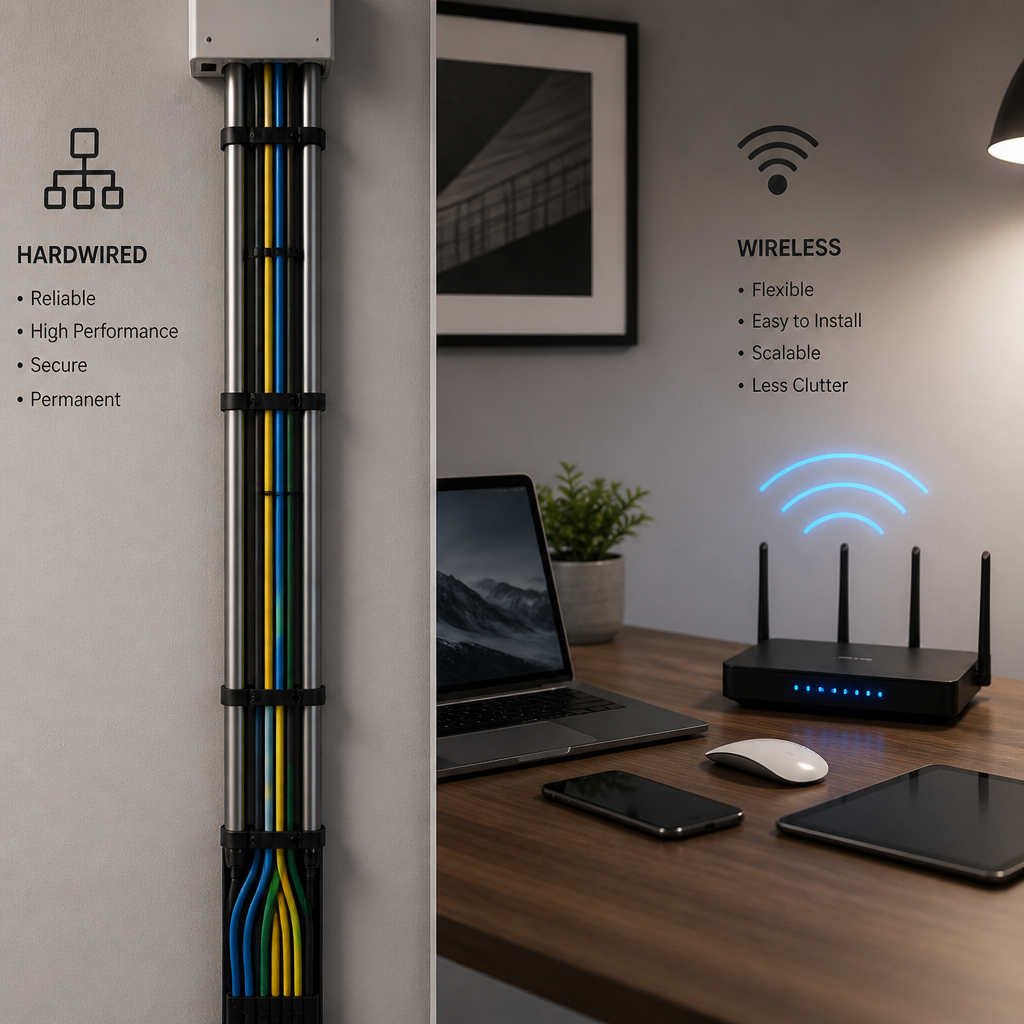
Almost every property manager or homeowner shopping for a new intercom system hits the same wall: wired or wireless? The choice looks simple until you start pricing cable runs for a five-story building or realizing that a Wi-Fi-based system drops calls whenever the router reboots. The wired vs wireless intercom debate is not really about technology preference. It is about matching the right system to a specific building, budget, and long-term maintenance plan. This guide cuts through the noise and gives you a framework for making that decision confidently, whether you are protecting a single-family home or managing a commercial complex.
Table of Contents
- Quick Takeaways
- How Wired Intercom Systems Actually Work
- How Wireless Intercom Systems Actually Work
- Pros and Cons: Wired Intercom Systems
- Pros and Cons: Wireless Intercom Systems
- Side-by-Side Comparison of Wired, Wireless, and Hybrid Systems
- Which to Choose Based on Property Type
- Integration With Access Control and CCTV
- Frequently Asked Questions
- References
Quick Takeaways
| Key Insight | Explanation |
|---|---|
| Wired systems offer greater reliability in large buildings | Hardwired connections are not subject to RF interference or Wi-Fi congestion, making them the preferred choice for multi-unit residential and commercial properties. |
| Wireless intercoms are faster and cheaper to install | No cable runs mean installation time drops by 60-80% in retrofits, which translates directly to lower labor costs for homeowners and property managers. |
| Signal range is the most overlooked wireless limitation | Consumer-grade wireless intercoms typically operate reliably within 500-1,000 feet in open space. Walls, floors, and metal structures can cut that range by more than half. |
| Wired systems have higher upfront costs but lower lifetime costs | The infrastructure lasts 15-25 years with minimal maintenance, while wireless systems may require battery replacements and firmware updates more regularly. |
| Hybrid systems exist and are worth considering | Many modern intercom panels use a wired backbone at the door station and wireless or IP-based communication to interior stations, combining reliability with installation flexibility. |
| Smart wireless intercoms add value but create dependency | App-based wireless intercom systems that rely on cloud servers can become non-functional if the manufacturer discontinues the service, a real risk with smaller vendors. |
| Building structure determines which system is viable | Concrete-and-steel construction severely degrades wireless signals, often making a wired or hybrid approach the only practical option regardless of budget preferences. |
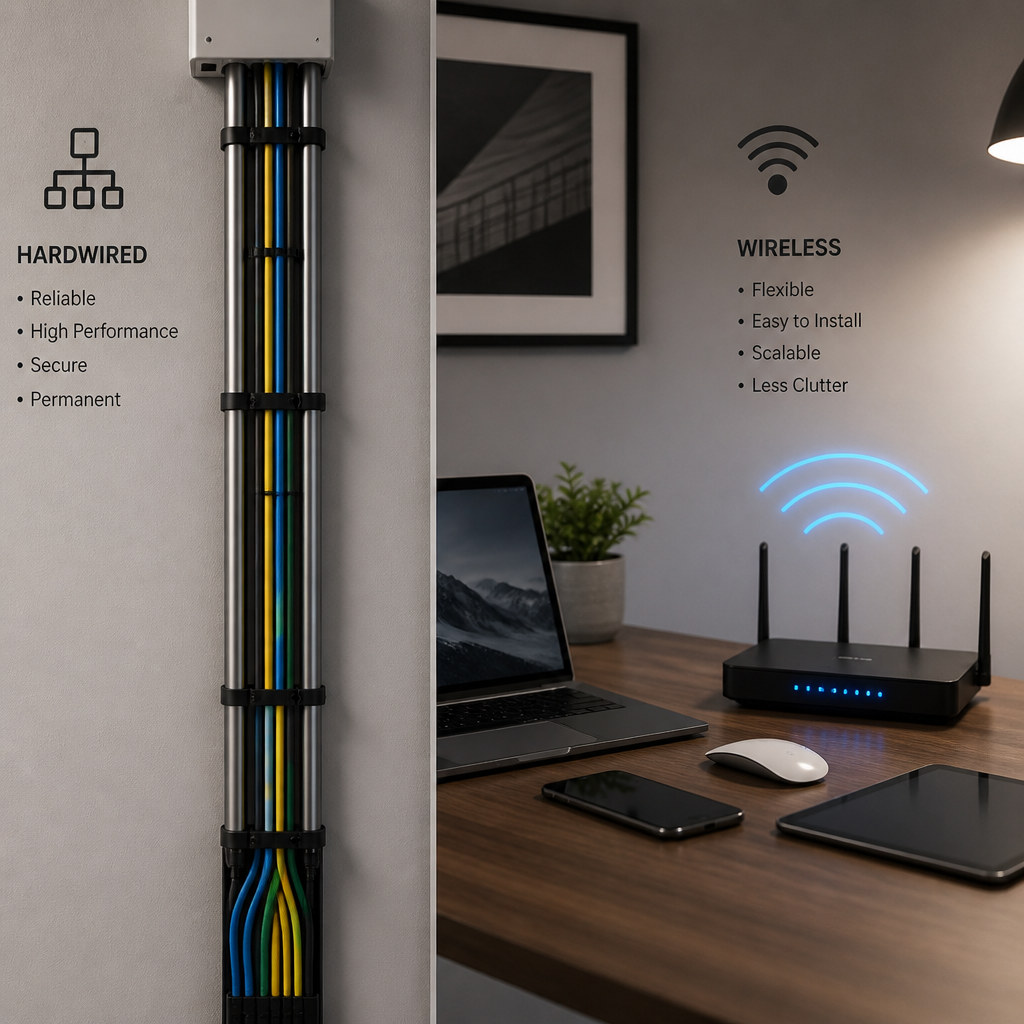
How Wired Intercom Systems Actually Work
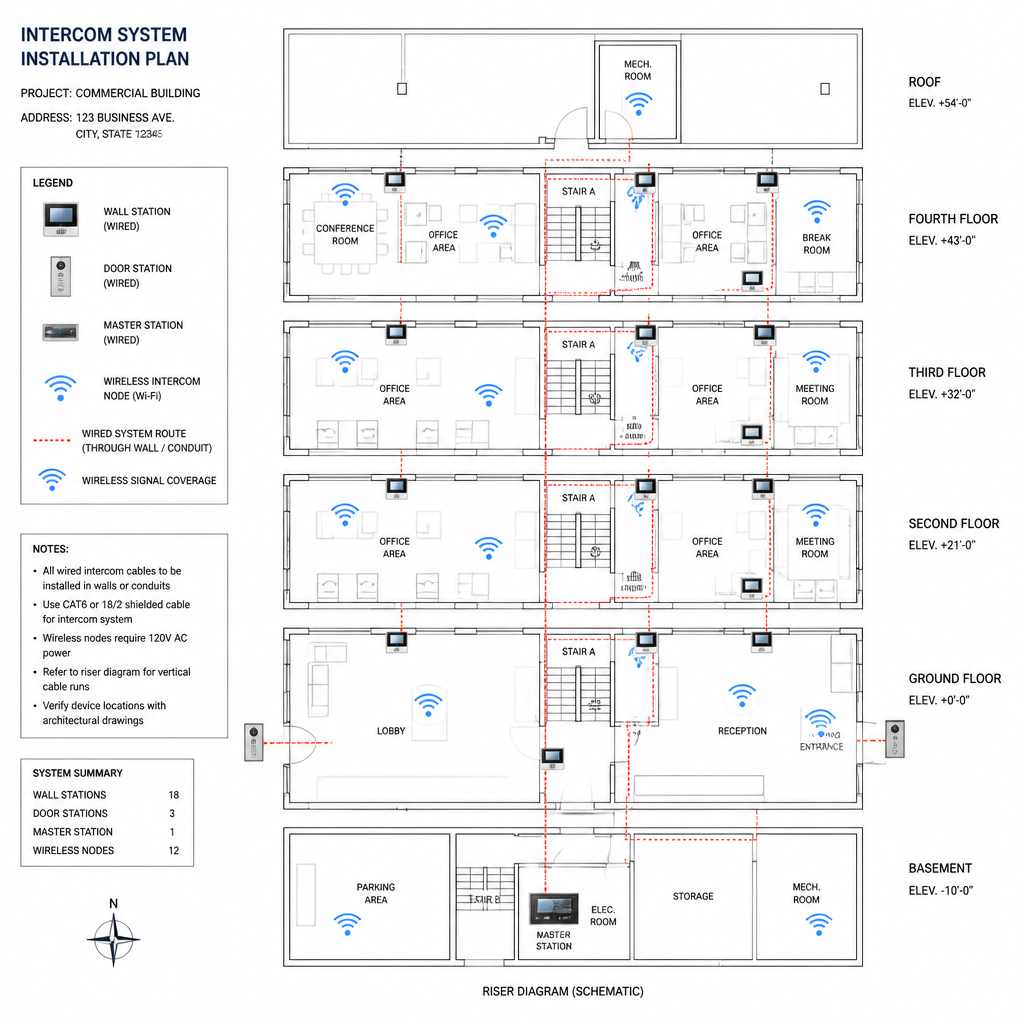
A wired intercom system connects door stations to interior stations through dedicated cable runs, typically twisted-pair audio cable, coaxial cable for video systems, or structured Cat5e/Cat6 cabling in modern IP-based installations. The signal travels along a physical path that does not compete with other devices on a shared spectrum.
In practice, a standard two-wire audio intercom can run cable distances of up to 1,000 feet without meaningful signal degradation. Video intercom systems using Cat6 cabling can push that further, especially when supported by PoE (Power over Ethernet) switches. This makes wired systems highly predictable, which is exactly what a property manager overseeing a 50-unit apartment building needs.
The installation process is where wired systems demand the most investment. Cable must be routed through walls, conduit, or ceiling spaces. In a new construction project, this is straightforward. In a retrofit situation, cutting drywall, pulling wire through finished walls, and restoring surfaces adds significant labor cost and time.
Pro tip: If you are installing a wired intercom in a new build, always run extra conduit alongside the intercom cabling. Future upgrades to video or IP-based systems become dramatically easier and cheaper when the pathway is already in place.
How Wireless Intercom Systems Actually Work
Wireless intercom systems transmit audio and video signals using radio frequency (RF), DECT (Digital Enhanced Cordless Telecommunications), Wi-Fi, or cellular networks depending on the product. The door station and interior station communicate without any physical cable connecting them beyond local power supply.
DECT-based wireless intercoms operate on the 1.9 GHz band, which is dedicated to voice communication in North America and experiences far less interference than the crowded 2.4 GHz Wi-Fi band. This makes DECT systems more reliable than Wi-Fi-only units in environments with high wireless traffic, such as offices, apartment buildings, or any property near a commercial router network.
Wi-Fi and app-connected wireless intercom systems go a step further by routing communication through the internet, allowing a resident or homeowner to answer the door from anywhere using a smartphone. The tradeoff is latency and dependency on internet uptime. A router reboot during a visitor’s arrival or a brief ISP outage can make the system temporarily unavailable.
Battery-Powered vs. Mains-Powered Wireless Stations
Battery-powered wireless intercom stations eliminate any need for electrical wiring at the installation point, making them genuinely tool-free to install in many cases. The practical downside is battery management. In a high-traffic commercial environment, a wireless door station running on AA batteries may need replacement every 2-4 months. Mains-powered wireless stations solve this but require an electrician to provide a power source, partially negating the installation simplicity argument.
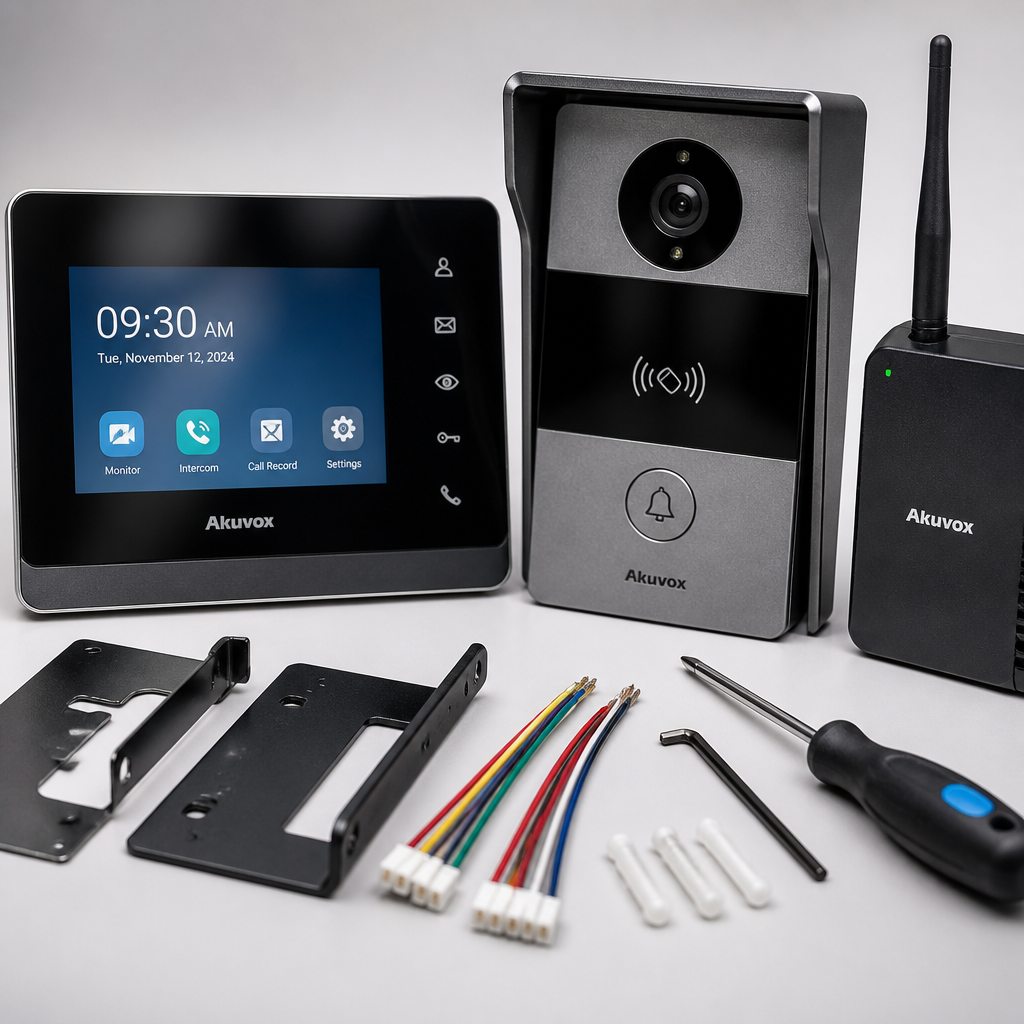
For homeowners managing a single entry point with moderate traffic, battery-powered wireless systems from providers like those available through UnikCCTV offer genuine convenience. For a busy commercial lobby, mains-powered or PoE-powered options are the right call.
Pros and Cons: Wired Intercom Systems
Wired systems have a decades-long track record in commercial and multi-residential installations. Their advantages are not marketing copy. They are engineering realities that property professionals rely on daily.
Advantages of Wired Intercom Systems
Signal consistency is the defining advantage. A wired intercom does not care how many Wi-Fi routers, Bluetooth devices, or cellular signals surround it. The signal travels along copper, not air. In dense urban apartment buildings, this alone justifies the installation cost premium.
Wired systems also offer superior audio and video quality. Because bandwidth is not shared and latency is not introduced by wireless protocols, wired video intercoms can deliver cleaner, lower-latency footage. For gate access systems where visual confirmation of a visitor matters for security, this difference is noticeable.
Longevity is another real advantage. A properly installed wired intercom system installed in a commercial building can operate for 20 or more years with routine maintenance. The infrastructure, meaning the cabling and conduit, often outlasts multiple generations of intercom panels, reducing long-term capital expenditure.
Disadvantages of Wired Intercom Systems
Installation cost and disruption are the primary drawbacks. Retrofit installations in existing buildings can cost 3-5 times more than wireless alternatives when factoring in labor, wall repair, and conduit installation. For a homeowner adding an intercom to an existing home, this cost can be prohibitive.
Scalability is also a genuine challenge. Adding a new station to a wired system typically requires pulling new cable to that location, which is neither quick nor cheap. Wireless systems can add a new station in minutes.
Pro tip: For wired systems in existing buildings, look for IP-based intercom panels that can use existing Cat5e Ethernet cabling already installed for networking. This dramatically reduces cable installation costs in offices and commercial spaces.
Pros and Cons: Wireless Intercom Systems
Wireless intercom systems have matured considerably over the past decade. The DECT and Wi-Fi based systems available today are genuinely reliable for residential and small commercial use, provided the right product is selected for the right environment.
Advantages of Wireless Intercom Systems
Installation speed and cost are the headline benefits. A wireless intercom system can be installed in hours rather than days. For property managers handling a building retrofit, this means minimal disruption to residents and faster project completion. The labor savings alone can represent 40-70% of total project cost compared to wired alternatives.
Flexibility is equally valuable. Wireless intercom systems can be repositioned, added to, or removed without any permanent modification to the building. For leased commercial spaces where tenants cannot modify the building structure, this is not just convenient. It is often contractually necessary.
Modern Wi-Fi and app-connected systems also enable remote access, which is a meaningful security feature. A homeowner can visually verify and speak with a delivery driver while traveling. A property manager can monitor multiple entry points from a central location without being physically present.
Disadvantages of Wireless Intercom Systems
Interference remains the most persistent limitation. Buildings with dense wireless environments, including apartment complexes with dozens of competing routers, can experience degraded call quality and connection drops on 2.4 GHz Wi-Fi systems. DECT-based systems mitigate this, but they are not entirely immune in extremely dense RF environments.
A common mistake is underestimating the impact of building materials on signal range. Concrete walls, metal studs, and reinforced floors can reduce effective wireless range by 50-75% compared to manufacturer specifications, which are typically measured in open air. Always test range under actual building conditions before committing to a wireless-only solution.
“The biggest failure point in wireless intercom deployments is not the technology itself. It is the failure to conduct a proper RF site survey before installation. What works in a wood-frame house may be completely inadequate in a concrete parking structure.” — Security systems integration industry guidance
Side-by-Side Comparison of Wired, Wireless, and Hybrid Systems
The following table compares the three main intercom approaches across criteria that matter most to property managers and homeowners making a real purchasing decision.
| Criteria | Wired Intercom Systems | Wireless Intercom Systems | Hybrid IP Intercom Systems |
|---|---|---|---|
| Installation Cost (Retrofit) | High. Requires cable runs, wall penetration, labor intensive | Low to Medium. Minimal labor, no wall damage | Medium. Wired at door entry, wireless to interior stations |
| Signal Reliability | Excellent. No interference, consistent performance | Good to Fair. Dependent on RF environment and building materials | Excellent at entry point, Good to Excellent at interior stations |
| Audio and Video Quality | Excellent. Low latency, high bandwidth on cable | Good. Adequate for most uses, variable under interference | Excellent. IP-based systems offer HD video at entry |
| Scalability | Difficult. Each added station requires new cabling | Easy. New stations added without cable runs | Easy for interior expansion, Moderate for additional entry points |
| Remote Access | Limited unless IP-based | Full remote access via smartphone on Wi-Fi and cellular models | Full remote access on IP-based hybrid systems |
| System Lifespan | 15-25 years with proper installation | 5-10 years for consumer-grade, 10-15 for commercial DECT | 10-20 years depending on component quality |
| Best Application | New construction, large multi-unit buildings, high-security commercial | Residential retrofits, small offices, leased spaces | Mid-size commercial buildings, apartment complexes with existing network infrastructure |
Which to Choose Based on Property Type
This is where the decision becomes concrete. The right system depends on the property, not on which technology is theoretically superior. Here is what the evidence and field experience actually support.
Single-Family Homes
For most homeowners, wireless intercom systems are the correct choice. The installation simplicity, lower cost, and smartphone integration features match what residential users actually want. Unless the home has a specific need, such as a large estate with a remote gate 600-plus feet from the residence, a DECT or Wi-Fi video intercom handles the job well.
Products that combine a video door station with app-based remote viewing and two-way audio cover nearly every residential use case. UnikCCTV offers wireless video intercom options that include facial recognition and smart lock integration, which is a meaningful upgrade for homeowners who want a single access control ecosystem rather than multiple disconnected devices.
Multi-Unit Apartment Buildings
For apartment buildings with more than 10-12 units, wired or hybrid IP intercom systems are the appropriate choice. The RF congestion from dozens of competing wireless networks in a dense residential building makes purely wireless systems unreliable at scale. A wired panel at the building entrance connected to individual unit stations via IP over existing network cabling provides both reliability and modern features.
Commercial Offices and Businesses
Commercial environments vary widely. A small professional office with a single entry point and a receptionist station can operate perfectly well on a DECT wireless system. A larger office complex with multiple entry points, loading docks, and security desk integration requires a wired or hybrid IP approach with centralized management capability.
Gated Properties and Perimeter Access
Gate access control almost always benefits from a wired connection between the gate controller and the intercom station. The cable run is outdoors, subject to weather, and often long. Reliable gate release depends on a consistent signal. For gate systems, UnikCCTV’s wired gate access control products provide the kind of weatherproof, consistently powered solution that wireless systems struggle to match over extended outdoor cable distances.
Integration With Access Control and CCTV
An intercom system rarely operates in isolation. Property managers and security-conscious homeowners increasingly want their intercom to work alongside smart locks, biometric readers, and CCTV cameras as a unified access control system. The wired vs wireless decision has direct implications for how well this integration works.
Wired intercom systems, particularly IP-based panels, integrate cleanly with access control infrastructure. A single network backbone can carry intercom audio and video, door release signals, CCTV feeds, and time attendance data. This is how enterprise-grade access control systems are built, and it is increasingly accessible for mid-size commercial properties and apartment complexes.
Wireless systems can also integrate with smart locks and CCTV, but the integration depth varies significantly by product. Consumer-grade wireless intercoms often use proprietary apps and closed ecosystems, which limits their ability to connect with third-party biometric readers or access control software. Before purchasing any wireless intercom system for a security-focused application, confirm that it supports open API or standard protocols like ONVIF or Wiegand output for access control panel compatibility.
UnikCCTV’s product range addresses both scenarios, offering wired IP intercom systems for large installations and wireless options that include biometric and facial recognition integration for properties that need modern features without full rewiring. This breadth of product selection matters when a facility operator needs to standardize across multiple building types within the same portfolio.
Pro tip: When combining an intercom system with CCTV, ensure both systems use the same network video recorder (NVR) or management software if possible. Viewing intercom call history and CCTV footage from a single interface reduces response time in security incidents and simplifies staff training.
Frequently Asked Questions
Can I replace a wired intercom with a wireless one without removing the old wiring?
Yes, in most cases. The existing wiring can simply be capped and left in the wall. It does not need to be removed. Some hybrid systems can actually use existing two-wire intercom cabling to power a new IP-based panel, which can save on installation costs. Confirm compatibility with your specific cable type before purchasing a replacement system.
How far can a wireless intercom system reliably transmit in a typical home?
In an open outdoor environment, most residential DECT and Wi-Fi wireless intercoms specify ranges of 500 to 1,000 feet. Inside a typical wood-frame home with standard drywall, expect 150 to 300 feet of reliable range. Concrete block or brick construction can reduce this to 50 to 150 feet. Always factor in actual building materials when evaluating range claims from manufacturers.
Do wireless intercom systems work during a power outage?
Battery-powered wireless intercoms continue operating during a power outage as long as batteries are charged. Mains-powered wireless systems and wired intercoms both go offline unless connected to a UPS (uninterruptible power supply) or backup battery. For security-critical applications, a UPS at the main panel is strongly recommended regardless of whether the system is wired or wireless.
Which system is better for an apartment building with 30 units?
A wired or hybrid IP intercom system is the correct choice for a 30-unit building. The RF congestion from 30 or more apartments, each with multiple Wi-Fi devices, creates an environment where wireless-only systems experience degraded performance. A wired entry panel connected to unit-level IP substations over the building’s existing network infrastructure provides reliability at scale. This is also easier to manage and troubleshoot remotely, which matters for property managers overseeing multiple buildings.
Are smart wireless video intercoms with facial recognition secure?
Smart wireless intercoms with facial recognition, such as those available from UnikCCTV, can be highly secure when properly configured. The key factors are data encryption on the wireless transmission, secure cloud storage if footage is stored remotely, and regular firmware updates. A common mistake is leaving default admin passwords unchanged after installation, which is the single most exploited vulnerability in any networked intercom or access control system. Change default credentials immediately upon installation.
How does a home intercom comparison typically differ for new builds versus retrofits?
In a new build, wired systems are almost always more cost-effective over the long term because cable installation happens before walls are closed, eliminating the labor-intensive wall penetration work. In a retrofit, the calculus often flips in favor of wireless because installation disruption and labor costs become the dominant expense. A thorough home intercom comparison for a retrofit should always include a labor estimate for cable installation, not just equipment costs, to get an accurate total project cost.
Can I integrate a wireless intercom with an existing wired gate system?
Yes, this is a common hybrid configuration. The gate controller remains wired for reliability, while the interior communication station switches to a wireless or app-based unit. The wireless station connects to the door release relay on the gate controller through a direct wired connection at that point, even though the audio and video path is wireless. This setup is practical and widely used in residential gate intercom retrofits.
Have you recently installed or upgraded an intercom system at your property? Share what system you chose and what drove that decision, because real-world experience from other property owners and managers is genuinely useful here.
References
- Statista: Smart Home Security Market Data and Global Intercom System Statistics
- Forbes: Coverage of Smart Home Technology Trends and Property Security Investment
- U.S. Department of Energy: Building Technologies Office Resources on Structured Cabling and Commercial Electrical Systems
- NIST: National Institute of Standards and Technology Guidelines on Wireless Network Security and RF Interference
- Ahrefs Blog: Data and Analysis on Smart Security and Access Control Product Search Trends


 No products in the cart.