
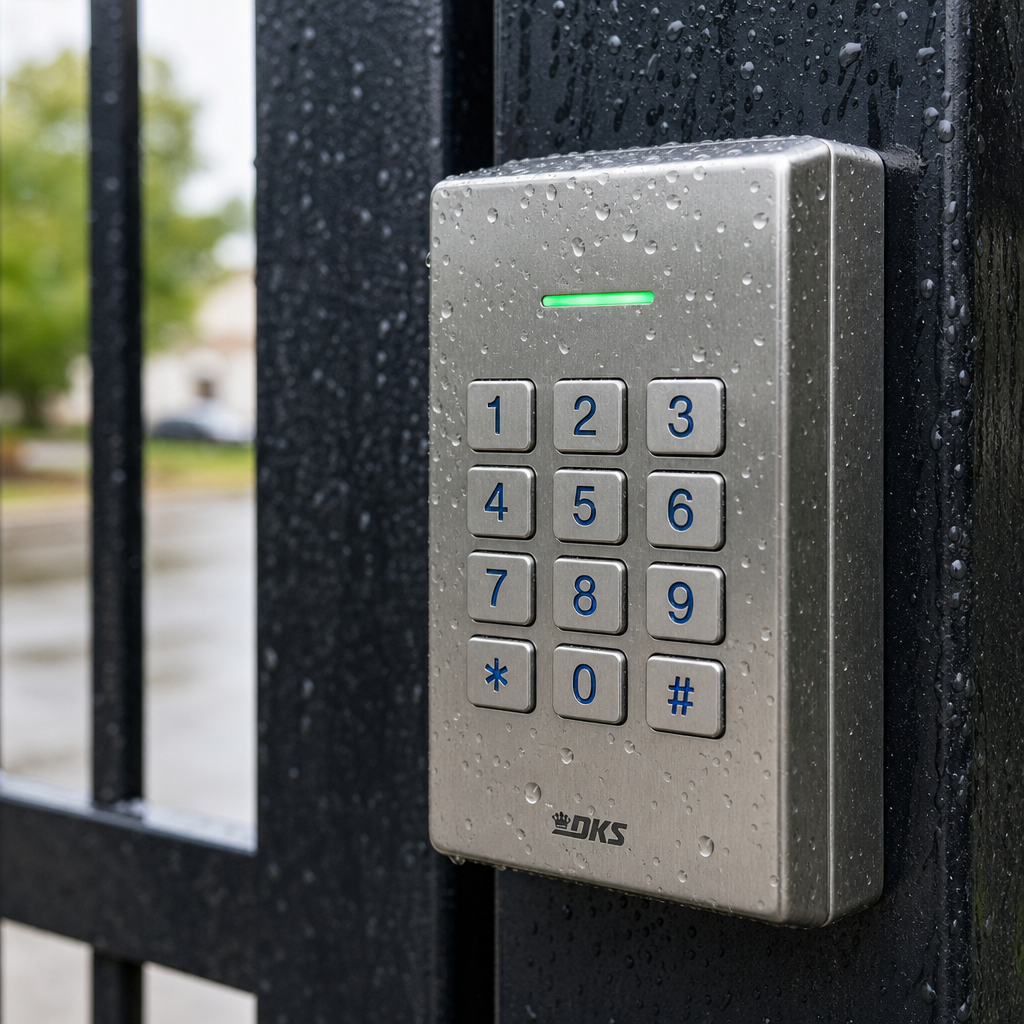
Picking the wrong gate keypad access system costs more than money. A system that fails in the rain, locks out residents, or gets bypassed by a determined intruder creates liability, frustration, and expensive replacements. According to Statista, the global access control market is projected to exceed $12 billion by 2025, yet most buyers still choose systems based on price alone rather than fit. This guide cuts through the marketing noise and gives property managers, homeowners, and facility operators a clear framework for evaluating gate entry systems that actually work for their specific property type and access volume.
Table of Contents
- Quick Takeaways
- What Is a Gate Keypad Access System?
- Key Factors to Evaluate Before Buying
- Keypad Types Compared
- Outdoor Durability and Weatherproofing
- Integration With Intercoms and Smart Locks
- Comparing Top Gate Access Control Approaches
- Installation and Wiring Considerations
- Common Mistakes Property Managers Make
- Frequently Asked Questions
- References
Quick Takeaways
| Key Insight | Explanation |
|---|---|
| IP65 or higher is non-negotiable for outdoor keypads | Anything rated below IP65 will fail within 12 to 18 months in exposed outdoor environments due to moisture and dust ingress. |
| Standalone vs. networked systems serve different property sizes | Standalone outdoor keypad locks work for single-family homes. Multi-unit properties need networked gate access control with audit trail capability. |
| Code management is where most systems fail in practice | Systems that require on-site reprogramming every time a tenant leaves create massive operational overhead. Remote code management is a practical necessity. |
| Backup power must be part of the specification | A gate that fails locked during a power outage is a fire hazard. A gate that fails open is a security breach. Both are avoidable with battery backup or fail-safe design. |
| Biometric and keypad hybrid systems reduce tailgating | A PIN alone can be shared. Pairing keypad entry with facial recognition or fingerprint access cuts unauthorized entry significantly on high-traffic sites. |
| Integration with existing intercom systems saves total cost | Buying a gate entry system that connects to an intercom already on the property avoids duplicating infrastructure and reduces installation labor costs. |
| Warranty and local support matter more than brand name | A well-known brand with no local technical support is a worse choice than a specialized supplier like UnikCCTV that offers consultation and product expertise in your region. |
What Is a Gate Keypad Access System?
A gate keypad access system is an electronic entry control device mounted at a gate, driveway, or perimeter entrance that grants or denies access based on a numeric PIN code, card credential, biometric input, or a combination of all three. It connects to an electric gate operator, magnetic lock, or strike lock to physically control entry.
The term covers a wide range of hardware complexity. At the basic end, you have a simple outdoor keypad lock with a fixed four-digit code wired to a single gate motor relay. At the sophisticated end, you have a cloud-connected gate access control panel supporting hundreds of unique user codes, time-scheduled access windows, remote management, and integration with CCTV and intercom systems.
Understanding where your property sits on that spectrum is the first decision to make before you look at a single product spec sheet.
Key Factors to Evaluate Before Buying
Before comparing specific products, map your actual requirements. A property manager running a 200-unit apartment complex has fundamentally different needs from a homeowner protecting a private driveway. Treating them the same is one of the most common specification mistakes in access control purchasing.
User Volume and Turnover Rate
How many people need access, and how often does that list change? A gate entry system for a gated community needs to support hundreds of active codes and allow fast deletion of old credentials without requiring a technician on-site. High-turnover environments like student housing or short-term rental properties need remote code management as a baseline feature, not an optional upgrade.
In practice, facilities with more than 20 regular users should avoid standalone systems with manual keyprogramming. The administrative burden alone makes those systems impractical within the first year of operation.
Traffic Type: Pedestrian vs. Vehicle
Pedestrian gate keypads and vehicle gate keypads have different mounting requirements, height specifications, and response time needs. A vehicle entry keypad for a parking facility needs to be mounted at driver-window height, typically 42 to 48 inches from the ground, and must activate a barrier arm or sliding gate quickly enough not to create traffic backup.
Pedestrian gates at apartment walkways have slower cycle times but higher frequency of use. Specify accordingly, because a system optimized for one use case often performs poorly in the other.
Connectivity Requirements
Wired systems are more reliable and less vulnerable to interference, but they require trenching and conduit work that adds installation cost, especially on large properties. Wireless gate entry systems using RF or cellular communication reduce installation complexity but introduce dependency on signal reliability and battery maintenance.
Pro tip: If your property already has conduit runs to the gate location, always choose a wired system. Wireless is a compromise, not an upgrade. Save wireless for locations where running cable is genuinely impractical.
Keypad Types Compared
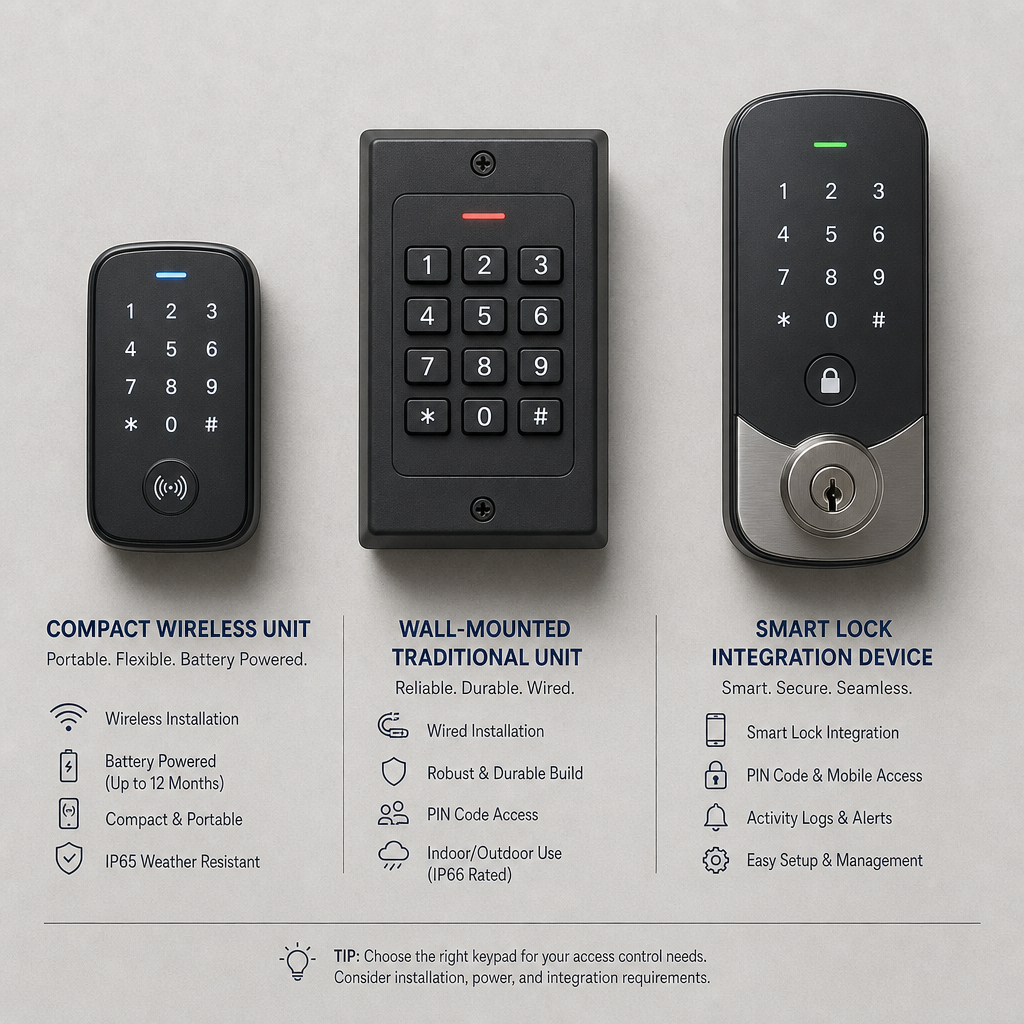
Not all keypad hardware is created equal. The physical input technology affects durability, user experience, and security level. There are three main categories worth understanding before making a purchase decision.
Membrane Keypads
Membrane keypads use a flat, sealed surface with pressure-sensitive zones. They are inexpensive and fully sealed against moisture, making them weather-resistant by design. The downside is tactile feedback: users often make input errors, especially in low light. They also show wear patterns over time, which can reveal the most-used digits of a PIN code to an observant attacker.
Mechanical Button Keypads
Mechanical keypads provide clearer tactile feedback and are generally preferred for high-traffic installations. Higher-quality units randomize the button layout on each use, which eliminates the worn-key attack vector. The tradeoff is that mechanical buttons have more physical ingress points, so the IP rating of the housing matters more.
Touchscreen Keypads
Touchscreen outdoor keypad locks look polished and allow for more complex interfaces, including PIN entry, card swipe prompts, and intercom calling from a single panel. However, they perform poorly in direct sunlight due to glare, and they require more maintenance because the display surface attracts smudging and scratching. Reserve touchscreen units for covered or recessed mounting locations.
Outdoor Durability and Weatherproofing
This is where cheap systems fail fastest, and where the total cost of ownership calculation turns against budget purchases. An outdoor keypad that fails after 18 months of exposure costs more in replacement and labor than a properly rated unit purchased upfront.
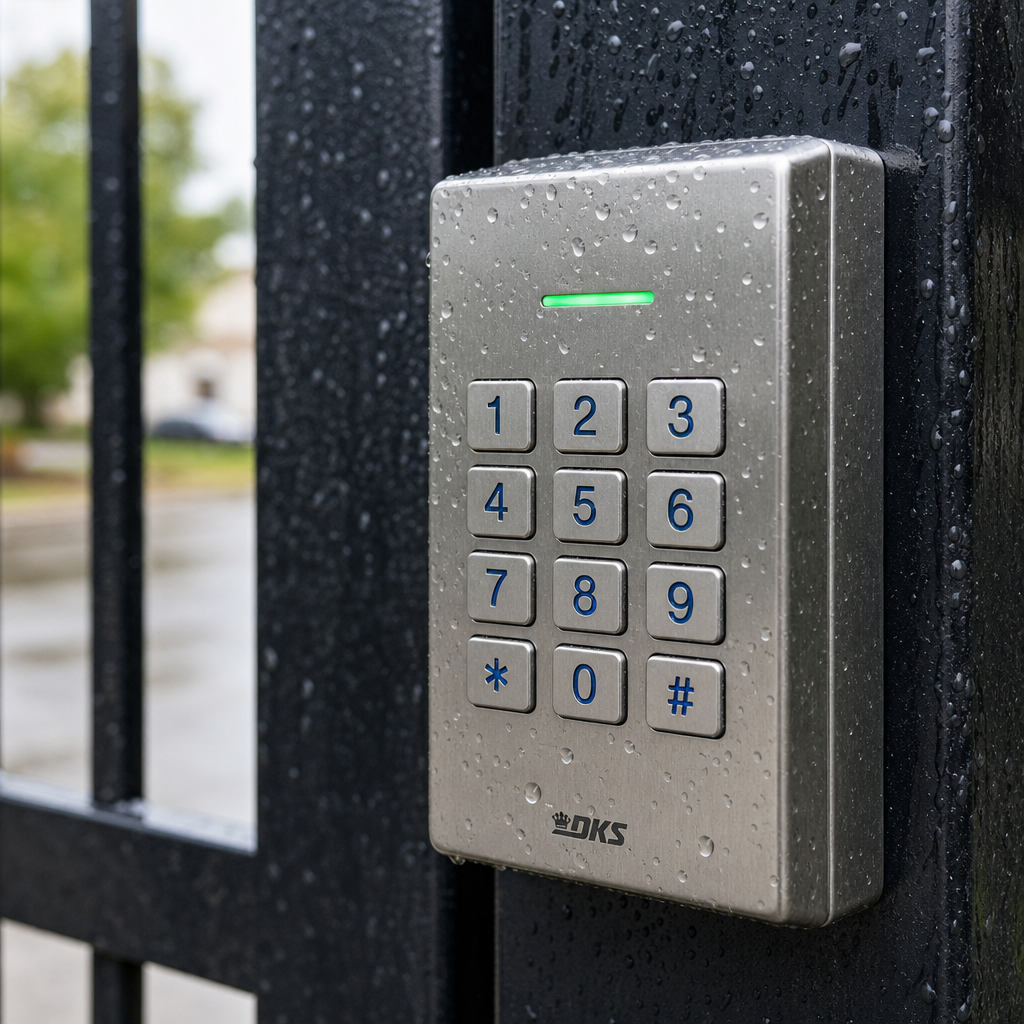
The IP (Ingress Protection) rating system is your primary benchmark. IP65 means the unit is fully dust-tight and resistant to water jets from any direction. IP66 adds protection against powerful water jets. For most outdoor gate applications in regions with significant rainfall or automatic irrigation systems nearby, IP65 is the floor, and IP66 is the practical recommendation.
“The leading cause of premature access control hardware failure in outdoor installations is moisture ingress into the electronics, not mechanical wear or vandalism.” – Access Control Industry Technical Review, referenced by the Security Industry Association
Beyond IP rating, check the operating temperature range. Systems used in regions with freezing winters need to specify cold-weather operation down to at least -20 degrees Celsius. LCD displays in particular can fail or display incorrectly below certain temperatures. Keypad units using LED indicators rather than screen displays tend to perform more reliably in extreme temperatures.
Pro tip: Always request the full IP certification documentation from the supplier, not just the marketing label. Some manufacturers claim IP ratings based on sub-component testing rather than whole-unit testing. A supplier like UnikCCTV that specializes in gate access control and CCTV equipment will be able to provide this documentation on request.
Integration With Intercoms and Smart Locks
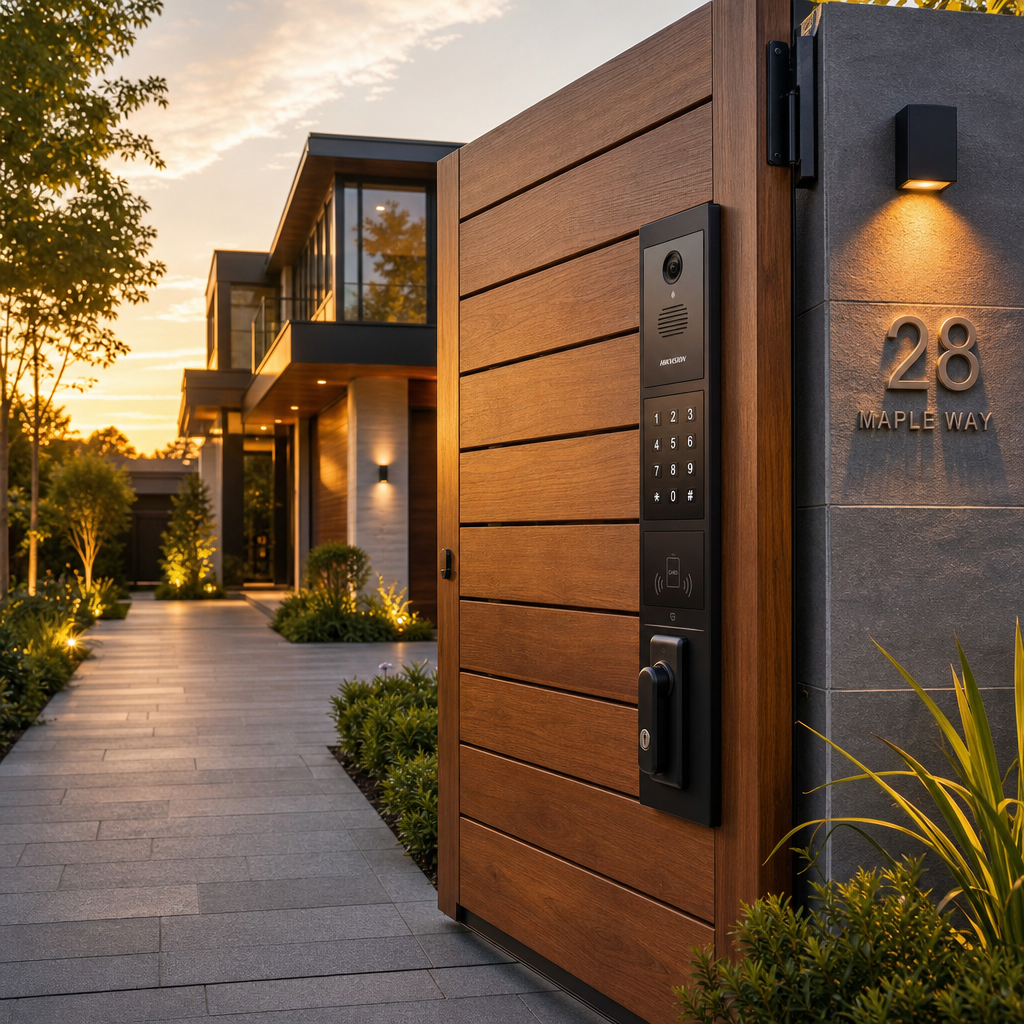
A gate keypad does not exist in isolation. For most residential and commercial properties, it needs to work alongside an intercom system that allows visitors without credentials to request entry, and potentially alongside smart locks on secondary pedestrian access points.
Intercom and Gate Keypad Compatibility
When a visitor arrives at the gate without a code, the intercom takes over. The gate entry system and the intercom panel need to share a common relay output so that the intercom’s door release button triggers the same gate operator that the keypad controls. Buying these as a matched pair from the same supplier eliminates compatibility guesswork.
Wireless intercom systems paired with keypad entry work particularly well for detached gatehouse setups where running separate communication cable would be expensive. UnikCCTV carries wireless intercom and gate access hardware specifically configured for combined installations, which matters when you need the two systems to communicate reliably.
Biometric Access as a Keypad Complement
For high-security applications, pairing keypad entry with biometric verification adds a second authentication factor that a shared PIN cannot replicate. Facial recognition door locks and fingerprint readers are increasingly affordable and can be integrated into a gate access control panel as an additional reader on the same wiring harness.
This is not overkill for apartment complexes or commercial facilities where tailgating is a documented problem. One person entering a valid code and holding the gate for others defeats the entire purpose of the system. Biometric readers at the pedestrian access point, combined with a keypad at the vehicle entrance, creates layered access control without requiring visitors to go through biometric enrollment.
Comparing Top Gate Access Control Approaches
| Approach | Best Suited For | Key Limitations |
|---|---|---|
| Standalone PIN Keypad | Single-family homes, small private driveways, low-traffic gates | No audit trail, PIN sharing cannot be tracked, code changes require physical access to the unit |
| Networked Gate Access Control Panel with Multi-User Codes | Apartment complexes, gated communities, commercial facilities with regular staff and visitor access | Higher upfront cost, requires network infrastructure, professional installation recommended |
| Hybrid Keypad plus Biometric Reader | High-security sites, facilities with compliance requirements, properties with documented tailgating issues | Highest cost, requires enrollment process for all authorized users, more complex maintenance |
Installation and Wiring Considerations
Installation quality determines whether a technically sound gate keypad system performs reliably or becomes a recurring maintenance problem. The hardware specification is only half the equation.
Power supply to the gate keypad and gate operator should always be on a dedicated circuit with proper grounding. Sharing circuits with high-current equipment like motors, HVAC units, or lighting creates voltage fluctuations that damage control boards over time. This is a common mistake on retrofit installations where the electrician uses the nearest available circuit rather than running a dedicated line.
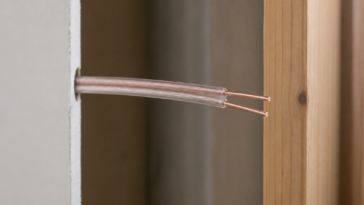
Cable routing matters significantly for outdoor gate entry systems. Low-voltage control cable for keypad-to-controller communication should be run in separate conduit from high-voltage power cable. Running them in the same conduit creates interference that causes spurious triggers, missed inputs, and communication errors between the keypad and the gate controller.
For properties where gate wiring runs underground, use direct-burial rated cable and ensure conduit ends are sealed against water intrusion. A flooded conduit run can destroy an entire gate access control installation after a single heavy rain event. This is not a theoretical concern. It is a documented failure mode on properties that skip proper waterproofing of underground conduit terminations.
Common Mistakes Property Managers Make
Property managers and facility operators consistently repeat the same purchasing and installation errors with gate keypad systems. Recognizing these in advance saves significant cost and frustration.
The first and most common mistake is buying a residential-grade outdoor keypad lock for a commercial-traffic application. Units rated for 50,000 actuations fail quickly when a multi-tenant gate cycles hundreds of times per day. Always verify the mechanical cycle rating against your estimated daily usage.
The second mistake is ignoring the long-term code management workflow. A system that requires a technician visit every time a tenant moves out is not a security system. It is a liability. Before purchasing, ask the supplier exactly how user codes are added, changed, and deleted, and whether that process can be done remotely.
The third mistake is treating the gate keypad as a standalone purchase rather than part of an integrated security ecosystem. Properties that pair their gate entry system with CCTV coverage at the gate, an intercom for visitor management, and time-attendance systems for staff get far more value from their investment than those running each component in isolation. UnikCCTV’s product range is specifically structured to support this integrated approach, which is a meaningful advantage over general retailers like Home Depot that sell components without the system-level expertise.
Frequently Asked Questions
What is the difference between a gate keypad access system and a gate entry system?
The terms are often used interchangeably, but technically a gate entry system refers to the complete setup including the gate operator, locks, intercom, and access control panel, while a gate keypad access system refers specifically to the keypad device used to enter credentials. In practice, buying them from the same supplier ensures compatibility between all components.
How many user codes should a gate access control system support for an apartment building?
A building with 50 units should have a system supporting at least 200 active codes to account for residents, property staff, maintenance contractors, and emergency services. Allow at least three to four codes per unit as a baseline. Systems that max out at 100 codes become a management problem quickly as a building fills to capacity.
Can a wireless gate keypad work reliably at a large property?
Wireless keypads using cellular communication work reliably at virtually any distance because they route through the mobile network rather than a local RF signal. Short-range RF wireless systems become unreliable beyond 100 to 150 meters, especially through walls, metal fencing, or dense foliage. For large properties, either run wired cable or specify a cellular-based gate entry system.
What is the best outdoor keypad lock for a driveway gate in a rainy climate?
Look for a unit with an IP66 rating, stainless steel or anodized aluminum housing, and a backlit keypad that works in low visibility. Avoid units with exposed circuit boards behind removable panels. A sealed, potted electronics compartment is the most important feature for wet climates. Units designed for marine or industrial outdoor use often meet this standard better than consumer-grade smart locks.
How do I prevent PIN sharing from becoming a security problem?
Assign individual unique codes to each authorized user rather than a single shared facility code. This way, when a code is compromised or an employee leaves, you delete one code rather than changing the code for everyone. Pair this with CCTV coverage at the gate entry point so you have visual records of gate activity that can be audited if a security incident occurs.
Do I need a professional installer for a gate keypad access system?
For a basic standalone residential keypad, a competent DIYer with basic electrical knowledge can handle the installation. For any system serving a multi-unit building, commercial property, or installation requiring underground cabling, a professional installation is strongly recommended. Incorrect wiring on a gate access control panel can damage the gate operator, void the product warranty, and create safety hazards. UnikCCTV offers professional installation consultation to help buyers understand what level of expertise their specific installation requires.
Have you recently installed or upgraded a gate keypad access system on your property? Share what worked, what did not, and any features you wish you had specified from the start.
References
- Statista: global access control and security market size data and forecasts
- Forbes: commercial real estate security technology trends and property management insights
- NIST: federal guidelines on physical access control systems and identity verification standards
- U.S. Department of Energy: facility security and access control recommendations for building operators
- McKinsey and Company: smart building technology adoption and operational efficiency research

 No products in the cart.