
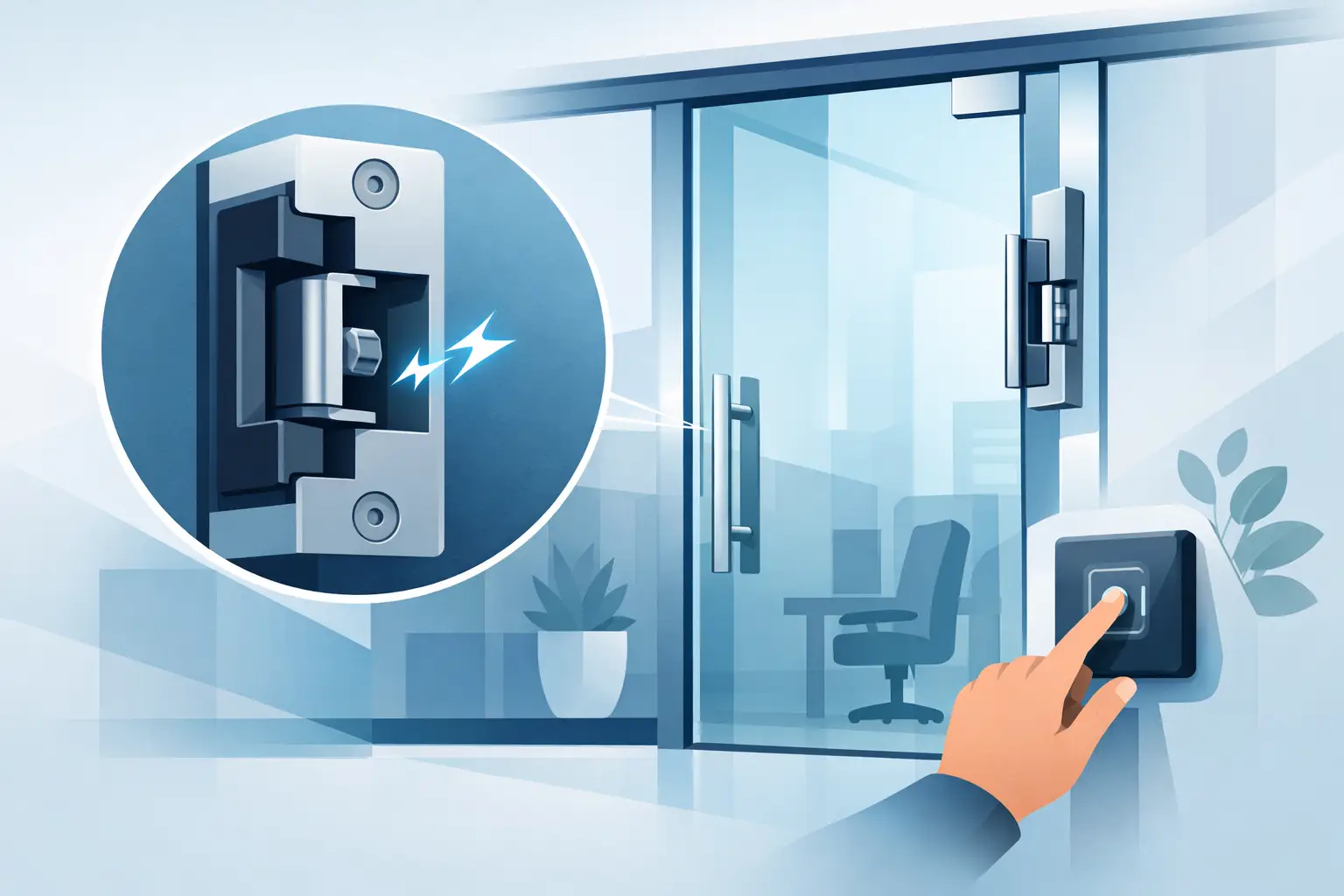
A glass entry can look clean and open while creating a very specific hardware problem. If you need controlled access without replacing the entire door package, an electric strike lock for glass door openings is often part of the answer – but only when the frame, door type, and access method actually support it.
That distinction matters. Many buyers start by asking for an electric strike because they want buzz-in entry from an intercom, keypad, or card reader. In practice, the right solution depends on whether the glass door has an aluminum storefront frame, a narrow stile rail, a compatible latch, and enough space to prep the jamb correctly. If one of those pieces is missing, a maglock, electric lockset, or different door setup may make more sense.
When an electric strike lock for glass door setups works well
The most common application is a commercial aluminum storefront door with glass infill and a mechanical latch already built into the lockset. In that arrangement, the electric strike is installed in the frame, not the glass panel itself. The strike releases the latch remotely when triggered by an access-control device, while the door hardware on the leaf stays largely unchanged.
This approach is attractive for offices, apartment vestibules, schools, mixed-use properties, and interior commercial entries because it can preserve the appearance of the door and keep the opening familiar for users. From an installation standpoint, that can reduce disruption if the existing lock and closer are in good condition.
It also works well when you need the door to remain mechanically secure during a power event, depending on whether you choose fail secure or fail safe hardware. For many perimeter doors, fail secure is the preferred starting point because the door stays locked when power is lost, while free egress is still handled by the interior hardware. For life-safety and code-sensitive openings, the answer is not universal. Local code, occupancy type, and the full opening configuration always come first.
What buyers often miss before ordering
The phrase “glass door” covers several very different door constructions. A full frameless all-glass door is not the same as an aluminum narrow stile storefront door. That difference affects almost everything.
With a framed glass storefront door, the strike can usually be mounted in the metal frame if the lockset and latch line up with an available electric strike body. With a frameless glass door, there may be no traditional latch relationship at the jamb for a standard electric strike to release. In that case, you may be looking at a patch lock, shear lock, maglock, or a purpose-built glass-door locking solution instead.
Another common issue is latch compatibility. Electric strikes are not one-size-fits-all. You need to know the lock type, latch projection, backset relationship, frame profile, faceplate requirements, and whether the opening uses cylindrical, mortise, or Adams Rite style hardware. A strike that fits the jamb cutout but does not properly capture or release the latch will create service calls quickly.
Voltage is another area where small errors turn into delays. Many electric strikes support 12VDC, 24VDC, or both, but that does not mean every power supply or access controller output is interchangeable. Current draw, duty cycle, and whether the strike is being pulsed or held open all matter. If the door is tied to an intercom or multi-tenant entry system, you also need to verify relay capacity and wiring distance.
Frame prep and door condition matter as much as the strike
Installers know this, but buyers sometimes focus too narrowly on the hardware body. An electric strike lives in the frame, so the frame condition matters. If the aluminum storefront is twisted, damaged, or previously modified poorly, the strike may align on paper and still perform badly in the field.
Door sag is especially important. A glass storefront door with a worn pivot, offset hinge issue, or failing closer can shift enough that the latch drags or misses the keeper. When that happens, the electric strike gets blamed for what is really a door alignment problem. Before selecting hardware, check latch engagement, reveal consistency, and whether the door closes cleanly every time.
Weather exposure also changes the recommendation. Exterior openings with wind pressure, temperature swings, and heavy traffic place more stress on the latch and keeper relationship. In those conditions, a higher-duty commercial strike with the correct static strength rating and a well-maintained closer is worth the extra attention. Light interior traffic and controlled environments give you more flexibility.
Fail secure or fail safe for a glass door opening?
This is one of the most important decisions in any electric strike lock for glass door application. The simple version is that fail secure stays locked when power is lost, and fail safe releases when power is lost. The correct choice depends on the opening function, egress requirements, fire-life-safety rules, and how the site operates.
For many commercial entries, fail secure is used where the exterior side needs to remain secure during a power outage, while occupants can still exit mechanically from the inside. That setup often works well for offices and controlled tenant entrances. But if the opening is part of a fire-rated path, tied into emergency release logic, or expected to unlock during certain events, you need to confirm that the full hardware set supports the intended operation.
This is where experienced specification review matters. The strike is only one component in a larger opening. Reader type, request-to-exit method, door position status, fire alarm interface, and closer behavior all affect whether the system performs correctly.
Access-control integration options
Most buyers are not purchasing the strike by itself. They are trying to make the door work with a keypad, card reader, intercom, telephone entry unit, push-button release, or scheduled access system. That is why integration planning should happen before product selection, not after.
If the opening is a small office suite, a basic keypad and power supply may be enough. For apartment or mixed-tenant entry, the strike may need to release from an intercom master station or directory panel. In schools and commercial facilities, it may be tied into credentialed access, remote unlock, audit trails, and door monitoring.
The operating pattern matters too. A short momentary release is different from repeated daytime traffic or long hold-open periods. Some strikes are built for intermittent release and some are better suited for heavier cycling. If the site expects constant visitor traffic, that should shape the recommendation.
Common mistakes that create callbacks
The first is choosing hardware based only on the phrase “for glass door” without identifying whether the opening is framed storefront or frameless glass. The second is ignoring the existing lockset. The third is treating access control as a separate decision instead of part of the same opening.
Another frequent problem is underestimating installation labor. Even when the strike itself is correct, frame cutting, wiring paths, power transfer planning, and final alignment take time. On retrofit jobs, hidden conditions inside older aluminum frames can slow down what looked simple at first glance.
Noise can also become an issue in certain environments. Some electric strikes produce a noticeable buzz when energized, while others are quieter. In a back office that may not matter. In a medical office, private practice, or upscale tenant lobby, it may.
How to choose the right electric strike lock for glass door projects
Start with the opening, not the catalog page. Identify whether the door is narrow stile aluminum storefront, hollow metal with glass, or frameless all-glass. Confirm the existing lock type and latch relationship. Measure the frame and faceplate area carefully, and check whether the opening is exterior or interior.
Next, define the access method. Is this release coming from an intercom, card reader, keypad, receptionist button, or timed schedule? Then determine power requirements, fail secure versus fail safe behavior, and whether code or life-safety conditions place limits on the hardware choice.
Finally, look at serviceability. Professional buyers usually want hardware that can be supported later with replacement parts, technical guidance, and compatible accessories. That is especially important for multi-door properties where consistency across openings reduces maintenance headaches. For installers and facilities teams sourcing from a specialized distributor like UnikCCTV, that support side is often just as valuable as the product itself.
A glass entrance usually gets judged by appearance first, but it succeeds or fails on hardware details. If the latch, frame, access control, and egress requirements all line up, the right electric strike can give you controlled entry without overcomplicating the opening. If they do not, the better move is to adjust the hardware plan early rather than force the wrong device onto the door.
 No products in the cart.