
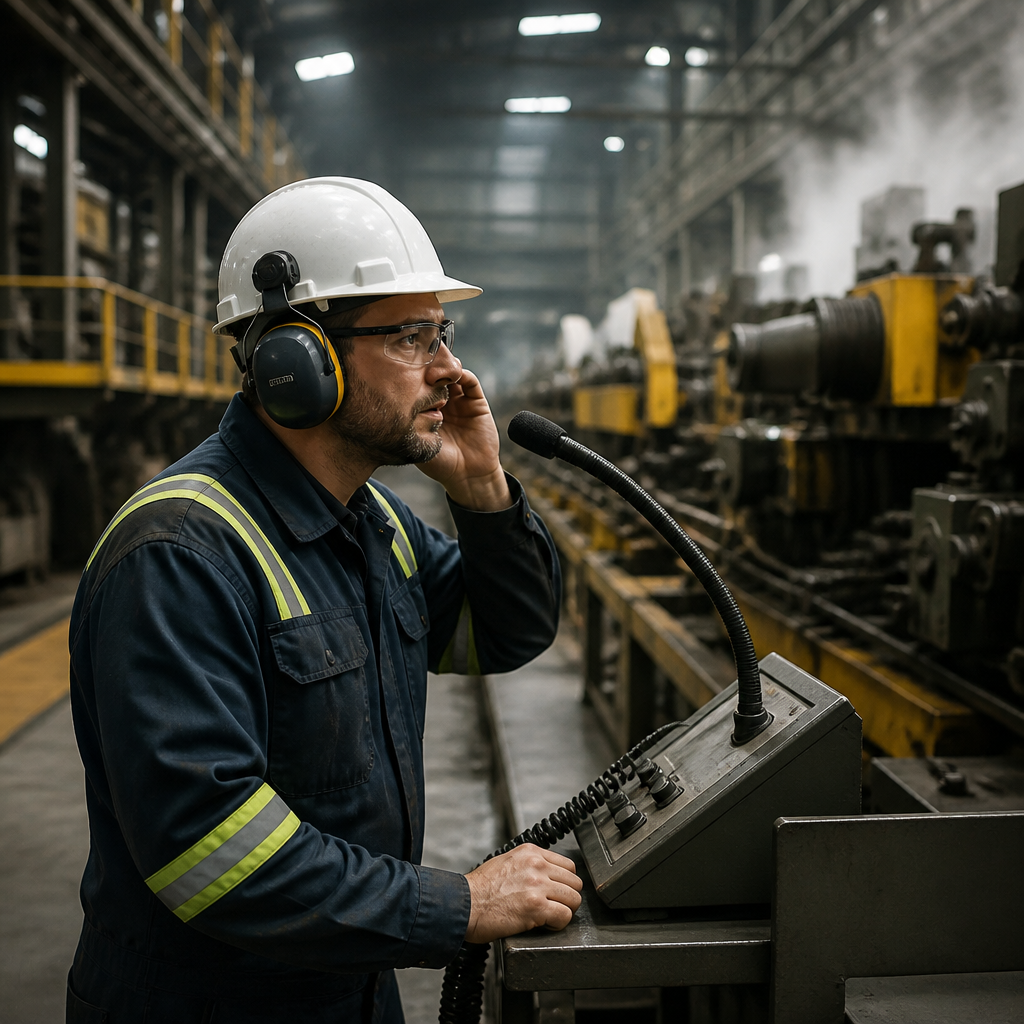
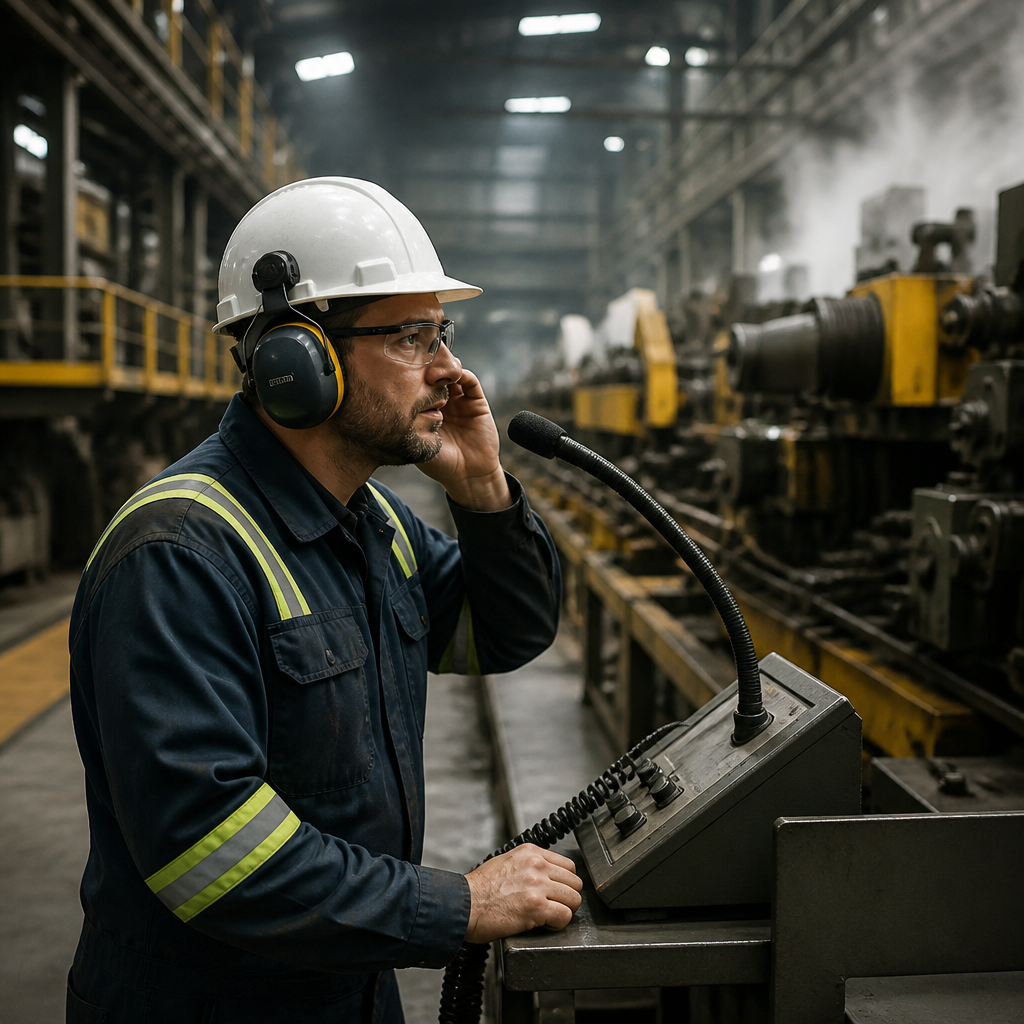
A factory intercom system that cannot cut through 90 decibels of machinery noise is not a communication tool. It is a liability. Supervisors resort to shouting, hand signals, or worse, leaving their post to walk a message across the floor. Every one of those workarounds costs time, introduces error, and creates safety gaps. The challenge in industrial environments is not simply range. It is range combined with noise rejection, hands-free operation, and the durability to survive shift after shift in a space that is hard on electronics. This article breaks down exactly what separates a capable industrial system from a consumer-grade unit that will fail you in three months.
Table of Contents
- Quick Takeaways
- Why Standard Intercoms Fail in Factories and Warehouses
- Key Features to Demand from a Factory Intercom System
- Wireless vs. Wired Industrial Intercom Communication
- How to Map Coverage Zones in a Large Warehouse
- System Comparison: Finding the Right Warehouse Intercom
- Installation and Integration with Existing Access Control
- Frequently Asked Questions
- References
Quick Takeaways
| Key Insight | Explanation |
|---|---|
| Noise-canceling is non-negotiable | Systems without active noise cancellation become useless on production floors. The microphone must filter ambient noise, not just amplify everything it picks up. |
| Range specs are measured outdoors | Manufacturer range claims (1200 ft, 3280 ft, 5280 ft) are tested in open air. Concrete walls, metal shelving, and racking can cut effective range by 50 to 70 percent indoors. |
| Full-duplex beats push-to-talk in most factory workflows | Full-duplex allows both parties to speak simultaneously, which is critical when a line operator needs to interrupt a supervisor mid-instruction to report a machine fault. |
| Zone mapping before purchase prevents dead spots | Placing units based on a floor plan sketch rather than a site walk almost always results in coverage gaps near loading docks, cold storage, or high-rack storage aisles. |
| Multi-station systems scale better than two-pack consumer units | A 6 or 9-station system allows communication across office, floor, dock, and gate simultaneously. Two-pack systems force staff to relay messages through a chain of radios or people. |
| Power dependency matters in power-outage-prone facilities | Plug-in units lose function during outages. Battery-backed or PoE (Power over Ethernet) systems maintain communication when it matters most. |
| Integration with access control multiplies security value | A factory intercom system linked to gate access or door entry allows a remote supervisor to verify, communicate with, and grant entry to a visitor without leaving the control room. |
Why Standard Intercoms Fail in Factories and Warehouses
Most consumer-grade intercoms are designed for a quiet home hallway or a small office reception desk. The microphone sensitivity, speaker output, and housing are all calibrated for an environment where the loudest background noise is an air conditioner. Put that same unit next to a conveyor belt, a forklift path, or a pneumatic press, and the result is garbled audio on both ends.
The three failure modes that appear most often in industrial settings are microphone saturation, speaker inadequacy, and physical housing damage. Microphone saturation happens when ambient noise overwhelms the mic element, producing nothing but a wall of static for the person on the receiving end. Speaker inadequacy is the mirror problem: a speaker rated for 85 dB output simply cannot compete with a floor running at 90 to 95 dB. Physical housing damage accumulates from dust, humidity, vibration, and the occasional impact that is routine in any active warehouse.
A common mistake is purchasing a system based on price per unit rather than specifying for the environment first. A cheaper unit that requires replacement every 18 months, plus the time cost of failed communications, is not a bargain. Facilities that have gone through this cycle typically land on commercial-grade or purpose-built industrial intercom communication equipment as the correct starting point, not an upgrade.
The true cost of a failed intercom is not the replacement hardware. It is the near-miss safety incident that happened because a line operator could not reach a supervisor in the 30 seconds that mattered.
Key Features to Demand from a Factory Intercom System
Selecting a factory intercom system for an industrial setting is a specification exercise, not a shopping exercise. Before looking at any product, define the environment: average ambient noise level in dB, square footage per communication zone, number of required endpoints, whether the space has reliable power at each station, and whether the system needs to integrate with door entry or gate access controls.
Noise Cancellation and Audio Clarity
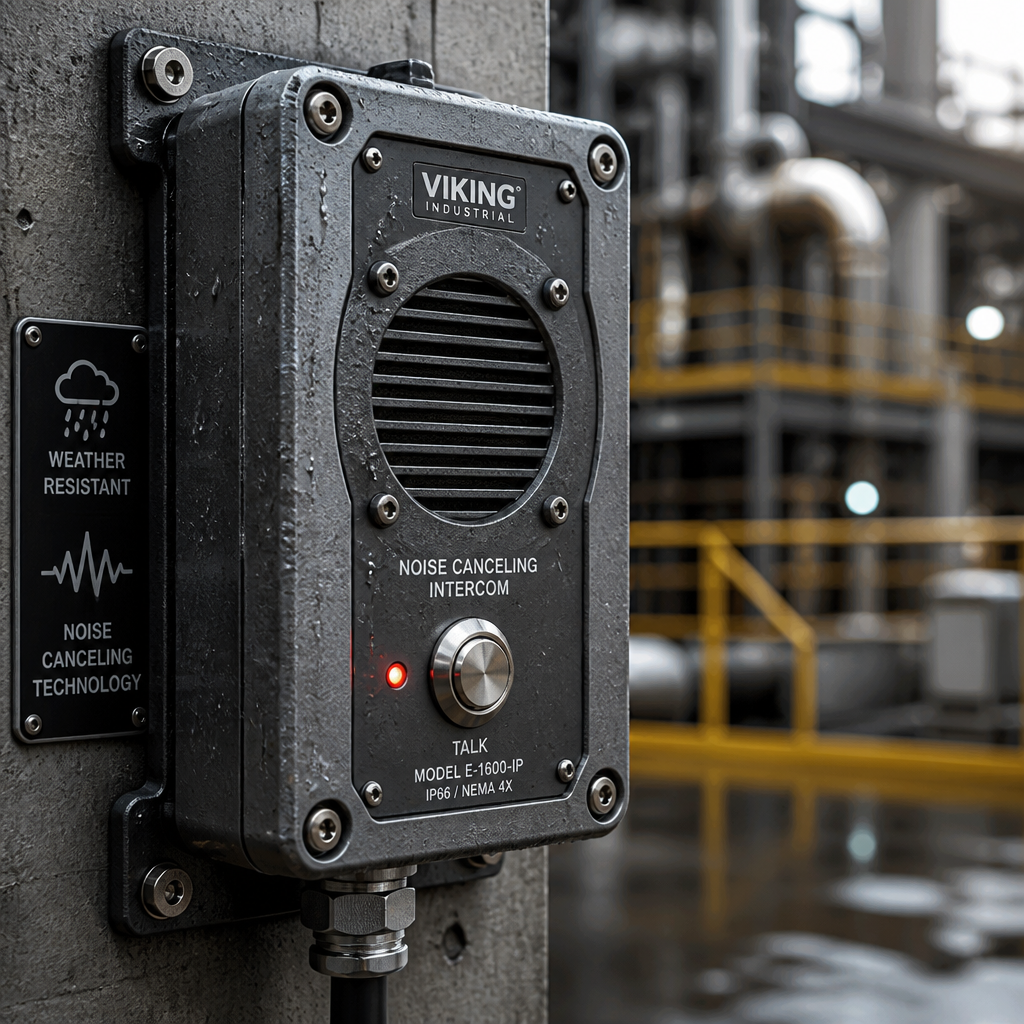
Active noise cancellation at the microphone level is the first filter to apply. Systems like the SANZUCO 60D include noise-canceling technology specifically to deliver clear audio in group calls across noisy environments. Without this, even a powerful transmitter sends garbled input to the receiving station. Speaker output should be evaluated in conjunction with local ambient noise. If the floor runs consistently loud, stations need a speaker that can exceed that baseline by at least 10 to 15 dB.
Full-duplex operation is the second critical feature. Push-to-talk systems create a conversational lag that feels minor in a quiet office but becomes operationally dangerous on a production floor where timing of communication matters. Full-duplex allows simultaneous two-way speech, which is the standard that any serious industrial intercom communication system should meet.
Range That Accounts for Indoor Obstacles
Manufacturer range specifications are tested in open outdoor environments. The Nexytrix system claims up to 3280 feet (1000 meters), and the Wuloo system claims up to 5280 feet. In practice, a warehouse with concrete block walls, metal racking, and a steel roof will reduce effective range significantly. A reasonable working assumption is to take the outdoor rated range and divide by two to three when estimating indoor performance, then plan station placement accordingly.
Pro tip: Before finalizing station locations, walk the floor with a handheld radio or test unit and note every location where signal degrades. Map those dead zones and position intercom repeaters or additional stations to bridge them. This site walk takes two hours and prevents months of complaints.
Hands-Free Operation
Warehouse and factory workers often have both hands occupied. A system that requires pressing and holding a button to talk is a liability when a worker is operating a pallet jack, handling materials, or working with machinery. VOX (voice-activated) operation and auto-answer modes, such as those found on the SANZUCO and ChunHee systems, eliminate this problem. The ChunHee system includes a VOX hands-free mode alongside a channel lock to prevent cross-talk between zones.
Wireless vs. Wired Industrial Intercom Communication
The wireless versus wired debate in industrial intercom communication is not purely a technical question. It is a question of what the facility can support in terms of infrastructure, budget, and flexibility over time.
Wired systems offer the most reliable audio quality and are unaffected by RF interference from welding equipment, motors, or other wireless devices common in factories. They do not lose range due to structural obstacles. The tradeoff is installation cost and inflexibility. Running cable through a working factory floor is disruptive, and relocating a wired station when the floor layout changes is a significant undertaking.
Wireless systems are faster to deploy and easier to reconfigure when production lines shift. Modern systems in the commercial range, including the Hosmart UltraSpeak Pro, Nexytrix, and Wuloo systems, offer strong performance for medium to large warehouses without cable runs. The practical limitation is power: most of these systems require a wall outlet at each station, which means they are wireless in terms of radio signal but not in terms of power. The ChunHee system addresses this with a battery-backed option offering 70 to 80 hours of operation per charge, which provides genuine mobility and outage resilience.
For most warehouses that are not in constant reconfiguration and do not have heavy RF interference, a well-placed wireless system from a reputable supplier is the more practical choice. For high-interference environments such as metal fabrication shops or facilities with heavy welding, wired backbone systems with wireless endpoints are worth the investment.
Pro tip: If your facility uses any heavy motor-driven equipment, test your chosen wireless intercom at full factory operating load before committing to a permanent installation. RF interference patterns change dramatically between an empty facility and a fully running production shift.
How to Map Coverage Zones in a Large Warehouse
Coverage zone mapping is the step most facility operators skip, and it is the reason most intercom installations underperform in year one. The process is straightforward and does not require specialized equipment.
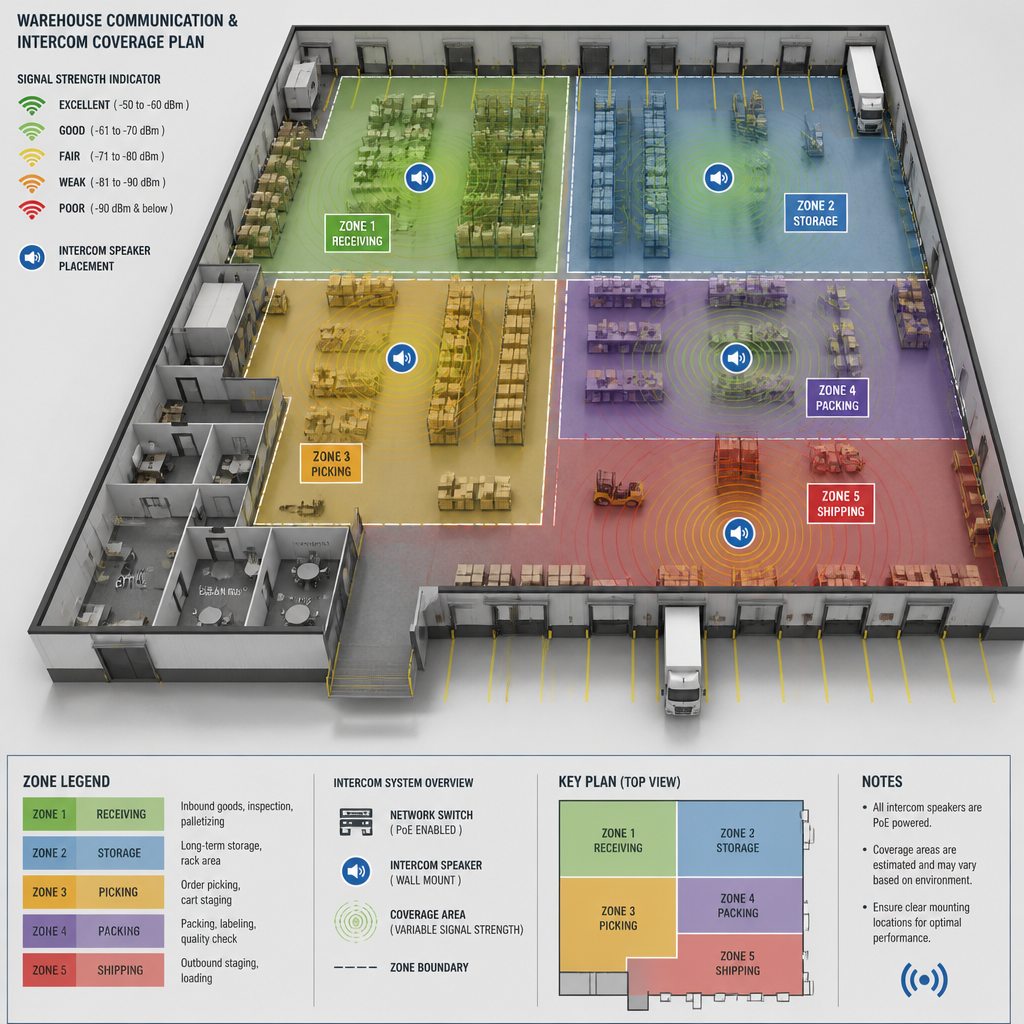
Start with a printed or digital floor plan and mark every location where communication is critical: receiving dock, shipping dock, supervisor station, quality control area, maintenance bay, front office, and any entry gates. Then mark every structural obstacle between those points: load-bearing concrete columns, refrigerated storage walls, high-rack shelving rows, and mezzanine floors. Each of these reduces effective wireless range.
With those two layers on the map, identify which pairs of communication points have clear line-of-sight paths and which have obstructions. Stations with clear paths between them can operate at longer distances. Stations separated by multiple walls or racking rows need to be positioned closer together or bridged by an intermediate station. A 9-station system like the SANZUCO 60D with 9 stations gives enough endpoints to cover most configurations in a mid-to-large facility without leaving dead zones at the dock or far corners of the floor.
The goal is to ensure that no worker on the floor is more than one intercom station away from being able to reach a supervisor or emergency contact. In practice, this means one station per 150 to 200 feet of floor space in an obstructed environment, and one per 300 to 400 feet in open floor plans.
System Comparison: Finding the Right Warehouse Intercom
The table below compares three distinct approaches to warehouse intercom deployment based on real system capabilities from verified product research. These are not the only options available through a supplier like UnikCCTV, but they represent the three most common deployment tiers for factory and warehouse environments.
| System Type | Best Fit Scenario | Key Strengths and Limitations |
|---|---|---|
| Two-Station Wireless (e.g., Hosmart UltraSpeak Pro 2-Pack, up to 1200 ft outdoor) | Small warehouses, repair bays, staging areas with two communication points | Quick plug-and-play setup, full-duplex audio, crystal-clear sound. Limited to two endpoints, no battery backup, range drops indoors. Best as a starter or supplementary unit. |
| Multi-Station Wireless (e.g., SANZUCO 60D 9-Station, up to 1400 ft; or Hosmart 6-Station) | Mid-to-large warehouses, distribution centers, multi-floor facilities needing office-to-floor-to-dock coverage | Scales to multiple zones, noise-canceling, group and private call capability, auto-answer option. Requires power outlet at each station. Up to 18 channels for separation of conversations. |
| Long-Range Battery or High-Range Wireless (e.g., Wuloo 5280 ft, ChunHee 3300 ft with 70-80 hr battery) | Large outdoor-to-indoor facilities, perimeter gate communication, sites with power outage risk | Maximum range for sprawling facilities, battery-backed units maintain function during outages, VOX hands-free operation. Range claims are outdoor figures; plan for indoor reduction. Channel lock prevents cross-talk. |
The right system for most warehouses is not the cheapest option per unit. It is the configuration that eliminates dead zones across all critical communication points, supports hands-free use, and can be expanded as the facility grows. A 6 or 9-station system costs more upfront than a 2-pack, but it replaces the radio chains and relay conversations that currently cost the facility time on every shift.
Installation and Integration with Existing Access Control
A factory intercom system that operates in isolation from the rest of a facility’s security infrastructure is a missed opportunity. The most operationally efficient installations connect the intercom network to door entry systems, gate access controls, and where applicable, CCTV surveillance. This is an area where UnikCCTV’s product range, which spans wireless intercoms, gate access controls, biometric systems, and CCTV, gives facility managers a path to a unified system rather than a patchwork of unconnected tools.
Connecting Intercom Stations to Entry Gates
The most common integration request from warehouse and factory facility managers is linking the intercom to the entry gate or perimeter access point. The operational benefit is immediate: a delivery driver at the gate presses a call button, the intercom connects to the supervisor station inside the facility, the supervisor verifies the driver verbally and visually (if a camera is present), and grants entry remotely. No one has to walk to the gate. No unauthorized vehicle idles at the entrance while someone searches for a key or a gate operator.
This setup requires a gate intercom station rated for outdoor use, a call-routing path to the interior station, and either a relay output or a compatible smart lock or gate controller. UnikCCTV supplies all three components of this chain, which matters because interoperability between components from different manufacturers is a common source of installation problems.
Placement and Mounting Considerations
Indoor stations in a factory should be mounted at a height accessible to workers wearing helmets or other PPE, typically between 55 and 65 inches from the floor to the speaker grille. Avoid mounting on shared walls with compressors or heavy vibrating equipment. Vibration transmission through the wall degrades audio quality and shortens the life of the unit. Exterior gate stations need IP65 or better weatherproofing ratings and should be positioned so that the camera angle (if integrated) captures the driver and vehicle plate, not just the intercom face.
For facilities that have already invested in a CCTV network or biometric access control from UnikCCTV, adding intercom stations to the same security ecosystem is straightforward because the infrastructure, cabling pathways, and power distribution are already in place. This is one of the tangible advantages of sourcing from a single supplier with a comprehensive product range rather than assembling a system from multiple vendors.
Frequently Asked Questions
What is the most important feature in a factory intercom system for high-noise environments?
Noise cancellation at the microphone is the single most important feature. A system without active noise cancellation will transmit ambient machine noise along with the speaker’s voice, making communication difficult or impossible on a busy production floor. After noise cancellation, full-duplex operation is the next priority, followed by sufficient speaker output to be heard above the ambient noise level at the receiving end.
How far can a wireless warehouse intercom actually reach indoors?
Manufacturer range specifications are always measured in open outdoor conditions. Inside a warehouse with concrete walls, metal shelving, and steel structural elements, effective range typically drops to 30 to 50 percent of the stated outdoor figure. A system rated at 1400 feet outdoors might realistically cover 500 to 700 feet in a typical warehouse layout. Plan your station placement using conservative indoor estimates, not the outdoor specification on the box.
Is a wired or wireless intercom better for a factory?
Wired systems provide the most reliable audio and are immune to RF interference from industrial equipment. Wireless systems are faster to deploy and easier to reconfigure when the floor layout changes. For most warehouses without heavy welding or strong RF interference, a commercial-grade wireless system is the practical choice. Facilities with significant RF interference sources, such as induction welding equipment or large motors cycling frequently, should consider a wired backbone with wireless endpoints at worker-level stations.
Can a warehouse intercom be integrated with gate access control?
Yes, and this integration is one of the highest-value configurations for a facility. An intercom station at the gate connects to an interior supervisor station. The supervisor can speak with the person at the gate and trigger a gate release or smart lock remotely. This requires selecting components that are compatible in terms of relay outputs and communication protocols. Sourcing both the intercom and the gate access control from the same supplier, such as UnikCCTV, significantly reduces integration problems.
How many intercom stations does a large warehouse need?
As a working rule, plan for one station per 150 to 200 feet of floor distance in an obstructed warehouse environment, and one per 300 to 400 feet in open floor plans. Critically, every key operational point should have a station within easy reach: receiving dock, shipping dock, supervisor office, quality control, maintenance, and any entry gates. A 9-station system covers most mid-to-large warehouses. Very large distribution centers or multi-building facilities may need repeaters or a hybrid wired-wireless design.
Do wireless industrial intercoms work during a power outage?
Most plug-in wireless intercom systems stop functioning during a power outage because they depend on a wall outlet at each station. Battery-backed units, such as the ChunHee system with 70 to 80 hours of operating time per charge via a built-in rechargeable battery, maintain communication during outages. For facilities where power interruptions are a real risk, battery-backed stations at critical points such as the gate, the emergency exit, and the supervisor station are worth the added cost.
Have you dealt with specific intercom challenges in your factory or warehouse? Share what worked, what failed, and what you wish you had known before your installation.


 No products in the cart.