
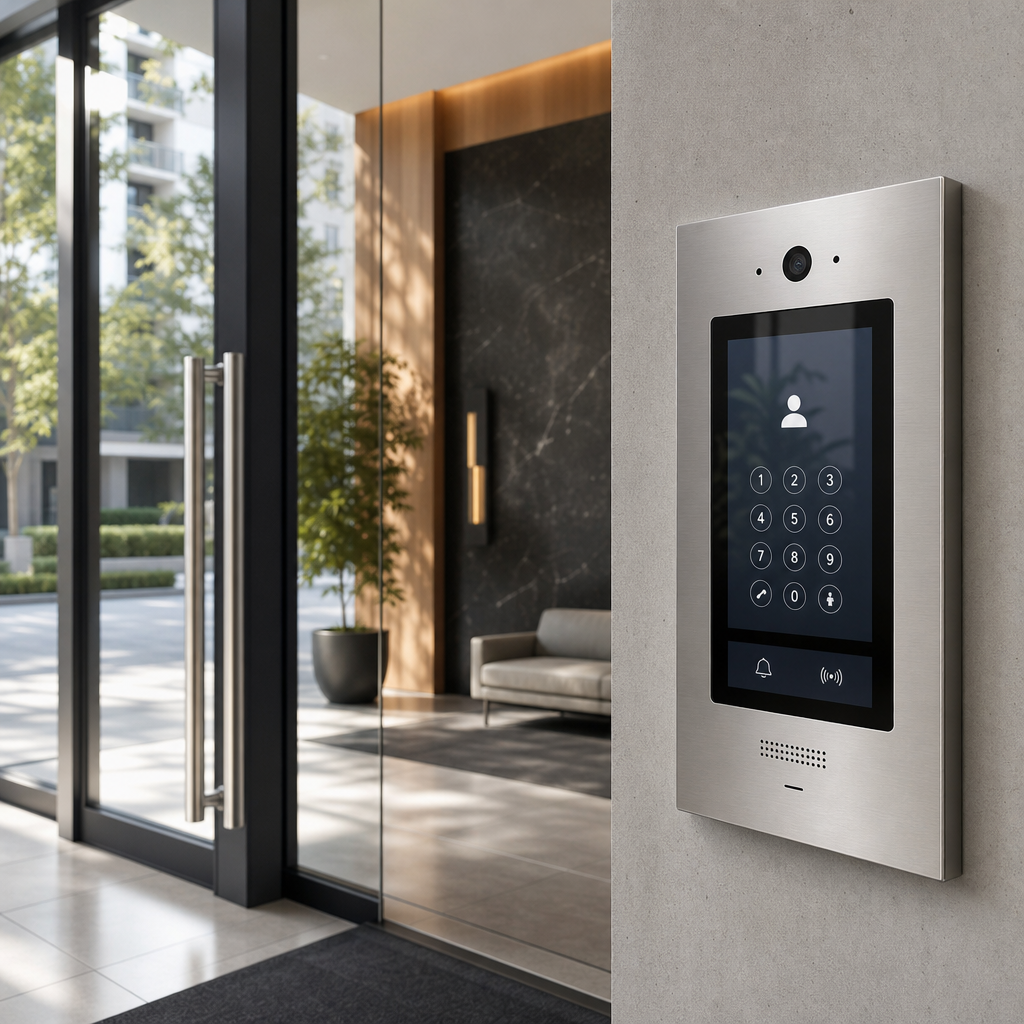
Choosing the wrong apartment intercom system costs property managers far more than the price of the hardware. A system that tenants cannot figure out, that fails during a power outage, or that requires a contractor visit every time a new resident moves in will drain your maintenance budget and damage your building’s reputation faster than a bad online review. This guide cuts through the noise and gives property managers, facility operators, and building owners a direct, practical framework for selecting, specifying, and installing apartment intercom systems that actually perform. Whether you manage a four-unit walk-up or a 300-unit high-rise, the decisions covered here apply directly to your situation.
Table of Contents
- Quick Takeaways
- Why the Intercom System Matters More Than Ever
- Types of Apartment Intercom Systems
- Wired vs. Wireless Apartment Intercom
- Key Features to Require Before You Buy
- Comparison of Intercom Approaches
- Installation Considerations for Multi-Unit Buildings
- Integrating Access Control with Your Door Entry System
- Total Cost of Ownership
- Frequently Asked Questions
- References
Quick Takeaways
| Key Insight | Explanation |
|---|---|
| IP-based systems are the standard for new installations | Cloud-connected intercoms allow remote management, tenant app access, and firmware updates without on-site technician visits, which directly reduces long-term operating costs. |
| Analog wired systems are not obsolete for retrofit projects | In buildings with existing two-wire or four-wire infrastructure, a wired intercom for apartments is often the most cost-effective and reliable upgrade path. |
| Wireless intercoms introduce latency and interference risks | In dense multi-unit buildings with many Wi-Fi networks competing for bandwidth, a poorly specified wireless system will produce dropped calls and frustrated residents. |
| Biometric and facial recognition integration is now accessible at mid-market price points | UnikCCTV carries biometric access panels that pair directly with door entry systems, eliminating fob management without requiring enterprise-level budgets. |
| Visitor management is the most overlooked intercom requirement | Package delivery access, temporary guest codes, and delivery driver protocols must be specified before purchase, not retrofitted after installation. |
| A multi-unit intercom system must scale with occupancy changes | Systems that charge per-directory-entry or per-tenant license become expensive in high-turnover buildings. Confirm licensing models before signing any purchase agreement. |
| Power backup is non-negotiable for any door entry system | Systems without battery backup or PoE failover leave residents locked out during outages, creating both safety and liability issues for building operators. |
Why the Intercom System Matters More Than Ever
The intercom at the front door of a residential building is the first security decision a visitor encounters. It signals, immediately and visually, how seriously a property owner takes access control. In practice, buildings that upgrade their door entry system see measurable reductions in unauthorized entry incidents, and property managers report that modern intercom systems are one of the top three amenities cited by prospective tenants during building tours.
According to Statista, the global video intercom market was valued at over 3.6 billion USD in 2022 and is projected to grow at a compound annual rate above 10% through 2030. That growth is not driven by luxury developments alone. Mid-market apartment owners are retrofitting older buildings with modern intercom for apartments because tenant expectations have shifted. Residents now expect to buzz in guests from their smartphones, receive package delivery alerts, and grant temporary access without leaving their units.
The mistake most property managers make is treating the intercom as a commodity purchase. They pick the lowest-cost panel that fits the rough opening of the old unit and move on. Then six months later they are paying a technician to reprogram directory entries every time a tenant moves out, because the system has no self-management portal.
Types of Apartment Intercom Systems
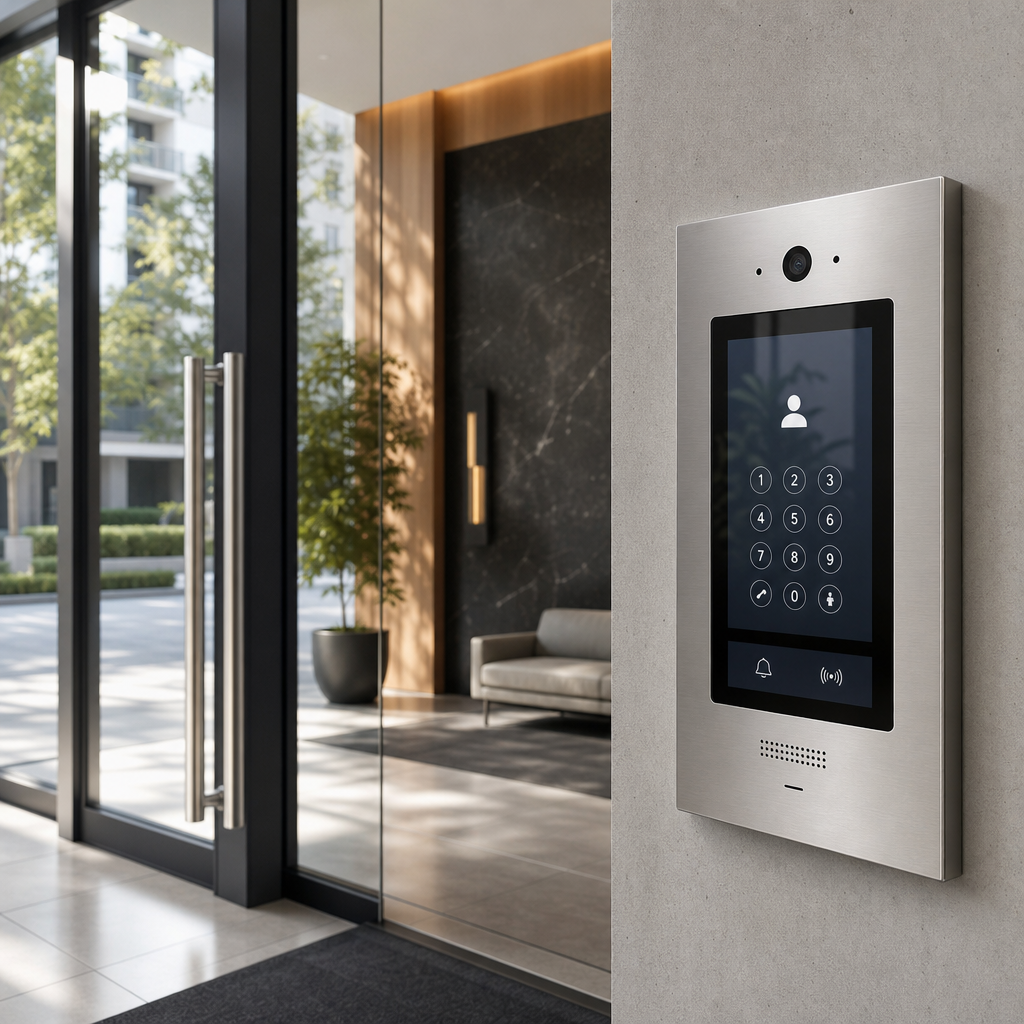
There are four meaningful categories of apartment intercom systems available today. Understanding the differences is the starting point for every buying decision.
Audio-Only Intercoms
Audio-only systems transmit voice communication between the entrance panel and the in-unit handset or telephone. They are the least expensive option and are appropriate for low-security applications, small buildings with four to eight units, or buildings where the budget for an upgrade is genuinely constrained. The critical limitation is that residents cannot visually confirm who is at the door, which is a meaningful security gap.
Video Intercom Systems
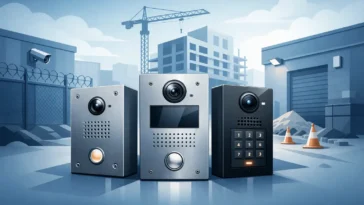
Video intercom systems add a camera at the entrance panel and a screen, smartphone app, or IP-connected device in the unit. This is the correct choice for virtually every multi-unit residential building. Residents see and hear the visitor before buzzing them in. The camera also creates a passive deterrent effect and provides recorded footage when paired with a CCTV integration. UnikCCTV’s range of wireless intercoms and door entry systems includes video-capable panels suitable for buildings from four units to several hundred.
IP-Based Cloud Intercoms
IP-based systems transmit audio and video over the building’s network infrastructure and connect to a cloud management platform. Property managers access the directory, review access logs, add or remove tenants, and issue temporary visitor codes from a browser or mobile app. This is the fastest-growing segment and the correct long-term choice for any building with more than 20 units or with high tenant turnover.
Telephone Entry Systems
Telephone entry systems dial a resident’s cell phone or landline when a visitor presses their name on the directory. The resident presses a key on their phone to release the door strike. These systems require zero in-unit hardware, which makes installation straightforward, but they depend entirely on the resident’s phone being available and the cellular or landline network being operational.
Wired vs. Wireless Apartment Intercom
This is the most debated decision in the multi-unit intercom category, and the answer is more nuanced than most manufacturers’ marketing materials admit.
When Wired Systems Win
Wired apartment intercom systems offer lower latency, no interference from competing wireless signals, and consistent performance that does not degrade as the building’s Wi-Fi environment changes over time. For new construction where conduit can be run during framing, or for retrofit projects where existing wiring is in place and in good condition, a wired system is the more reliable long-term choice. The installation cost is higher upfront, but the per-year cost of a reliable system over a ten-year lifecycle is almost always lower than the cumulative repair cost of a poorly specified wireless installation.
When Wireless Systems Make Sense
Wireless intercom for apartments is the practical solution when running new wiring through finished walls and ceilings is cost-prohibitive, or when a building owner needs a temporary or rapidly deployable solution. Modern wireless systems operating on the 5 GHz band with WPA3 encryption and dedicated access points perform acceptably in most residential environments. The key specification to require is a dedicated SSID or VLAN for the intercom traffic, isolated from the general tenant Wi-Fi network.
“The single biggest failure mode in wireless intercom deployments is co-channel interference from the building’s existing Wi-Fi infrastructure. If you are not assigning a dedicated access point and VLAN to the intercom system, you are setting yourself up for call drops and tenant complaints within six months.” – UnikCCTV installation advisory, based on multi-site deployment data
Pro tip: Before specifying a wireless intercom system for an apartment building, conduct a Wi-Fi spectrum survey using a tool like Ekahau or even the free NetSpot application. If the 2.4 GHz band shows more than four competing networks with strong signal strength, insist on a 5 GHz capable system and a dedicated access point.
Key Features to Require Before You Buy
A significant number of intercom purchases fail not because the hardware is bad, but because the buyer did not specify the right features before signing a purchase order. The following requirements are non-negotiable for any serious multi-unit installation.
Tenant Self-Management Portal
Any system without a web portal or mobile app for tenants to manage their own directory listings and access credentials creates ongoing administrative burden for property managers. In a 50-unit building with 30% annual turnover, that is 15 directory changes per year at minimum. If each change requires a technician visit or a call to the manufacturer’s support line, the cost accumulates quickly.
Package Delivery and Guest Access
The majority of tenant complaints about intercom systems today involve package delivery. Carriers need a reliable, auditable way to access the building lobby without a resident needing to be home. Require any system you consider to support time-limited PIN codes, QR codes, or carrier-specific delivery integrations before purchase.
Power Backup and Fail-Safe Door Control
Door strikes and magnetic locks should be specified as fail-safe (open on power loss) for egress doors and fail-secure for utility or restricted areas. The intercom panel itself must have either a battery backup unit or be powered by a PoE switch with an uninterruptible power supply. This is both a code compliance issue in many jurisdictions and a basic liability consideration for any building operator.
Integration with Existing Access Control
If your building already uses a key fob or biometric access system at secondary doors, the intercom panel should integrate with the same access control platform. UnikCCTV offers biometric access systems and smart locks that can operate as a unified access control ecosystem alongside their intercom and CCTV product lines, which eliminates the cost and complexity of managing multiple separate systems.
Comparison of Intercom Approaches
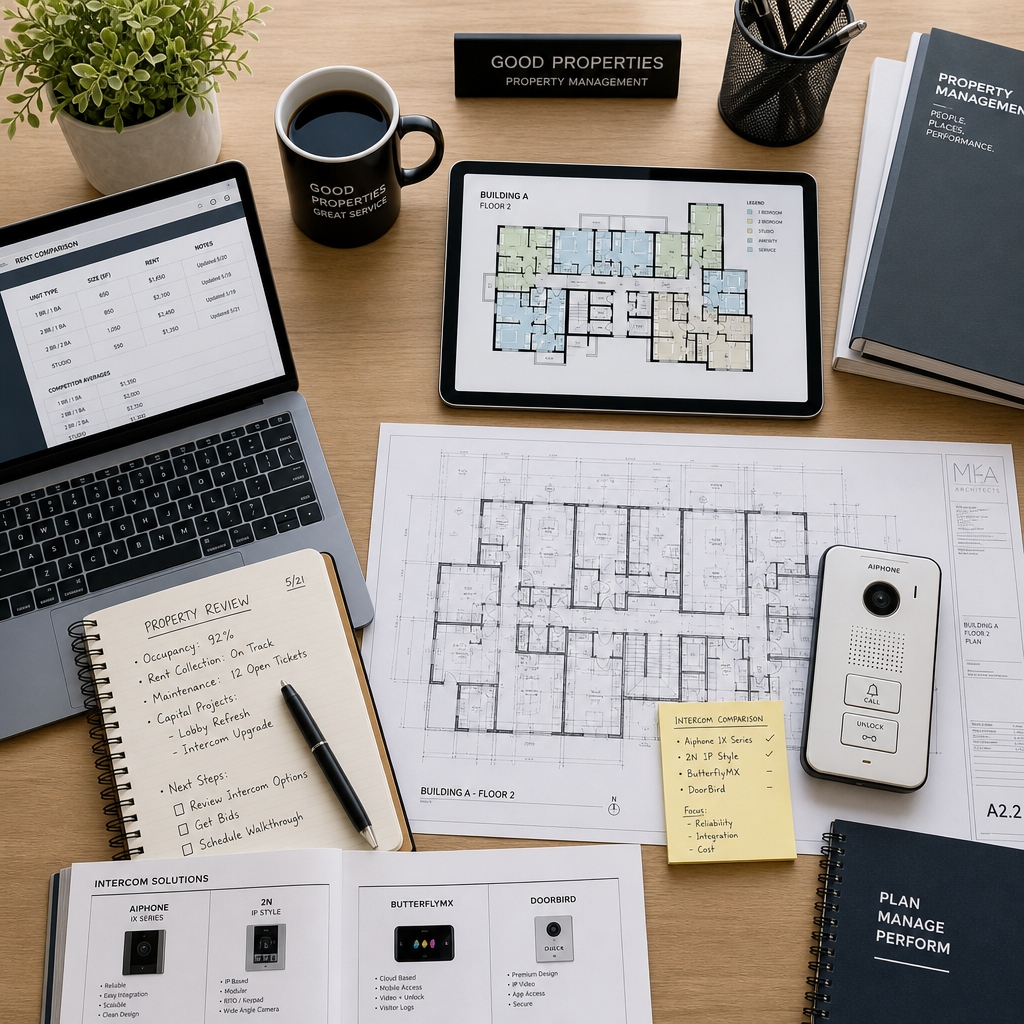
The table below compares the three most common intercom approaches for apartment buildings. These are real, named system architectures that installers and property managers encounter regularly, not abstract categories.
| Intercom Approach | Best Fit Scenario | Primary Limitation |
|---|---|---|
| Traditional Wired Video Intercom (analog or IP over structured cabling) | New construction, retrofit with existing wiring, buildings requiring maximum reliability and zero wireless interference | Higher installation labor cost, conduit runs required in retrofit projects without existing wiring |
| Cloud-Based IP Intercom (smartphone app, no in-unit hardware) | Buildings with high tenant turnover, property management companies operating multiple sites from a single dashboard, buildings seeking zero in-unit hardware cost | Dependent on reliable cellular or Wi-Fi connectivity for residents. Call failures occur if residents have poor signal inside units |
| Telephone Entry System (cell phone or landline dial-out) | Low-budget retrofits, small buildings under 10 units, temporary or transitional access solutions | No video capability, no access log without add-on hardware, dependent on carrier network availability |
Pro tip: If you are evaluating cloud-based intercom vendors, ask specifically whether the system operates in offline or LAN-only mode if the internet connection drops. Systems that require a live cloud connection to unlock a door are a safety and liability risk. A well-designed system stores credential data locally and syncs to the cloud when connectivity is restored.
Installation Considerations for Multi-Unit Buildings
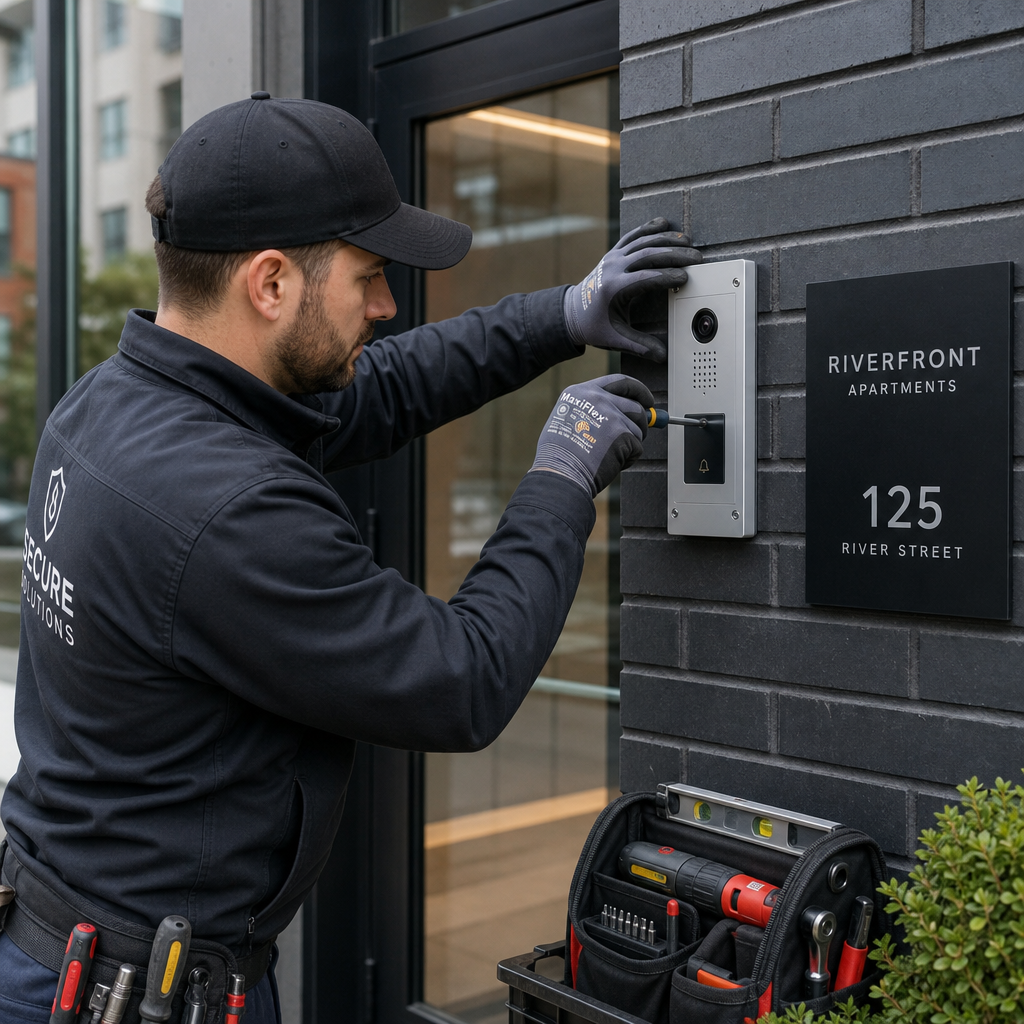
Installation is where the gap between a good buying decision and an operational disaster opens up. Property managers who have been through multiple intercom installations will confirm that the installation phase is where most budget overruns and performance failures originate.
Door Strike and Electromagnetic Lock Compatibility
The intercom panel controls a door release mechanism, either an electric door strike or an electromagnetic lock. These components must be specified to match the door hardware, the door frame material, and the power supply available at the door location. A common mistake is purchasing a panel that outputs 12V DC when the existing door strike is rated for 24V DC, or selecting a magnetic lock with a holding force that exceeds the door frame’s capacity to resist it.
Directory Configuration and Tenant Onboarding
For buildings above 20 units, the time required to program an initial directory is a real project cost. Systems with CSV import capability or API integration with property management software like Yardi or AppFolio reduce onboarding time substantially. Confirm this capability before purchase. In practice, manual programming of a 100-unit directory through a keypad interface can consume an entire working day of installer time.
Camera Placement and Lighting at the Entrance Panel
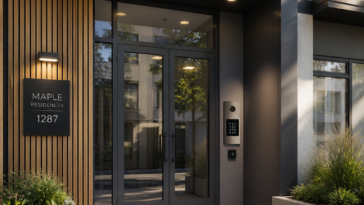
The entrance camera on an intercom panel must be positioned to capture a clear face image of the visitor, not the top of their head or the underside of their chin. Standard panel mounting height is between 48 and 54 inches from finished floor to the center of the camera lens. At this height, the camera captures a clear facial image for most adult visitors. Supplemental overhead lighting at the entrance is strongly recommended to ensure usable video during evening hours.
Integrating Access Control with Your Door Entry System
The intercom is one component of a broader access control architecture. Property managers who treat it as a standalone device consistently end up with redundant systems, conflicting credential databases, and higher maintenance costs than buildings that plan for integration from the beginning.
A fully integrated door entry system at a residential building typically includes: a video intercom panel at the main entrance, a key fob or biometric reader at secondary doors and the parking gate, a CCTV camera system covering entrance points and common areas, and a centralized access control platform that manages all credentials from a single interface.
UnikCCTV’s product catalog is specifically designed for this kind of layered integration. Their gate access controls, biometric panels, time attendance clocks, and CCTV equipment are compatible with a common access control infrastructure, which means a property manager can issue a single credential, whether it is a fob, a PIN, or a biometric enrollment, that works across every access point in the building.
The alternative, which is purchasing an intercom from one vendor, a fob system from another, and a gate controller from a third, creates a credential management problem that grows more expensive with every tenant change. This is a structural issue with how many property owners shop for security equipment, and it is worth solving at the specification stage rather than after installation.
Total Cost of Ownership
The purchase price of an intercom panel is usually the smallest cost over a ten-year ownership period. Property managers who evaluate intercom systems only on hardware cost consistently make the wrong buying decision. A complete total cost of ownership analysis must include the following components.
Hardware and Installation
Panel cost, wiring or wireless infrastructure, door hardware, power supply, and installation labor. For a 50-unit building with one main entrance and two secondary access points, a realistic budget for a mid-range IP video intercom system with professional installation runs between 4,000 and 12,000 USD depending on the system specification and regional labor rates.
Software and Subscription Fees
Cloud-based intercom systems typically charge a monthly or annual subscription for access to the management platform, remote access features, and video storage. These fees range from 1 to 5 USD per unit per month in the market. Over a ten-year period on a 50-unit building, that is between 6,000 and 30,000 USD in software costs alone. Confirm whether the system functions with full features if the subscription lapses, or whether it becomes non-operational.
Maintenance and Support
Panel cleaning, firmware updates, door hardware maintenance, and occasional component replacement are ongoing costs. Systems from established manufacturers with local installer networks, such as those available through UnikCCTV, typically have shorter service response times and more predictable parts availability than systems from offshore brands with no local support infrastructure.
Tenant Turnover Administration
As discussed above, the administrative cost of managing tenant directory changes, credential issuance, and access revocation is a real line item. Systems with self-service tenant portals and automated offboarding dramatically reduce this cost. For a building with 30% annual turnover, this is not a minor consideration.
Frequently Asked Questions
What is the difference between a multi-unit intercom and a single-unit door intercom?
A multi-unit intercom system includes a directory panel at the building entrance that allows visitors to select a specific resident or unit, and then connects the visitor to that unit’s handset, app, or phone number. A single-unit intercom connects directly to one indoor station without any directory or selection functionality. For any building with more than one occupant or unit, a multi-unit system is the correct specification.
Can I retrofit a video intercom into an older apartment building without running new wiring?
In most cases, yes. Several modern video intercom systems are designed specifically for retrofit applications and can operate over existing two-wire telephone wiring, existing coaxial cable, or wirelessly via Wi-Fi. UnikCCTV offers wireless intercom options that are designed for retrofit applications where running new wiring through finished construction is cost-prohibitive. A site assessment by a qualified installer will confirm which approach is feasible for a specific building.
How many units can a single apartment intercom panel support?
This varies significantly by system and manufacturer. Entry-level panels typically support 10 to 30 units. Mid-range IP systems commonly support 100 to 500 units with expanded directory modules. Enterprise-grade systems can support several thousand units across multiple buildings managed from a single platform. Confirm the maximum directory capacity of any system you are evaluating, and confirm what additional hardware is required to reach that maximum.
Do apartment intercom systems work during a power outage?
Only if they are connected to a battery backup or uninterruptible power supply. Standard intercom panels require AC power to operate. The door strike or magnetic lock also requires power to release or hold the door. For code compliance and safety, egress doors with electric hardware must be specified with a power failure mode that does not trap residents inside. A battery backup unit rated for a minimum of four hours of operation is the standard recommendation for residential building intercom installations.
What is the best intercom system for a small apartment building with fewer than 10 units?
For buildings under 10 units, a direct-dial telephone entry system or a compact IP video intercom panel with smartphone app integration is typically the most cost-effective solution. Telephone entry systems require no in-unit hardware and are straightforward to install. Compact video intercom systems add visual confirmation capability at a modest cost premium. The key specification at this building size is reliability and ease of tenant directory management, not the advanced features required at larger properties.
Should I integrate my intercom system with a CCTV surveillance system?
Yes, and doing so significantly increases the security value of both systems. An entrance camera integrated with a CCTV recorder provides continuous recording at the building entry point, which the intercom panel camera alone typically does not. In practice, the combination of a video intercom, a CCTV camera, and a CCTV recorder at the entrance creates an auditable record of every visitor interaction, which is valuable for incident investigation and for demonstrating due diligence in building security management. UnikCCTV’s product line is specifically designed to support this kind of integrated deployment.
How long do apartment intercom systems typically last?
Quality apartment intercom systems from established manufacturers have an expected service life of 10 to 15 years for the core panel hardware. Outdoor entrance panels are subject to UV exposure, moisture, and physical wear, and should be rated for outdoor installation with an IP65 or higher ingress protection rating. Electronic components and software platforms may require updates or replacement before the physical hardware reaches end of life. When evaluating a system, confirm the manufacturer’s track record for long-term firmware support and parts availability.
If you have installed or managed an apartment intercom system recently, share what worked or what you would do differently in your next project so other property managers can benefit from your experience.
We would love your feedback and any insights you would share with others. What perspective would you add?
References
- Statista: Global video intercom market size data and growth projections through 2030
- Forbes: Analysis of smart building technology adoption trends in residential real estate
- U.S. Department of Energy: Guidelines for building access control and power backup requirements in commercial and residential properties
- NIST: Physical access control system standards and security recommendations for multi-tenant buildings
- U.S. Department of Housing and Urban Development: Building security and access control guidance for residential property operators

 No products in the cart.