
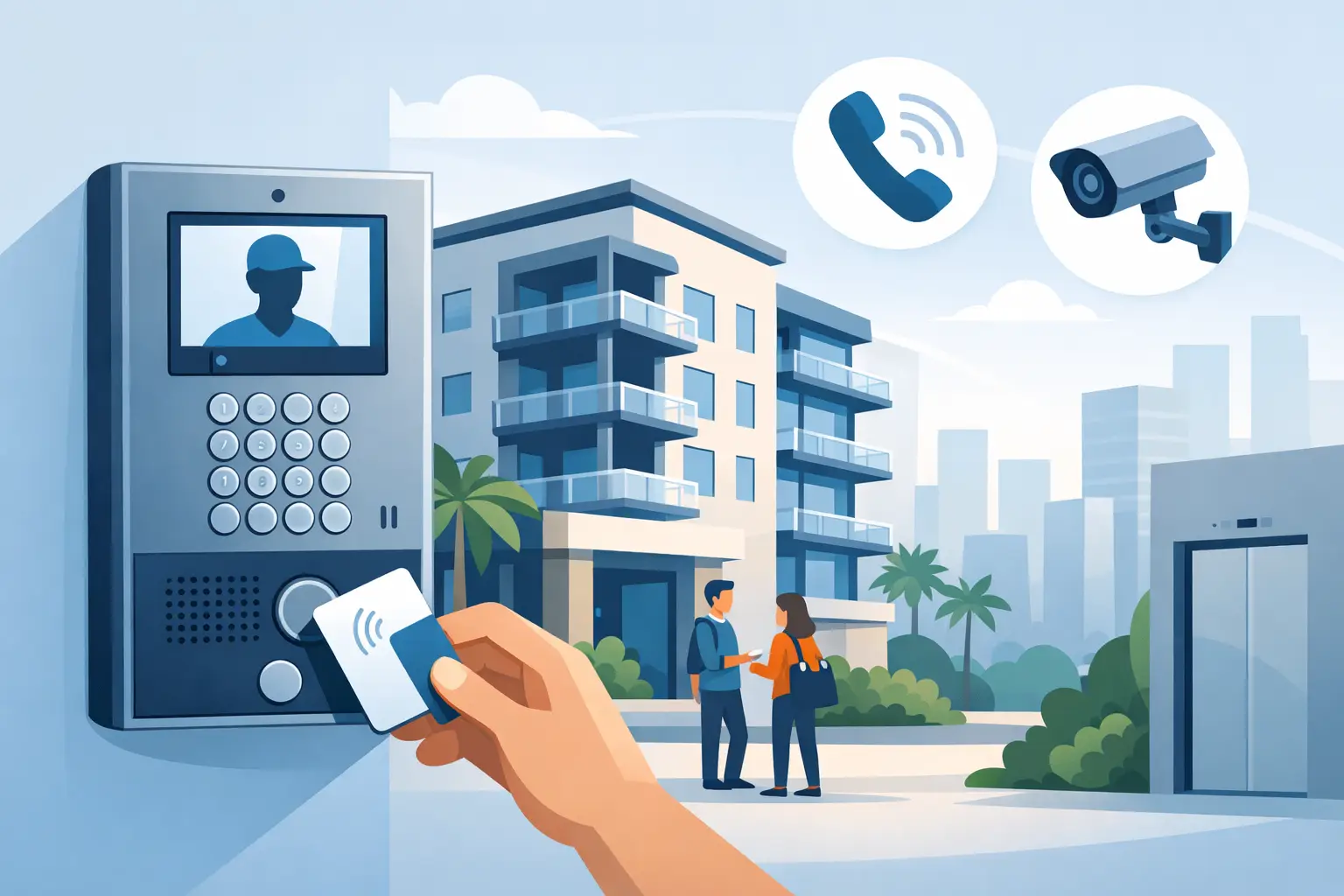
A front door that stays locked is only half the job. In a condo building, residents still need to let in guests, delivery drivers, contractors, and service personnel without turning the lobby into an open-access point. That is where a telephone entry system for condos earns its place. It gives residents a practical way to verify visitors and grant access while giving managers more control over how the building handles daily traffic.
For condo boards, property managers, and installers, the real question is not whether an entry system is useful. It is which type fits the building, the resident base, and the site conditions without creating unnecessary service calls later. A good system needs to be reliable, easy to manage, and compatible with the door hardware and access setup already in place.
What a telephone entry system for condos actually does
At the door or gate, a visitor uses the entry panel to find a resident and place a call. The resident answers on a phone line, mobile device, or designated handset depending on the system design, speaks with the visitor, and can trigger the door or gate release remotely. In many buildings, the same platform also supports PIN codes, directory dialing, key fobs, cards, or postal lock integration.
That sounds straightforward, but the hardware behind it can vary quite a bit. Some systems are built around traditional telephone lines. Others use cellular communication or network-based connectivity. Some are intended for a single entrance, while others can be expanded across multiple doors, gates, or building sections. The right choice depends on how the condo operates day to day, not just what looks good on a spec sheet.
Start with the building, not the brochure
A small walk-up condo with one front entrance has different requirements than a multi-building property with parking access, package rooms, and separate resident amenities. Before comparing models, it helps to define the actual scope of the job.
The first issue is entry count. If the property needs communication at the main lobby only, system selection is easier. If the site also needs gate entry, garage access, or side-door control, expansion capability matters. Some entry systems handle this well through modular hardware or integration with a broader access-control platform. Others are better treated as stand-alone door stations.
Resident count also affects the decision. A 12-unit building can work with a simpler directory and limited management tools. A 150-unit condo building needs a system that handles larger databases, easier resident updates, and faster administrative changes when owners move in, change phone numbers, or assign access credentials.
Then there is the question of who will manage the system. If management wants to make updates in-house, the programming interface should be practical for non-technical staff. If updates will always go through an installer or service provider, the focus can shift more toward durability and integration than user-friendly administration.
Telephone line, cellular, or network-based service
One of the most important buying decisions is how the system places calls.
Traditional telephone-line systems are still a workable option in some properties, especially where legacy infrastructure already exists. They can be dependable, but they also depend on the availability and long-term practicality of landline service. In many cases, boards and managers are moving away from that model because phone service costs and carrier support are changing.
Cellular-based systems solve a lot of wiring and carrier issues. They are often easier to deploy at gates or remote entrances where trenching or dedicated telecom service would add cost. They also fit well in retrofit work, particularly when an older entry panel is being replaced and the site wants to avoid major infrastructure changes. The trade-off is recurring cellular service cost, along with the need to verify signal strength and carrier reliability at the installation point.
Network-based systems can offer more flexibility and better integration with modern property infrastructure, especially when paired with managed access control. They may support app-based management, event tracking, and remote programming. But they place more weight on network stability, IT coordination, and proper configuration. In a condo environment, that is not always a problem, but it should never be treated as automatic.
Door hardware compatibility matters more than many buyers expect
An entry panel does not secure a building by itself. It tells another device to unlock the door, release the gate, or trigger the operator. That is why lock compatibility needs to be confirmed early.
For pedestrian doors, the system may need to work with an electric strike, magnetic lock, electrified mortise lock, or another release device. Each has different power and life-safety considerations. If there is already hardware on the opening, the new system should be matched to what is there or the opening should be evaluated as part of the upgrade.
For vehicle gates, the conversation changes again. The telephone entry unit may need to trigger a gate operator, monitor door position, or coordinate with separate safety devices and loop detectors. A condo entrance that mixes pedestrian and vehicle access often benefits from a more unified access-control strategy instead of piecing together unrelated components.
This is where experienced distribution support matters. A system that looks compatible on paper can still create problems if relay output, voltage requirements, lock timing, or enclosure conditions are overlooked.
Resident experience is a practical issue, not a cosmetic one
Condo boards often focus on the exterior panel, but residents live with the calling experience every day. If the system is slow, confusing, or unreliable, complaints show up quickly.
Directory usability is one part of that. Visitors should be able to find residents without scrolling through a poorly organized list or dealing with unclear prompts. Audio quality also matters. If the resident cannot clearly hear who is at the door, the system creates friction instead of control.
Another factor is how calls are routed. Some properties want calls to go directly to resident phones. Others prefer a hybrid model with app support, alternate numbers, or time-based routing. In senior-oriented or mixed-use condo properties, simplicity can matter more than feature depth. In newer developments, mobile-first convenience may be a stronger selling point. Neither approach is universally better. It depends on the resident base and the management priorities.
Reliability in outdoor and high-traffic conditions
Most condo entry systems live in demanding environments. Exterior panels face rain, snow, humidity, heat, dust, and repeated daily use. Vandal resistance may also matter depending on the neighborhood and building layout.
For that reason, enclosure quality, button durability, weather resistance, and reader protection should not be treated as secondary details. A lower-cost system may look attractive during budgeting, but if the keypad fails in winter or the directory becomes hard to read in direct sun, the savings disappear fast.
Installers usually know this from experience. Property managers often learn it after the first avoidable service cycle. A better-grade panel, proper housing, and the right mounting method usually pay for themselves over time.
Features worth paying for and features you may not need
Not every condo property needs the same level of functionality. A telephone entry system for condos can range from basic visitor calling to a broader managed-entry platform.
Useful features often include PIN or code access for residents, credential support for fobs or cards, audit trails, remote management, elevator control integration, and multi-entrance expansion. In buildings with frequent deliveries or contractors, temporary credentials and timed access schedules can reduce day-to-day management burden.
At the same time, some properties overbuy. A luxury feature set is not much help if the staff will not use it or the residents do not need it. The best specification is usually the one that fits current operations while leaving room for reasonable growth.
Retrofit vs new construction
In new condo construction, the system can be planned around power, low-voltage pathways, door hardware, and management requirements from the start. That makes it easier to choose a platform with broader capabilities.
Retrofit work is more constrained. Existing wiring, old backboxes, legacy locks, damaged conduit, and unfinished telecom history all affect what makes sense. In these cases, a clean replacement strategy is often more valuable than chasing every possible feature. A practical upgrade that improves reliability and resident convenience is usually the better investment than forcing a complex platform into a difficult site.
This is also why site assessment matters. Measurements, power verification, communication path review, and lock evaluation should happen before equipment is finalized. For many projects, that up-front discipline prevents the delays and change orders that make condo boards wary of access upgrades.
A better buying approach
The strongest results usually come from treating condo entry as part of the building’s larger access plan. The entry panel, lock hardware, credentials, management software, and support path should work together. If one piece is weak, the whole system becomes harder to manage.
For buyers comparing options, the best questions are practical ones. How will residents receive calls? Who updates the directory? What hardware releases the door? How will visitors be handled after hours? What happens if internet service drops or a cellular signal is weak? Those questions get you closer to the right system than feature marketing ever will.
For installers and property decision-makers who need dependable equipment and clear compatibility guidance, working with a specialized supplier such as UnikCCTV can shorten the path from quote to successful installation.
A condo entry system should make the property easier to secure, easier to manage, and easier to live in. If it does all three, it is usually the right fit.


 No products in the cart.