
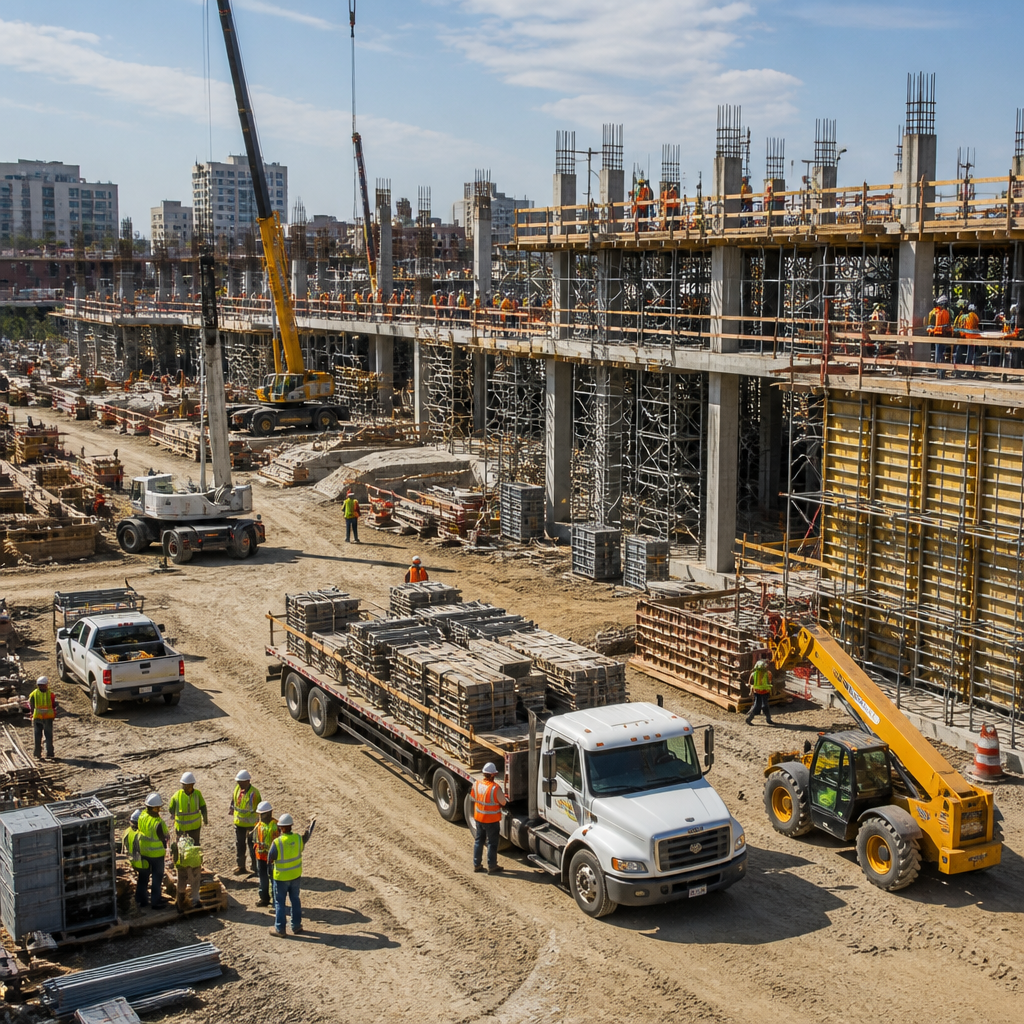
A miscommunication between a ground crew and a crane operator does not just slow a job down – it can end it in the worst possible way. Construction sites are high-noise, high-stakes environments where verbal shouting and hand signals fail precisely when they matter most. A properly deployed group intercom system changes that equation by keeping every member of a crew connected in real time, whether they are on the 20th floor, operating heavy machinery, or managing deliveries at the gate. This article breaks down how to choose, deploy, and get the most out of construction site intercom systems so your teams stay coordinated and your site stays safe.
Table of Contents
- Quick Takeaways
- Why Standard Radios Fall Short on Construction Sites
- What Makes a Group Intercom System Different
- Types of Construction Site Intercom Systems
- Key Features to Demand from a Project Site Intercom
- Comparison of Intercom Approaches for Construction Sites
- Common Deployment Mistakes and How to Avoid Them
- Integrating Intercoms with Site Access Control
- Frequently Asked Questions
- References
Quick Takeaways
| Key Insight | Explanation |
|---|---|
| Push-to-talk radios block urgent warnings | Only one person can transmit at a time on a PTT radio. A critical warning from a ground worker can be “stepped on” by someone already speaking, creating dangerous delays. |
| Hands-free operation is non-negotiable on active sites | Workers operating equipment or climbing scaffolding cannot hold a radio handset. Group intercom systems designed with wearable or helmet-mounted units solve this directly. |
| Wireless mesh networks outperform Wi-Fi on open sites | Mesh systems create their own network between devices without relying on a router or cellular signal, making them ideal for remote or infrastructure-free project sites. |
| Group routing is what separates an intercom from a radio | A group intercom system routes a single broadcast to every member of a defined team simultaneously, not just one recipient, which is essential for coordinating crews across zones. |
| Noise cancellation is a safety feature, not a comfort one | OSHA mandates hearing conservation programs when workers are exposed to noise above 90 dBA. An intercom with active noise cancellation lets workers communicate clearly without removing hearing protection. |
| Scalability determines long-term value | A system that caps at 10 users becomes a problem on a large commercial site. Prioritize systems that support 50 or more extensions with straightforward add-on units. |
| Access control integration closes a major security gap | Construction sites are frequent targets for equipment theft. Pairing a group intercom with gate access control means one system handles both crew communication and unauthorized entry prevention. |
Why Standard Radios Fall Short on Construction Sites
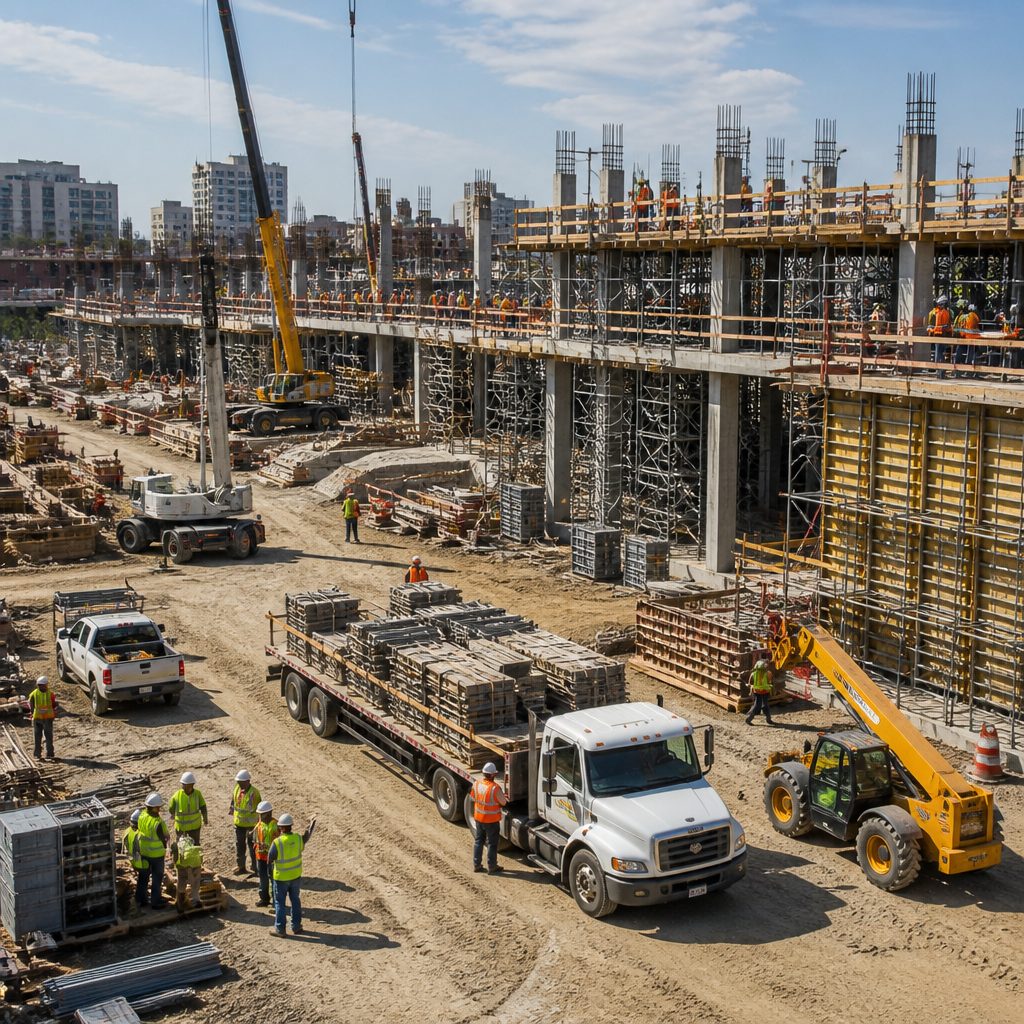
The traditional two-way radio has served construction crews for decades, and it still has a place. The problem is that its limitations become dangerous in the specific conditions that define active construction: high ambient noise, multi-level work zones, and situations where workers need both hands.
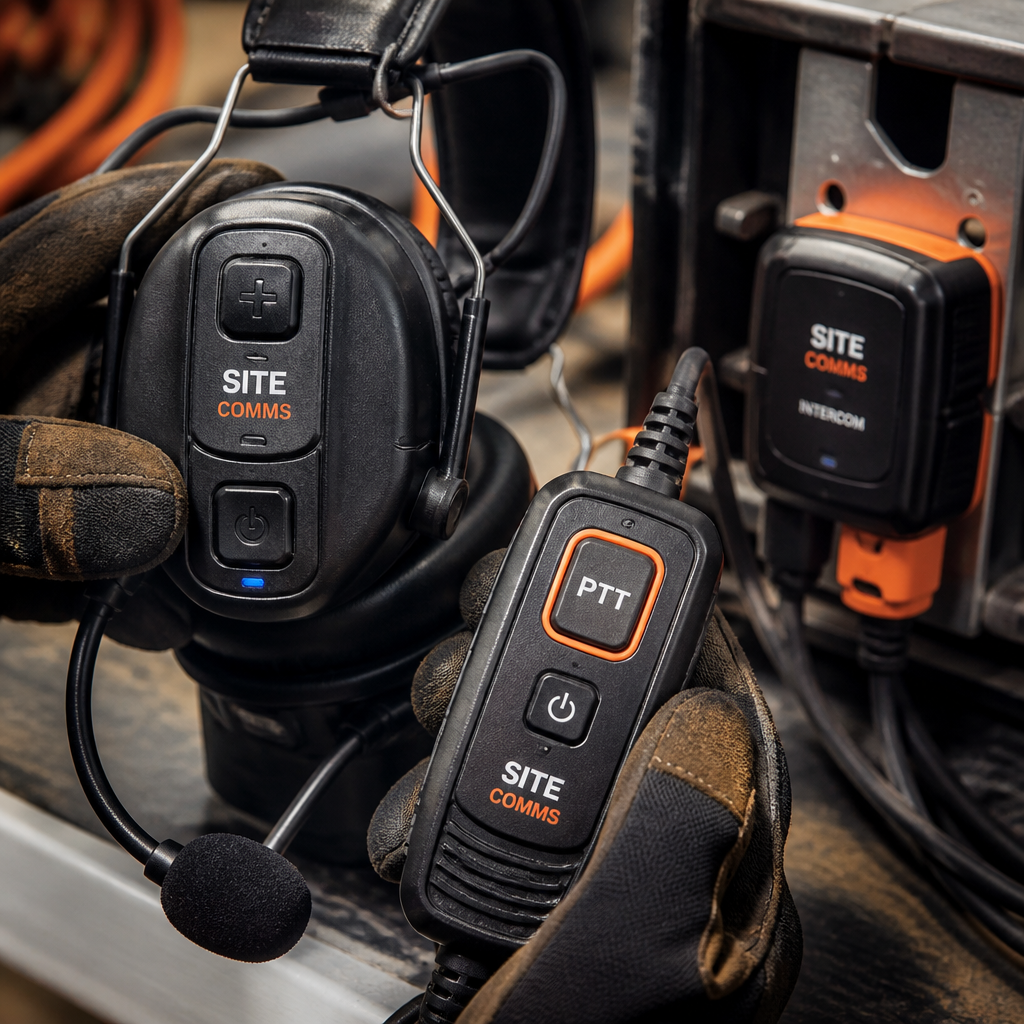
With a standard push-to-talk radio, only one person can transmit at a time. If a worker on the ground has an urgent safety warning for an equipment operator, but someone else is already speaking, that warning gets blocked. The message does not go through until the channel clears – and on a construction site, a two-second delay is not a minor inconvenience. Beyond blocking, workers operating heavy equipment or working at height simply cannot reach for a handset without creating a new safety risk.
Noise compounds everything. Construction environments regularly generate noise above 85 dBA, which is the threshold at which OSHA identifies hearing hazard risk. Shouting into a standard radio handset in that environment produces poor audio quality and forces workers to remove hearing protection to hear the speaker – which defeats the purpose of wearing it in the first place.
Pro tip: If workers on your site are routinely repeating themselves or asking for message confirmations, that is a signal that your current communication setup is creating dangerous information gaps, not just workflow inefficiency.
What Makes a Group Intercom System Different
A group intercom system is purpose-built for team-wide simultaneous communication. When a supervisor broadcasts a message, every unit in the defined group receives it at once. There is no channel contention, no push-to-talk discipline required, and no information hierarchy where one person’s transmission blocks another’s.
This architecture matters on construction sites because communication needs happen in parallel. The foreman may need to update the entire crew while the safety officer is relaying instructions to a separate zone team. A group system supports these concurrent communication flows where a single shared radio channel cannot.
Clear communication allows workers to report hazards or call for help quickly, reducing the risk of accidents. Better coordination between workers and operators ensures tasks are completed without confusion or delays.
Modern group intercom systems also support subgroup functionality. A large commercial site with a structural steel crew, a concrete team, and an electrical crew does not benefit from all three receiving every message. Good systems let you define communication groups and switch between them as task phases change, keeping broadcasts relevant and reducing noise fatigue.
Types of Construction Site Intercom Systems
Wearable and Helmet-Mounted Intercom Units
These are the strongest option for active work zones where hands-free operation is required. Units integrate with hard hat mounts or headbands, allowing full-day hands-free communication without the worker needing to touch a device. Advanced versions include voice-command activation so workers never need to press any button at all. They also incorporate hearing protection elements, which means workers get both communication capability and OSHA-compliant hearing protection from a single piece of equipment.
Push-to-Talk Wireless Intercom Stations
For site managers, gate attendants, or workers in fixed positions (hoisting operators, security checkpoints), a push-to-talk wireless station with a two-mile or greater range provides reliable audio without requiring cellular infrastructure. Systems like the ZDL-8021-category devices operate on dedicated wireless frequencies rather than Wi-Fi, which means they function on remote sites that have no internet connectivity. These units work well as the base-layer communication layer that supplements wearable intercoms for crew supervisors who are stationary.
Dynamic Mesh Network Systems
Mesh intercom systems create a wireless network directly between the devices themselves, with no base station or router required. Each unit serves as a node, extending the network range automatically as more units are added. This architecture is particularly well-suited for large open sites or multi-building construction projects where conventional Wi-Fi coverage would be spotty or expensive to deploy. Teams can split into smaller subgroups and rejoin the main group without reprogramming, which matches the fluid structure of construction crew assignments.
Fixed-Station Intercom Systems for Multi-Level Sites
High-rise and multi-story construction introduces a vertical dimension that wireless range must account for. Installing fixed intercom stations at each floor or vertical zone, connected to a main controller, ensures that hoist operators, floor supervisors, and ground crews have a persistent communication link regardless of floor count or building material interference. These systems are essentially a temporary site-specific intercom network that can be removed and redeployed once the project is complete.
Key Features to Demand from a Project Site Intercom
Not all construction site intercom systems are built for the same conditions. These are the features that separate a system that actually works from one that fails on day two of deployment.
Noise cancellation at the microphone level. This is the single most important audio feature. Active noise cancellation in the microphone – not just the speaker – ensures that the person transmitting is heard clearly even when standing next to a generator, jackhammer, or concrete mixer.
Weather and dust resistance. A site intercom that is not rated for dust and rain exposure is not a site intercom. Look for IP65 or higher ratings. Construction sites are not office environments, and a system that requires shelter to function creates gaps in coverage exactly where coverage is needed.
Battery life sufficient for a full shift. A unit that dies at hour six of an eight-hour shift creates a safety gap. Systems should offer at least a full-day continuous-use battery with in-field charging options such as AC cradles.
Scalability without reprogramming every unit. Some systems require a computer or service center visit to add a new unit to a group. On construction sites where crews grow and change regularly, that is an unacceptable bottleneck. Prioritize systems where adding a new unit is as simple as synchronizing it with the group, comparable to pairing a Bluetooth device.
No Wi-Fi or cellular dependency. Cellular signal is unreliable on sites with steel framing, underground levels, or remote locations. Systems that operate on their own dedicated frequency bands or mesh networks remain functional regardless of local infrastructure.
Pro tip: Before committing to any group intercom system, test a unit in the noisiest corner of your site. If the receiver cannot understand a normal-volume voice transmission from 20 feet away with heavy equipment running nearby, the system will fail you in an emergency.
Comparison of Intercom Approaches for Construction Sites
| Approach | Best For | Key Limitations |
|---|---|---|
| Traditional Push-to-Talk (PTT) Radio | Small crews (under 10) in open areas with minimal concurrent activity | One speaker at a time, requires a free hand, no group broadcast, channel blocking in emergencies |
| Wearable Wireless Group Intercom System | Active construction crews, equipment operators, multi-level vertical builds, hearing-protection zones | Higher upfront cost per unit, requires battery management for full-shift coverage |
| Wireless Mesh Network Intercom System | Large open sites, remote project locations, phased builds that expand over time | Requires sufficient node density for consistent coverage across very large sites, initial configuration time |
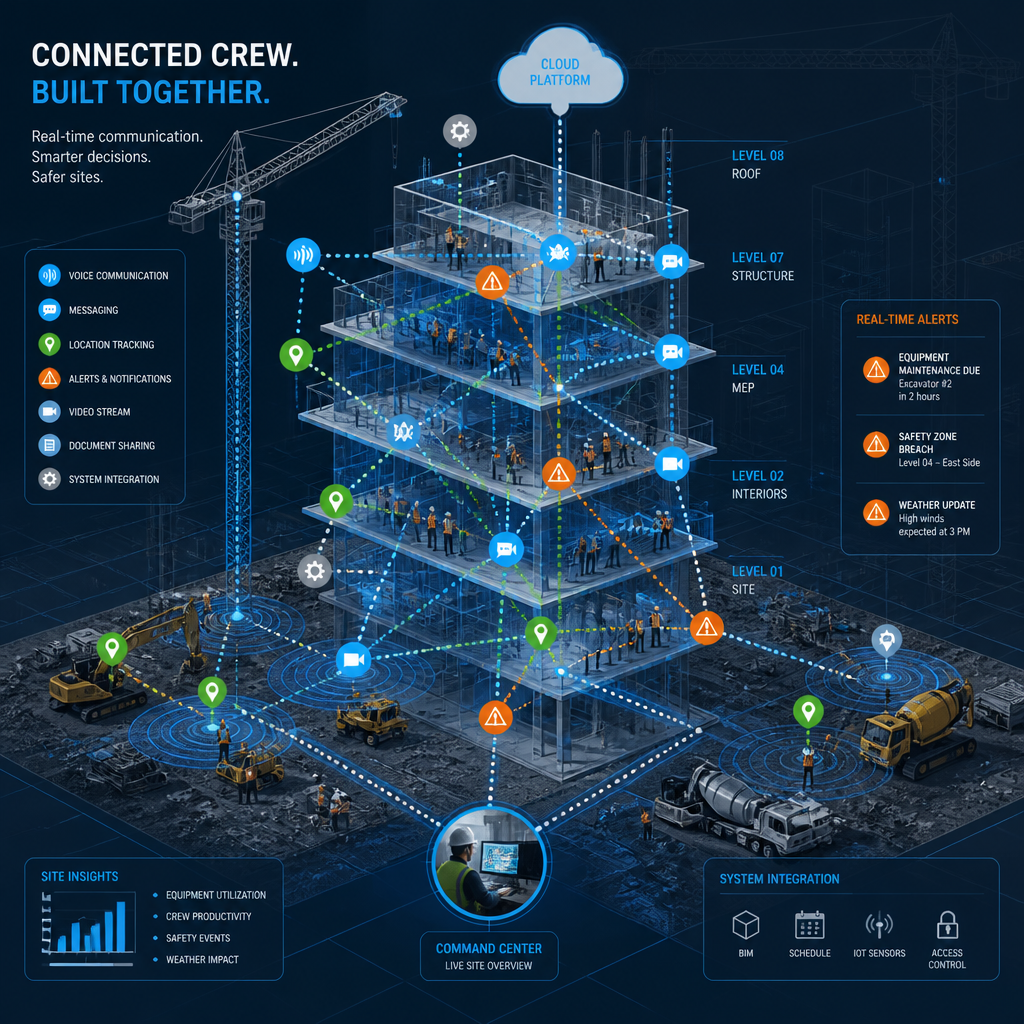
In practice, most mid-to-large construction projects benefit from a layered approach: wearable units for active crew members, fixed-station or PTT wireless intercoms at key control points (gates, hoist stations, site offices), and a mesh or dedicated-frequency backbone connecting all zones. A single-technology solution rarely covers the full communication surface of a complex build.
Common Deployment Mistakes and How to Avoid Them
The most common mistake is treating intercom deployment as a one-time setup rather than a living system. Construction sites change daily – new zones open, crews rotate, and building materials alter radio propagation. A communication plan that worked in week one needs to be tested and adjusted as the site evolves.
A second frequent error is underestimating the number of units required. The instinct to buy the minimum necessary and add later creates coverage gaps that coincide with the busiest and most hazardous phases of a project. Deploy enough units to cover all active zones from day one, including spares for units that go out of service.
Failing to train workers on group structure and channel discipline is another avoidable problem. Even an excellent group intercom system becomes noise if workers broadcast irrelevant messages to the whole group. Define communication groups by crew function (structural, electrical, ground crew, supervisors), assign a group leader who controls broadcast discipline, and brief every new worker on which channel to use for what purpose.
Finally, purchasing a system without weatherproofing because it is “only temporary” is a false economy. A unit that fails after a rain delay has not saved money – it has created a safety liability.
Integrating Intercoms with Site Access Control
Construction site theft is a persistent operational problem. Equipment, materials, and tools represent significant capital investment, and an unsecured perimeter makes them easy targets outside of active work hours. A group intercom system that integrates with gate access control solves both the communication problem and the security problem with a single infrastructure decision.
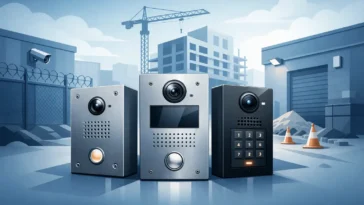
The most practical configuration for a construction site is a wireless intercom system at the main entrance gate that allows gate attendants or site supervisors to verify and admit personnel without being physically present at the gate at all times. Gate visitors can initiate a call from the entry panel, which routes to the supervisor’s intercom unit or a designated monitoring station. Combined with keypad or keyfob access, this creates a controlled perimeter that does not slow down authorized personnel.
For larger sites with multiple access points, intercoms at each entry zone feed into a centralized communication group, giving the site manager real-time awareness of all entry activity from a single device. This is the same architecture used in commercial building access control – applied to a temporary project site context.
UnikCCTV offers intercom systems specifically categorized for project site and group communication use cases, including push-to-talk wireless units with two-mile range that require no cellular network, and expandable wireless intercom kits that support up to 99 extensions. For construction site managers evaluating options, the Push-to-Talk 2-Mile Range Wireless Intercom and the Group Communication Walkie-Talkie Intercom with multi-group support are worth evaluating as starting points. The 11-Unit Portable Extension Wireless Intercom Kit supports up to 99 extensions and runs on rechargeable lithium batteries, which aligns well with full-shift deployment requirements.
Frequently Asked Questions
What is a group intercom system and how does it differ from a walkie-talkie?
A group intercom system broadcasts a single transmission simultaneously to every unit in a defined group without requiring individual channel selection or a push-to-talk response from each recipient. A walkie-talkie operates on a shared channel where only one person transmits at a time, others must wait, and there is no structured group routing. Group intercom systems are designed for team-wide coordination, while walkie-talkies are designed for sequential one-to-one or one-to-few communication.
Do construction site intercom systems need Wi-Fi or cellular coverage to work?
The best construction site intercom systems do not require Wi-Fi or cellular networks. Systems operating on dedicated wireless frequencies (such as 900 MHz bands) or dynamic mesh networks create their own communication infrastructure between devices. This makes them functional on remote sites, underground levels, and buildings under construction where cellular signal is blocked by steel and concrete.
How many users can a typical group intercom system support?
This varies significantly by system. Entry-level systems may support 5 to 10 units, while professional-grade construction intercom systems can support 50, 99, or more extensions. Some systems also support multiple separate groups simultaneously, which is essential for large sites where different crews need their own communication channels without interference from each other. Always verify the maximum extension count and the maximum number of simultaneous groups before purchasing.
Can a group intercom system be used for both crew communication and gate access control?
Yes, and this integration is increasingly common on well-managed construction sites. An intercom station at the site entrance or gate can be linked to the supervisor’s communication group, allowing entry verification calls to reach the right person regardless of where on the site they are located. When paired with a keypad or keyfob gate release, the intercom handles the communication layer while the access control hardware manages physical entry. This eliminates the need for a dedicated gate attendant at all hours.
What is the effective range of a wireless construction site intercom system?
Effective range depends heavily on the frequency band and the physical environment. A low-power 2.4 GHz system may reach a few hundred feet in open conditions, while systems operating in the 900 MHz range or on mesh networks can cover substantially larger distances. On a steel-frame construction site, expect 30 to 50 percent range reduction compared to open-air specifications due to signal interference from building materials. Always test under actual site conditions before committing to full deployment, and select systems with enough range overhead to account for real-world obstructions.
How do wearable intercom units handle hearing protection requirements on loud construction sites?
Advanced wearable intercom systems are designed to serve as hearing protection devices simultaneously. They incorporate hearing-protective ear cups or headbands that attenuate external noise to safe levels, while delivering intercom audio through the same unit. This means workers can comply with OSHA hearing conservation requirements without having to remove their hearing protection to hear radio transmissions – a critical safety improvement over standard radios used with separate ear defenders.
What should I look for when scaling a group intercom system as a construction project grows?
Look for systems that allow new units to be added through simple pairing rather than factory programming. Check that the system supports enough total extensions for your maximum crew size, with room to spare. Verify that adding units does not require reconfiguring existing units or taking the system offline. Also confirm that the system supports multiple communication groups so that crew growth can be organized into structured teams rather than adding all users to a single broadcast channel, which degrades communication quality as headcount increases.
If you manage a construction project or facility and have experience deploying group intercom systems on site, share what worked and what did not in the comments below – practical field experience from real deployments is the most useful information available for teams evaluating these systems.
We would love your feedback and any insights you would share with others. What perspective would you add?
References
- How industrial intercom systems improve safety and coordination on construction sites
- Why wireless intercom systems outperform traditional radios for construction crew communication
- Wearable mesh intercom systems for noisy and hazardous work environments
- OSHA standards and resources for construction site noise hazards and hearing conservation


 No products in the cart.