
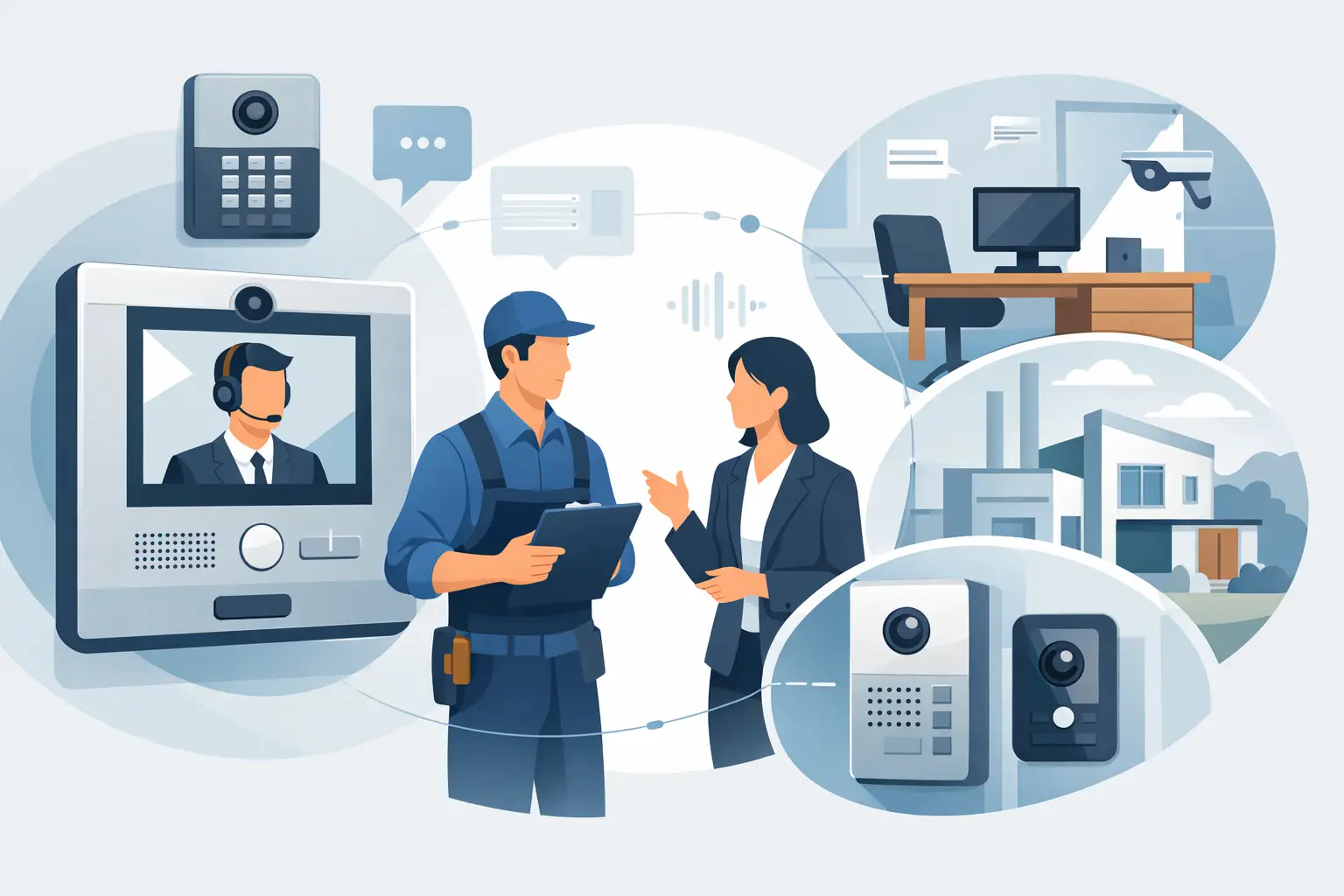
A front door call station that works fine in a single office can become a daily problem in a 40-unit building. That is usually where intercom systems stop being a simple product choice and start becoming an application decision. The right setup depends on how people enter, who needs to communicate, what doors or gates need to release, and how much reliability matters when the system is used all day.
For installers, property managers, and facility teams, the question is not just whether an intercom is audio or video. The real question is whether the system matches the site. Door count, user count, cabling path, indoor station type, lock hardware, and future expansion all matter. A good intercom system reduces delays at the entrance and supports controlled access. A poor fit creates service calls, user confusion, and added cost later.
What intercom systems actually need to do
At a basic level, intercom systems handle visitor communication and entry control. In practice, most buyers need more than that. They may need to release an electric strike at a lobby door, trigger a magnetic lock at a side entrance, call multiple units in an apartment property, connect a gate entrance to an indoor monitor, or add credentials such as cards, fobs, or keypads.
That is why application matters more than feature lists. A school may prioritize controlled entry, clear audio, and the ability to identify visitors before release. An apartment building may need tenant directory calling, multi-tenant scalability, and durable outdoor hardware. A warehouse or industrial site may need long-distance gate communication and equipment that holds up in harsh conditions. The same term – intercom system – covers all of these, but the equipment choices are not interchangeable.
Audio, video, and hybrid setups
Audio-only intercoms still make sense in many jobs. They are often cost-effective, simpler to deploy, and well suited for sites where voice verification is enough. Smaller offices, service counters, secondary doors, and some multi-tenant retrofits can still benefit from audio systems, especially where budget and existing wiring shape the project.
Video intercom systems add a layer of verification that many properties now expect. Seeing the visitor before unlocking a door changes the security profile of the entrance. This is especially useful in residential buildings, schools, offices, and mixed-use properties where staff or occupants need to confirm identity quickly. Video also helps when ambient noise makes voice communication less reliable.
Hybrid needs are common. Some sites want video at a main entrance and audio at interior or secondary points. Others need a video door station with mobile forwarding, but standard indoor stations for day-to-day use. The best choice depends on traffic patterns and how the building is staffed. More features are not automatically better if they add complexity that the end user will not use properly.
Wiring changes the decision more than most buyers expect
One of the biggest practical differences between systems is infrastructure. In new construction, there is more freedom to choose the platform that best fits the building. In retrofit work, existing wire pathways often narrow the options.
A system may look ideal on paper but become expensive if it requires new cable runs through finished walls or across long exterior distances. On the other hand, using existing wiring just to avoid labor can lead to performance limitations if the system was not designed for that environment. Distance, conductor type, power requirements, and device count all affect what will work reliably.
This is where experienced planning saves money. A distributor that understands intercom systems in real installations can help identify whether a property is a better fit for a simple door phone, a multi-tenant station, an IP-based platform, or a gate-specific solution. That decision should happen before product is ordered, not during installation.
Matching the system to the property type
In single-family homes or small owner-occupied properties, the priorities are usually straightforward communication, door release, and ease of use. A compact audio or video station may be enough, especially if the owner wants indoor monitoring without building-wide complexity.
For apartment and multi-unit buildings, scale becomes the issue. The system has to support multiple residents, calling methods, and dependable entry management at shared doors. Directory style entrance stations, tenant station compatibility, and lock release integration are central. The buyer also has to think about turnover. If residents change frequently, the system should be manageable without major reprogramming headaches.
Office environments often care about visitor screening and workflow. Reception may need to answer the main entrance, while side or delivery doors may require separate stations. Some offices want the intercom tied into access control so staff credentials handle regular entry while visitors use the call station. In these cases, the intercom is part of the broader entry system, not a stand-alone device.
Schools and commercial campuses usually need clear control over who enters and when. Durability, visibility, and reliable release of electrified hardware are critical. Depending on the layout, there may be a need for communication between buildings, a vestibule arrangement, or gate entry before someone reaches the main structure.
Industrial facilities and gated sites bring another layer of complexity. Gate distance, weather exposure, and vehicle-based visitor interaction all shape equipment selection. A standard front-door solution may not survive or perform well in that environment. Long-range communication, enclosure quality, and compatibility with gate operators can be more important than indoor aesthetics.
Intercom and access control should be planned together
A common mistake is treating the intercom and the lock hardware as separate purchases. In real jobs, they have to work together. The intercom station may trigger an electric strike, a maglock, a gate operator, or another relay-driven device. Power supply requirements, exit hardware, code compliance, and fail-safe versus fail-secure behavior all matter.
If the system includes keypads, cards, fobs, or app-based credentials, then the line between intercom and access control gets even thinner. Buyers should think through daily use. Who is entering with credentials? Who is answering visitor calls? Is the release point one door or several? Does the property need audit capability, scheduled access, or tenant-based control?
When these questions are handled early, the installation is cleaner and support is easier later. When they are ignored, the result is often field improvisation, added parts, and inconsistent performance.
Reliability is not the same as having more features
It is easy to focus on screens, mobile apps, or advanced calling options. Those may be valuable, but reliability usually comes first. Outdoor door stations take abuse. Apartment entrances see heavy daily traffic. Schools and commercial properties cannot afford communication failure at the wrong time. Hardware grade, weather resistance, button quality, camera performance, and power stability matter more than a long list of extra functions.
There is also a trade-off between sophistication and support burden. A highly configurable system may offer flexibility, but it can also demand more setup time and more user training. For some jobs, that is acceptable. For others, a simpler platform with clear operation is the better business decision.
Questions worth answering before you buy
Before selecting intercom systems, it helps to define the job in practical terms. How many entrances need communication? How many indoor stations or users need to answer? Is the site new construction or retrofit? What type of lock or gate operator will be released? Does the property need tenant directories, video verification, mobile access, or expansion later?
It is also worth asking who will maintain the system. A property manager may want equipment that can be updated without specialized tools. An installer may want a platform with familiar wiring logic and available replacement parts. A facility may prioritize long-term serviceability over a lower initial cost.
These are not minor details. They shape whether the system works well for years or becomes a recurring problem.
Why support matters in intercom systems
Intercom products are easy to oversimplify online because many listings make different systems look interchangeable. They are not. The difference between a smooth deployment and a difficult one often comes down to whether the buyer got the right guidance on compatibility, power, layout, and use case.
That is where a specialized supplier adds value. Companies such as UnikCCTV work with installers, resellers, and property buyers who need professional-grade options, not consumer gadgets dressed up as security equipment. The goal is not to sell a generic box. It is to match the site with hardware that fits the job, the wiring, and the day-to-day operating needs.
A good intercom setup should feel routine once it is installed. Visitors can call, occupants can respond, doors release when they should, and the system holds up under daily use. If you are choosing equipment for a real property, the smartest move is to start with the application and let the system follow from there.

 No products in the cart.