
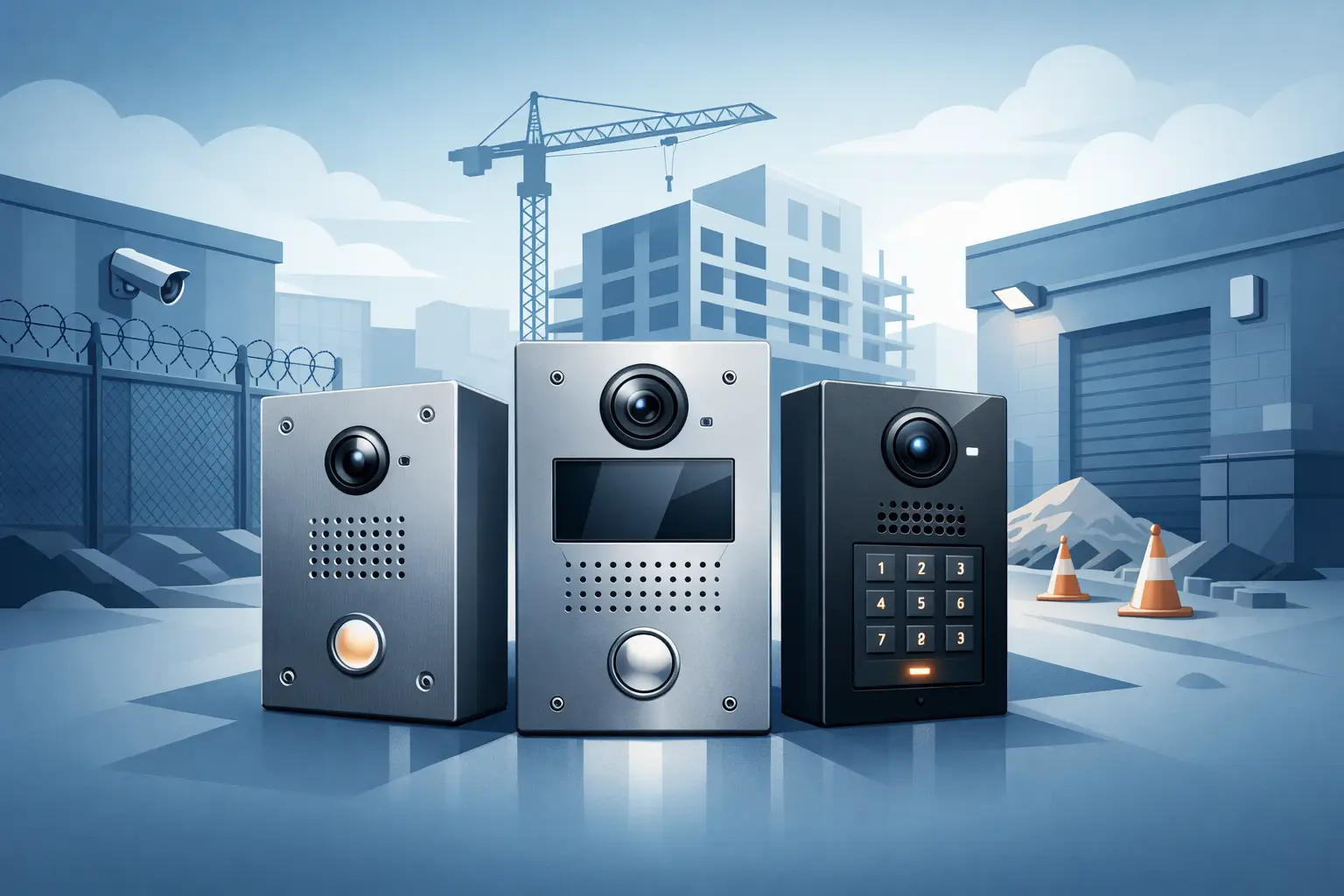
A door station at a managed entry is often the first device a visitor touches and the first device a vandal tests. The best vandal resistant door stations are not simply metal-faced intercoms. They are entry-system components selected around the opening, user traffic, wiring method, weather exposure, lock hardware, and the level of abuse the property actually experiences.
For an apartment building, a recessed video station with directory capability may be the right answer. At a warehouse gate, a surface-mounted unit with oversized call buttons, clear audio, and protected cable routing may be more practical. Schools, transit-facing commercial properties, and industrial sites often need a different level of protection than a low-traffic office entrance. The correct purchase starts with the application, not a claim on a product box.
What Makes the Best Vandal Resistant Door Stations?
Vandal resistance is a system of design choices. A station can have a stainless steel faceplate and still be vulnerable if the camera lens is exposed, the mounting screws are accessible, or the back box can be pulled from a weak wall. Look at the complete installed assembly, including its mounting method, housing depth, cable entry, and the equipment supporting it inside the building.
A purpose-built vandal resistant station usually uses a heavy-gauge metal faceplate or housing, security fasteners, protected speaker and microphone openings, and recessed or impact-resistant call buttons. Video models should have a protected camera window rather than a protruding camera module. For keypad or card access applications, the reader or keypad must be appropriate for outdoor use and resistant to repeated hard use.
Material alone does not determine performance. Stainless steel is a common choice for exposed entrances because it handles corrosion and daily contact well. Powder-coated metal can be a good fit where color matching matters, but the finish should suit the local climate and cleaning practices. Aluminum may work in lower-risk installations, especially when it is part of a properly mounted enclosure, but it is not automatically the best option for every high-abuse location.
The label “vandal resistant” also does not mean indestructible. A station can resist casual impact, tampering, and attempts to remove it without surviving deliberate attack with hand tools or vehicles. Sites with a known history of damage may need layered protection: recessed mounting, camera coverage, protected conduit, proper lighting, and an access-control enclosure located on the secure side of the opening.
Mounting Matters as Much as the Faceplate
Flush or recessed mounting is generally preferred where the wall construction allows it. With fewer exposed edges to grab, the station is harder to pry from the wall and less likely to be struck by carts, bags, or equipment. A properly installed flush box also provides a cleaner finished appearance at apartment and commercial entrances.
Surface mounting is often necessary at gates, masonry walls, metal posts, retrofit locations, and sites where cutting a wall cavity is not realistic. In those situations, use a metal back box designed for the station, route cable through the rear whenever possible, and secure the assembly with tamper-resistant hardware. A surface-mounted station with exposed side wiring is an avoidable weak point.
Consider maintenance access before finalizing the mount. A station that cannot be serviced without removing a gate panel or disrupting a tenant entry may create unnecessary labor later. The goal is to limit unauthorized access while giving authorized technicians a clear service path.
Match the Station to the Entry Environment
A door station should be evaluated by where and how it will be used. The following applications commonly call for different priorities:
- Multifamily buildings: Directory options, multiple call buttons or tenant selection, clear two-way audio, camera capability, and compatibility with indoor stations or mobile answering are often central requirements. Choose a faceplate and buttons that can handle high daily use.
- Schools and child-care facilities: Visitor screening, reliable video, controlled release from an interior office, and simple operation for staff take priority. The station should support the site’s door-locking and emergency procedures rather than work as a stand-alone calling device.
- Office and commercial entries: A compact video station may be enough for a single controlled door. Larger facilities may need card, fob, keypad, or credential-reader integration alongside visitor calling.
- Gates and industrial sites: Weather exposure, long cable runs, vehicle noise, glare, and limited lighting can be more challenging than vandalism itself. Select equipment rated for outdoor conditions and make sure audio, camera angle, and network or bus distance are appropriate for the gate location.
Environmental ratings should be taken seriously. Rain, snow, direct sun, airborne dust, salt exposure, and temperature swings shorten the life of equipment that is not specified for the environment. Even an outdoor-rated station benefits from thoughtful placement. A small hood, good drainage, and a camera angle that avoids direct afternoon sun can improve usability and reduce service calls.
Choose Audio, Video, and Access Functions Carefully
Audio-only door stations remain a sensible choice for many secured entries. They are straightforward, often economical, and can be very reliable when the visitor does not need visual screening. They are commonly used at internal doors, warehouses, loading areas, and locations already covered by a nearby CCTV camera.
Video door stations give staff or residents visual confirmation before releasing a lock. That added context is valuable at schools, multifamily properties, medical offices, and remote gates. However, video adds planning requirements. Confirm camera field of view, low-light performance, backlight handling, monitor or mobile-app compatibility, network needs, recording expectations, and available bandwidth for IP systems.
Do not assume every video station records video or every intercom can trigger every type of lock. Some systems provide live calling and door release but require separate equipment for recording. Others are designed around a proprietary bus, while IP stations may use network infrastructure and software licensing. Mixing components without checking compatibility can lead to lost features, unreliable calling, or costly rework.
Door release is another frequent point of confusion. The station is normally the command point, not the device supplying lock power. The final system may require a power supply, relay, request-to-exit device, electric strike or maglock, fire alarm interface, and access-control panel. For life-safety and code-sensitive doors, the door hardware sequence should be reviewed before ordering the intercom equipment.
Buttons, Directories, and Credentials
A one-button station works well when a visitor needs to call a single office, guard desk, or resident. Multi-button stations are useful when a small number of tenants or departments must be reached directly. Large buildings may benefit from digital directories or tenant dialing, but these add programming and administrative responsibilities.
Credential access can reduce dependence on physical keys, but it should be specified as part of an access-control plan. A keypad may be convenient for staff, yet codes are easily shared. Proximity cards, fobs, mobile credentials, or managed access control may offer better oversight depending on the site. At public-facing entries, keep visitor calling and employee access functions clear and easy to understand.
Installation Details That Prevent Failures
Many door-station problems are installation problems. Before choosing equipment, identify the available wire path, distance to the interior station or controller, power source, network availability, lock type, and wall or post construction. Older buildings may have existing cable that supports some intercom formats but not others. A pre-installation review can prevent a system from being selected around wiring that cannot support it.
Use protected pathways for outdoor and exposed cable. Conduit, weatherproof fittings, strain relief, and drip loops help keep water and physical damage from reaching connections. At gates, allow for movement, vibration, and service access. At metal structures, consider grounding and surge protection requirements, especially where long runs and outdoor power are involved.
Audio performance also deserves attention. A station installed beside heavy traffic, compressors, or an active loading dock may need volume adjustment, noise management, or a different placement. Test calling at normal operating conditions, not only during a quiet installation period. The same applies to video: verify the image at night, with a visitor standing in the expected position, before closing out the job.
Buying for Long-Term Serviceability
The lowest initial price is rarely the best value when a door station is installed at a difficult or high-traffic entry. Evaluate availability of replacement faceplates, buttons, power supplies, handsets, monitors, and compatible accessories. Standardized equipment can make future additions and repairs easier across a portfolio of properties.
For installers and facilities teams, documentation matters as much as hardware. Keep wiring diagrams, programming records, door-release details, IP addresses where applicable, and a list of installed components. If the property changes management or a technician is called years later, that information reduces downtime.
UnikCCTV can help buyers evaluate door stations alongside the supporting locks, access-control hardware, cameras, and replacement components required for a complete installation. That broader view is especially useful when a project involves existing wiring, multiple entries, or mixed tenant and staff access requirements.
A vandal resistant door station earns its value when it remains clear to use, difficult to tamper with, and serviceable after years at the entrance. Start with the door, the people using it, and the conditions around it. The right station will follow from those facts.
 No products in the cart.