
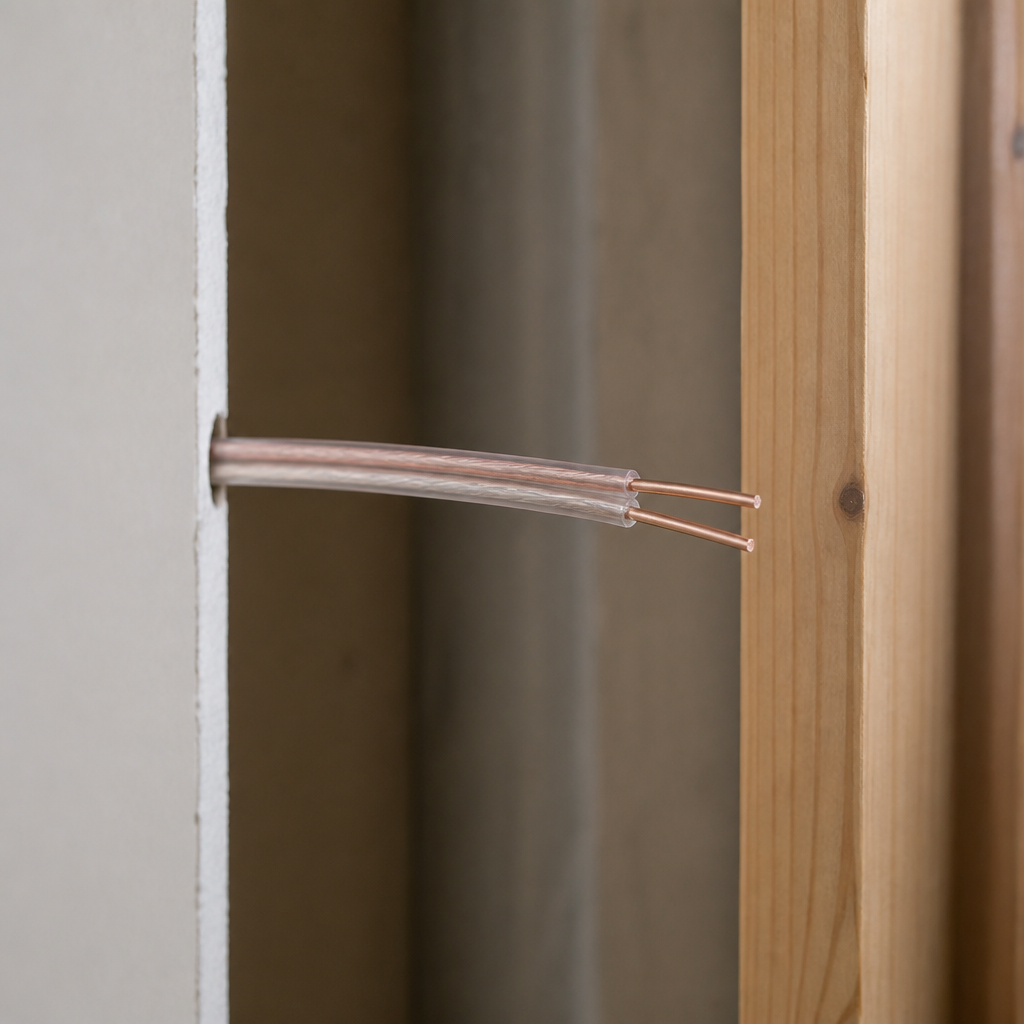
If your building still runs on old intercom wiring and you are trying to figure out how to modernize entry access without tearing open every wall, a two wire intercom system is almost certainly the answer worth examining first. Most property managers and homeowners assume that upgrading to video entry means full rewiring. In practice, that assumption costs real money unnecessarily. Two-wire systems are engineered to carry both power and communication signals over a single cable pair, which means they can often work with the infrastructure already in the walls. This article explains exactly how they work, where they fit, and when a different approach makes more sense.
Table of Contents
- What Is a Two-Wire Intercom System?
- How Two-Wire Wiring Actually Works
- Two-Wire vs. Four-Wire vs. IP Intercoms
- Best Use Cases for a Two-Wire Intercom
- Intercom Installation: What to Check Before You Commit
- When Two-Wire Is Not the Right Choice
- Frequently Asked Questions
- References
What Is a Two-Wire Intercom System?
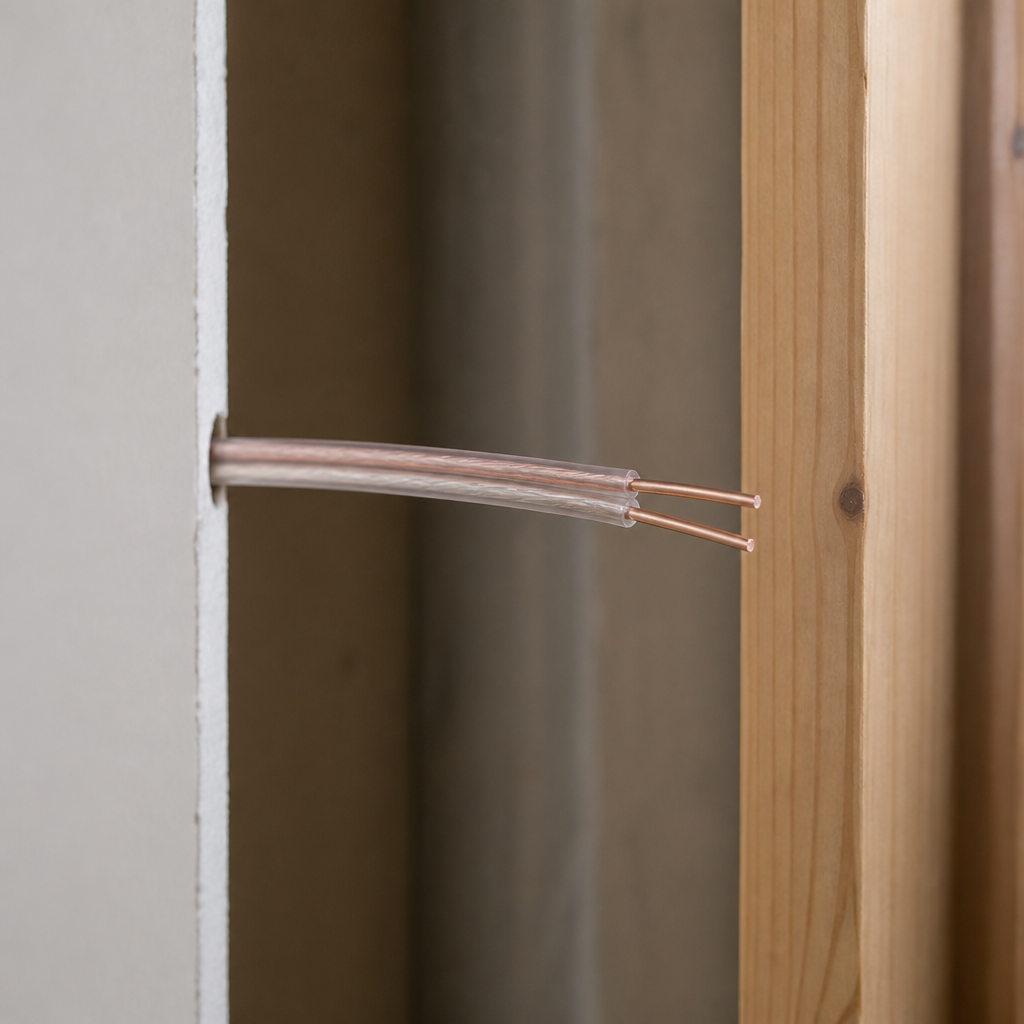
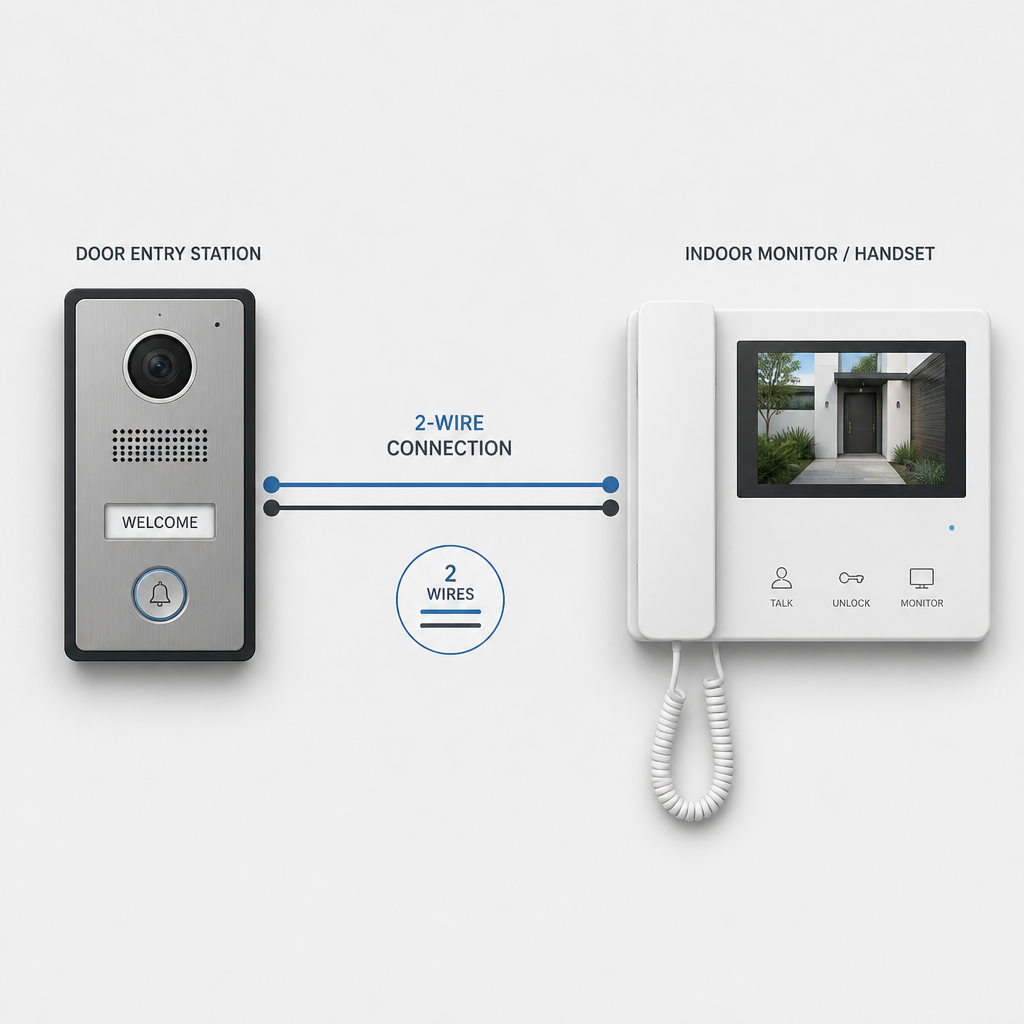
A two-wire intercom system is a communication and access control system that uses exactly two physical wires to connect an outdoor door station to one or more indoor monitors or handsets. One wire carries the audio (and in modern systems, video) signal while the other carries power, or both functions run over the same shared pair using a technique called a shared bus.
The simplicity of this design is the whole point. Traditional intercom installations required separate wire runs for power, audio, and sometimes video, which drove up both materials and labor costs significantly. A two-wire setup consolidates those functions, which is why these systems became the standard choice for multi-unit apartment buildings, gated residential communities, and commercial entry points where running new cabling was either impractical or expensive.
Modern two-wire systems have evolved far beyond basic audio. Many current products support full video calling between door stations and indoor units, door release integration, remote access via mobile apps, and even integration with IP cameras and smart home sensors, all over the same two conductors that would have supported only a buzzer decades ago.
How Two-Wire Wiring Actually Works
The technical backbone of a two-wire intercom is a shared bus architecture. All intercom units, whether the outdoor panel, indoor monitors, or control modules, connect to the same pair of wires running throughout the building. Signals are digitally encoded so that audio, video, and control data can all travel over the same cable without colliding.
Power is delivered to indoor units and the door station over these same two wires from a central power supply, eliminating the need for local power outlets at every indoor monitor. This is particularly useful in apartment corridors and stairwells where adding power outlets would require additional electrical work.
Half-Duplex vs. Full-Duplex Communication
One technical reality to understand: most traditional two-wire systems operate in half-duplex mode, meaning only one party can transmit at a time. Think of it like a walkie-talkie. Modern digital two-wire systems have largely resolved this limitation through signal processing and encoding, but it is worth confirming full-duplex capability when evaluating specific products, especially for commercial applications where clear, simultaneous two-way conversation matters.
Distance and Signal Quality
Two-wire systems are generally reliable over the cable distances found in most residential apartment buildings and small commercial properties. For very large installations with long cable runs, signal degradation can become a factor. In those scenarios, line amplifiers or signal boosters can extend the effective range, but this adds cost and complexity that should be factored into the planning stage.
Two-Wire vs. Four-Wire vs. IP Intercoms
Understanding the differences between these three main intercom architectures helps you choose the right system rather than simply the cheapest or the most marketed one.
In a four-wire system, two wires connect to the power supply and two separate signal wires connect to the controller. Having dedicated wires for each function, microphone and speaker handled on separate conductors, reduces electrical interference and can produce higher audio quality. Four-wire systems also support full-duplex communication more naturally than their two-wire counterparts. The tradeoff is installation cost: running four conductors throughout a building is significantly more work and material than running two.
IP intercoms operate over a standard Ethernet or Wi-Fi network. They offer the greatest flexibility, the highest video quality, and the deepest integration with access control platforms, cloud management dashboards, and smart building systems. However, they require either existing network infrastructure or the cost of installing it. In older buildings without structured cabling, that cost can be substantial.
| System Type | Best For | Key Limitation |
|---|---|---|
| Two-Wire Intercom | Apartment retrofits, buildings with existing two-wire cabling, cost-conscious upgrades | Half-duplex in older models; limited scalability for very large enterprise deployments |
| Four-Wire Intercom | New construction where full-duplex audio quality is a priority | Higher installation labor and materials cost; more complex wiring runs |
| IP Intercom | Large commercial buildings, new builds with network infrastructure, cloud-managed access | Requires network infrastructure; higher upfront cost in older buildings without cabling |
The right choice depends primarily on what is already in the building. If two-wire cable is already installed, replacing it with four-wire or Ethernet for a comparable feature set rarely makes economic sense. If the building has no existing cabling at all, the decision deserves a proper cost comparison.
The biggest mistake in intercom upgrades is assuming you need to start over. Most buildings already have usable infrastructure. The goal is matching the system to what is there, not designing around an ideal that does not exist on site.
Best Use Cases for a Two-Wire Intercom
Two-wire intercom systems are the right tool in specific situations. Using them outside those contexts often means compromising on features you actually need, or paying for flexibility you will never use.
Residential Apartment Buildings Requiring Retrofit
This is where two-wire systems genuinely shine. Older apartment and condominium buildings typically have two-wire or coaxial cable already running from each unit to the building entrance. Replacing that infrastructure entirely to support a modern IP system means opening walls, running new conduit, and paying for labor that adds up quickly across dozens of units.
A modern residential apartment intercom built on a two-wire platform can use that existing cabling to deliver video calling, door release, and even mobile app access. The building gets a fully upgraded entry experience without construction work in occupied units, which is a significant advantage for property managers trying to minimize tenant disruption.
Gated Communities and Single-Family Homes with Existing Wiring
Homeowners who already have two-wire cable running from their gate or front door to the interior of the house can upgrade to a video intercom system without any new wiring. This is a common scenario in properties originally built with basic audio-only intercoms in the 1990s and 2000s. The existing cable can support a modern video door station connected to a wall-mounted indoor monitor or a mobile app.
Small Commercial Properties and Office Entrances
Offices, clinics, and small retail spaces with a single controlled entry point often find two-wire systems ideal. The installation is straightforward, the cost is predictable, and the day-to-day function, a visitor presses the panel, staff speaks with them and remotely releases the door, covers most access control needs at that scale.

Pro tip: Before purchasing a two-wire intercom system for a retrofit, physically inspect the existing cable. Check the conductor gauge, look for any visible damage at junction points, and confirm the cable run lengths. Even if the wiring is two-wire, degraded or undersized cable can cause signal issues that no amount of system configuration will fix.
Intercom Installation: What to Check Before You Commit
The intercom installation phase is where most problems originate, and almost all of them could have been caught with a proper site survey before ordering equipment.
Audit the Existing Cabling
Start by identifying what cable is actually installed in the building. Two-wire intercom cable, coaxial cable, and standard telephone-grade twisted pair are all different, and not all two-wire intercom systems are compatible with every cable type. Your system manufacturer’s specifications will list compatible cable types and maximum run lengths. Match those specs against what is in the walls before placing an order.
Confirm Power Supply Location
Two-wire systems require a central power supply unit. This is typically installed in a building’s electrical room, a dedicated security cabinet, or near the main entrance panel. Confirm that a suitable power source is available at that location and that the power supply unit can be securely mounted. Running new power to the right location is usually straightforward but should be planned in advance.
Plan for Door Release Integration
A wired intercom connected to a door strike or magnetic lock is only as reliable as the door hardware itself. Before installation, verify that the existing electric strike or maglock is compatible with the intercom system’s relay output voltage and current rating. Mismatched specifications here are a common source of field problems that delay commissioning.
Think About Expansion Early
If the building has multiple entry points or is likely to expand, confirm that the two-wire system you are evaluating supports multiple door stations and additional indoor units. Some residential-grade systems are limited to a single door station and a fixed number of monitors. Discovering that limit after installation means either replacing the system or adding a parallel one, neither of which is a good outcome.
Pro tip: For apartment buildings, map out every indoor unit location and measure actual cable run distances before system selection. Two-wire bus systems have a maximum total bus length, and exceeding it degrades performance across all connected units, not just the furthest ones. This is a specification that product datasheets list clearly, so use it.
When Two-Wire Is Not the Right Choice
Two-wire systems are practical and cost-effective in the right context, but they have clear limits. Recognizing those limits early saves the cost of an underperforming installation.
Large Enterprise or Campus Deployments
A corporate campus, hospital, university, or large mixed-use development with dozens of controlled entry points needs a system that communicates across a full network, not just between two points. IP intercom platforms connect all units across the network and support centralized management, access logging, video recording, and integration with broader physical security systems. At that scale, a two-wire system’s point-to-point architecture is a structural mismatch, not just a limitation.
Buildings with No Existing Cabling
If a property has no existing intercom wiring at all, the cost of installing two-wire cable versus pulling Ethernet at the same time is worth comparing carefully. In new construction especially, adding Cat6 cable alongside power runs during rough-in is relatively inexpensive, and it gives you a much wider choice of current and future intercom and access control systems. Deliberately installing two-wire cable in a new build when network cabling is equally accessible is rarely the better long-term decision.
When Integration with Access Control Platforms Is Required
If your property uses a cloud-based access control platform for credential management, mobile keys, or time attendance, check compatibility explicitly. Many of the most capable access control integrations are built for IP-based or network-connected intercom systems. Some two-wire systems now offer IP bridging, but it adds components and cost. If deep integration with a broader security platform is a firm requirement from day one, an IP system may be the more direct path.
Frequently Asked Questions
Can a two-wire intercom system support video as well as audio?
Yes. Modern two-wire intercom systems support both audio and video by digitally encoding all signals over the same cable pair. This is a significant advancement over older analog two-wire systems that carried audio only. When evaluating a specific product, confirm in the datasheet that video is supported and check the resolution the system delivers, as this varies between product lines.
What is the difference between a two-wire and a four-wire intercom system?
In a two-wire system, both power and communication signals share a single pair of wires. In a four-wire system, two wires are dedicated to power and two separate wires handle communication signals, allowing for separate microphone and speaker paths. Four-wire systems typically offer higher audio quality and full-duplex communication more easily, but they require more cabling and higher installation costs.
Is a two-wire intercom system good for a residential apartment building?
A two-wire intercom is one of the best choices for residential apartment buildings, particularly those undergoing a retrofit upgrade. Most older apartment buildings already have two-wire cabling installed from the entrance to each unit. A compatible two-wire intercom system can use that existing infrastructure to deliver modern video entry, door release, and mobile app access without rewiring occupied units.
How many units can a two-wire intercom system support?
This varies by product and manufacturer. Residential-grade two-wire systems typically support anywhere from a few units up to around 64 or more, while commercial-grade systems can scale further. The limiting factors are the total bus length of the two-wire cable run and the power budget of the central supply unit. Always check the manufacturer’s specification for maximum supported units before selecting a system for a multi-unit building.
Can I use an existing two-wire intercom cable for a new IP-based intercom system?
In some cases, yes. Certain manufacturers offer IP-over-two-wire converter devices that allow you to connect IP intercom hardware over existing two-wire or coaxial cable without replacing it. This approach bridges the gap between the convenience of working with existing wiring and the feature set of an IP platform. Not all IP systems support this, so you need to confirm compatibility with the specific product you are considering.
What should I look for when buying a wired intercom system for a small business?
For a small business with a single controlled entry point, prioritize door release compatibility with your existing electric strike or lock hardware, clear audio quality, and ease of use for staff. A two-wire system covering one door station and a handset or monitor at a reception desk is often all that is needed. If remote access for after-hours entry management is a requirement, look for systems that offer a mobile app or cloud management alongside the wired installation.
If you are currently evaluating intercom systems for your property, we would like to hear what factors matter most to you. Share your experience in the comments or reach out to the team at UnikCCTV for a consultation specific to your building layout and existing infrastructure.
References
- DNAKE: Technical comparison of 2-wire intercom systems versus IP intercom systems for homes and apartments
- Swiftlane: Complete guide to 2-wire video intercom systems for apartment building retrofits
- 2N: Complete guide to apartment intercom systems, how they work and installation considerations
- Swiftlane: Overview of wired intercom systems including 2-wire versus 4-wire architecture comparison
- DNAKE: 2-wire intercom retrofit solution for existing apartment buildings with no rewiring required

 No products in the cart.