
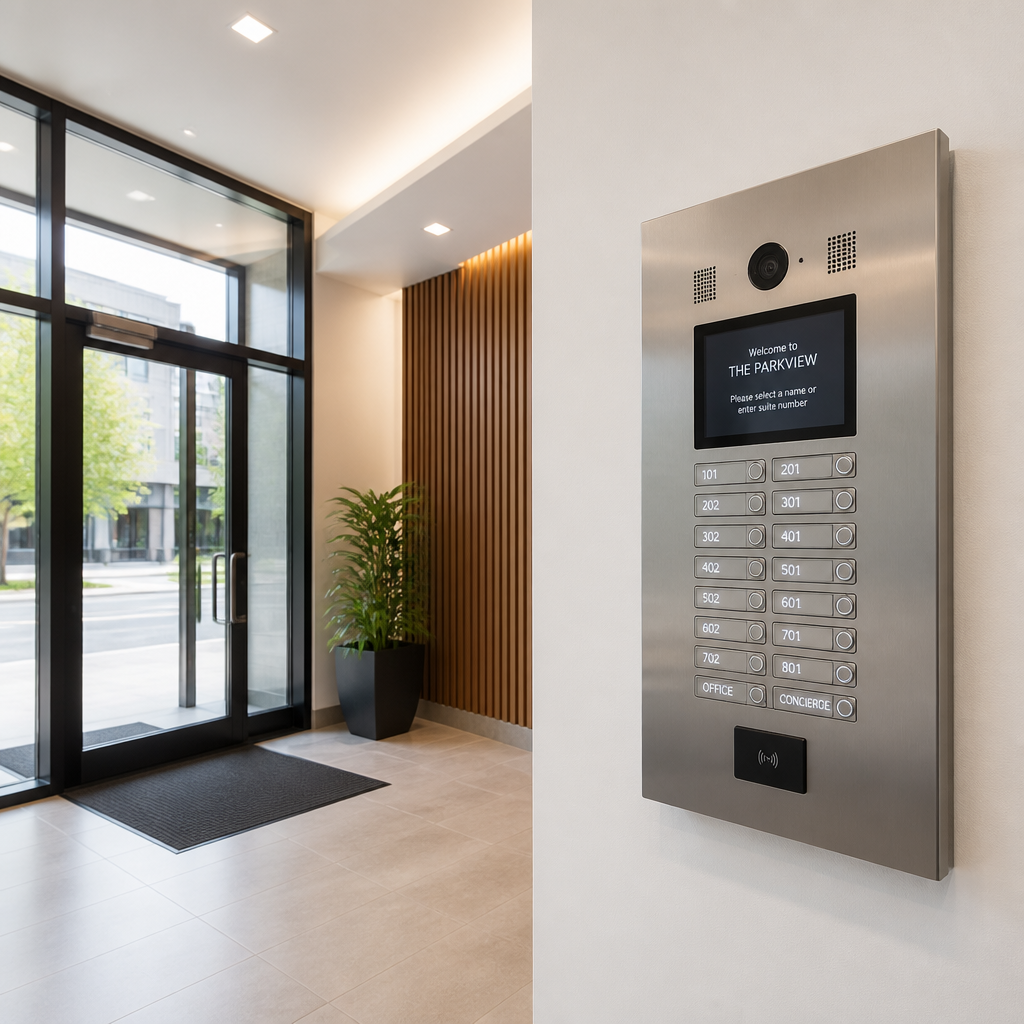
Pick the wrong apartment intercom system and you will spend the next five years dealing with dead panels, frustrated tenants buzzing the wrong unit, and a vendor support line that never answers. It is one of the most consequential hardware decisions a property manager or building owner makes, yet most buyers focus almost entirely on camera resolution and brand name while ignoring the factors that actually determine whether a system works day-to-day: wiring compatibility, directory scalability, remote management capability, and how the system handles deliveries. This guide cuts through the noise and gives you a direct, opinionated framework for making the right call.
Table of Contents
- Quick Takeaways
- Intercom System vs. Access Control: Why the Distinction Matters
- Types of Intercom Systems for Apartment Buildings
- Key Buying Factors You Cannot Afford to Ignore
- Wiring and Retrofit Reality Check
- Intercom System Comparison: Wired, Wireless, and Cloud-Managed
- Video Access Control Intercoms: When You Need More Than Audio
- Multi-Unit Building Entry Considerations by Building Size
- Frequently Asked Questions
- References
Quick Takeaways
| Key Insight | Explanation |
|---|---|
| Wiring compatibility determines your real shortlist | Before evaluating any system on features, confirm whether your building has existing two-wire, coaxial, or Cat5/6 runs. Retrofitting the wrong system into incompatible wiring adds significant cost and delay. |
| Cloud-managed systems are worth the subscription for high-turnover buildings | Properties with frequent resident turnover need remote directory management. Having to visit the panel in person every time a tenant moves out is an operational liability. |
| Audio-only intercoms are rarely the right choice for new installations | Video intercoms give residents confidence before they buzz anyone in. The cost gap between audio-only and video has narrowed enough that audio-only is hard to justify for a new build or full replacement. |
| Panel scalability caps vary widely across brands | Some entry panels handle 20-unit directories cleanly, then fail operationally at 40 or 80 units. Verify the maximum directory size before buying, not after installation. |
| Delivery workflow support is now a baseline expectation | Residents in multifamily buildings receive frequent package deliveries. A system without a delivery access feature, whether a PIN code, QR code, or managed access window, creates daily friction and security gaps. |
| Mobile app answering reduces missed calls and complaints | Residents answer intercom calls on their smartphones rather than a dedicated handset. This directly reduces “I couldn’t let my guest in” complaints that reflect on property management quality. |
| Gate and outdoor entries require hardware rated for the environment | A panel designed for a lobby ceiling will fail prematurely when exposed to direct sun, rain, or freezing temperatures. Outdoor-rated hardware is not optional for gate and perimeter entry points. |
Intercom System vs. Access Control: Why the Distinction Matters
These two terms get used interchangeably in product listings and vendor sales calls, but they solve fundamentally different problems. Understanding the difference prevents you from buying something that only solves half of your entry management challenge.
An intercom system manages communication between a visitor at the door and a resident inside the unit. It handles the front-entrance unlock workflow. A resident gets a call, sees or hears who is there, and presses a button to release the door. That is its job.
An access control system manages how people move throughout an entire property. Unit doors, amenity spaces, parking garages, package rooms, rooftop access, staff corridors. It manages permissions, credentials, audit logs, and vendor access workflows. Intercom sits at the building entry point. Access control covers everything behind it.
In practice, modern multifamily buildings need both, and increasingly they need them integrated. A video intercom that connects to the same credential platform as your smart locks and amenity access is dramatically easier to manage than two disconnected systems. If you are evaluating systems for a building with more than 20 units or multiple entry points, ask every vendor directly: does your intercom integrate with third-party access control platforms, or does it require your proprietary ecosystem?
Modern access control is evolving beyond simply unlocking doors. It is becoming the operational infrastructure that connects buildings, residents, staff, vendors, and workflows into one unified system.
Pro tip: If a vendor cannot clearly explain which access control platforms their intercom integrates with and how that integration is configured, treat that as a red flag. Integration claims that cannot be demonstrated in a live environment often fall apart during installation.
Types of Intercom Systems for Apartment Buildings
Not every system type fits every building. Here is a direct breakdown of what each category actually delivers and where each one falls short.
Audio-Only Wired Intercoms
These are the traditional systems found in most older apartment buildings: a lobby panel with a keypad, individual handsets in each unit, and a two-wire connection between them. They are reliable, straightforward to maintain, and inexpensive to repair. The problem is that audio-only gives a resident zero visual confirmation of who is at the door. For most properties adding or replacing a system today, audio-only is a step backward.
Two-Wire Video Intercom Systems
A two-wire intercom system transmits both power and signal over a single pair of wires, which makes it the most practical retrofit option for buildings that already have wired infrastructure. The two-wire architecture means an installer does not need to run new Cat5 or coaxial cable through finished walls. A monitor is installed in each unit that displays the lobby camera feed and has a door-release button. Two-wire video systems are the workhorse of residential intercom installation in mid-rise apartment buildings and are worth serious consideration for any retrofit project.
IP and Cloud-Managed Video Intercoms
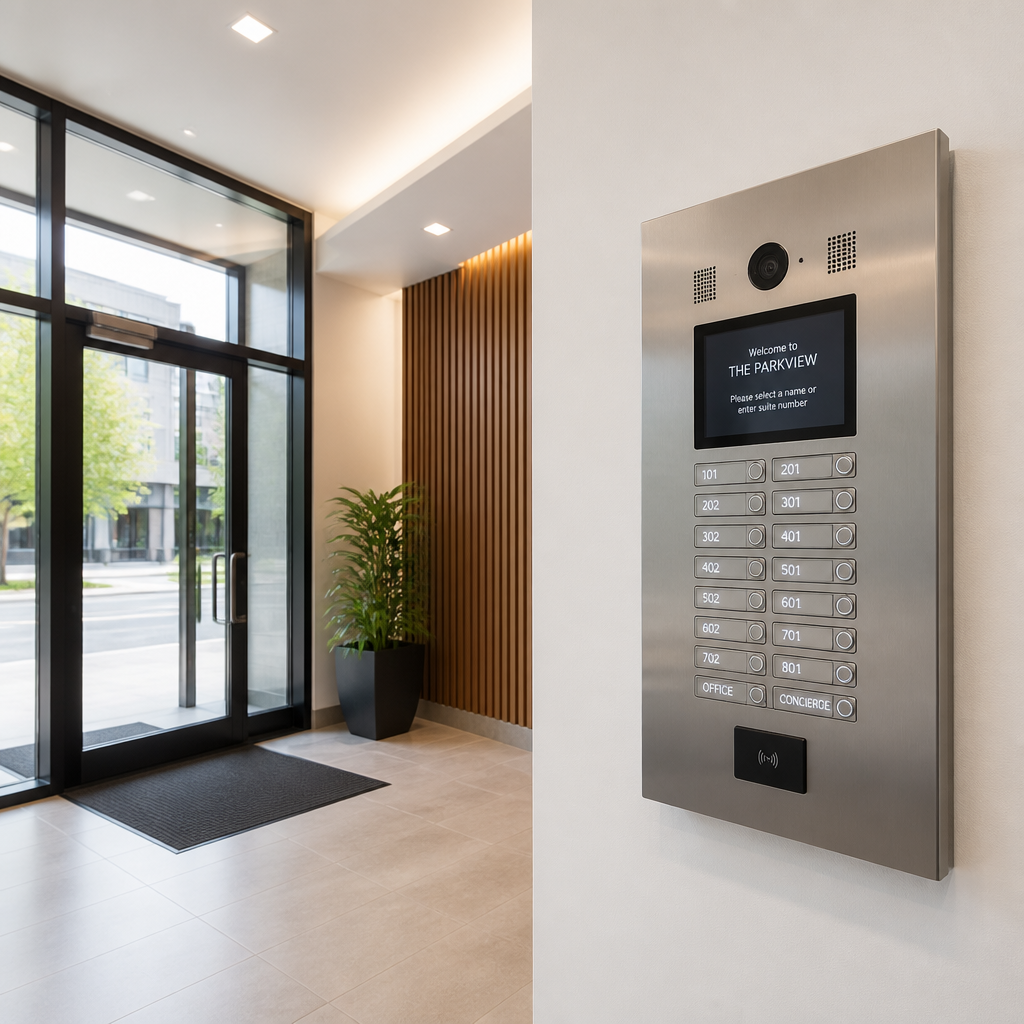
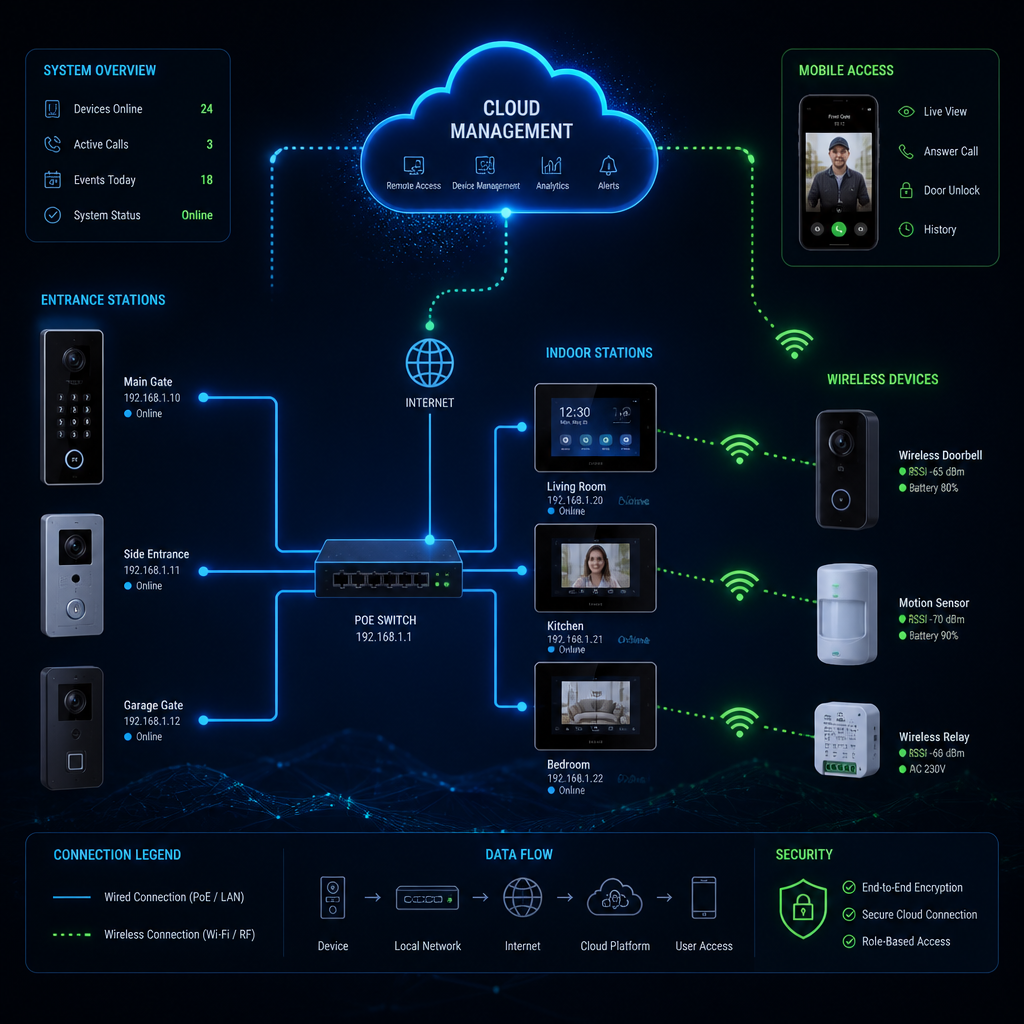
These systems transmit audio and video over a building’s IP network, which means they depend on network infrastructure but deliver far more flexibility. Residents answer calls on a smartphone app rather than a dedicated handset. Property managers update the tenant directory remotely without visiting the panel. Some platforms support delivery workflows, access logs, and integration with smart locks. The tradeoff is a dependency on reliable network infrastructure and, often, a recurring software subscription fee.
Wireless Intercoms
Wireless systems avoid wiring entirely, communicating via RF or Wi-Fi between panels and indoor units. They are the fastest to deploy in buildings where running cable is impractical or cost-prohibitive. Signal reliability across concrete floors and walls is the main concern. For large or dense buildings, wireless systems often require signal repeaters, and RF interference can be a persistent issue in buildings with competing wireless devices.
Key Buying Factors You Cannot Afford to Ignore
Camera resolution and panel design are the factors vendors lead with because they photograph well. Here are the factors that actually determine whether a system works in a real building environment.
Directory Scalability
A system that manages 20 units cleanly may become operationally unusable at 60 or 80. Some entry panels have hard directory limits built into their firmware. Others become slow and difficult to navigate as the tenant list grows. Before committing, verify the maximum directory size the system supports and whether the directory is searchable or requires scrolling through a linear list. For buildings over 30 units, a searchable, cloud-managed directory is not a luxury, it is a necessity.
Resident Turnover and Remote Management
High-turnover properties, student housing, short-term rental buildings, and large apartment complexes cannot afford a system that requires an on-site technician every time a resident moves in or out. Remote directory management means an administrator adds or removes a tenant from any device with internet access. This feature alone can save dozens of hours per year for a busy property management team.
Delivery Access Workflows
Package deliveries to apartment buildings have increased substantially. A system with no managed delivery access forces couriers to call a resident directly or leave packages outside. Look for systems that support delivery-specific PINs, time-limited QR codes, or carrier-specific access windows. This is a feature gap that creates real daily friction if it is missing.
Power Over the Entry Panel
Check whether the panel is powered by a dedicated power supply, Power over Ethernet (PoE), or a cellular connection. Each has different implications for backup power during outages. A building entry point that goes offline when the power goes out is a security and liability concern.
Pro tip: Ask vendors to walk you through exactly what happens to door-release functionality during a power outage or internet outage. A system that locks everyone out during a network disruption is not a safe building system.
Wiring and Retrofit Reality Check
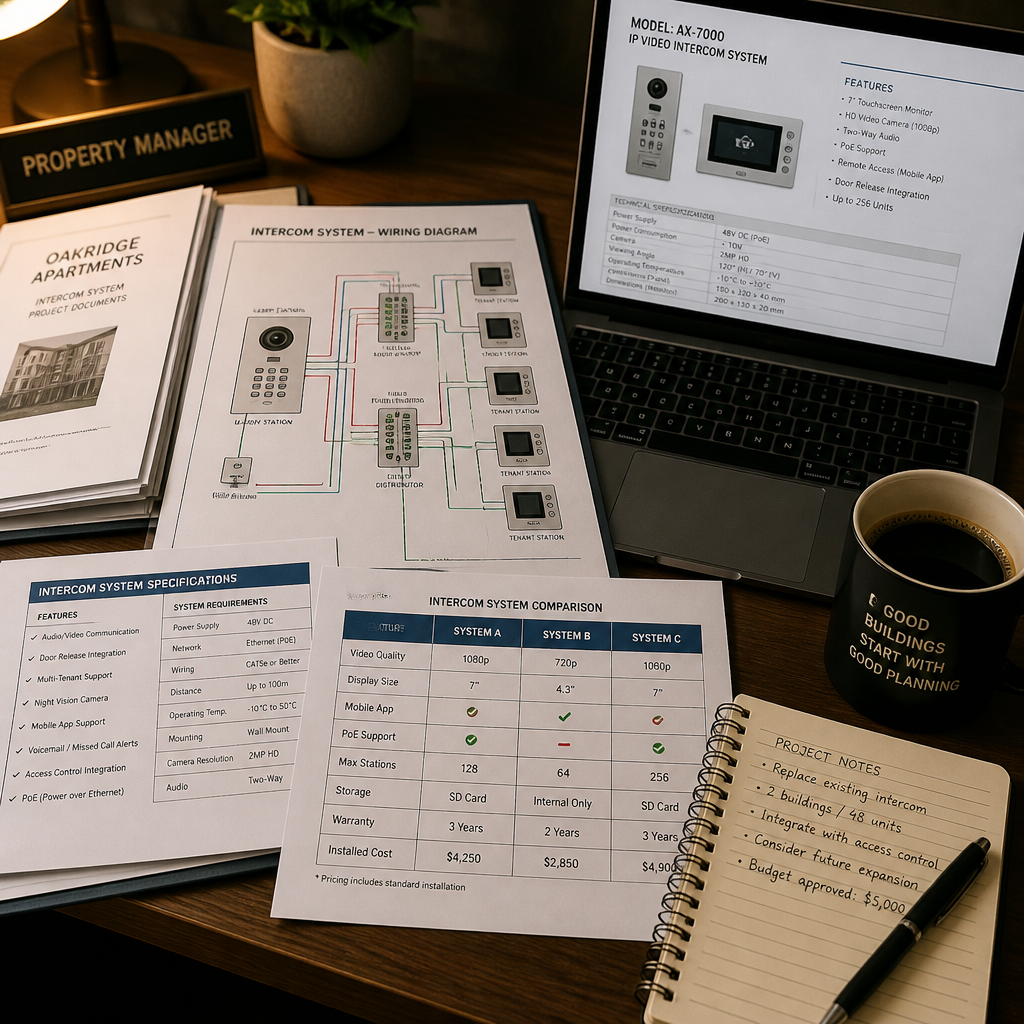
The single biggest hidden cost in any intercom installation project is discovering mid-project that the existing wiring is incompatible with the chosen system. This is avoidable if you do the infrastructure assessment before selecting a product.
Older apartment buildings typically have one of three wiring situations. They have existing two-wire runs between the lobby and each unit. They have coaxial or category cable installed during a previous upgrade. Or they have no relevant existing wiring at all, which means any wired system requires new cable pulls through finished walls, ceilings, and conduit.
A two-wire intercom system is the most retrofit-friendly wired option because it reuses the existing pair of conductors already running to each unit. If your building has this infrastructure in place, a two-wire video system is usually the most cost-effective upgrade path. The alternative, pulling new cable through a finished building, can cost several times the price of the panels themselves.
For buildings where wiring is impractical, a cloud-managed IP system with a cellular backhaul at the panel and a mobile app in place of unit handsets removes the in-unit wiring requirement entirely. Residents receive intercom calls on their phones. This is increasingly common in retrofit scenarios because it eliminates the most expensive part of the installation.
Intercom System Comparison: Wired, Wireless, and Cloud-Managed
The table below compares the three main intercom approaches for apartment buildings on the criteria that matter most to property managers and building owners.
| Factor | Two-Wire Wired Video Intercom | Wireless RF Intercom | Cloud-Managed IP Intercom |
|---|---|---|---|
| Retrofit suitability | High, reuses existing two-wire runs | High, no cable required | Medium, requires network or cellular at panel |
| Video capability | Yes, standard on modern units | Yes, varies by model | Yes, typically high-resolution HD |
| Remote directory management | Limited, usually on-panel only | Limited | Full remote management via web or app |
| Mobile app answering | No, dedicated monitor required | No, dedicated handset required | Yes, residents answer on smartphones |
| Reliability in large buildings | High, deterministic wired signal | Variable, signal degradation through concrete | High if network is stable |
| Ongoing subscription cost | None | None | Often required for cloud features |
| Best fit | Mid-rise retrofit with existing wiring | Small buildings, quick deployment | High-turnover properties, large portfolios |
Video Access Control Intercoms: When You Need More Than Audio
A video access control intercom combines the communication function of an intercom with a camera that logs entry attempts, identifies visitors visually, and in more advanced configurations, integrates with facial recognition or license plate recognition at gate entries. For most apartment buildings, this is the category worth targeting for any new installation or full system replacement.
The visual confirmation element is not a gimmick. Residents who can see who is at the door before buzzing them in are more likely to use the system correctly and less likely to simply buzz anyone in without checking. This directly affects building security, not just resident satisfaction.
Facial Recognition and Biometric Entry
Biometric access, including facial recognition locks and fingerprint readers, is increasingly available at price points that make sense for apartment buildings rather than just commercial facilities. These systems allow residents to access their building without a key, fob, or phone, which eliminates the cost and friction of credential replacement when a fob is lost. For a building with high resident turnover, eliminating physical credential management is a significant operational benefit.
At UnikCCTV, the product range includes facial recognition locks and biometric access systems designed for exactly this use case, serving buildings that want keyless entry without being locked into a single vendor’s cloud ecosystem.
Gate and Perimeter Video Intercoms
Gate entry points have different hardware requirements than lobby panels. Outdoor-rated enclosures, vandal-resistant surfaces, and the ability to trigger a gate relay rather than a simple door strike are all required. A common mistake is selecting a lobby panel for a gate application and discovering post-installation that the unit is not weatherproofed or that the relay output is not compatible with the gate operator. Verify outdoor rating and relay compatibility before purchasing any panel intended for gate or perimeter use.
Multi-Unit Building Entry Considerations by Building Size
Building size has a direct effect on which system type performs best. What works for a six-unit townhouse complex fails operationally in a 120-unit mid-rise, and oversizing a system for a small building wastes money without adding value.
Small Buildings: Under 20 Units
For buildings under 20 units, a two-wire video intercom or a straightforward IP system with a small panel is usually the right call. The directory is small enough to manage manually. Resident turnover is lower. The primary requirement is reliable video and a clean door-release mechanism. Avoid over-specifying enterprise hardware with subscription fees that exceed the value delivered at this scale.
Mid-Size Buildings: 20 to 60 Units
This is where directory scalability and remote management start to matter. A two-wire video system with a well-designed lobby panel that supports a searchable directory of 60-plus entries is workable. A cloud-managed IP system with mobile answering is often the stronger long-term choice because it removes the on-site administration burden. At this size, delivery access management also becomes a daily operational concern rather than an occasional one.
Large Buildings and Multi-Building Portfolios
At 60-plus units or across multiple buildings, a centralized cloud-managed platform with a single administrative dashboard is the only practical option. Managing separate systems at each building with separate directories, separate credentials, and separate vendor relationships multiplies administrative overhead unsustainably. The goal is one workflow, one login, and one support relationship across all entry points. At this scale, integration between the intercom system for apartment building use and the broader access control and smart lock ecosystem becomes not just useful but operationally essential.
Pro tip: For multi-building portfolios, negotiate multi-site licensing or volume pricing before signing any cloud platform contract. Per-unit or per-building subscription fees that seem reasonable for one property can become the largest line item in your technology budget across ten properties.
Frequently Asked Questions
What is the difference between a two-wire intercom system and a standard wired intercom?
A two-wire intercom system transmits both power and signal over a single pair of wires, which means it can reuse existing in-wall wiring in most older apartment buildings. A standard wired intercom may require separate wiring for power and signal, often demanding new cable runs. For retrofit projects, the two-wire architecture is almost always more cost-effective because it avoids opening finished walls and ceilings to pull new cable.
Can I replace just the lobby panel without replacing the in-unit monitors?
Sometimes, but it depends on the system architecture. Some manufacturers design their panels and monitors as a matched set using proprietary signaling protocols. Mixing a new panel with old monitors often results in incompatibility. Before purchasing a replacement panel, confirm with the manufacturer whether it is backward-compatible with the monitors already installed in units. If compatibility is uncertain, budget for a full system replacement rather than a partial one.
How does a video access control intercom improve building security compared to audio-only?
Visual confirmation is the core difference. With an audio-only intercom, a resident hears a voice and decides whether to grant access. With a video intercom, they see the visitor’s face, which significantly reduces tailgating and social engineering entry attempts. Residents are less likely to buzz in someone they do not recognize when they can clearly see them on a monitor or smartphone screen. Access logs with video timestamps also provide evidence when security incidents need to be reviewed.
Do cloud-managed intercom systems work if the internet connection goes down?
It depends on the specific system design. Some cloud-managed systems cache resident directory data locally on the panel so that basic call and door-release functionality continues during an internet outage. Others rely entirely on cloud connectivity and go offline when the connection is lost. This is a critical question to ask any cloud-managed vendor before purchasing. For a building entry point, any system that completely stops working during a network outage is a safety and liability concern.
What should I look for in an intercom system if my building has a gate in addition to a lobby entrance?
Gate entries require hardware that is outdoor-rated for weather resistance and vandal resistance, capable of triggering a gate relay output rather than just a door strike, and ideally designed for the longer cable runs that gate installations often involve. A standard lobby panel installed at a gate will typically degrade faster and may not have the relay output needed to operate a swing or slide gate motor. Always confirm the outdoor IP rating, the relay output specifications, and the maximum cable run distance before selecting hardware for a gate application.
Is a biometric or facial recognition intercom system practical for a residential apartment building?
Yes, and increasingly so. Facial recognition and fingerprint-based access eliminates the cost of issuing, tracking, and replacing physical credentials like key fobs. For buildings with 30 or more units, the administrative savings on credential management over a three-to-five year period can offset the higher upfront cost of biometric hardware. The main considerations are enrollment workflow (getting all residents registered in the system) and privacy policy compliance in your jurisdiction, which varies by location.
Have you recently replaced or installed an intercom system in your building? Share what worked, what surprised you, or what you wish you had known before choosing a system.
References
- Comparison of the best video intercom systems for multifamily and commercial buildings, covering retrofit considerations, wiring types, and vendor tradeoffs
- Explanation of how intercom systems and access control systems differ in multifamily building environments and why integration matters
- Overview of video intercom systems for commercial and multi-tenant buildings, including directory scalability and panel selection guidance

 No products in the cart.