
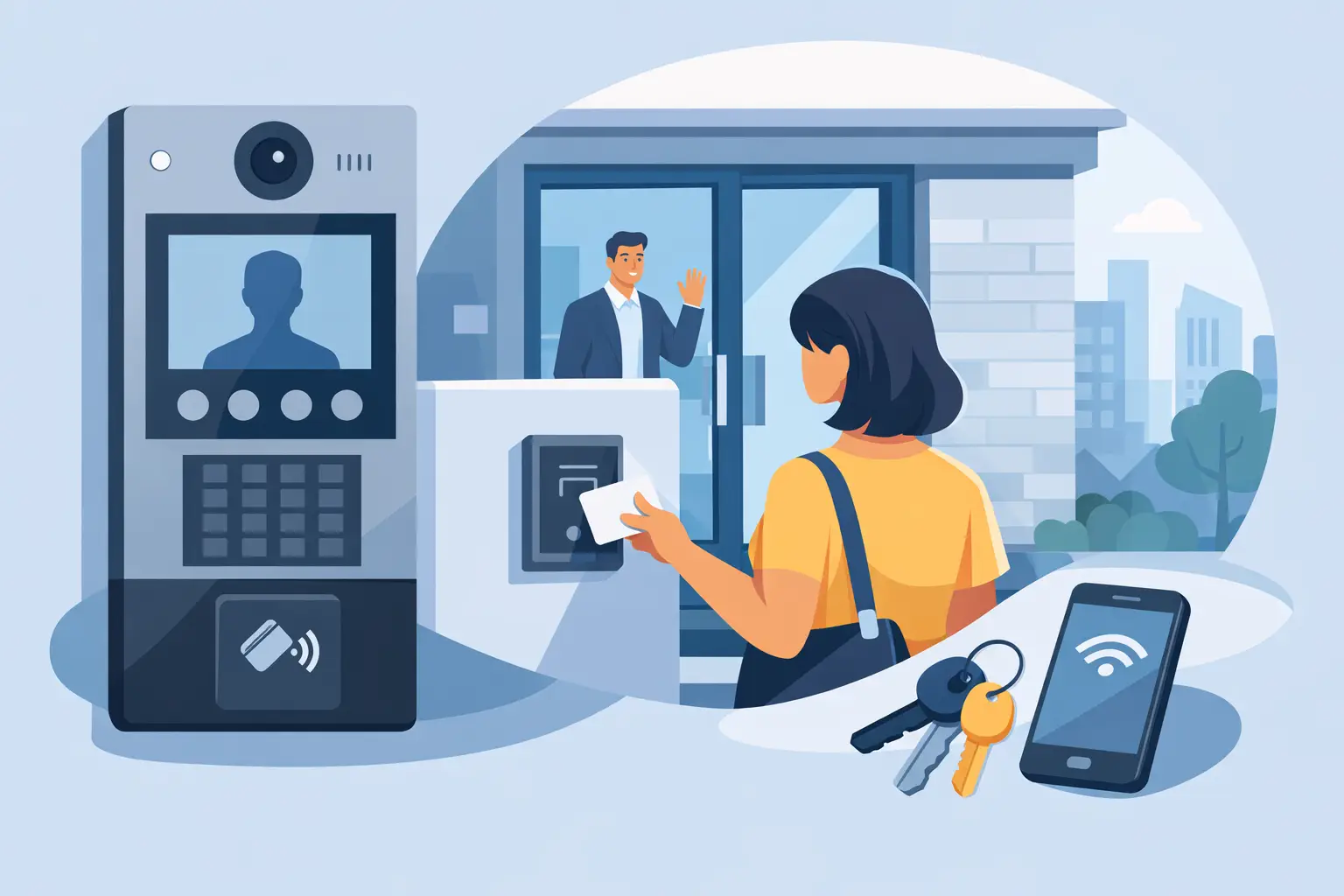
A front entrance is where an apartment property either gains control of visitor access or leaves it to a buzzer, a key, and resident guesswork. The right apartment door entry panels give visitors a clear way to call residents, give tenants a dependable entry method, and give property staff a system they can service without rebuilding the entrance every time occupancy changes.
For installers and property managers, the panel itself is only one part of the decision. The complete application includes the number of apartments, the distance to each unit, existing cable, door hardware, power availability, visitor traffic, and the level of access control expected at the building. A panel that looks appropriate on the wall can still be the wrong choice if it does not support the lock, directory, communication method, or future expansion the property needs.
Start With How the Building Actually Operates
Apartment entry systems should be selected around the building’s daily workflow, not just unit count. A six-unit walk-up with a common front door has very different requirements than a 75-unit building with a lobby, package deliveries, maintenance staff, and multiple entrances.
At a smaller property, a flush-mount or surface-mount panel with labeled call buttons may be the most practical option. Each button corresponds to an apartment station, and the resident can speak with the visitor before releasing the door. This format is straightforward, durable, and easy for tenants and visitors to understand.
Larger properties often benefit from a directory panel, keypad entry, or a digital system that can manage more residents without requiring a separate physical button for every unit. The trade-off is greater programming and system design work. Digital directories can reduce relabeling and present a cleaner appearance, but management must have a reliable process for adding and removing resident names, codes, and credentials.
Before specifying equipment, identify whether visitors need audio communication only or video verification as well. Audio entry remains a practical fit where the entry door is visible from resident units or where the project budget is focused on basic controlled entry. Video is usually the better choice for busy lobby doors, properties with delivery activity, or sites where residents need to confirm who is at the entrance before unlocking it.
Common Types of Apartment Door Entry Panels
The panel style should support the communication system and the physical conditions at the entrance. Weather exposure, vandal risk, wall construction, and available mounting depth all affect the right choice.
Multi-Button Audio and Video Panels
Multi-button panels are commonly used for small to mid-size apartment buildings. Each resident or unit has a dedicated call button, often with a name window or engraved label. When a visitor presses the button, the system calls the corresponding indoor station, handset, monitor, or compatible communication device.
This approach has a clear operational benefit: a visitor does not need to search a directory or enter a unit number. It is also easy for a property manager to inspect. If a single button, label, or station has an issue, service personnel can isolate the affected unit quickly.
The limitation is capacity. As unit count grows, button panels become physically larger and more difficult to update. They are best suited to properties with relatively stable occupancy and a manageable number of apartments.
Directory and Keypad Entry Panels
Directory-based entry panels provide a resident list or searchable calling method. Keypad-equipped models can also support door codes, resident PINs, or staff credentials, depending on the system design. These panels work well where a property needs visitor calling and controlled tenant entry at the same door.
A keypad should not be treated as the only security layer. Shared codes can be passed along, former tenants may retain old codes, and frequently used codes can become known to vendors or unauthorized visitors. For better control, pair keypad access with card, fob, mobile credential, or managed code capabilities where the system supports them.
Vandal-Resistant and Weather-Rated Panels
An exterior panel needs to match its environment. Stainless steel or metal faceplates, tamper-resistant fasteners, protected call buttons, and weather-rated housings are common requirements at exposed entrances. Covered porches and recessed vestibules offer more protection, but they do not eliminate the effects of moisture, temperature changes, salt, dust, or repeated use.
For high-traffic or higher-risk locations, prioritize serviceable components. A panel that allows replacement of a camera module, button assembly, speaker, microphone, or directory component can reduce downtime and avoid a full panel replacement after damage.
Match the Panel to the System Behind It
An entry panel cannot be selected independently from the rest of the door system. Compatibility is where many apartment entry projects succeed or fail.
First, confirm the calling architecture. Traditional analog intercom systems, two-wire systems, IP-based systems, and wireless components do not have the same wiring, expansion limits, or device compatibility. Existing cable may influence whether a retrofit can use the current pathway or whether new cable runs are needed. Reusing cable can control labor cost, but only if the cable type, condition, and route support the selected system.
Next, verify the door release requirements. The panel or master station must be able to operate the intended electric strike, magnetic lock, electrified trim, or gate operator through the proper relay and power arrangement. A lock may require a separate power supply, relay isolation, request-to-exit device, fire alarm interface, or battery backup. These details should be defined before installation, not discovered after the panel is mounted.
Video projects need additional planning. Confirm camera coverage at the visitor position, low-light performance, monitor or mobile-app compatibility, recording needs, and network capacity if IP equipment is involved. Video intercom and CCTV can complement each other, but they have different purposes. The intercom camera handles a visitor interaction; surveillance cameras provide wider-area monitoring and recorded evidence. Many apartment entrances benefit from both.
Design for the People Who Must Use It
A professional entry installation has to work for tenants, visitors, delivery personnel, maintenance staff, and management. That means the panel should be mounted at a practical height, clearly labeled, readable in low light, and positioned where visitors can stand comfortably without blocking the door swing.
Accessibility should be considered during design. Controls, directories, and communication features should be reachable and usable by a broad range of residents and visitors. Local codes and project requirements may establish specific mounting and accessibility obligations, especially in new construction and substantial renovations.
Tenant turnover also deserves attention. A system with paper labels may be economical, but it requires a dependable update process. If names are not changed promptly, visitors call the wrong unit and former residents remain displayed at the entrance. Digital directories simplify some updates, yet they require authorized staff access and clear procedures for resident data.
For managed buildings, establish who can issue credentials, change codes, update directory entries, and authorize remote door release. Security failures often come from loose administration rather than failed hardware.
Plan Installation and Service Before Ordering
A panel installation is not complete when the faceplate is secured to the wall. The project should include an equipment schedule, wiring plan, lock interface details, power calculations, and a test procedure for every apartment station and access method.
For retrofit work, inspect the entrance before committing to a panel size or mounting method. Measure the available wall space, check whether the door frame allows wiring transfer, locate existing conduit, and verify the condition of the backbox or recess. Surface mounting may be faster and less disruptive, while flush mounting can provide a cleaner, more protected finish. The best choice depends on the building structure and the expected exposure.
Keep service in mind as well. Property staff and installers should know how to replace tenant labels, reset a station, test door release, change a credential, and identify whether a problem is related to the panel, wiring, power supply, lock, or resident device. Keeping compatible replacement parts available can prevent a minor issue from becoming a prolonged entry problem.
Questions to Answer Before Selecting a Panel
The following questions help narrow the equipment category and prevent mismatched components:
- How many apartments, entrances, and call destinations must the system support?
- Is audio sufficient, or do residents need video verification?
- Will tenants enter with keys, fobs, cards, PINs, mobile credentials, or a combination?
- What electric locking hardware is installed or planned at each controlled opening?
- Can existing wiring be reused, and what distances must the system cover?
- Does the entrance require weather resistance, vandal resistance, or a recessed mounting solution?
- Who will manage names, credentials, codes, and service requests after installation?
A well-selected entry panel does more than place a call to an apartment. It creates a workable point of control between the street and the building, while giving installers and managers a system they can maintain as the property changes.
 No products in the cart.