
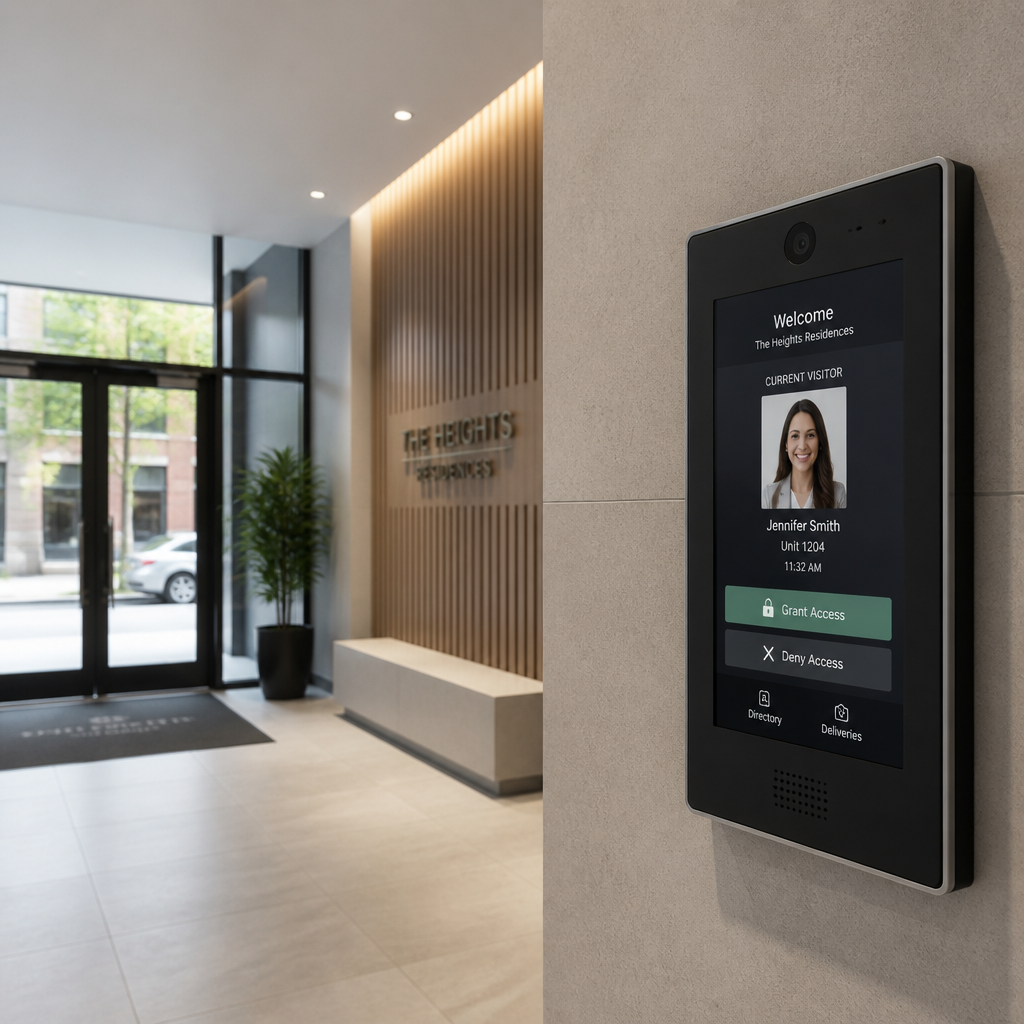
Choosing the wrong intercom system for an apartment building is an expensive mistake that property managers make more often than they should. A system that works fine for a 10-unit building will buckle under the demands of a 200-unit complex, and a wired system installed without considering future scalability will cost you twice as much to upgrade in three years. This apartment intercom buyer’s guide cuts through the noise and gives you a direct, practical framework for selecting the right intercom systems for apartments, whether you manage a small residential property or a large mixed-use building.
Table of Contents
- Why Apartment Intercom Systems Matter More Than Ever
- Quick Takeaways
- Types of Intercom Systems for Apartments
- Key Features to Evaluate Before You Buy
- Wired vs. Wireless Intercom Systems: Which Is Right for Your Building?
- Best Apartment Intercom Systems Compared
- Installation and Integration Considerations
- Cost Breakdown for Apartment Intercom Systems
- Frequently Asked Questions
- References
Why Apartment Intercom Systems Matter More Than Ever
Apartment buildings without a reliable entry intercom system are a liability. According to the Bureau of Justice Statistics, approximately 1 in 5 property crimes occur at multi-family residential properties. A well-chosen intercom system does not just provide convenience; it is a documented deterrent and a legal protection point for property managers who need to demonstrate due diligence in tenant security.
Beyond security, modern tenants expect frictionless entry experiences. A 2023 Multifamily Technology survey found that 68% of renters rank smart access control among their top three amenity priorities. That number has only grown since package delivery surged post-pandemic.
Quick Takeaways
| Key Insight | Explanation |
|---|---|
| IP-based intercoms scale better than analog | IP systems allow you to add units without rewiring, making them the smarter long-term investment for buildings expecting tenant turnover or expansion. |
| Video intercoms reduce unauthorized entry by up to 60% | Visual verification at the door stops tailgating and impersonation, issues that audio-only intercoms cannot address effectively. |
| Mobile-connected systems solve the missed-delivery problem | Residents who receive visitors or packages via smartphone app eliminate the need to be physically present, cutting missed entries and tenant complaints. |
| Cloud-managed systems reduce property manager workload | Remote access control and user management mean you can add or revoke entry credentials without visiting the building in person. |
| Wired systems still outperform wireless in large buildings | For buildings over 50 units, structured cabling provides the signal reliability and bandwidth that Wi-Fi or cellular simply cannot guarantee at scale. |
| Biometric and facial recognition options are now affordable | What cost $5,000 per door in 2018 is now available under $800, making biometric access a realistic option for mid-size apartment buildings. |
| Integration with CCTV adds forensic value | Pairing your intercom with a CCTV system creates a timestamped visual record of every entry event, which is critical for incident investigations. |
Types of Intercom Systems for Apartments
There are four primary categories of intercom systems used in apartment buildings, and each serves a different building profile. Picking the right category is the single most important decision you will make before looking at specific products.
Audio-Only Intercoms
Audio-only intercoms are the most basic entry point. They allow a visitor to press a button, speak to the tenant, and the tenant buzzes the door open. These systems work acceptably for small buildings with under 20 units, where simplicity and low cost are priorities. The downside is obvious: tenants cannot see who is at the door, which creates a verification gap that building insurers and security consultants consistently flag.
In practice, audio-only systems are being phased out of new apartment installations because the price gap between audio and video has closed dramatically over the past four years.
Video Intercoms
Video intercom systems add a camera to the door panel, allowing tenants to see and speak with visitors before granting access. This is the standard for any new installation today. Units range from basic single-tenant door cameras to full building-wide IP video intercom networks. Video intercoms are the right choice for the vast majority of apartment buildings in 2026.
IP and Cloud-Based Intercoms
IP-based intercom systems run over your building’s network infrastructure, pushing video and audio through the same cables or Wi-Fi that handles internet traffic. Cloud-based variants store access logs and allow remote management through a web dashboard or mobile app. These are the systems property managers should be targeting for any building where tenant turnover is common or where multiple entry points need to be managed centrally.
Wireless and Mobile-App Intercoms
Wireless intercom systems connect via Wi-Fi, cellular LTE, or proprietary radio frequencies. They eliminate the need for new cabling in retrofit projects, which makes them attractive for older buildings where running wire is cost-prohibitive. Mobile-app-connected systems let residents answer the door from anywhere, which is a significant selling point for buildings with a high percentage of work-from-home or travel-heavy tenants.

Key Features to Evaluate Before You Buy
A common mistake property managers make is evaluating intercom systems purely on price per unit. The features list matters far more than the upfront cost when you factor in long-term management time and tenant satisfaction.
Directory Management
For buildings with more than 30 units, digital directory management is non-negotiable. Systems that require a technician visit to add or remove tenant names waste property manager time and money. Look for systems with a cloud-based admin panel where you can update the resident directory remotely in under two minutes.
Access Control Integration
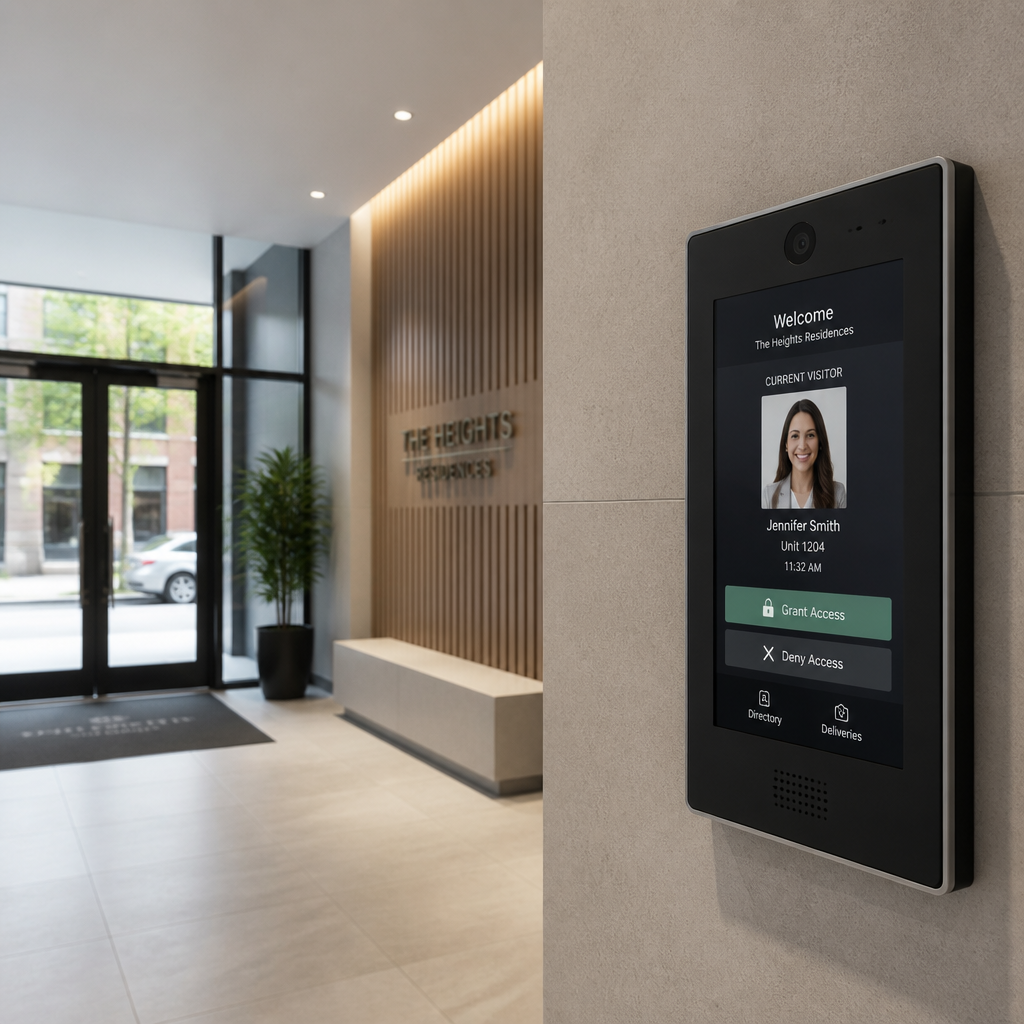
Your intercom should integrate with your broader access control ecosystem. At UnikCCTV, the most effective apartment security setups pair video intercoms with smart locks and gate access controllers so that the same credential, whether a PIN, fob, or mobile credential, works at every entry point. Siloed systems where the intercom and the door locks operate independently create administrative friction and security gaps.
Pro tip: Before committing to any intercom brand, ask specifically whether it integrates with Wiegand or OSDP access control readers. These are the two dominant protocols, and compatibility will determine whether your intercom can speak to your existing door hardware.
Camera Resolution and Night Vision
Door cameras that deliver less than 1080p resolution in 2026 are not worth installing. Infrared night vision is equally important. Entry attempts after dark are common, and a camera that produces a grainy, unrecognizable image at night provides no forensic value. Test any candidate system in low-light conditions before signing a purchase order.
Visitor Management and Delivery Access
Package theft costs apartment residents an estimated $5.4 billion annually in the United States, according to data cited by Forbes. Systems that support temporary access codes for delivery personnel, or that integrate directly with services like Amazon Key for Business, address this problem directly and reduce tenant complaints.
“The best access control system is the one your residents actually use correctly. Complexity is the enemy of compliance.” – Security Industry Association, 2024 Annual Report on Physical Security Trends
Wired vs. Wireless Intercom Systems: Which Is Right for Your Building?
This is the question that generates the most debate among property managers, and the answer is not universal. The right choice depends on your building’s age, size, and existing infrastructure.
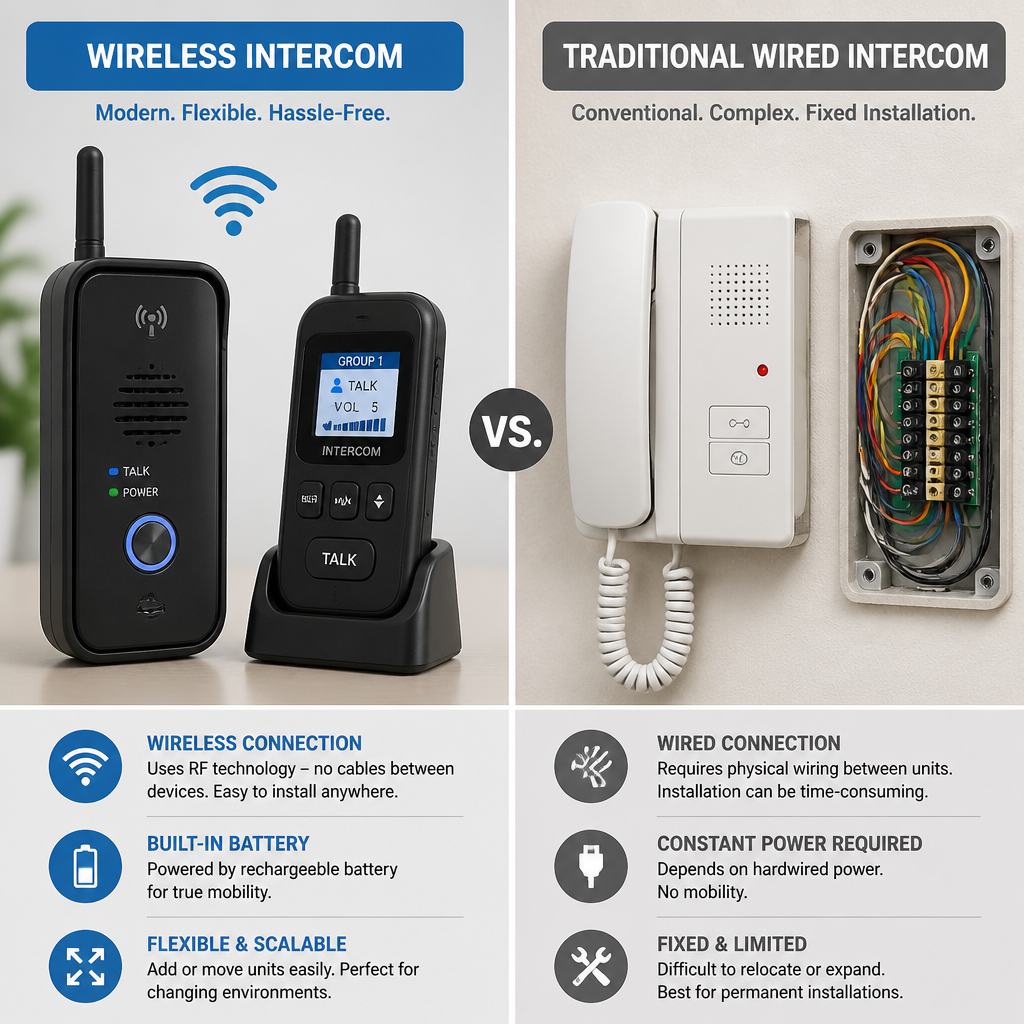
When Wired Systems Win
For new construction or buildings already equipped with structured cabling, a wired IP intercom system is the superior choice in nearly every scenario. Wired systems deliver consistent signal quality regardless of wireless interference from neighboring networks, microwaves, or physical obstructions like concrete walls. In buildings with 50 or more units, call reliability under load is critical, and wired infrastructure provides that without compromise.
Wired systems also tend to have longer operational lifespans. A properly installed Cat5e or Cat6 video intercom network can serve a building for 15 to 20 years with minimal hardware changes.
When Wireless Systems Win
Wireless intercom systems are the practical choice for retrofit projects in older buildings where running new cable would require opening walls, disturbing tenants, and incurring significant labor costs. They are also the better option for smaller buildings under 20 units where the call volume does not stress wireless bandwidth.
Modern Wi-Fi 6 infrastructure has improved wireless intercom reliability substantially, but in buildings with older networking equipment or dense construction materials like brick or reinforced concrete, performance can still be unpredictable. Always audit your wireless environment before committing to a wireless-first approach.
Pro tip: If you are retrofitting an older building and budget is tight, consider a hybrid approach: use existing phone wiring (two-conductor or four-conductor) to connect the main entry panel to a central controller, then use wireless transmission to reach individual apartment units that are difficult to wire. UnikCCTV carries wireless transmitter kits specifically designed for this hybrid architecture.
Best Apartment Intercom Systems Compared
Rather than listing every product on the market, this comparison focuses on the three most relevant system types for apartment buildings in 2026, evaluated against the criteria that matter most to property managers and facility operators.
| System Type | Best For | Key Strengths |
|---|---|---|
| IP Video Intercom (Wired) | Buildings with 30+ units, new construction, managed campuses | Reliable signal, high video quality, integrates with CCTV and access control, long hardware lifespan, supports large resident directories |
| Cloud-Based Wireless Intercom with Mobile App | Retrofit projects, small to mid-size buildings (under 50 units), tech-forward tenant demographics | No new cabling required, remote resident management, delivery access features, rapid installation timeline |
| Biometric / Facial Recognition Door Entry System | High-security buildings, executive residences, buildings replacing keycards or fobs | Eliminates credential loss or sharing, fast throughput at busy entry points, audit trail for every access event, scalable across multiple doors |
UnikCCTV stocks all three of these system types, along with the ancillary hardware (electromagnetic locks, door strikes, gate controllers) that complete each installation. The advantage of sourcing from a specialist rather than a general retailer like Home Depot is the ability to specify compatible components from the start rather than troubleshooting integration issues after installation.
Installation and Integration Considerations
The intercom unit itself is only part of the equation. A clean, professional installation that integrates with your building’s existing infrastructure determines whether the system performs as specified or underdelivers from day one.
Door Hardware Compatibility
Your intercom panel needs to trigger a door release mechanism, typically an electric strike, magnetic lock, or electronic deadbolt. These devices operate on different voltages and current requirements, and mismatching them with your intercom controller is a common installation error that causes intermittent failures. Before purchasing, confirm that your intercom system’s relay output is compatible with your door hardware specifications.
Network Infrastructure Requirements
IP-based intercom systems require Power over Ethernet (PoE) switches if you want to avoid running separate power lines to each door panel. This adds a line item to your installation budget but simplifies the physical installation significantly. Ensure your building’s network switch has sufficient PoE wattage for all connected intercom panels, cameras, and access control readers simultaneously.
Pairing with CCTV Surveillance
The strongest apartment security setups pair intercom systems with a CCTV camera network. The intercom handles visitor verification and access decisions, while the CCTV system provides continuous monitoring and recorded footage of common areas, parking, and entry points. When an incident occurs, the timestamped footage from both systems together provides a complete picture that a standalone intercom log cannot.
UnikCCTV’s product range covers both sides of this equation, which means your intercom panel cameras and your building’s surveillance cameras can feed into a single NVR or cloud recording platform rather than two separate, incompatible systems.
Cost Breakdown for Apartment Intercom Systems
Budget planning for apartment intercom systems requires separating hardware costs from installation costs and ongoing software or subscription fees. Each of these can vary significantly depending on the system type and building size.
Hardware Costs
Entry-level audio-only intercom systems for small buildings start around $200 to $400 for the door panel and two to four tenant stations. Mid-range IP video intercom systems for buildings of 20 to 50 units typically run $1,500 to $4,000 for hardware. Enterprise-grade cloud-managed systems for larger buildings can reach $8,000 to $20,000 in hardware costs, though the per-unit cost decreases significantly at scale.
Installation Labor
Installation labor for a straightforward wired intercom retrofit in a 30-unit building typically runs $1,500 to $3,500 depending on local labor rates and the complexity of the cable run. Wireless systems cut this cost by 40 to 60 percent in most cases, which is why they are popular for retrofit projects despite the higher hardware cost per unit.
Software and Subscription Fees
Cloud-managed intercom platforms charge ongoing subscription fees ranging from $20 to $100 per month depending on the number of units and features included. These fees cover remote management, cloud video storage, and software updates. Factor this into your total cost of ownership calculation. A system with higher upfront hardware costs but no subscription may be cheaper over a five-year period than a lower-cost hardware system with a monthly cloud fee.
Pro tip: When comparing quotes from multiple vendors, always request a five-year total cost of ownership breakdown that includes hardware, installation, and any subscription or maintenance fees. The lowest-bid intercom system frequently becomes the most expensive option within two years of installation when hidden fees and compatibility issues surface.
Frequently Asked Questions
What is the best intercom system for a small apartment building with fewer than 20 units?
For small apartment buildings under 20 units, a cloud-based wireless video intercom with mobile app connectivity is the most practical choice. It eliminates the need for complex wiring, installs quickly, and gives residents the smartphone-based access features they expect. Look for a system that supports temporary visitor codes and remote directory management so you are not making site visits every time a tenant moves in or out.
How long does it take to install an intercom system in an apartment building?
A wireless intercom system in a building of 20 to 30 units can typically be installed in one to two days by a qualified technician. A wired IP intercom system in the same building requires three to five days depending on cable routing complexity. Larger buildings of 100 or more units with multiple entry points and integrated access control can take one to two weeks for a complete installation.
Can apartment intercom systems integrate with existing CCTV cameras?
Yes, and this integration is highly recommended. IP-based intercom systems that support ONVIF protocol can connect to most modern IP CCTV cameras and NVR systems. This allows you to pull intercom door panel footage into your central surveillance dashboard, creating a unified view of all building entry events. UnikCCTV specializes in designing these integrated systems so that both components are specified for compatibility from the start.
What is the difference between a video intercom and a smart lock system?
A video intercom handles visitor identification and communication at the building entry point. A smart lock manages credential-based access, typically for individual unit doors or restricted internal areas. They serve different functions but work best when integrated. The intercom grants access to the building, and the smart lock controls access to individual spaces within it. A complete apartment security system uses both, with a shared access control platform managing credentials across all entry points.
Are biometric intercom systems practical for apartment buildings?
Biometric and facial recognition access systems are now practical and cost-effective for apartment buildings, particularly those with 30 or more units where credential management at scale becomes burdensome. The key advantage is eliminating fob or keycard loss, which costs property managers an average of $30 to $80 per replacement event when you factor in hardware, administrative time, and security re-keying. Biometric systems have no credential to lose, copy, or share, which substantially improves access security and reduces management overhead.
What should property managers look for in a vendor when buying apartment intercom systems?
Look for a vendor who stocks the full system, including door panels, network controllers, door release hardware, and cabling accessories, rather than just the panel unit. A vendor who can also provide installation guidance, technical support, and compatible CCTV components saves you the integration headaches that come from sourcing components from multiple suppliers. General home improvement retailers are not equipped to advise on building-scale intercom deployments. Specialist suppliers like UnikCCTV exist precisely for this reason.
If you have installed or evaluated an apartment intercom system recently, share what worked, what did not, and what you wish you had known before the installation began. Your experience helps other property managers make better decisions.
References
- Statista: Property crime statistics and multifamily residential security data
- Forbes: Package theft impact on residential properties and smart access solutions
- NIST: Physical access control system standards and guidance for building operators
- U.S. Department of Energy: Building infrastructure and network cabling standards for commercial and residential properties
- Bureau of Justice Statistics: Crime victimization data for multifamily and residential properties

 No products in the cart.