
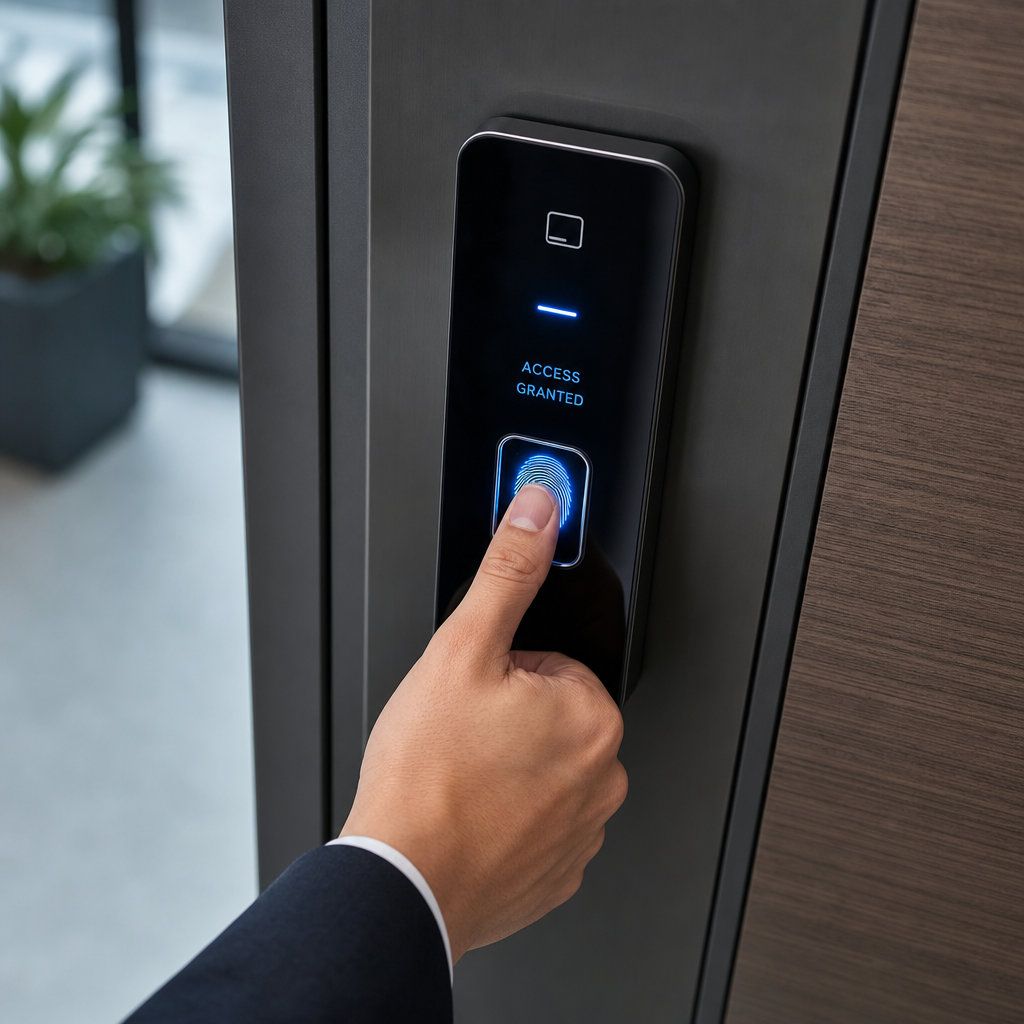
Key cards get cloned. PIN codes get shared. And when an employee leaves without returning their badge, most businesses have no reliable way to know who still has access to their building. Biometric access control eliminates that entire category of risk by tying building entry to something that cannot be duplicated: a person’s fingerprint, face, or iris. According to Statista, the global biometric system market is projected to exceed $82 billion by 2027, and the adoption curve in commercial real estate is accelerating fast. Property managers and business owners are not switching out of novelty. They are switching because their legacy systems are actively failing them.
Table of Contents
- Quick Takeaways
- The Real Cost of Traditional Access Systems
- What Biometric Access Control Actually Delivers
- Fingerprint Door Locks vs. Card Readers vs. PIN Pads
- Commercial Access Control for Multi-Tenant Buildings
- Office Security Integration with CCTV and Intercoms
- How to Evaluate a Biometric System Before You Buy
- Frequently Asked Questions
- References
Quick Takeaways
| Key Insight | Explanation |
|---|---|
| Credential theft is the top access control vulnerability | Cards, fobs, and PINs can all be copied or shared. Biometric identifiers cannot be transferred between people. |
| Fingerprint door locks reduce administrative overhead | No rekeying, no card reprinting. Removing a departing employee takes seconds in the management software. |
| Commercial access control now includes audit trails | Biometric systems log every entry attempt with a timestamp, creating legally defensible records for incidents. |
| Facial recognition locks work without physical contact | Useful for high-traffic entrances where touchless operation reduces bottlenecks and hygiene concerns. |
| ROI shows up faster than most managers expect | Eliminating card replacement costs, locksmith visits, and rekeying expenses often recoups hardware costs within 18 months. |
| Integration with CCTV multiplies the security value | Pairing biometric entry logs with timestamped camera footage gives security teams a complete picture of any incident. |
| Biometric data stays on-device in most quality systems | Reputable systems store templates locally, not in a cloud database, limiting exposure in the event of a data breach. |
The Real Cost of Traditional Access Systems
Most businesses underestimate what their current key card or PIN-based system actually costs. The hardware line item is visible. The hidden costs are not.
In practice, a mid-size office with 50 employees will replace between 8 and 15 access cards per year due to loss, theft, or damage. Each replacement costs money, but the real problem is the window of vulnerability between when a card goes missing and when IT or facilities management actually deactivates it. That window averages 72 hours in organizations without a strict reporting protocol, according to security audit data compiled by the ASIS International foundation.
PIN codes carry a different failure mode. They get written on sticky notes, shared casually between colleagues, or reused across systems. A common mistake is assuming that the person entering a PIN is who they claim to be. There is no verification layer. Traditional credentials authenticate the object or the number, not the person.
For property managers running apartment buildings or multi-tenant commercial spaces, the problem compounds. Tenant turnover means constant rekeying or card replacement cycles. Every time a tenant moves out, every lock or reader they had access to becomes a question mark. Biometric access control removes that question entirely. When a person is no longer enrolled in the system, they cannot enter. Period.
What Biometric Access Control Actually Delivers
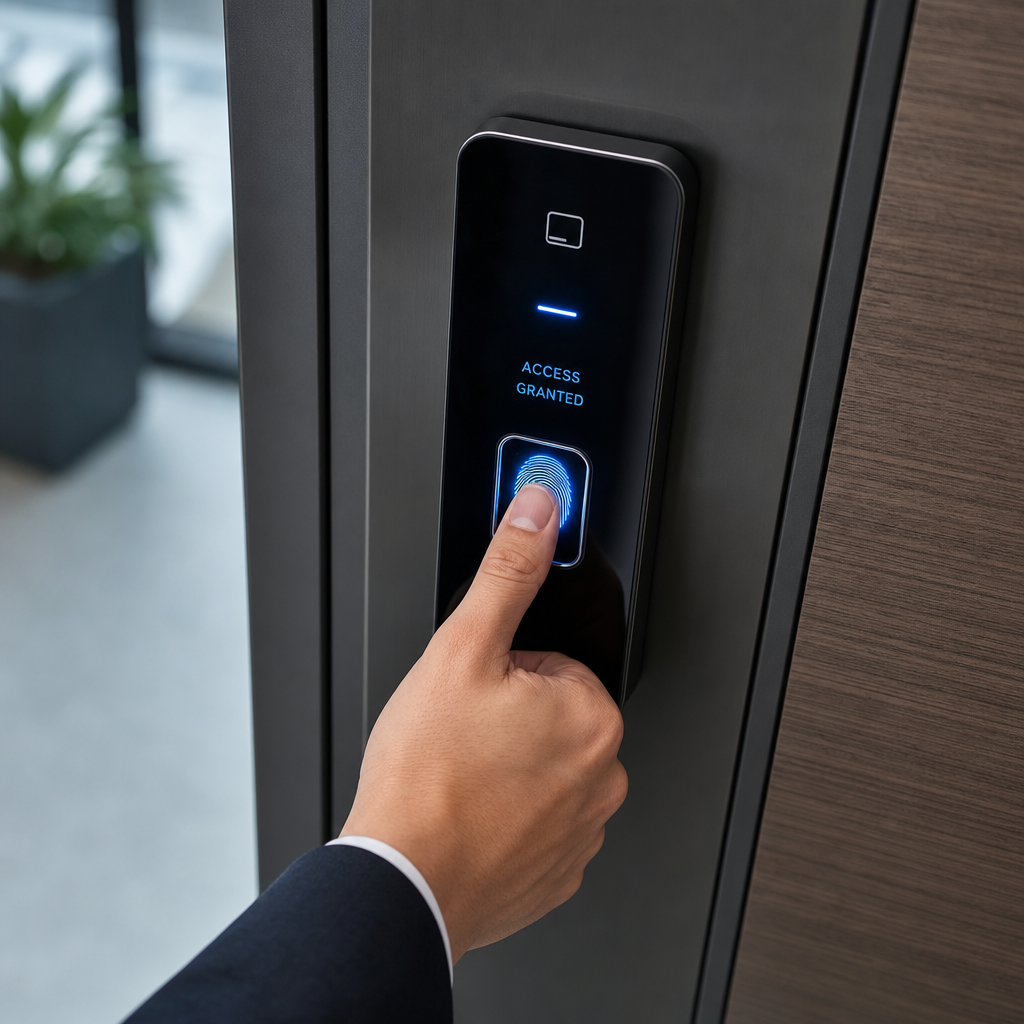
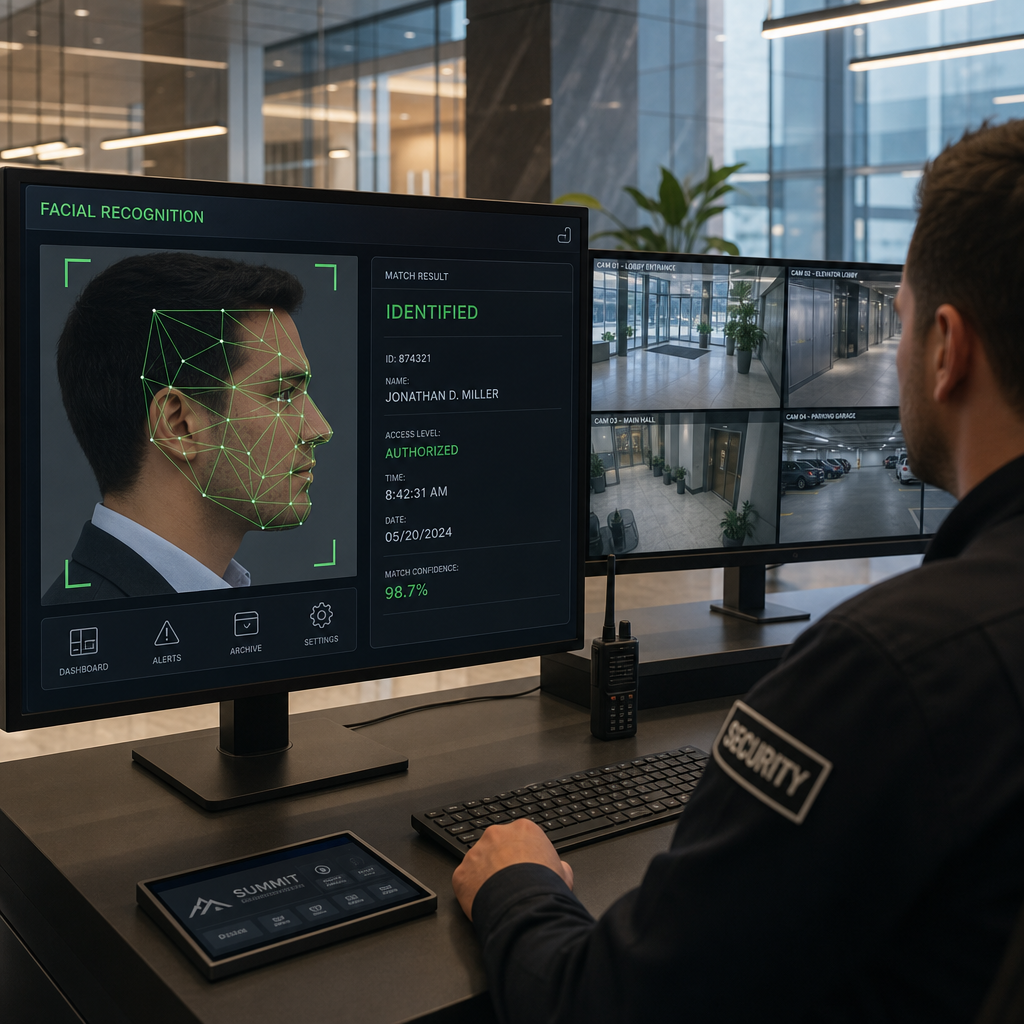
Biometric access control is not a single product. It is a category that includes fingerprint door locks, facial recognition entry panels, iris scanners, and palm vein readers. For most commercial applications, fingerprint and facial recognition are the dominant technologies because they balance accuracy, cost, and ease of use.
Elimination of Credential Sharing
This is the foundational advantage that drives most commercial adoption. A fingerprint belongs to one person. It cannot be lent, copied onto a blank card, or guessed. In environments where physical security directly affects liability, such as pharmaceutical storage, data centers, or financial back offices, this non-transferability is not a convenience. It is a compliance requirement.
Real-Time Audit Logs That Hold Up Under Scrutiny
Every biometric access event creates a timestamped log tied to a specific enrolled individual. If an incident occurs in a restricted area, security personnel can pull an exact record of who entered, when, and how many times. Compare that to a PIN system, where the log shows only that someone entered the correct code. The biometric log is evidence. The PIN log is barely a clue.
Scalable Enrollment Across Large Teams
Enrolling a new employee into a modern biometric system takes under two minutes. That enrollment covers every door or zone the employee is authorized to access. Removing them on their last day takes the same amount of time. There is no physical credential to retrieve, no lock to change, and no lingering access risk from an unreturned badge.
Pro tip: When setting up biometric access control for a commercial building, create access tiers before you start enrollment. Defining zones such as general entry, server room, and executive floor upfront prevents permission creep and makes audits far simpler six months down the line.
“The move toward biometric authentication in physical security mirrors what happened with digital security a decade ago. Organizations that waited to adopt multi-factor authentication paid for it in breaches. The same dynamic is now playing out at the door.” – Security Industry Association, Physical Security Technology Trends Report
Fingerprint Door Locks vs. Card Readers vs. PIN Pads
Choosing the right access control technology is not about picking the most advanced option. It is about matching the technology to the specific risk profile and operational context of each entry point.
| Technology | Security Level | Best Use Case |
|---|---|---|
| Fingerprint Door Locks | High. Biometric identifier is unique and non-transferable. False acceptance rate typically below 0.001%. | Server rooms, pharmacies, office back areas, high-turnover workplaces where rekeying costs are significant. |
| Smart Card or Fob Readers | Medium. Cards can be cloned with readily available RFID tools. Security depends heavily on reporting protocols. | Low-risk general access zones where speed of entry is the priority and credential theft risk is low. |
| PIN Pad Entry | Low to Medium. Codes are regularly shared or observed. No individual accountability at the log level. | Secondary authentication layer combined with another method, or very low-security interior doors. |
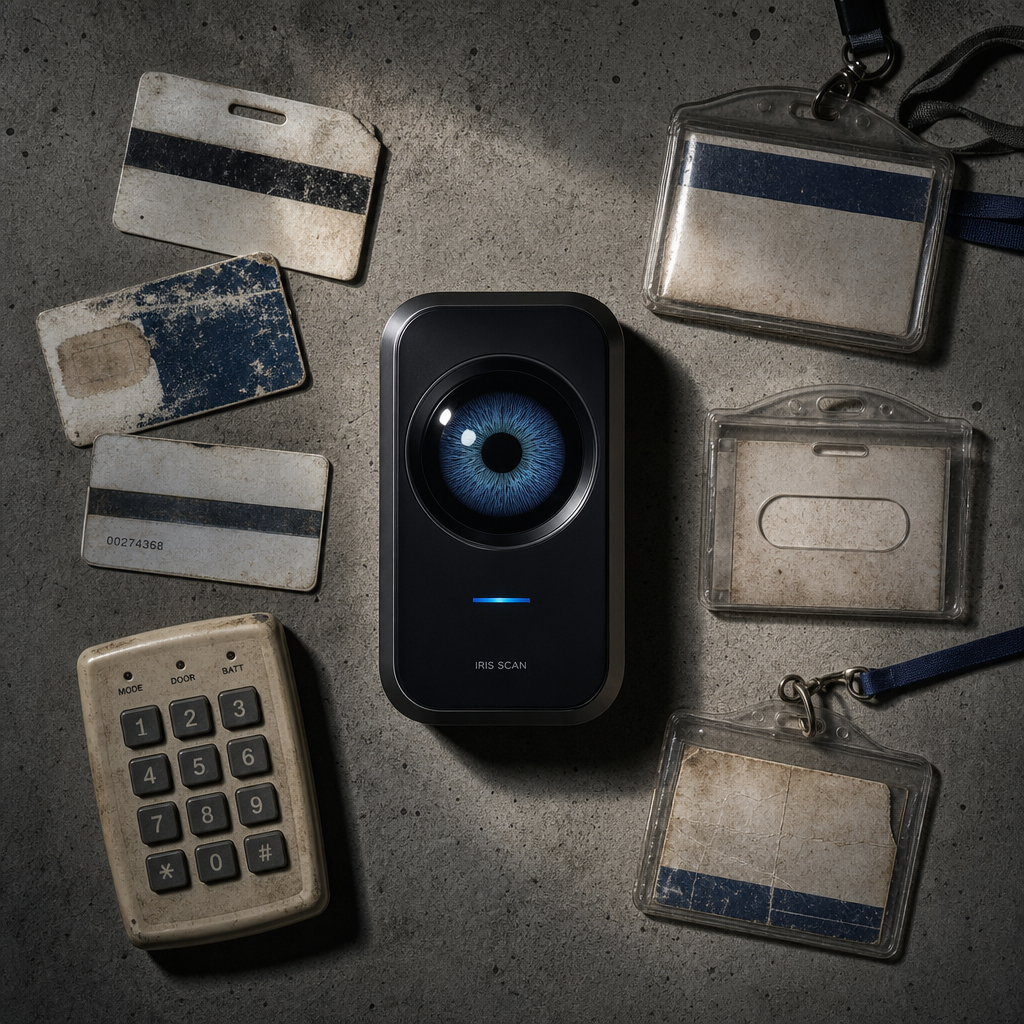
In practice, the most secure commercial installations use a layered approach: a fingerprint scan or facial recognition panel at the perimeter, combined with a PIN or smart card at secondary internal access points. This is called multi-factor physical authentication, and it is the standard in any environment where a single access failure could create significant liability.
Products like the facial recognition smart locks and biometric access panels available through UnikCCTV are designed for exactly this kind of layered deployment. They integrate into existing door hardware without requiring a full infrastructure overhaul, which matters significantly for businesses that cannot afford extended construction downtime.
Commercial Access Control for Multi-Tenant Buildings
Property managers face a specific version of the access control problem that single-tenant business owners do not. When you manage a building with 20, 50, or 200 tenant units, you are constantly cycling people in and out of the system. Traditional systems make this expensive and error-prone. Biometric commercial access control fundamentally changes the economics of tenant management.
Gate Access Control for Multi-Unit Properties
Gate access is often the first place property managers see a clear return on investment from biometric upgrades. A biometric gate panel eliminates the need to reissue key fobs every time a tenant moves out. More importantly, it eliminates the risk that a former tenant retained a copied fob or shared their code with someone else.
For apartment complexes and gated communities, systems that combine facial recognition or fingerprint entry with an intercom panel give residents smooth daily access while giving managers a complete log of every gate event. This is particularly valuable when disputes arise about unauthorized access or after-hours disturbances.
Managing Access Tiers Across Common Areas
Not every tenant needs access to every part of a building. A ground-floor retail tenant does not need access to the rooftop mechanical room. A biometric system allows property managers to assign precise access permissions by individual, by unit, or by lease term. When a lease expires, access can be automatically scheduled to terminate, removing the human error factor from the offboarding process entirely.
Pro tip: If you manage a multi-tenant property and are evaluating biometric access control systems, ask vendors specifically about their tenant offboarding workflow. Systems that require manual deletion of each access point individually will create administrative bottlenecks at scale. Look for systems where one action removes a user from all assigned zones simultaneously.
Office Security Integration with CCTV and Intercoms
A biometric access control system operating in isolation delivers a fraction of its potential value. The real security intelligence comes when it is integrated with CCTV surveillance and intercom systems to create a unified picture of building activity.
Synchronized Timestamps Between Access Logs and Camera Footage
When a biometric entry event triggers a camera clip capture, security personnel can pull up the exact footage for any logged access in seconds. This matters enormously during incident investigation. Instead of manually scrubbing through hours of footage, a manager can search by employee name and access time to retrieve the corresponding clip. The data consistently shows that response time to security incidents drops significantly when access logs and camera footage are synchronized.
Wireless Intercoms as a First-Line Screening Layer
For visitor management, pairing a biometric access system with a wireless intercom panel at the main entrance creates a two-step process. Known, enrolled individuals use biometric entry. Visitors announce themselves through the intercom, which connects to a mobile device or front desk terminal. The person inside can verify the visitor visually, grant one-time access remotely, and the system logs that a visitor was admitted along with the timestamp and the identity of the employee who granted access.
This workflow addresses one of the most common security gaps in commercial buildings: tailgating, where an unauthorized person follows an authorized one through a secured door. When every entry requires either biometric verification or an explicit intercom grant, tailgating becomes a logged, visible event rather than an invisible one.
UnikCCTV’s catalog of wireless intercoms and CCTV surveillance equipment is specifically designed to work alongside biometric entry panels, giving property managers and business owners a coherent system rather than a collection of disconnected devices. Investing in components built for integration from the start avoids the compatibility problems that plague piecemeal security upgrades.
How to Evaluate a Biometric System Before You Buy
The biometric access control market has expanded rapidly, and not every product on it deserves the same trust. There are several criteria that consistently separate quality commercial systems from hardware that will create more problems than it solves.
False Acceptance Rate and False Rejection Rate
Every biometric system has two error metrics. The false acceptance rate (FAR) measures how often the system incorrectly grants access to an unauthorized person. The false rejection rate (FRR) measures how often it incorrectly denies access to an authorized one. For commercial security, the FAR must be the priority. A system with a FAR above 0.01% is not appropriate for high-security zones. For general office entry, an FAR under 0.1% combined with a low FRR is a reasonable balance that avoids both security failures and frustrated employees.
On-Device vs. Cloud Biometric Template Storage
This is a specification most buyers overlook, and it has real consequences. Systems that store biometric templates (the mathematical representation of a fingerprint or face) locally on the device are significantly less exposed to mass data breaches than those that store templates in a cloud database. If a cloud database is compromised, biometric data cannot be changed the way a password can. On-device storage isolates that risk. Always ask vendors explicitly where biometric templates are stored before purchasing.
Compatibility with Existing Door Hardware
A common mistake is purchasing a biometric lock or panel without confirming it is compatible with the existing door frame, locking mechanism, and electrical infrastructure. Most quality commercial biometric panels support standard wiring interfaces and work with electric strikes, magnetic locks, or electrified exit devices. Confirming compatibility before purchase prevents installation costs from doubling the project budget unexpectedly.
For buyers who are uncertain about compatibility, UnikCCTV offers expert consultation services that assess your existing infrastructure and recommend systems that integrate cleanly, rather than requiring expensive modifications.
Time and Attendance Integration
For businesses managing shift workers or hourly employees, biometric access control systems that double as time attendance clocks eliminate the need for a separate time-tracking system. Every biometric entry and exit becomes a verified clock-in and clock-out record tied to a specific individual. Buddy punching, where one employee clocks in for another, becomes structurally impossible. The payroll accuracy improvement alone justifies the investment for many businesses within the first year.
Frequently Asked Questions
Is biometric access control appropriate for small businesses, or only for large enterprises?
Biometric access control is appropriate for any business where controlling who enters specific areas matters. A small medical practice protecting patient records, a retail stockroom with high-value inventory, or a four-person tech company protecting hardware are all valid use cases. The hardware cost has dropped significantly over the past five years, making entry-level fingerprint door locks accessible for businesses with fewer than ten employees.
What happens if a fingerprint scanner fails to read a finger?
Quality biometric systems include backup authentication methods, typically a PIN or a management override card, for situations where a biometric scan fails. Failure to read a fingerprint can happen due to dry skin, cuts, or certain medical conditions. A well-configured system will prompt the user for a secondary method after one or two failed scan attempts rather than locking them out entirely.
How do biometric access systems handle employee terminations?
Removing a terminated employee from a biometric access control system takes less than two minutes through the management software. The deleted enrollment immediately invalidates their access across all zones they were assigned to. There is no physical credential to retrieve and no risk that they retained a copy. This is one of the most operationally significant advantages over card or PIN-based systems.
Can biometric access data be used as legal evidence in a security incident?
Yes, and this is one of the strongest arguments for commercial adoption. Biometric access logs create a timestamped record tied to a verified individual identity, not just a credential. When combined with synchronized CCTV footage, this data has been used in workplace investigations, insurance claims, and legal proceedings. The evidentiary value of a biometric log is substantially higher than a PIN entry log, which cannot identify who actually entered the code.
Is it a privacy violation to collect employee fingerprints for access control?
This depends on jurisdiction. In the United States, states including Illinois, Texas, and Washington have biometric privacy laws that require explicit consent from employees before collecting biometric identifiers. Businesses operating in those states must provide written notice and obtain signed consent. In most cases, employers who explain the purpose clearly and obtain consent have no legal exposure. Consulting with an employment attorney before rollout is advisable for businesses operating in regulated states.
How does facial recognition access control perform in poor lighting?
Modern commercial-grade facial recognition panels use infrared sensors that operate independently of visible light. This means they function reliably in low-light entryways, underground parking structures, or night-shift environments without performance degradation. Consumer-grade or low-cost panels may rely on standard cameras and will perform inconsistently in poor lighting, which is one of the key specification differences to verify when comparing products.
Have you recently evaluated or installed a biometric access control system at your property or office? Share what worked, what surprised you, or what you wish you had known before making the decision.
References
- Statista global biometric systems market size data and forecasts
- Forbes reporting on enterprise security technology adoption trends
- NIST standards and guidelines for biometric system performance and evaluation
- U.S. Department of Homeland Security resources on physical access control and biometric security
- McKinsey research on workplace security technology investment and ROI


 No products in the cart.