
Most people assume building a solid home security setup requires spending thousands of dollars. The reality is different. A well-chosen combination of a budget smart lock, a cheap intercom system, and a capable camera can cover the essentials for under $500 total. The market for affordable smart home security has matured significantly, and the gap between entry-level and premium hardware has narrowed. This guide cuts through the noise, tells you exactly what to buy, what to skip, and how to set spending priorities that match real-world security needs for homes, apartments, and small commercial properties.
Table of Contents
- What $500 Actually Buys You in Security Hardware
- Quick Takeaways
- Budget Smart Locks That Actually Work
- Cheap Intercom Systems Worth Considering
- Affordable Cameras Under $200
- Building a Complete Setup Under $500
- Comparison: Budget vs Mid-Range vs Premium Security Tiers
- Common Mistakes to Avoid When Buying Budget Security Gear
- Frequently Asked Questions
- References
What $500 Actually Buys You in Security Hardware
The $500 ceiling is a realistic starting point for most homeowners and small property managers. According to Statista, the global smart home security market was valued at over $78 billion in 2023 and continues to push hardware costs down as competition increases. That price pressure directly benefits budget buyers.
In practice, $500 lets you cover three core components: one entry point with a smart lock, one door or gate with an intercom, and one to two outdoor cameras. That is not a compromised setup. That is a functional perimeter for a single-family home or small apartment unit.
The mistake most first-time buyers make is spreading their budget too thin across too many devices. Four cheap cameras with no smart lock and no intercom is a worse outcome than two well-placed cameras, one solid lock, and a working intercom. Coverage depth beats coverage breadth at this price point.
Pro tip: Start with your front door. It is the entry point involved in the majority of residential break-ins. A smart lock plus a doorbell camera at the front entry gives you more real-world protection than spreading that same money across five cheaper sensors throughout the property.


Quick Takeaways
| Key Insight | Explanation |
|---|---|
| $500 covers a full three-component setup | One smart lock, one intercom, and one to two cameras can be purchased within this budget without sacrificing core functionality. |
| Wired intercoms outperform wireless at the same price | A wired intercom in the $80-$150 range typically offers more reliable audio and longer lifespan than a wireless unit at the same cost. |
| Biometric locks are now available under $150 | Entry-level fingerprint and PIN-based smart locks from reputable manufacturers now sit below $150, making keyless entry accessible on any budget. |
| Local storage cameras avoid monthly subscription fees | Cameras with SD card or NVR storage eliminate recurring cloud fees, which can add up to $100 or more per year per device. |
| Intercom placement matters more than features | A basic intercom mounted at the correct height and angle performs better than a feature-rich unit mounted poorly or in a low-traffic location. |
| IP65 or higher weatherproofing is non-negotiable for outdoor cameras | Budget cameras without proper weatherproofing fail within one to two seasons in most climates, negating any initial savings. |
| Integration compatibility reduces long-term costs | Choosing devices that work together (or with a common app) avoids the cost of replacing hardware that cannot communicate with future additions. |
Budget Smart Locks That Actually Work
The budget smart lock category has improved dramatically over the past three years. You no longer have to choose between affordability and reliability. The key is knowing which features are worth paying for and which are marketing additions that drive up cost without adding security value.
What to Look for in a Lock Under $150
At the $80 to $150 price range, look for locks with a Grade 2 ANSI/BHMA rating or higher. This is the minimum standard for residential security. Below Grade 2, you are essentially buying a novelty device. Most reputable manufacturers at this price point include this rating, but always verify before purchasing.
PIN pad entry is standard. Fingerprint or biometric access is now available in this range from manufacturers specializing in access control hardware, including options available through dedicated security suppliers like UnikCCTV. Avoid locks that require a proprietary hub with a mandatory subscription to unlock basic features.
Wired vs Battery-Powered Smart Locks
Battery-powered smart locks are more common and easier to install, but they introduce a single point of failure: a dead battery. In practice, most quality battery-powered locks provide a 6 to 12 month battery life under normal use. Locks that support a 9V emergency power terminal on the outside are worth the minor premium because they eliminate the lockout risk entirely.
Wired smart locks cost more to install due to labor, but they suit apartment buildings, offices, and properties where UnikCCTV-style access control integration is planned from the start. For a single residential front door on a tight budget, battery-powered is the right call.
Pro tip: If you are managing multiple units in an apartment building, look for smart locks that support access code management for individual tenants. This removes the cost of rekeying when tenants change, which averages $50 to $100 per lock per turnover.
Cheap Intercom Systems Worth Considering
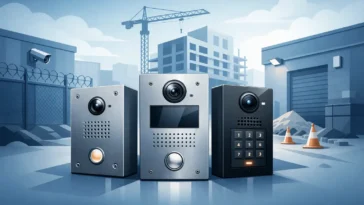
The phrase “cheap intercom system” gets a bad reputation, mostly because buyers conflate low price with low performance. A basic wired audio intercom from a hardware-focused supplier in the $80 to $130 range outperforms a wireless consumer-grade video intercom at the same price in almost every reliability test.
Wired Audio Intercoms for Apartments and Gates
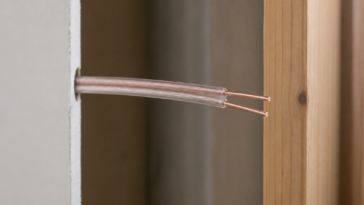
For property managers overseeing apartment buildings or gated properties, a wired audio intercom is still the most cost-effective entry point. These systems connect directly to building wiring, do not depend on Wi-Fi stability, and can serve multiple units from a single outdoor station. A two-wire intercom kit for a small building typically runs $100 to $180, well within the sub-$500 total budget.
UnikCCTV carries intercom systems designed specifically for multi-unit residential and commercial properties, which is a meaningful differentiator from general retailers like Home Depot where product selection skews toward single-family residential and post-sale support is minimal.
Wireless Intercoms for Homes and Small Offices
Wireless intercoms are the right choice when running cable is not practical. The trade-off is range and reliability. A DECT-based wireless intercom performs significantly better than a Wi-Fi dependent unit in environments with crowded wireless channels, such as apartment buildings or dense urban areas.
For a home or small office, a wireless intercom in the $60 to $100 range handles basic visitor communication. Pair it with a smart lock and a camera doorbell and you have covered the front entry comprehensively without exceeding $300 on those three components alone.

Affordable Cameras Under $200
The camera market is the most saturated segment of budget smart home security. That is both good and bad. Good because competition has pushed quality up and prices down. Bad because the sheer number of options makes it easy to buy something that looks capable on a spec sheet but fails in real-world use.
Indoor vs Outdoor Camera Priorities at This Price Point
Outdoor cameras at the sub-$100 price point are viable, but only if they meet IP65 weatherproofing standards and use proper infrared night vision rather than color-boost night mode, which degrades significantly in total darkness. For outdoor use, resolution matters less than night vision quality and weatherproofing.
Indoor cameras at this price point have fewer constraints and can prioritize features like motion zones, two-way audio, and local storage compatibility. A 1080p indoor camera with local SD card storage for $40 to $70 is a solid value. Avoid cameras that lock footage behind a paid cloud subscription at this price tier.
Local Storage vs Cloud Storage for Budget Setups
Local storage is the right default for budget buyers. A camera with a microSD card slot and no mandatory subscription keeps your total cost of ownership lower over three years. Cloud subscriptions that seem minor at $3 to $10 per month per camera add up to $108 to $360 per camera over three years. That erases any initial savings on hardware.
For buyers who want remote access without cloud fees, a local NVR (Network Video Recorder) setup from a supplier like UnikCCTV can serve multiple cameras on a single local network with mobile app access, no recurring fees, and higher storage capacity than individual SD cards.
Building a Complete Setup Under $500
Here is a concrete breakdown of how to allocate a $500 budget across the three core components for a single-family home or small apartment unit.
- Smart lock (front door, PIN plus fingerprint): $100 to $150
- Wired or wireless intercom (front entry): $80 to $130
- Outdoor camera (front entry or driveway): $60 to $100
- Indoor camera (common area or main living space): $40 to $70
- Mounting hardware, cable, batteries: $20 to $40
Total: $300 to $490, with room for a second outdoor camera or an upgraded lock depending on priorities. This is a complete, functional setup, not a stripped-down compromise.
Property managers overseeing multiple units should approach this differently. The per-unit cost drops substantially when buying intercom stations in bulk, and a centralized NVR for camera storage becomes more cost-effective at four or more units than individual SD card cameras per unit.
“The most effective security investment is the one that gets used consistently. A $200 setup that is easy to operate beats a $1,000 system that residents ignore or disable because it is complicated.” — Security Industry Association, 2023 residential security adoption report
Comparison: Budget vs Mid-Range vs Premium Security Tiers
| Feature | Budget Tier (Under $500 total) | Mid-Range Tier ($500-$1,500 total) | Premium Tier ($1,500 and above) |
|---|---|---|---|
| Smart lock type | PIN or biometric, battery-powered | Biometric plus app control, auto-lock | Integrated access control with audit logs |
| Intercom system | Basic wired audio or wireless DECT | Video intercom with app-based answering | IP video intercom with building management integration |
| Camera storage | Local SD card, no subscription | Local NVR or optional cloud | Dedicated NVR with redundant cloud backup |
| Camera resolution | 1080p | 2K to 4MP | 4K with AI motion detection |
| Scalability | Limited, device-by-device expansion | Moderate, compatible ecosystem | Full system integration, centralized management |
| Best suited for | Homeowners, single units, small offices | Multi-unit properties, growing businesses | Large buildings, enterprise facilities |
Common Mistakes to Avoid When Buying Budget Security Gear
A common mistake is treating camera count as the primary success metric. More cameras do not automatically mean better security. Two well-positioned cameras with clear sightlines to entry points outperform six cameras with overlapping or redundant coverage of low-risk areas.
Another frequent error is buying from a general retailer like Home Depot or a boutique smart home brand without verifying that the hardware is supported long-term. Consumer-grade smart home brands have a history of shutting down cloud services or discontinuing app support within three to five years of launch, which renders their hardware nonfunctional if it depends on a cloud connection to operate.
Buying from a dedicated security hardware supplier with a documented product line and ongoing support infrastructure, such as UnikCCTV, reduces this risk because the business model is built around security hardware longevity rather than consumer electronics refresh cycles.
Finally, ignoring installation quality is a budget-killer. A $100 smart lock installed incorrectly, with misaligned strike plates or improperly secured mounting, provides less actual security than a $40 deadbolt installed correctly. If you are not confident in a self-install, factor in a one-time professional installation consultation before purchasing.
Pro tip: Before finalizing any hardware purchase, check whether the manufacturer provides English-language technical documentation and accessible customer support. Budget hardware from suppliers with no English documentation or support infrastructure creates installation and troubleshooting problems that cost more in time than the initial savings justified.
Frequently Asked Questions
Can a $500 security setup realistically protect a home or small apartment?
Yes, and the evidence supports this. A smart lock on the primary entry, a working intercom for visitor screening, and one to two cameras covering the front and back create a deterrent and documentation system that addresses the most common residential security vulnerabilities. The $500 ceiling is not a limitation for most single-unit properties.
What is the most important component to buy first on a tight budget?
The front door lock. According to FBI crime statistics, the majority of residential burglaries involve forced or unlocked front door entry. A biometric or PIN smart lock at the front door closes the most common vulnerability before you spend anything on cameras or intercoms.
Are wireless intercoms reliable enough for a rental property?
DECT-based wireless intercoms are reliable for single-unit properties and small offices. For multi-unit apartment buildings, wired intercoms are the better choice because they do not depend on tenant Wi-Fi, are not affected by wireless interference, and have longer operational lifespans at equivalent price points.
How do I avoid recurring subscription fees on security cameras?
Choose cameras with local SD card storage or connect them to a local NVR (Network Video Recorder). Cameras that require a cloud subscription for basic recording access should be avoided in a budget setup. Multiple quality cameras with local storage are available in the $40 to $100 range from hardware-focused suppliers.
Is a biometric smart lock secure enough for residential use?
Entry-level biometric locks in the $100 to $150 range are secure for residential use when they carry a Grade 2 ANSI/BHMA rating or higher. The fingerprint sensor quality varies between manufacturers, so buying from a supplier with transparent product specifications and a dedicated access control product line matters more than brand name recognition.
What is the difference between a video doorbell and a proper intercom system?
A video doorbell is a single-function consumer device designed for Wi-Fi connectivity and cloud-based app notifications. A proper intercom system supports two-way audio or video communication, can serve multiple indoor stations, does not require a cloud subscription to function, and is designed for longer-term installation. For rental properties or commercial uses, a dedicated intercom system is the more cost-effective long-term choice.
Can I expand a budget security setup later without replacing everything?
Yes, if you plan for it upfront. Choose a smart lock that supports access code expansion, cameras that use standard protocols like ONVIF, and an intercom system with documented compatibility specs. Starting with expandable hardware means adding components later rather than replacing the entire setup, which is where the real long-term savings come from.
Have you built an affordable smart home security setup yourself? Share what worked or what you would change, because real-world experience from property owners and managers helps everyone in this community make better buying decisions.
References
- Statista: Smart Home Security Market Data and Global Revenue Statistics
- Forbes: Expert Reviews and Buyer Guidance on Home Security Systems and Smart Devices
- Federal Trade Commission: Consumer Guidance on Smart Home Device Privacy and Security Standards
- NIST: Cybersecurity and Physical Security Standards for Smart Home and IoT Devices
- U.S. Department of Energy: Home Security Integration Guidance and Energy-Efficient Device Standards
 No products in the cart.