
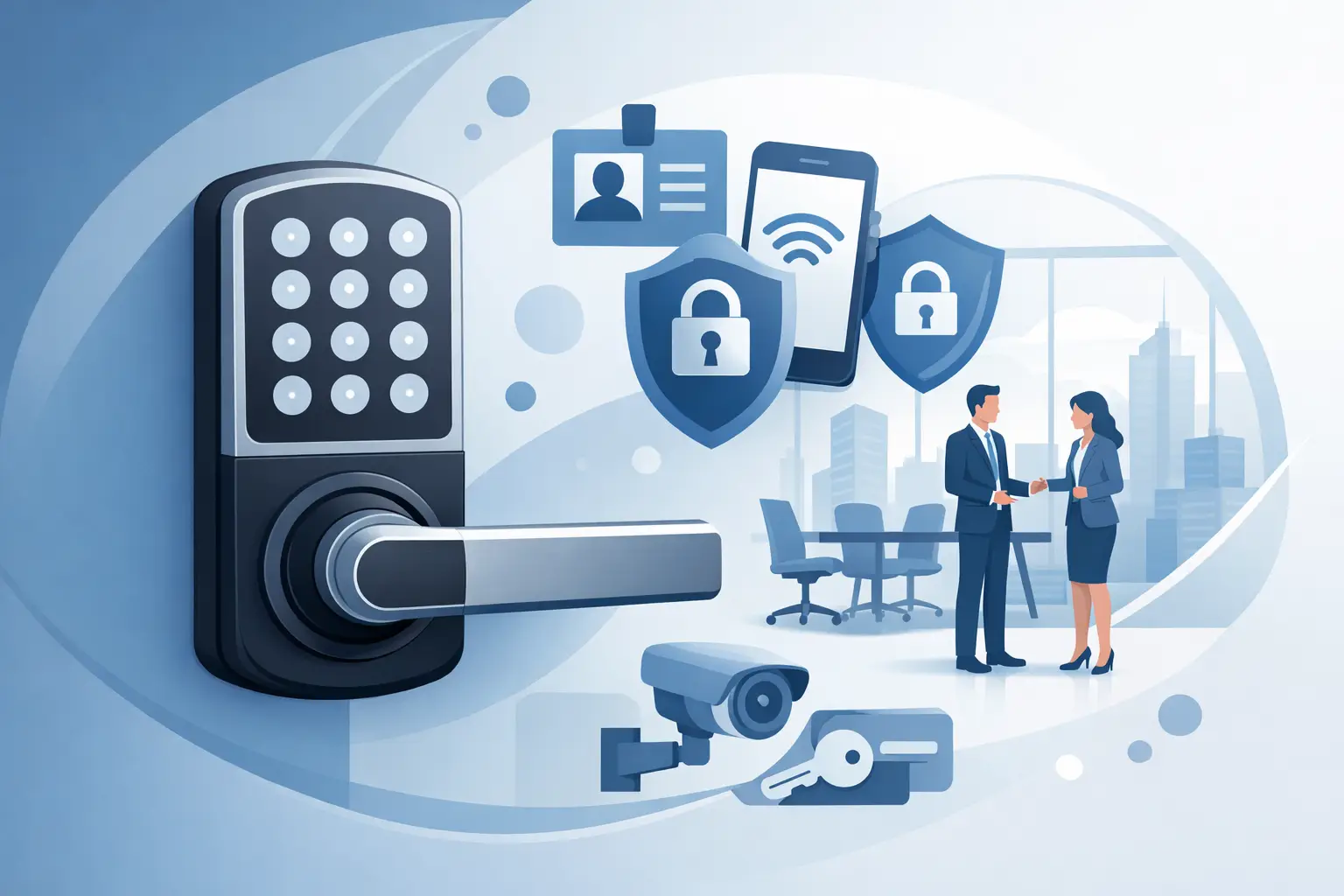
A front office door that sees 20 users a day needs something very different from a warehouse side entrance used by staff, vendors, and after-hours service crews. That is why choosing a keypad door lock for business is less about picking a feature list and more about matching the lock to traffic, door construction, user management, and the rest of the access-control system.
For commercial buyers, the wrong lock usually fails in predictable ways. It may be too light-duty for the opening, too limited for the number of users, or too isolated to work with existing credentials, door closers, intercoms, or electric release hardware. A keypad lock can solve real access problems, but only when the opening, the people, and the operating schedule are considered together.
What a keypad door lock for business is really solving
Most business buyers start with one of four needs. They want to stop passing around physical keys, they need to track who can enter and when, they want faster rekeying without changing cylinders, or they need a controlled way to secure employee-only areas. In each case, a keypad changes the management side of the door.
That sounds simple, but the business environment matters. A lock on a private office may only need a few stable user codes and basic audit capability. A lock on a mixed-use building, school office, clinic interior door, or stockroom may need scheduling, code changes by shift, and integration with broader access-control hardware. The more people, turnover, and door activity involved, the less useful a stand-alone consumer-style keypad becomes.
This is where commercial-grade hardware earns its place. The discussion should move quickly from convenience to duty cycle, credential management, code capacity, lock body type, and compatibility with the opening.
How to evaluate a keypad door lock for business
The first question is not brand. It is the door itself. Material, thickness, fire rating, frame condition, handing, and whether the opening already has a cylindrical lock, mortise lock, panic device, maglock, electric strike, or closer all affect what can be installed without creating problems.
A narrow-stile aluminum storefront door, for example, often points buyers toward different hardware than a hollow metal rear entry or a solid wood office door. If the opening is part of a code-sensitive egress path, hardware selection gets even more specific. A keypad may control entry, but free egress from the inside still has to be preserved where required.
The second question is traffic. A business with five employees entering through one office door has a very different requirement than a property manager controlling a common area door used throughout the day. High-traffic openings need commercial durability, stable power performance, and hardware designed for repeated use. Lower-traffic interior doors may allow more flexibility.
The third question is management. If one manager will assign a handful of permanent codes and rarely change them, a stand-alone keypad lock may be enough. If user permissions change weekly, if there are contractors or cleaning crews, or if access should follow schedules, the lock may need to be part of a larger system.
Stand-alone keypad locks vs integrated access control
A stand-alone keypad lock works well when the opening is local, the user count is moderate, and central management is not necessary. This is common for private offices, interior storage rooms, small business suites, and low-complexity employee entrances. These locks reduce key handling and can simplify day-to-day entry control.
The trade-off is visibility and scalability. A stand-alone lock may not provide the event history, remote administration, or coordinated control that a larger site needs. If a business wants one credential across multiple doors, scheduled access by department, or integration with intercom or release devices, stand-alone hardware can become restrictive.
Integrated access control is usually the better fit when the keypad is only one part of a system. In that setup, the keypad may act as a credential reader, a code-entry device, or a secondary factor tied to a controller, power supply, electric lock, request-to-exit device, and door position monitoring. That adds cost and planning, but it also improves control and consistency across the property.
For many commercial buyers, the decision comes down to whether the door is a single controlled opening or part of a managed access environment.
Key features that matter in commercial use
Code capacity sounds straightforward, but it matters more than many buyers expect. If the lock only supports a small number of users, it may not fit even a modest facility once supervisors, cleaning staff, vendors, and temporary users are added. It is also worth checking whether the lock supports one-time codes, scheduled codes, or easy deletion of individual users instead of full resets.
Audit trail is another dividing line. Some businesses only need controlled entry. Others need a record of who entered, when, and whether a code was used after hours. Schools, offices with sensitive files, clinics, and inventory rooms often benefit from event tracking, even if the opening does not need a fully networked system.
Power and fail behavior should be discussed early. Battery-operated keypad locks are practical for many doors, but battery maintenance has to be realistic. Hardwired solutions may make more sense where uptime and centralized support are priorities. Buyers also need to understand whether the opening should fail secure or fail safe, depending on the application and life-safety requirements.
Weather exposure matters for exterior doors. A keypad used on a sheltered office vestibule may perform differently than one mounted on a gate pedestal or exposed service entrance. Finish durability, keypad construction, and environmental rating all affect service life.
Common business applications and what changes by opening
Interior office doors are usually the simplest use case. A keypad lock here often replaces key sharing and gives management a cleaner way to control private spaces such as HR offices, file rooms, or executive areas. The focus is typically on user convenience, clean installation, and basic credential management.
Employee-only exterior doors need more planning. These doors see heavier use, higher abuse potential, and more dependence on reliable latching and closing. If the door does not consistently close and latch, even a good keypad lock will not solve the real security issue. On these openings, the lock, closer, frame alignment, and strike condition all need to be looked at together.
Retail back rooms and stock areas often need quick access for authorized staff without creating a key-control problem. Here, code changes after staffing changes are often more important than advanced integration. Still, if loss prevention is part of the goal, audit capability becomes more valuable.
Schools, multifamily common areas, and mixed-use properties usually require a broader access-control view. A keypad may be used at selected openings, but it often sits alongside credentials, intercoms, electric strikes, magnetic locks, or door stations. In these environments, treating the keypad as a single hardware purchase instead of part of a system can lead to rework later.
Installation concerns buyers should not overlook
Retrofit convenience can be misleading. A lock may appear to fit the door prep, but still conflict with code requirements, stile dimensions, glass conditions, latch projection, or existing hardware footprints. Commercial openings are less forgiving than residential doors, especially when there are fire labels, aluminum storefront frames, or specialized exit hardware involved.
It is also common to focus on the outside trim and ignore the inside operation. Businesses need to confirm how egress works, whether a passage mode is required during operating hours, and who controls programming. If a lock requires constant manager intervention for simple changes, that can turn into an operational annoyance.
Support matters here as much as hardware. Installers and facility teams usually benefit from confirming handing, backset, door thickness, power method, and compatibility before the order is placed. That is one reason many commercial buyers prefer working with a specialized supplier rather than trying to adapt consumer hardware to a business opening.
When a keypad lock is the right fit and when it is not
A keypad lock is a strong fit when a business wants controlled entry without the overhead of physical key management, especially on offices, staff doors, storage rooms, and selected perimeter openings. It is also useful where staff changes make rekeying costly or inconvenient.
It may not be the best fit when the opening has very high traffic, strict audit requirements, complex schedules, multiple linked doors, or code-driven egress constraints that point toward a more complete access-control system. In those cases, the keypad may still be part of the solution, but not as a stand-alone lock.
For buyers comparing options, the safest path is to start with the opening and the use case, not the keypad style. Door type, user volume, code management, traffic level, and system compatibility will usually narrow the field faster than any product brochure. That practical approach is how commercial hardware gets specified correctly the first time.
If you are evaluating a keypad door lock for business, think beyond the keypad itself. The best result is a door that works correctly every day, fits the building, and does not create extra labor for the people responsible for securing it.



 No products in the cart.