
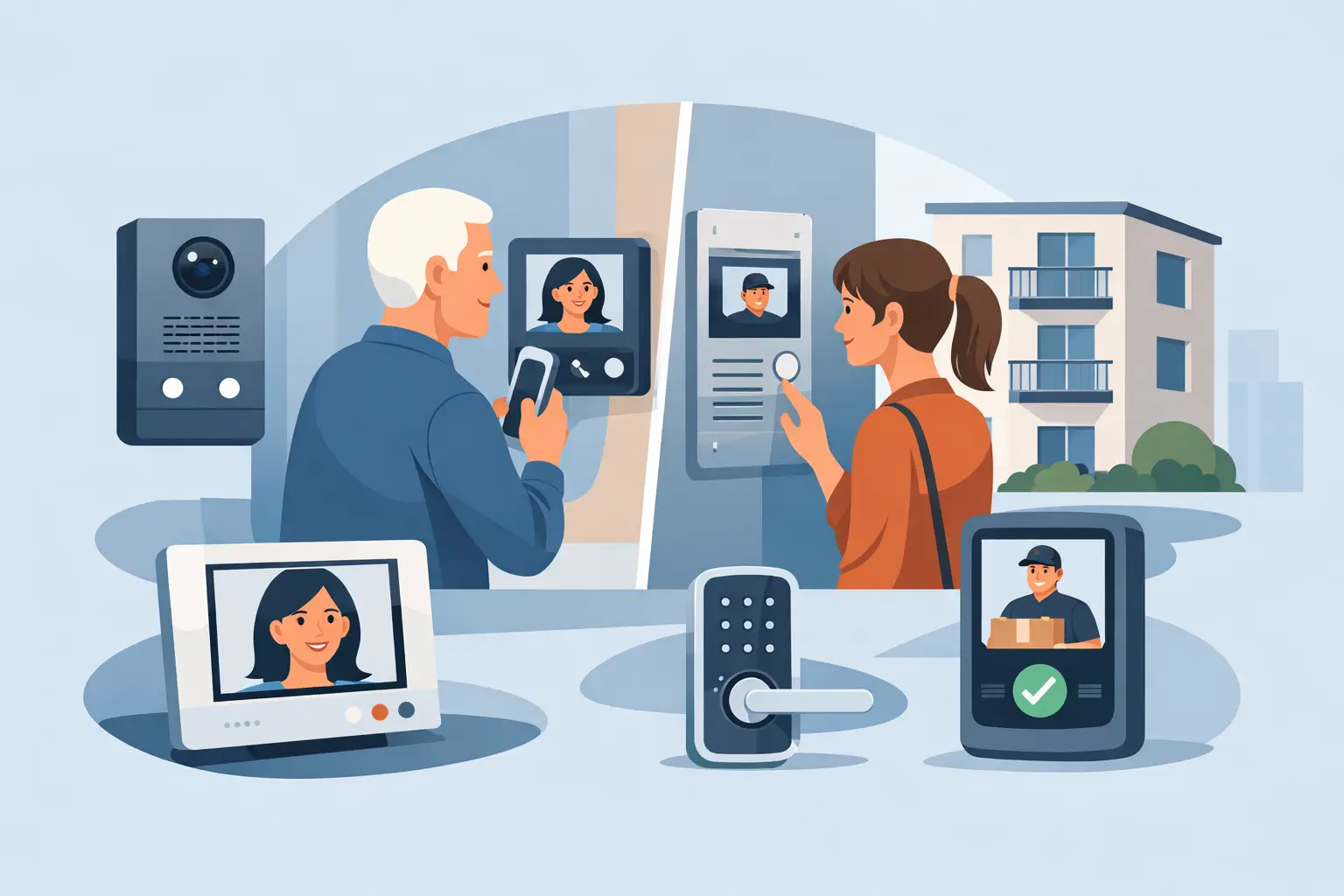
A two-unit building does not need a large, complicated access-control platform, but it does need more than a basic doorbell camera. This 2 apartment video entry review looks at what makes a system practical for a duplex, coach house, converted single-family property, or small apartment entrance: reliable tenant calling, clear visitor video, dependable electric lock control, and hardware that can be serviced later.
For property managers and installers, the real question is not whether a video intercom can show a visitor at the door. Most can. The better question is whether the system fits the building wiring, supports the actual door hardware, and gives each resident independent control without creating avoidable service calls.
What a Two-Apartment Video Entry System Should Do
At minimum, the outdoor station should have two clearly labeled call buttons, one for each apartment. Each button must call the correct indoor monitor or handset, allowing that resident to speak with the visitor, view the camera image, and release the entrance door when authorized.
That sounds straightforward, but system design matters. A proper apartment entry system separates the two residences while sharing the entrance panel, camera, power supply, and, in many cases, the door-release circuit. Residents should not need to answer each other’s calls or depend on a mobile app to open the building door.
For a front entry with an electric strike or magnetic lock, the monitor’s unlock button sends a signal to the appropriate relay. The relay then releases the lock according to the hardware’s voltage and current requirements. This is where many low-cost consumer video doorbells fall short. They may record video well, but they are not always designed to operate commercial-grade locking hardware, coordinate request-to-exit devices, or remain serviceable in a shared-entry building.
2 Apartment Video Entry Review: Where These Systems Work Best
A two-apartment video entry system is a strong fit when both units use one common exterior door and each tenant needs private communication with visitors. Typical applications include side-by-side flats, a two-unit rental above a storefront, a rear coach house arrangement, and a small building with a secure vestibule.
The system can also be useful for owner-occupied duplexes. An owner may want a separate call point and monitor for each residence while retaining a professional-looking entrance panel instead of mounting multiple consumer doorbells at the same door.
It is less suitable when the building has several separate entrances, a gated parking area, or a requirement for credential-based resident access at multiple doors. In that case, an expandable multi-door intercom or a dedicated access-control system may be the more economical choice over the life of the property. Starting with a system that has room for one additional door or monitor can also be worthwhile if a renovation is planned.
Video Quality Is Only One Part of the Decision
A camera with high resolution is useful, especially when the station is exposed to backlighting, street traffic, or nighttime visitors. However, a high advertised resolution does not compensate for a poor camera position. If the entry panel is mounted too low, too far to the side, or directly under a bright exterior light, faces can still be difficult to identify.
Look for a station with a wide enough viewing angle to capture a person standing at the door, not just their chest. Infrared illumination or low-light performance is also valuable for unlit vestibules and rear entrances. For many two-unit installations, a stable live image and clear two-way audio are more important than advanced smart-camera features.
Audio deserves close attention. A hard-surfaced entryway, busy street, or metal storm door can create echo and noise. Outdoor stations with well-designed microphones, speaker volume adjustment, and weather-resistant construction generally perform better in real installations than consumer doorbells placed in an exposed common area.
Wiring and Infrastructure Determine the Right Platform
Before selecting equipment, identify what cable is already in the building and whether it is usable. This can narrow the choices quickly.
Traditional multi-wire systems can be a practical option for straightforward new installations, particularly when cable runs are short and walls are open. They are familiar to many installers and can provide direct, predictable operation. Their limitation is that each monitor and function may require additional conductors, making retrofits more labor-intensive.
Two-wire bus systems reduce the amount of cabling required and can be particularly attractive in older properties. Depending on the product line, they may use a single pair to carry power, communication, video, and signaling. That does not mean every existing pair is automatically suitable. Cable condition, distance, splices, and power requirements still need to be verified.
IP-based video intercom systems offer the greatest flexibility when the project already has reliable network infrastructure. They may support indoor monitors, mobile calling, multiple entrance stations, and integration with broader access control. For a basic duplex, though, IP can add cost and network administration that the owner does not need. It is best when remote management, expansion, or integration is a real requirement rather than a feature list preference.
Door Hardware Compatibility Cannot Be an Afterthought
The entry panel is only one piece of the installation. The door lock, power supply, fire and life-safety requirements, request-to-exit device, door position switch, and wiring path all affect the final system design.
An electric strike is common on aluminum storefront doors and many wood or hollow-metal frames. It can be a good choice where the door latch already aligns well and the building needs a mechanical means of egress. A magnetic lock can suit certain glass doors or frames where a strike is difficult to install, but it requires careful planning for emergency release, power-loss behavior, and code compliance.
Check whether the intercom relay is rated to switch the lock directly or whether an external relay and separate lock power supply are required. Using the monitor’s small relay output to power a lock beyond its rating is a common source of failure. The same applies to power budgeting: two indoor monitors, an outdoor panel, and an electric lock should be sized as a complete system, not as isolated components.
Features Worth Paying For
A small apartment system should remain simple for residents, but several features have real operational value. Adjustable unlock time helps prevent a door from remaining unsecured longer than necessary. A second relay can be useful for a pedestrian gate, driveway gate, or common-area door. Surface- and flush-mount options matter when the entry frame or wall construction limits installation depth.
For rentals, replaceable nameplates are preferable to improvised tape labels. A station with vandal-resistant metal construction is also a better choice for an exposed front entrance than a lightweight plastic doorbell. If remote answering is required, confirm whether it works through a dedicated monitor, a mobile app, or both, and determine what happens if the internet service is down.
Avoid paying for mobile credentials, cloud recording, or multi-site management simply because they are available. Those capabilities are useful in the right project, but a reliable hardwired monitor and correctly wired door release often deliver more value in a two-unit building.
Questions to Settle Before Ordering
A complete equipment quote should be based on the actual opening and operating requirements. Confirm these points before choosing a system:
- Is there one shared entry door, or does each apartment have a separate exterior entrance?
- What lock is installed or planned, and is it fail-safe or fail-secure?
- How far is the outdoor station from each indoor monitor, and what cable route is available?
- Does the property require remote mobile answering, or will fixed monitors meet the need?
- Is future expansion to a gate, rear door, additional monitor, or more apartments likely?
These answers prevent a common mistake: buying a two-button entry panel first, then finding out it cannot support the planned lock hardware, cable distance, or second entrance.
Installation and Long-Term Service Considerations
A clean installation protects the equipment and reduces callbacks. The outdoor station should be mounted at a usable height, sealed appropriately for weather exposure, and positioned so visitors naturally face the camera. Cable splices should be accessible where possible, and power supplies should be installed in a secure, serviceable location rather than buried behind finished walls.
For managed properties, document monitor assignments, relay wiring, power supply location, and lock type. When a tenant changes, the manager should be able to update the name label and confirm the correct call button without guessing. If the system includes app access, establish who owns the administrator account before residents are added.
UnikCCTV can help installers and property decision-makers match video entry equipment, door hardware, power components, and accessories to the opening instead of treating the intercom as a stand-alone purchase. For a two-unit project, the right result is usually straightforward: each resident sees and speaks to visitors clearly, the door releases when it should, and the system remains practical to service years after installation.
 No products in the cart.