
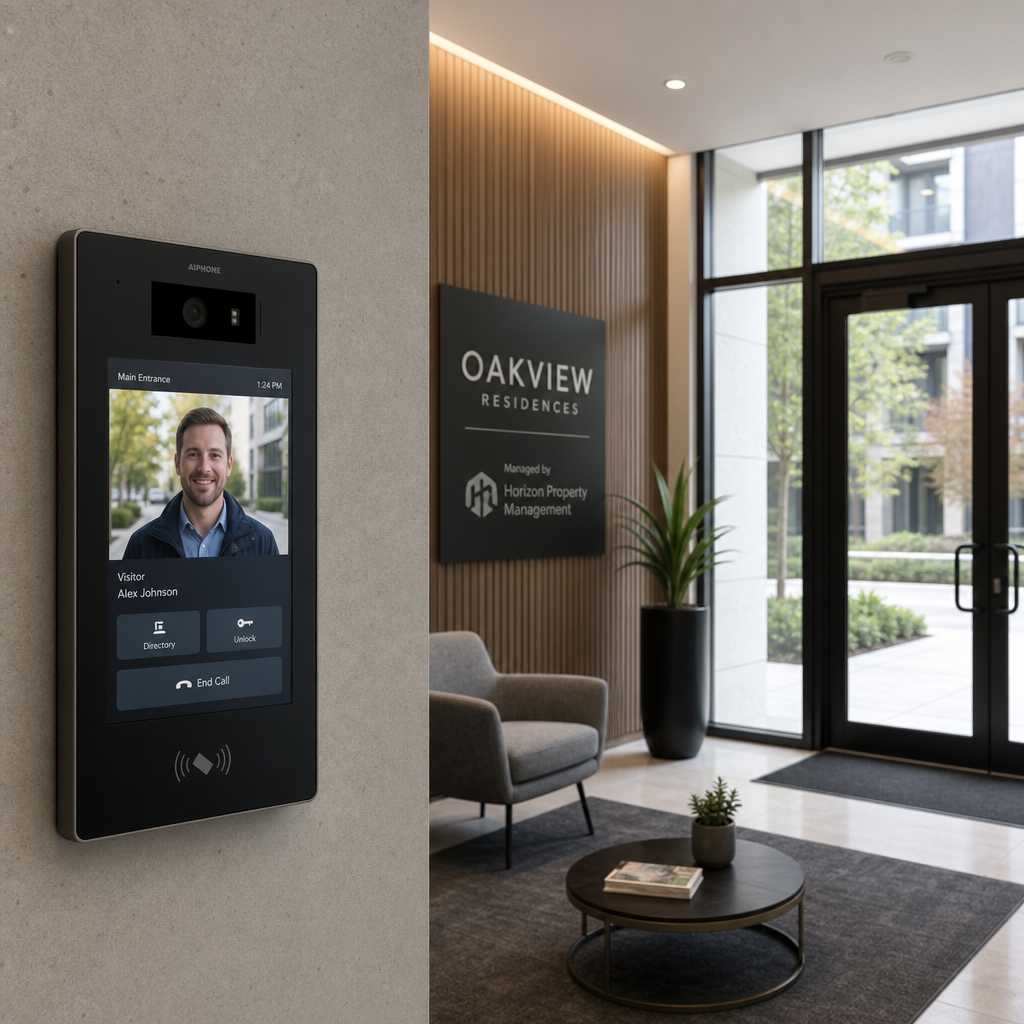
Choosing the wrong video intercom system for apartments costs more than money. It costs tenant trust, lease renewals, and in worst cases, building security. Property managers across the country are replacing outdated buzzer systems with IP-based video intercoms, and the stakes for making a poor purchase decision have never been higher. This guide cuts through the marketing noise and gives you a frank, practitioner-level breakdown of what matters when selecting an apartment building intercom: wiring requirements, cloud access, tenant experience, scalability, and total cost of ownership.
Table of Contents
- Why Video Intercoms Matter for Apartments
- Quick Takeaways
- Types of Video Intercom Systems
- IP Video Intercom vs. Analog: A Direct Comparison
- Key Features to Evaluate Before Buying
- Wiring and Installation Requirements
- Integration With Access Control and CCTV
- Cost Breakdown: What to Budget
- Comparison Table: Intercom System Types
- Common Mistakes Property Managers Make
- Frequently Asked Questions
- References
Why Video Intercoms Matter for Apartments
According to Statista, the global video intercom market was valued at over $2.5 billion in 2023 and is projected to grow at a compound annual rate of roughly 12% through 2030. That growth is being driven specifically by multifamily residential buildings upgrading outdated telephone-entry systems. The reasons are straightforward: tenants expect remote door access from their smartphones, and building owners need an auditable record of every entry event.
In practice, the buildings that delay upgrading their entry systems are the ones dealing with the highest tenant turnover. A modern apartment building intercom is no longer a nice-to-have amenity. It is a baseline expectation, especially in urban markets where competing properties are already offering mobile-based access and video verification.
Quick Takeaways
| Key Insight | Explanation |
|---|---|
| IP video intercoms outperform analog at scale | Analog systems require individual wiring runs per unit. IP systems share a single network infrastructure, dramatically reducing installation cost in buildings with 20+ units. |
| Smartphone-based door release is now the baseline standard | Tenants expect to answer the door and grant access from their phone. Systems that still require a dedicated handset in every unit lose out in tenant satisfaction surveys. |
| Cloud-based systems carry ongoing subscription costs | Many “affordable” entry-level intercoms hide their real cost in monthly SaaS fees. Calculate total 5-year cost, not just hardware price, before comparing products. |
| Camera resolution matters more than sellers admit | A 1080p camera at the entrance provides usable footage for incident investigation. Sub-720p units create footage that is practically useless for identification purposes. |
| Integration with existing access control saves budget | Buying an intercom that connects natively to your current smart lock or gate controller eliminates the need for a second access control platform. |
| Biometric options reduce lost-key incidents significantly | Buildings using facial recognition or fingerprint access report near-zero lockout calls, which reduces property management overhead substantially. |
| Retrofitting is possible but requires a proper site survey first | Older buildings with existing two-wire telephone entry infrastructure can often be upgraded to IP systems without full rewiring, but only after confirming cable condition and distance. |
Types of Video Intercom Systems
The first decision you make when specifying a video intercom for an apartment building is the architecture type. Get this wrong and every subsequent decision builds on a flawed foundation.
Standalone Video Door Phones
These are single-entry solutions with a camera panel at the door and one or more monitor units inside. They work well for small buildings with two to eight units but do not scale. Each additional unit requires its own dedicated monitor and wiring run. For a 40-unit complex, that is 40 monitors, 40 wiring runs, and 40 points of maintenance failure.
IP-Based Networked Intercom Systems
An IP video intercom connects the entrance panel to a building’s IP network. Residents receive calls on a SIP-compatible app, a web browser, or a network-connected indoor unit. The system uses Power over Ethernet (PoE) where possible, dramatically simplifying cable management. This architecture is the correct choice for any building with more than ten units.
Wireless Intercom Systems
Wireless systems eliminate the need for new cabling entirely. They communicate over Wi-Fi or a proprietary RF frequency between the entrance panel and indoor units or smartphones. In practice, wireless systems are most reliable in buildings with strong, consistent Wi-Fi coverage. Signal interference and dead zones remain a real concern in steel-frame structures.
Pro tip: For mixed-use buildings where ground-floor retail tenants have different access needs than residential tenants above, an IP-based system with role-based access permissions is the only architecture that handles this cleanly without installing two separate systems.


IP Video Intercom vs. Analog: A Direct Comparison
The analog vs. IP debate is mostly settled at this point. Analog systems made sense before reliable building networks existed. That argument no longer holds for any property built or significantly renovated after 2010. What the debate has shifted to is which IP architecture, and which feature set, fits the specific building profile.
Analog systems use dedicated coaxial or two-wire connections from the entrance panel to each indoor unit. Adding a unit means running a new wire. Removing a unit means a dead wire in the wall. There is no remote management, no event logging accessible from a browser, and no way to answer the door from outside the building. These are not opinions. They are structural limitations of the technology.
IP systems use the building’s existing data network. Adding a unit is a software configuration change. Remote management is built in. Event logs with timestamps and optionally with captured images are standard. The trade-off is that IP systems depend on network uptime. A router failure at 2 AM means no door release capability until it is resolved. This is why UPS backup on network equipment is non-negotiable in any serious apartment building installation.
“Access control and video verification are converging into a single platform layer. Buildings that treat them as separate procurement decisions will spend significantly more over a five-year horizon than those that specify them together from the start.” – Security Industry Association, 2023 annual market outlook
Key Features to Evaluate Before Buying
Not every feature on a spec sheet deserves equal weight. Here is what actually determines whether a system performs well in a real apartment building versus what looks good in a brochure.
Camera Resolution and Night Vision
Minimum acceptable resolution for a building entrance camera is 1080p at 30fps. Night vision must be infrared, not software-brightened, which produces grainy, unusable footage. The entrance door is the highest-value camera position in any security system. Do not cut cost here.
Mobile App Quality and Reliability
The mobile app is the resident-facing product. A system with a buggy app will generate more support calls than it resolves. Test the app on both Android and iOS before purchase. Specifically check: push notification latency, connection reliability on cellular (not just Wi-Fi), and how the app handles simultaneous calls to multiple residents in the same unit.
Visitor Access Management
A well-designed system allows residents to generate one-time access codes or timed QR codes for delivery personnel and guests. This feature alone eliminates the single most common tenant complaint about apartment entry systems: packages left at the door because no one was home to buzz in the courier.
Directory and Tenant Management
Property managers need to add, remove, and reassign tenants without calling a technician. Any system that requires on-site programming for routine tenant changes is a liability. Cloud-managed directories should be the default specification for any building with more than 20 units.
Pro tip: Ask the vendor specifically how long it takes to remove a former tenant’s access after move-out. If the answer is longer than five minutes and requires a technician visit, that is a serious security gap, not a minor inconvenience.
Wiring and Installation Requirements
Installation complexity is where many buyers get an unpleasant financial surprise. The hardware cost is the visible number. The labor and infrastructure cost is where budgets collapse.
New Construction vs. Retrofit
New construction gives you the opportunity to specify conduit runs and network drops at rough-in stage, which reduces installation cost significantly. Retrofit installations in older buildings with concrete or brick construction require a detailed site survey before any quote is meaningful. A common mistake is accepting a hardware quote without a site survey, then discovering the actual installation doubles the project cost.
PoE vs. Traditional Power
Entrance panels and indoor IP units that accept Power over Ethernet simplify installation by eliminating the need for separate power outlets at every device location. For a 50-unit building, the difference in electrician labor between PoE and non-PoE installation is substantial. Specify PoE-compatible equipment wherever the building network infrastructure supports it.
Cable Distance Limitations
Standard Cat5e or Cat6 Ethernet has a practical distance limit of 100 meters from switch to device. In tall residential buildings, this may require intermediate network closets on upper floors. Plan network closet locations before finalizing equipment selection, not after.

Integration With Access Control and CCTV
A video intercom that operates as an island disconnected from the rest of the building’s security infrastructure is a missed opportunity. The most effective apartment security deployments treat the intercom as the front-end interface for a unified access control platform.
At UnikCCTV, the product portfolio is specifically designed around this integration philosophy. The intercom systems, smart locks, gate access controls, and CCTV surveillance equipment are specified to work together, which means property managers interact with a single management interface rather than three or four disconnected apps. That matters operationally at 11 PM when something goes wrong at the gate.
Smart Lock Integration
When the video intercom connects directly to smart locks on individual unit doors, residents can grant remote access to a specific unit from the front entrance. This is the architecture used in high-end residential buildings and it is now accessible to mid-market apartment properties at reasonable cost. Biometric locks with facial recognition add an additional authentication layer that essentially eliminates unauthorized entry from shared access credentials.
CCTV and Event Correlation
Systems that time-stamp intercom call events and correlate them with CCTV footage from the same timestamp allow property managers to review any entry event with full visual context. This is a significant operational advantage when investigating incidents or responding to police information requests.
Time and Attendance Integration
For mixed-use buildings with commercial tenants and staff, integrating the intercom access control layer with a time attendance clock system eliminates the need for a separate HR access tool. This is particularly relevant for buildings with on-site property management offices or concierge services.
Cost Breakdown: What to Budget
The data consistently shows that buyers who focus only on hardware unit cost make the worst long-term purchasing decisions. Here is a realistic cost structure for a mid-size apartment building installation.
For a 30-unit residential building, a complete IP video intercom system with cloud management, mobile app access, and integration with a single gate controller typically falls in the $8,000 to $18,000 range installed. That range is wide because site-specific factors dominate: existing network infrastructure, building construction type, number of entry points, and whether existing wiring can be reused.
Ongoing costs include cloud subscription fees if the chosen platform uses SaaS licensing, which typically range from $50 to $200 per month depending on feature tier and unit count. Factor this into the five-year total cost before comparing hardware prices from different vendors. A system that costs $3,000 less upfront but carries a $150 per month cloud fee costs more over five years than a self-hosted system at the higher initial price.
Maintenance costs are lower for IP systems than for analog, primarily because software updates resolve many issues without a truck roll. Budget approximately 5-8% of hardware cost annually for maintenance on a well-specified IP system.
Comparison Table: Intercom System Types
| Feature | Analog Video Intercom | IP Video Intercom (Cloud-Managed) | IP Video Intercom (Self-Hosted) |
|---|---|---|---|
| Scalability for 30+ units | Poor. Requires individual wiring per unit. | Excellent. Software-based unit management. | Excellent. Software-based unit management. |
| Mobile app door release | Not available. | Standard feature. | Available with SIP-compatible client apps. |
| Remote tenant management | Not available. Requires on-site reprogramming. | Full browser-based management from anywhere. | Full management from local network or VPN. |
| Ongoing subscription cost | None. | $50-$200/month depending on platform. | None after initial setup. |
| Event logging and audit trail | None. | Full timestamped log with optional image capture. | Full log stored on local server. |
| Integration with CCTV and access control | Limited. Requires separate systems. | API-based integration with major platforms. | API-based integration; requires IT configuration. |
| Upfront hardware cost (30 units, installed) | $6,000-$10,000 | $10,000-$18,000 | $9,000-$16,000 |
| 5-year total cost of ownership | Low upfront, high replacement and maintenance. | Moderate-high due to subscription fees. | Best long-term value for buildings with IT support. |
Common Mistakes Property Managers Make
After reviewing dozens of apartment building intercom installations, certain errors appear consistently. Knowing them in advance saves significant budget and frustration.
Buying for Today’s Unit Count Only
A common mistake is specifying a system that handles the current 24 units perfectly but has no upgrade path when the adjacent lot gets developed and the building expands to 60 units. Always confirm the license tier ceiling and hardware scalability limits before committing to a platform.
Skipping the Network Infrastructure Audit
IP intercoms depend entirely on network quality. Installing a $15,000 intercom system on a building network with a single consumer-grade router and no redundancy is a recipe for failure. The network infrastructure assessment should happen before the intercom procurement, not during installation.
Ignoring Tenant Onboarding Requirements
Some IP intercom platforms require tenants to download an app, create an account, and complete a verification step before they can receive calls. In buildings with elderly residents or low digital literacy, this creates immediate adoption problems. Ask the vendor specifically what the tenant setup process looks like and how long it takes for a non-technical user.
Treating Security and Access Control as Separate Budgets
Purchasing a video intercom from one vendor and a gate controller from another and CCTV cameras from a third creates three separate service contracts, three management portals, and three support numbers to call when something fails at midnight. Unified procurement from a specialist provider like UnikCCTV, which carries the full stack of intercom, access control, and surveillance equipment, produces a better outcome both technically and operationally.
Pro tip: Request a 30-day post-installation support window as a contract term when purchasing a video intercom system for apartments. The first month of live operation will surface every configuration issue and edge case that testing did not catch. Having a vendor contractually obligated to resolve these issues at no additional cost is worth negotiating for.
Frequently Asked Questions
What is the difference between a video intercom system and a standard door buzzer for apartments?
A standard door buzzer uses audio-only communication and a simple electric door strike release. A video intercom adds a camera at the entrance panel so residents can see and identify visitors before granting access. Modern IP-based video intercoms also include remote access via smartphone, event logging, visitor code generation, and integration with smart locks and CCTV systems. The functional difference is significant, and the security improvement is not marginal.
Can I retrofit a video intercom system into an older apartment building without rewiring everything?
In many cases, yes. Older buildings with existing two-wire telephone entry infrastructure can support certain IP video intercom systems through two-wire IP adapters, which convert the existing cable to carry IP data. However, this only works if the existing cable is in good condition and the run distances are within acceptable limits, typically under 150 meters. A site survey by a qualified technician is mandatory before assuming retrofit compatibility. Assume nothing until the cable plant is physically inspected.
How many units can a single IP video intercom entrance panel handle?
This depends entirely on the platform. Entry-level systems are licensed for 30 to 50 units. Enterprise-tier platforms from reputable manufacturers support 500 units or more from a single entrance panel or a clustered panel installation. When specifying a system, confirm both the hardware limit and the software license limit. These are sometimes different numbers and vendors do not always volunteer the lower of the two proactively.
What video resolution should I require for an apartment building entrance camera?
The minimum acceptable specification for a primary building entrance is 1080p resolution at 25 to 30 frames per second with infrared night vision capable of usable image capture in complete darkness at a distance of at least 2 meters. Anything below this standard produces footage that satisfies neither security incident investigation nor insurance documentation requirements. Cameras claiming higher resolution but using cheap CMOS sensors often underperform their stated specs in low light. Request sample night-vision footage from the specific model before purchasing.
Should I choose a cloud-managed or self-hosted IP video intercom platform?
The answer depends on the building’s IT capabilities and operational model. Cloud-managed systems are easier to deploy and require no on-site server infrastructure. They work well for property managers who lack in-house IT support. Self-hosted systems have no ongoing subscription cost, keep all access data on-premises, and do not depend on a third-party cloud service remaining operational. For larger buildings with IT support staff and strong data privacy requirements, self-hosted is the better architecture. For smaller properties or management companies operating multiple buildings remotely, cloud-managed is the more practical choice.
How does a video intercom system integrate with gate access control for apartments with parking?
In a properly specified unified system, the entrance intercom and the parking gate controller share the same access management platform. A visitor who calls from the pedestrian entrance triggers the same resident app notification as a vehicle arriving at the gate. Residents can release either the pedestrian door or the gate from the same interface. Dedicated delivery and service vendor access codes can be configured to work specifically for the pedestrian entrance but not the vehicle gate, or vice versa, without any hardware changes. This level of granular control is only possible when both systems are specified together from a provider that carries both product categories.
What is the typical lifespan of an IP video intercom system for an apartment building?
Hardware lifespan for quality IP intercom equipment is typically 8 to 12 years when installed in a covered or weatherproofed location. Exposure to direct sun, rain, and temperature extremes without appropriate housing reduces that to 5 to 7 years. The more relevant planning horizon is software support lifecycle. Most reputable manufacturers commit to firmware and security updates for 5 to 7 years from release date. Specify systems from manufacturers with a documented end-of-support policy and plan a hardware refresh at the 7-year mark regardless of physical condition.
If you manage an apartment building or are currently evaluating intercom systems, share your biggest challenge with the current setup in the comments below and we will address it directly.
References
- Statista: Global video intercom and access control market size data and forecasts
- Forbes: Real estate technology trends and smart building investment analysis
- U.S. Department of Energy: Building security and energy-efficient access control infrastructure guidelines
- NIST: Physical access control systems standards and cybersecurity framework for networked building devices
- Ahrefs Blog: Commercial real estate and property technology search trend analysis

 No products in the cart.