
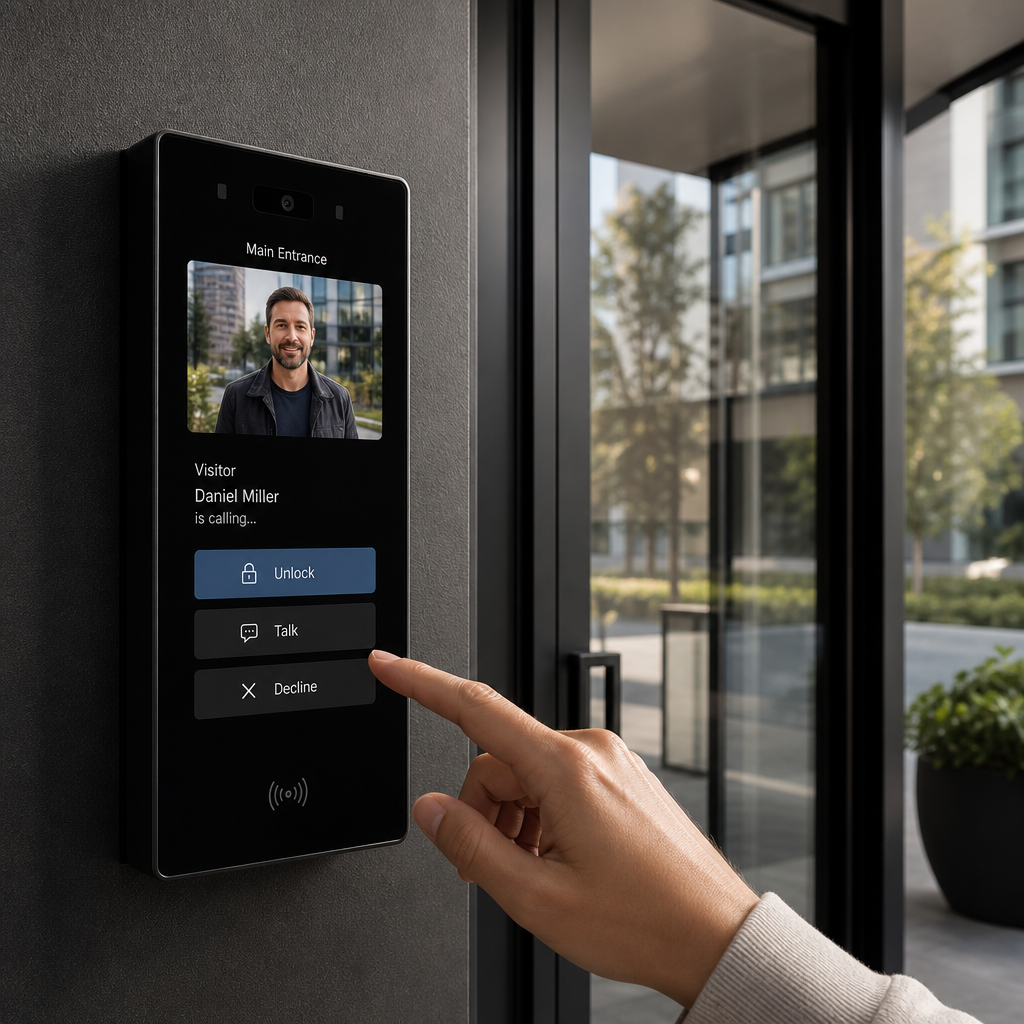
Property managers and building owners lose an average of 20 minutes per incident dealing with unauthorized entry attempts, package theft, and tenant lockout calls. A significant portion of those problems trace directly back to outdated buzzer systems that offer no visibility, no audit trail, and no remote control. Smart intercom systems have changed what building access control can actually do, but they are not automatically the right choice for every property. This guide breaks down the real differences, the real costs, and the conditions under which each solution earns its place.
Table of Contents
- Quick Takeaways
- What Traditional Buzzers Actually Do
- What Smart Intercom Systems Actually Do
- Comparing the Two Side by Side
- Access Control for Buildings: Which Properties Benefit Most
- Wireless and Cellular Intercom Options Explained
- Smart Door Locks for Apartments: Pairing Them With Intercoms
- Cost Breakdown: Installation to Long-Term Operation
- Property Manager Security Solutions: Making the Final Call
- Frequently Asked Questions
- References
Quick Takeaways
| Key Insight | Explanation |
|---|---|
| Smart intercoms enable remote access management | Property managers can grant or revoke entry from any device, eliminating the need to be on-site for visitor access or contractor entry. |
| Traditional buzzers have near-zero upfront cost but high hidden costs | Rekeying locks, replacing lost fobs, and handling after-hours lockouts all accumulate into significant annual expenses that buzzer advocates routinely ignore. |
| Cellular intercom systems remove the need for building-side wiring | Properties without existing phone line infrastructure save substantially on installation when choosing a cellular-based door entry system. |
| Biometric and facial recognition locks increase accountability | Unlike key fobs or PIN codes, biometric data cannot be shared or duplicated, making them the most audit-ready option for commercial buildings. |
| Wireless intercoms are ideal for retrofits | Buildings that cannot run new conduit benefit most from wireless intercom systems that communicate over existing Wi-Fi or dedicated RF channels. |
| Smart door locks for apartments work best paired with a door entry system | A smart lock at the unit door without a controlled building entrance still leaves the property vulnerable at the lobby or gate level. |
| Video verification reduces false deliveries and tailgating by up to 40 percent | Buildings that add video capability to their intercom report measurable drops in unauthorized entry events within the first 60 days of deployment. |
What Traditional Buzzers Actually Do
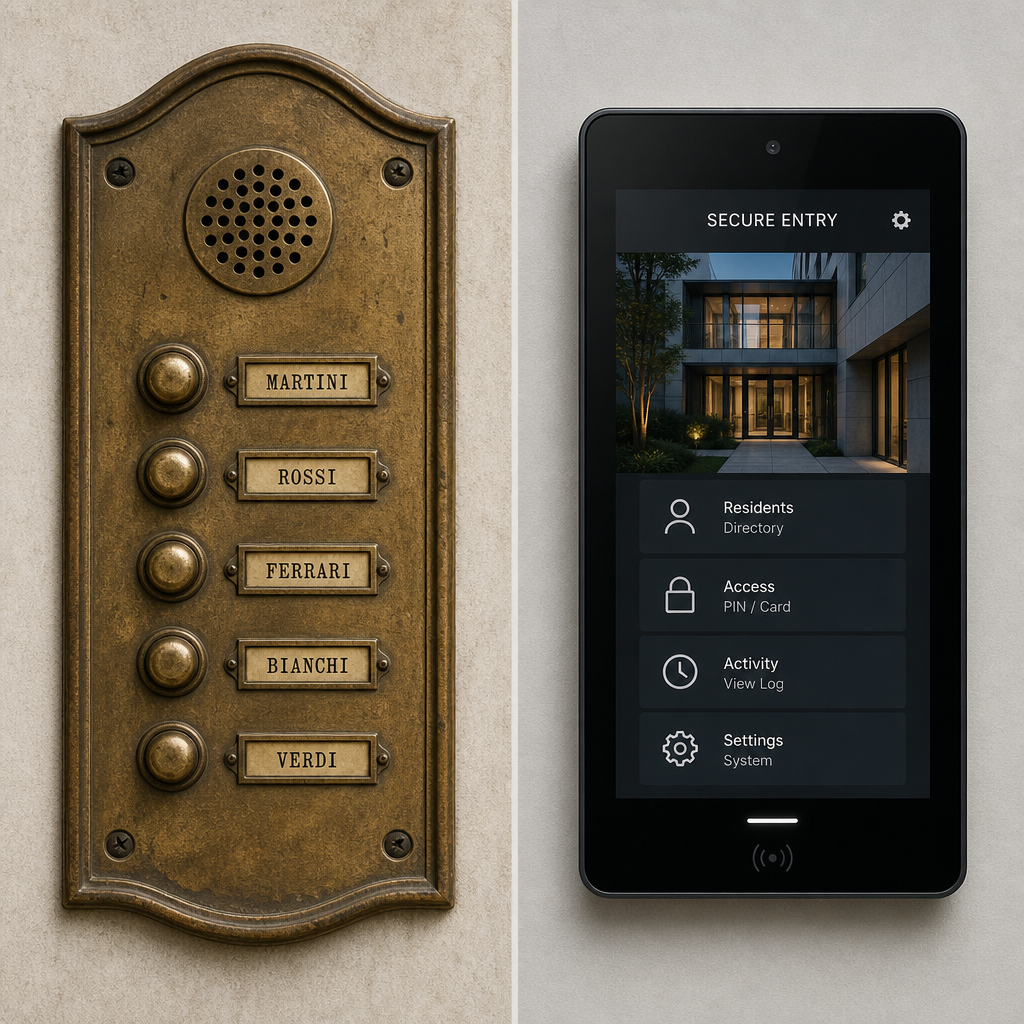
A traditional buzzer system does exactly one thing: it rings a tone or phone line when someone presses a button at the entry point. The tenant hears it, presses a button back, and the door releases. No identity verification. No record. No visual confirmation of who is standing outside.
In practice, this creates a specific vulnerability called social engineering tailgating. A visitor presses multiple apartment buttons until someone buzzes them in without asking questions. Security researchers and building managers alike have documented this pattern repeatedly in multi-unit residential buildings.
Traditional systems do have real advantages. They are mechanically simple, they do not depend on internet connectivity, and they rarely fail in the way software-dependent systems can. For a small property with a hands-on owner and low foot traffic, a well-maintained wired buzzer is not a bad answer. The problem is that most properties are not that simple.
Pro tip: If you currently operate a traditional buzzer and experience more than two unauthorized entry complaints per month, that is a threshold signal to evaluate a smart intercom system upgrade. Below that frequency, the ROI case gets harder to make for smaller budgets.
What Smart Intercom Systems Actually Do
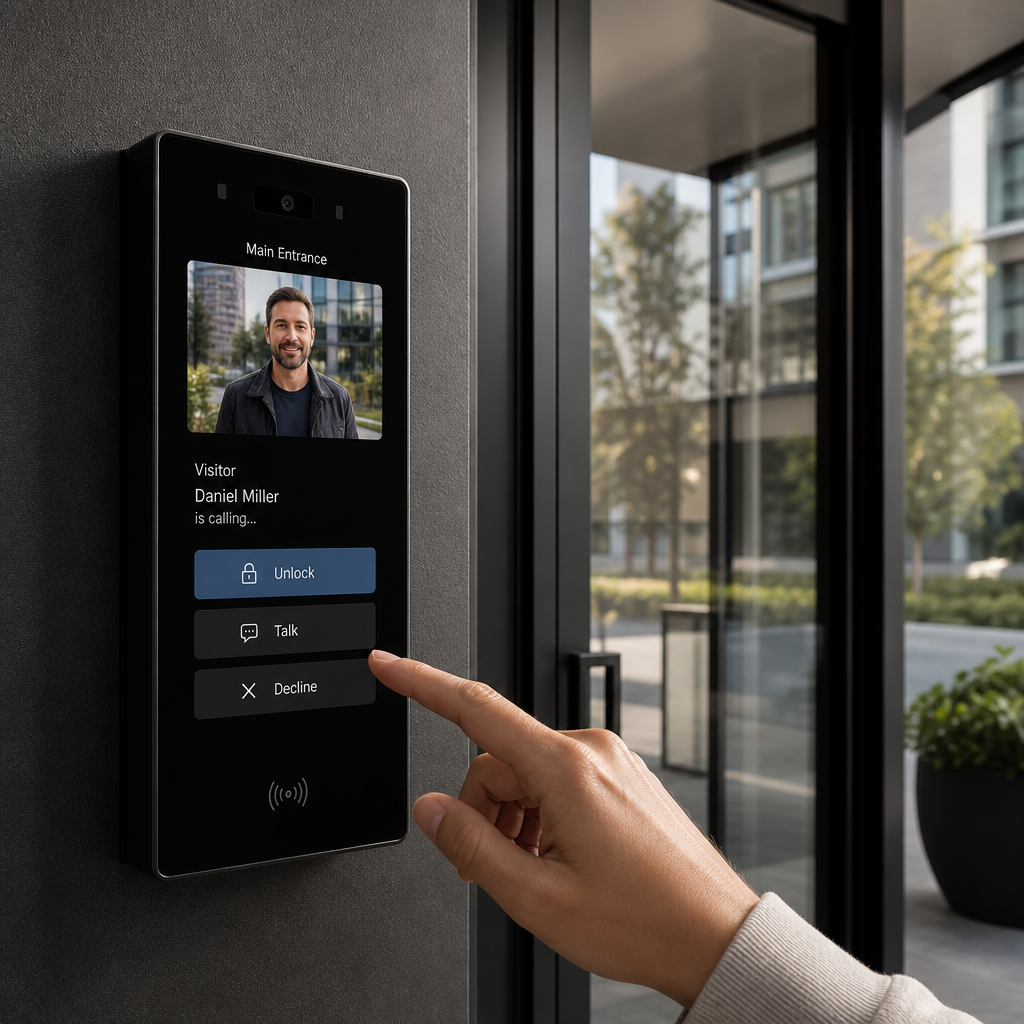
Smart intercom systems connect the physical entry point to a digital management layer. When a visitor presses the call button, the system initiates a video or audio call to the tenant’s smartphone, to a desktop management panel, or to both. The person receiving the call can see who is there, speak with them, and unlock the door without being anywhere near the building.
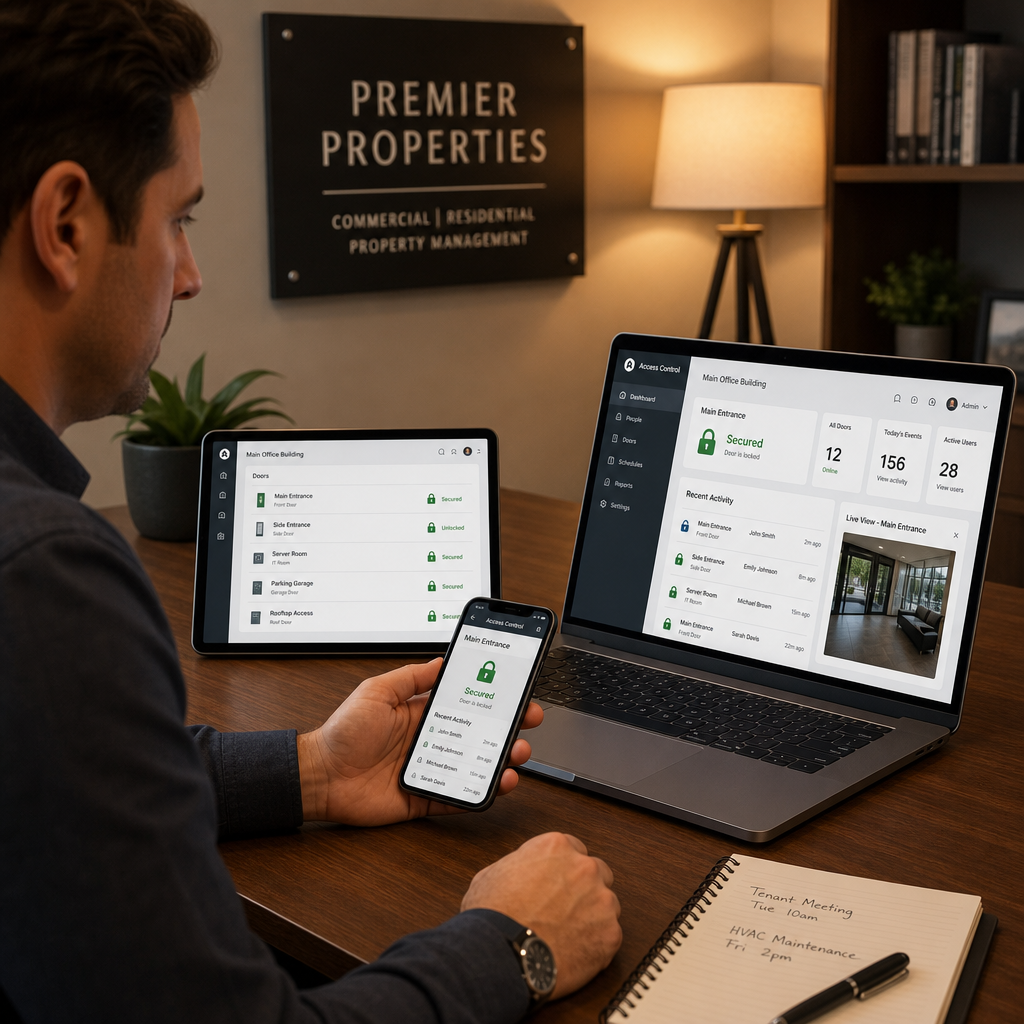
Modern systems log every entry event with a timestamp, a photo or video clip, and the identifier of who granted access. That audit trail matters enormously for liability management in commercial buildings and for lease enforcement in residential properties.
Integration With the Broader Access Control Stack
A standalone smart intercom at the front door is useful. A smart intercom integrated with a door entry system, elevator floor restrictions, and parking gate access becomes a full access control for buildings solution. The integration point is where property managers see the biggest operational lift, because a single credential can govern every layer of access rather than requiring separate management of each.
UnikCCTV’s product range covers exactly this architecture, from lobby intercom panels through to biometric readers and CCTV surveillance, allowing properties to build a single unified access layer rather than patching together incompatible vendors.
According to a Statista report on smart building technology adoption, the global smart building market was valued at over 80 billion USD in 2022 and is projected to grow at roughly 10 percent annually through 2030, driven primarily by security system upgrades in commercial and multi-unit residential properties.
“Access control is no longer a hardware problem. It is a data management problem. The buildings that handle it well are the ones treating entry events as structured data rather than mechanical events.” – Building Security Journal, 2023
Comparing the Two Side by Side
The comparison below covers three named system categories that property managers and building owners are most likely to evaluate when replacing or upgrading their current setup. The goal is to give you a realistic picture of what each actually delivers, not an idealized vendor spec sheet.
| System Type | Best Fit | Key Limitation |
|---|---|---|
| Traditional Wired Buzzer | Small buildings under 10 units with on-site management and minimal visitor traffic | No visual verification, no audit trail, vulnerable to social engineering entry |
| Wireless Smart Intercom System | Mid-size residential or commercial buildings that cannot run new wiring, retrofit scenarios | Dependent on Wi-Fi or RF signal quality; interference can cause call drops in dense urban environments |
| Cellular Intercom System | Properties in remote areas, parking lots, gated communities, or buildings with no internet infrastructure | Monthly cellular plan cost; carrier signal gaps in underground or basement entry points |
The data consistently shows that wireless and cellular intercom systems now account for the majority of new apartment intercom system installations in North America, primarily because the retrofit cost is dramatically lower than running new conduit through finished walls.
Access Control for Buildings: Which Properties Benefit Most
Not every building gets the same return from a smart system upgrade. The properties where smart intercom and access control for buildings investments pay back fastest are those with high visitor volume, frequent tenant turnover, or distributed management responsibilities.
Multi-Unit Residential Buildings
Apartment buildings with 20 or more units generate the clearest ROI case. Tenant turnover alone, which averages roughly 50 percent annually in urban rental markets according to the National Apartment Association, means constant credential management. Smart systems allow property managers to add or remove access remotely in seconds rather than physically rekeying locks or collecting fobs.
Commercial Office Buildings and Retail Properties
Commercial properties have a different driver. The liability exposure from an unauthorized person in an office building is significantly higher than in a residential setting. A time-stamped, photo-verified entry log provides documented evidence in the event of a dispute, theft, or workplace incident. That documentation has real legal value.
Gated Communities and Multi-Building Campuses
For properties with multiple entry points, a gate access control integrated with a central management dashboard eliminates the operational fragmentation of managing each entry point separately. A delivery driver can be verified at the gate, and that same credential event is visible to the property manager in real time.
Pro tip: For gated communities specifically, a cellular intercom system at the gate entry point is almost always preferable to a wired option. Gate posts are exposed to weather, vehicle vibration, and vandalism, all of which accelerate wired connection failures.
Wireless and Cellular Intercom Options Explained
The term wireless gets used loosely in the industry, and that creates real confusion during the buying process. In the context of apartment intercom systems, wireless refers to two distinct architectures that are not interchangeable.
Wi-Fi and RF-Based Wireless Intercoms
These systems communicate over the building’s existing Wi-Fi network or over a dedicated radio frequency channel. They require no new wiring between the entry panel and the indoor station or management server. The tradeoff is signal dependency. Buildings with thick concrete walls, electrical interference, or overloaded Wi-Fi networks will see degraded performance. UnikCCTV offers wireless transmitters designed to maintain signal integrity in high-interference environments, which is a specific advantage over consumer-grade alternatives.
Cellular-Based Door Entry Systems
A cellular intercom system connects to the carrier network rather than the building’s infrastructure. This makes it truly infrastructure-independent. It is the right answer for properties without reliable internet, for outdoor entry points like parking structures, and for any scenario where the building owner does not want the intercom’s function to depend on the local network administrator keeping the Wi-Fi healthy.
The ongoing cost is a monthly cellular data plan, typically in the range of 5 to 20 USD per month per panel depending on the carrier and data tier. That cost is real but small relative to the operational problems a failed entry system creates.
Smart Door Locks for Apartments: Pairing Them With Intercoms
Smart door locks for apartments are a natural complement to a building entry intercom, but they serve a different layer of the access stack. The intercom governs who enters the building. The smart lock governs who enters the individual unit. Treating them as substitutes is a common mistake that leaves a visible gap in the security architecture.
The most effective setup pairs a video-capable smart intercom at the building entrance with unit-level smart locks that share the same credential management system. When a tenant moves out, one action in the management platform revokes their access at both layers simultaneously. Without that integration, property managers routinely discover they removed unit access but forgot to update the building entry credential, or vice versa.
Biometric and Facial Recognition Options
For buildings that need the highest accountability, biometric access systems and facial recognition locks eliminate the shared-credential problem entirely. A PIN can be written on a sticky note. A key fob can be copied. A fingerprint or facial scan cannot be delegated. UnikCCTV’s biometric product line covers both fingerprint readers and facial recognition units suitable for unit doors, server rooms, and restricted-access areas within commercial buildings.
The data consistently shows that properties using biometric access at entry points report significantly fewer disputed entry events because the identity verification is embedded in the credential itself rather than depending on the person presenting the right object.
Cost Breakdown: Installation to Long-Term Operation
The most persistent myth in this space is that traditional buzzers are cheap and smart systems are expensive. That framing ignores the operating cost side of the ledger entirely.
A wired buzzer system in a 30-unit building might cost 1,500 to 3,000 USD installed. But over five years, factor in: emergency locksmith calls (averaging 150 to 300 USD each), key fob replacement (typically 25 to 50 USD per unit per turnover), property manager time responding to access issues, and the reputational cost of security incidents. The real five-year cost of a traditional system in a mid-size residential building frequently exceeds the upfront cost of a smart intercom installation.
A mid-range smart intercom system for the same 30-unit building typically runs between 3,000 and 8,000 USD installed, depending on video capability, integration requirements, and panel count. Ongoing costs include the software subscription if applicable and any cellular plan fees. The operational savings, particularly in property manager time and locksmith calls, typically produce a positive return within 18 to 30 months for properties with regular tenant turnover.
UnikCCTV provides consultation services specifically to help property managers and facility operators build an accurate cost model before committing to a system, which is the right approach given how variable installation complexity can be across different building types.
Property Manager Security Solutions: Making the Final Call
There is no single correct answer for every building, but there is a clear decision framework based on property characteristics. Use this to anchor your evaluation rather than starting from a vendor’s feature list.
If your building has fewer than 10 units, on-site management, low visitor volume, and a recent wired buzzer installation in good condition, upgrading is hard to justify on cost alone. Maintain what you have and plan for a smart system at the next major renovation cycle.
If your building has 20 or more units, distributed management, regular tenant turnover, or any history of unauthorized entry complaints, a smart intercom system is not a luxury. It is a liability management tool that also happens to reduce day-to-day operational friction.
If you manage multiple properties or a campus environment, the integration argument becomes even stronger. A centralized platform that shows you every building’s entry events, credential status, and alert history in one view is a fundamentally different operational reality compared to managing a dozen separate systems independently. That is where solutions from a full-stack provider like UnikCCTV, covering intercoms, smart locks, biometric readers, gate access, and CCTV, produce compounding operational advantages.
The property managers who report the highest satisfaction with their access control investments are consistently those who bought for their actual building’s needs rather than for the lowest upfront number on a quote sheet.
Frequently Asked Questions
What is the difference between a wireless intercom and a cellular intercom system?
A wireless intercom communicates over the building’s Wi-Fi network or a dedicated radio frequency channel, meaning it still depends on the property’s local network infrastructure. A cellular intercom system connects directly to a mobile carrier network and functions independently of the building’s internet connection, making it more reliable for outdoor entry points or properties with inconsistent Wi-Fi coverage.
Can smart intercom systems work in older buildings without existing wiring infrastructure?
Yes, and this is one of the primary reasons wireless and cellular intercom options exist. Retrofit installations in older buildings that lack structured cabling are one of the most common use cases for wireless smart intercom systems. The installation cost is significantly lower than running new conduit through finished walls, and the functional result is comparable to a fully wired system in most building configurations.
How do smart door locks for apartments differ from standard electronic locks?
Standard electronic locks replace a physical key with a PIN or fob but do not connect to a central management system. Smart door locks for apartments integrate with a property management platform, allowing credentials to be added, modified, or revoked remotely, and generating an audit log of every entry event. The management integration is what makes them a property manager security solution rather than simply a consumer convenience product.
What is the best apartment intercom system for a 50-unit residential building?
For a 50-unit building, a video-capable smart intercom system with smartphone app integration and a cloud-based management dashboard is the practical standard. The system should support both tenant-facing call forwarding to mobile devices and a property manager portal for credential management. Cellular connectivity is worth the additional monthly cost if the building has any entry points in low-signal areas like underground garages or basement lobbies.
How does access control for buildings reduce liability exposure for property managers?
Modern access control systems generate time-stamped, photo or video-verified entry logs for every access event. In the event of a theft, assault, or unauthorized entry dispute, that documentation provides concrete evidence of who entered the building and when. Buildings operating traditional buzzers with no logging capability have no equivalent record, which significantly weakens their position in any legal or insurance dispute involving premises liability.
Are biometric access systems appropriate for residential buildings or only commercial ones?
Biometric systems are increasingly common in upscale residential buildings, particularly for amenity spaces like gyms, package rooms, and parking areas where PIN sharing among tenants is a persistent problem. For standard unit entry in a general residential building, the added cost is harder to justify unless the property is positioned as a premium security offering. In commercial buildings, biometric readers make clear operational sense anywhere credential accountability matters.
If you are currently evaluating an access control upgrade for your property, share what your biggest operational pain point has been with your current system. Your experience helps others in the same position make a better-informed decision.
References
- Statista: Smart Building Market Data and Global Security Technology Adoption Statistics
- Forbes: Coverage of Smart Building Technology, Property Management Innovation, and Access Control Trends
- U.S. Department of Energy: Building Technologies Office Research on Smart Building Infrastructure
- National Institute of Standards and Technology: Guidelines on Physical Access Control Systems and Cybersecurity Integration
- HubSpot: Research and Reports on Technology Adoption in Property and Facility Management

 No products in the cart.