
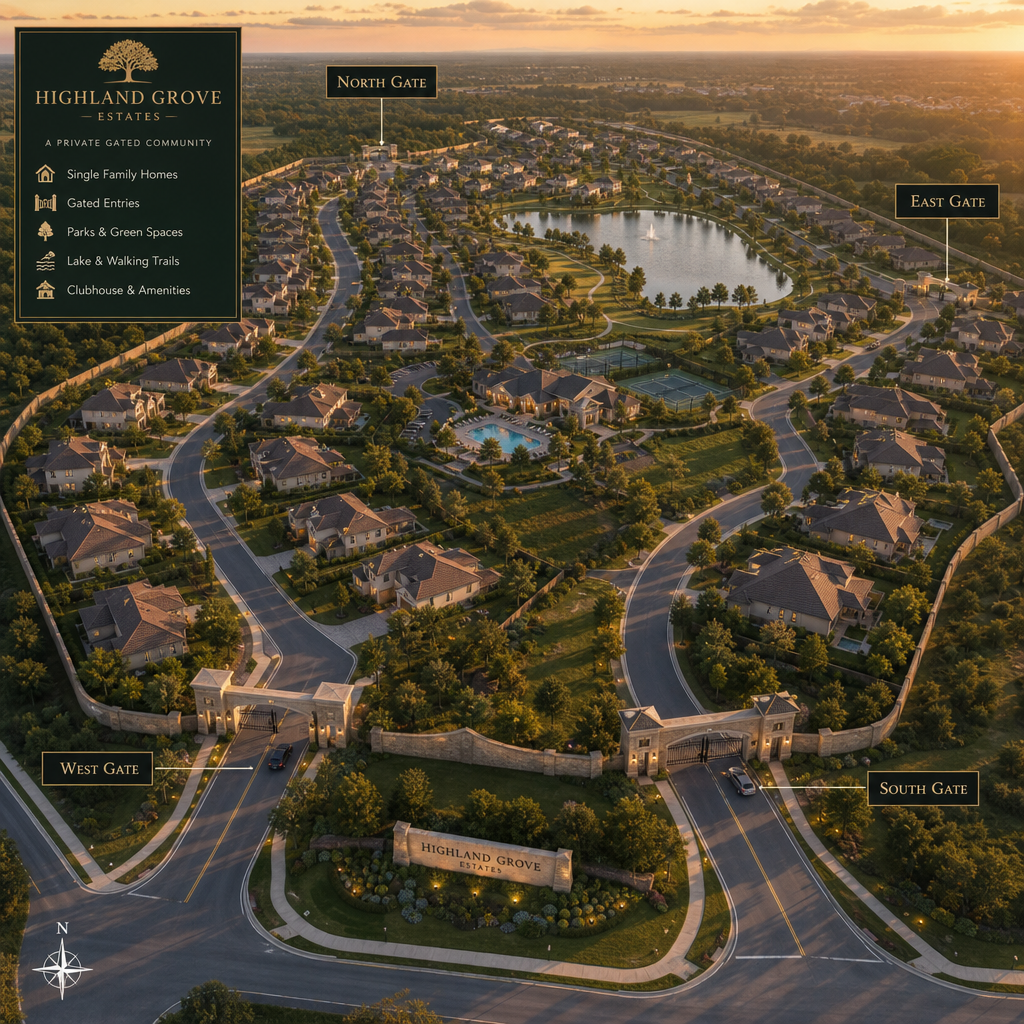
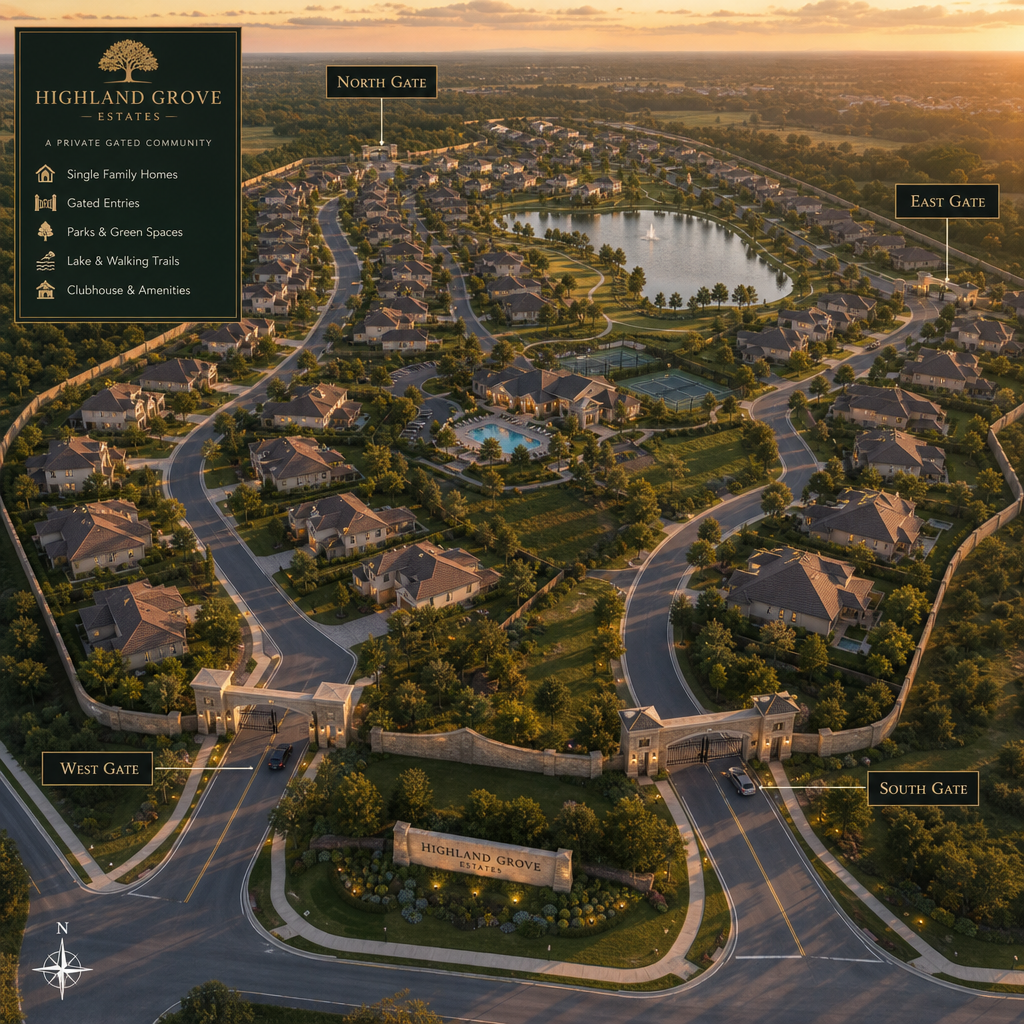
Managing access to a gated community without a reliable gate intercom system is a recurring headache for property managers and homeowners alike. Unauthorized vehicle tailgating, delayed deliveries, and frustrated residents are the most common complaints, and they all trace back to the same root cause: an entry system that was not designed for the actual volume and variety of visitors a community sees every day. This guide breaks down every option available, the features that matter most, and the installation decisions that will save you time and money from day one.
Table of Contents
- Quick Takeaways
- Why Gated Communities Need Purpose-Built Intercom Systems
- Core Features to Look for in a Gate Intercom System
- Types of Gate Intercom Systems
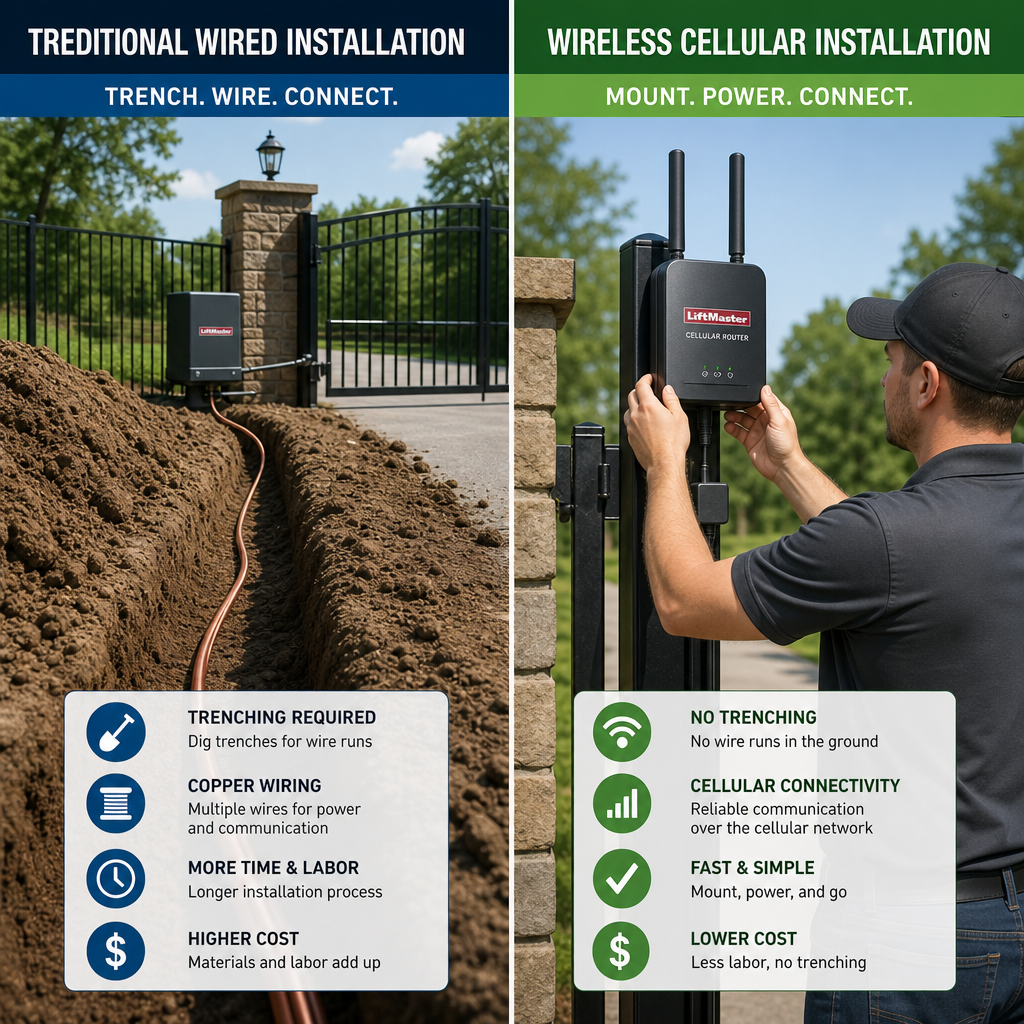
- Cellular Gate Entry vs. Wired Systems
- Gate Access Control Integration
- Installation Tips for Gated Community Intercom Systems
- Comparison of Gate Intercom System Types
- Frequently Asked Questions
- References
Quick Takeaways
| Key Insight | Explanation |
|---|---|
| Cellular systems eliminate costly trenching | A cellular gate entry system connects over 4G or LTE, removing the need to run copper wire from the gate to a central panel, which can cost thousands in labor alone. |
| Video intercoms reduce tailgating incidents | Real-time video verification at the gate gives residents and staff visual confirmation before granting access, reducing unauthorized entry compared to audio-only units. |
| Cloud-based management is essential for large communities | Property managers overseeing 50 or more units need to add and revoke access credentials remotely. Cloud-connected systems make this a 30-second task instead of a physical site visit. |
| Biometric access control layers security effectively | Combining a gate intercom with fingerprint or facial recognition access control eliminates lost-fob or shared-PIN vulnerabilities that plague older systems. |
| Power backup is non-negotiable | Gates that fail open during a power outage create a serious liability. Any system installed on a community gate must include UPS battery backup or a fail-secure mechanism. |
| Visitor management integration saves front-desk labor | Systems that issue temporary QR codes or PIN codes for expected guests allow residents to pre-authorize deliveries, cutting guard or staff intervention by a significant margin. |
| Weather resistance ratings are not optional | Gate intercoms operate outdoors year-round. Look for IP65 or higher ratings for dust and water resistance to avoid premature unit failure in rain or humid climates. |
Why Gated Communities Need Purpose-Built Intercom Systems
A standard residential doorbell intercom is built for one household and one front door. A gated community intercom has to handle dozens to hundreds of residents, multiple vehicle lanes, delivery drivers, service technicians, and emergency responders, all at the same physical entry point. Those are fundamentally different operational demands.
In practice, the most common failure mode for communities that installed cheap or undersized systems is directory overflow. When a system can only store 50 resident entries and the community grows to 120 units, management ends up fielding daily calls from people stuck at the gate. Purpose-built gated community intercom systems are engineered with scalable resident directories, multiple communication channels, and integration hooks for access control hardware from day one.
There is also a liability dimension. According to the National Apartment Association, properties with documented access control systems face lower insurance premiums and reduced exposure in premises liability cases. A gate that logs every entry attempt, with timestamps and user identity, creates an audit trail that generic intercom units simply cannot produce.
Core Features to Look for in a Gate Intercom System
Not every feature listed in a product brochure translates into real operational value. After working with installations across residential complexes, multi-tenant commercial properties, and homeowner associations, the features below consistently separate systems that work long-term from those that create maintenance headaches.
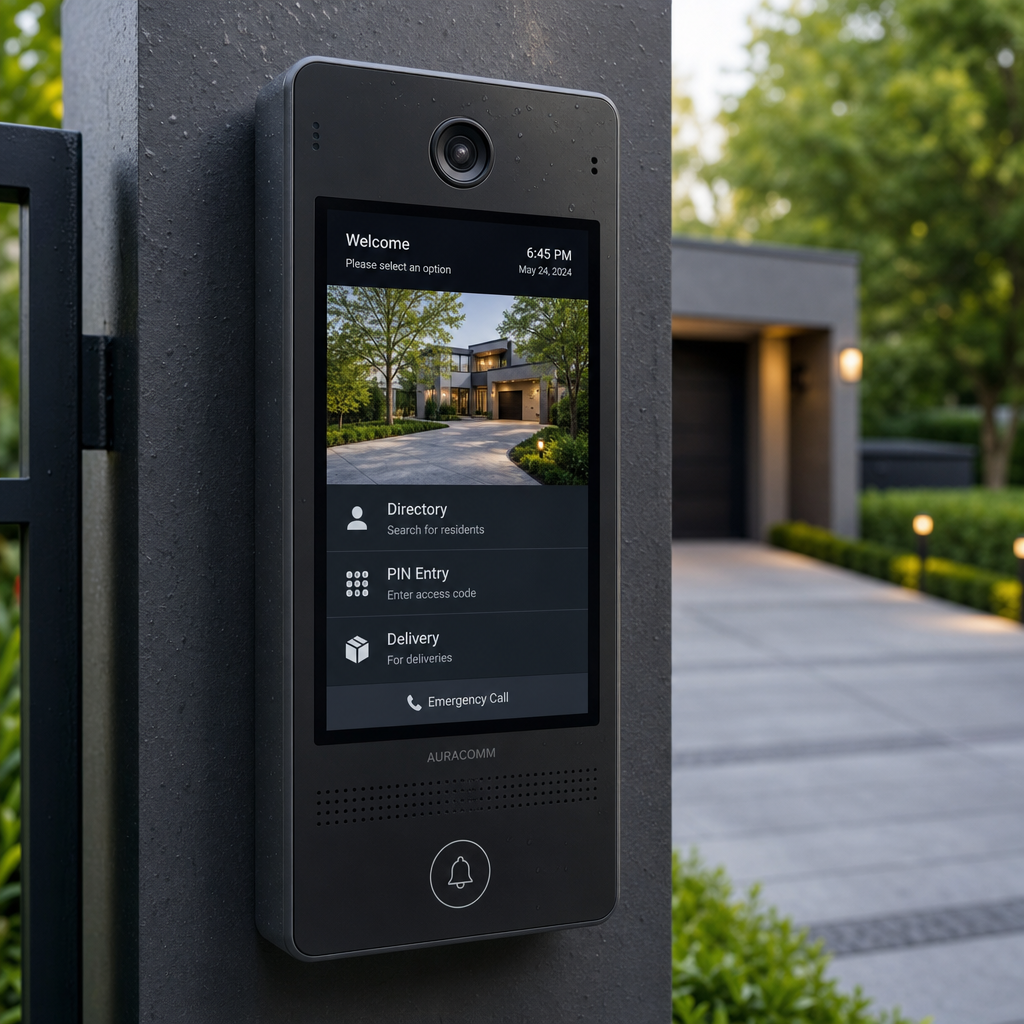
Two-Way Video with Night Vision
Audio-only intercoms were the standard for decades, but they are now inadequate for any community that takes security seriously. Two-way video lets the resident or security staff see the visitor clearly before pressing the unlock button. Night vision or infrared capability ensures that 10 PM deliveries and late-night visitors are visible with the same clarity as daytime calls.
Mobile App Remote Access
The ability to receive a gate call and unlock the entry from a smartphone is not a luxury feature, it is a baseline expectation for residents in 2024. A property manager at UnikCCTV recommends looking for systems that support simultaneous calls to multiple devices, so a visitor does not get stuck waiting if the first resident does not answer.
Pro tip: Confirm that the mobile app works over both Wi-Fi and cellular data. Some systems drop gate calls when the resident’s phone switches between networks, which creates a poor user experience and unnecessary support tickets for management.
Resident Directory with Virtual Keys
A searchable resident directory on the gate panel lets visitors find the right unit without needing a printed list. Virtual key or PIN-based access goes one step further, letting residents assign a time-limited code to a dog walker, contractor, or house cleaner without handing over a physical credential.
Access Logging and Audit Trails
Every entry event should be logged with a timestamp, the credential used, and ideally a snapshot from the camera. This data is invaluable when investigating a security incident or verifying that a delivery was actually made.
Types of Gate Intercom Systems
There are four primary categories of gate intercom systems currently available, and each suits a different property profile. Choosing the wrong category for your community is the most expensive mistake you can make, because retrofitting is always more costly than getting it right the first time.
Wired Audio Intercoms
These are the oldest and most straightforward category. A cable runs from the gate panel to each unit or to a central guard station. They are highly reliable because they do not depend on internet connectivity, but scaling them to a large community requires significant wiring infrastructure. They are best suited to small, already-wired communities or properties where internet connectivity is unreliable.
Wired Video Intercoms
Similar infrastructure to audio systems but with added camera and display hardware. The image quality is typically higher than wireless alternatives at the same price point because there is no compression over a Wi-Fi connection. Installation cost is higher due to the additional cabling, but long-term reliability is excellent.
Wireless and Wi-Fi Based Intercoms
These systems communicate over the property’s existing Wi-Fi network or a dedicated wireless bridge. They eliminate most of the trenching and cabling cost but introduce a dependency on the property’s network infrastructure. A Wi-Fi outage at the router means the gate panel goes offline. For this reason, wireless intercoms should always be paired with a cellular backup or a dedicated network segment.
Cellular Gate Entry Systems
Cellular gate entry systems connect over 4G LTE or 5G networks independent of any on-site Wi-Fi. They are the most installation-friendly option for properties that do not have existing network infrastructure at the gate, or for communities where running conduit is impractical. Cellular systems typically involve a monthly data fee, but the reduction in wiring labor often makes the total cost of ownership lower than a wired system over a five-year horizon.
Pro tip: Before committing to a cellular gate entry system, verify the signal strength of your preferred carrier at the exact gate location. Carrier coverage maps are averages. Physically testing signal with a phone in airplane mode switched to a single carrier at the gate post will give you a far more accurate picture than any map.
Cellular Gate Entry vs. Wired Systems
The debate between cellular and wired systems is one of the most common conversations property managers have when planning a gate entry upgrade. The honest answer is that neither is universally superior, but each has clear scenarios where it wins.
Wired systems win on long-term reliability and uptime. A copper or fiber connection to the gate does not experience signal interference, does not depend on a cellular carrier’s network stability, and has no recurring monthly SIM fee. For communities with an existing conduit pathway and a network closet near the gate, wired video intercom systems from UnikCCTV offer the best combination of image quality and system stability.
Cellular systems win on installation speed and flexibility. A cellular gate entry unit can typically be commissioned in a single day without any trenching. For communities built on large lots where the gate is hundreds of meters from the nearest building, the cost of trenching and conduit alone can exceed the hardware cost of a cellular system by a factor of three or four.
“The total installed cost of a wired gate intercom system on a property with more than 150 meters of trench run routinely exceeds $8,000 in labor alone. Cellular systems at that distance are an obvious financial choice.” – Security Integration Industry White Paper, Electronic Security Association
A common mistake is assuming that cellular means lower security. Modern cellular gate entry systems use AES-256 encryption for all communications between the gate panel and the cloud backend, which is the same encryption standard used in banking applications. The security posture of a cellular system depends almost entirely on the quality of the vendor’s backend, not the transmission medium itself.
Gate Access Control Integration
A gate intercom system handles the communication layer, but gate access control handles the physical authorization layer. These two systems need to work together seamlessly, and in many installations they are treated as separate projects by different contractors, which leads to integration problems after the fact.
Key Fob and Card Reader Integration
RFID fob and card readers are the most common credential type in gated communities. Residents tap their fob or card on a reader mounted near the gate, and the system validates the credential against an access database. The advantage is simplicity and speed for daily resident use. The disadvantage is that fobs get lost, shared, or stolen, and each replacement requires administrative action.
Biometric Access at the Gate
Fingerprint readers and facial recognition access panels are increasingly common at gate entry points for commercial properties and high-security residential communities. UnikCCTV offers both fingerprint biometric access systems and facial recognition locks that can be configured for gate mounting. Biometric credentials cannot be shared or lost, which eliminates an entire category of access control vulnerability.
The data consistently shows that communities implementing biometric access at secondary pedestrian gates see the steepest reduction in unauthorized entries, because pedestrian gates are often the weakest point in a perimeter, with residents propping them open or letting strangers follow them through.
Time-Based Access Schedules
Gate access control systems should allow administrators to set time-based rules. A landscaping crew might have access credentials that are valid only on weekday mornings. A contractor’s access badge might expire automatically after their project completion date. This granularity is not possible with a simple intercom-and-unlock setup and requires a proper access control backend integrated with the intercom system.
Integration with CCTV Surveillance
Linking the gate intercom and access control system to a CCTV surveillance setup creates a comprehensive security record. When an access event occurs, the system can trigger the nearest camera to capture a clip automatically. For property managers managing multiple properties remotely, this integration means they can review access events and corresponding footage from a single dashboard rather than checking two separate systems.
Installation Tips for Gated Community Intercom Systems
Installation quality determines whether a technically good system performs well or becomes a maintenance liability within two years. The tips below reflect the most common avoidable mistakes encountered on gated community intercom projects.
Conduct a Site Survey Before Choosing Hardware
A site survey should measure the distance from the gate to the nearest power source, the distance to the nearest network infrastructure, the number of vehicle lanes to cover, and whether the gate faces direct sun exposure. Direct afternoon sun on a camera lens will wash out the image entirely, which makes a camera facing west without a sun shield functionally useless in the afternoon hours.
Mount Height and Angle for Vehicle and Pedestrian Use
Gate intercom panels for vehicle lanes should be mounted at a height accessible from a car window, typically 1.2 to 1.4 meters from the ground to the center of the panel. Pedestrian panels should be mounted at standing eye level. A common mistake is installing a single panel optimized for vehicles, then discovering that delivery drivers on foot cannot reach it comfortably.
Protect All Wiring in Conduit
Any cabling running to an outdoor gate panel must be run through weatherproof conduit, even if it is rated for direct burial. Conduit protects against rodent damage, accidental dig-up during landscaping, and UV degradation over time. Skipping conduit to save on installation cost typically results in a wiring failure within three to five years in most climates.
Test the Full System Before Closing Walls or Trenches
Always commission and fully test the intercom, access control, and camera systems before any trenches are backfilled or conduit access points are sealed. Discovering a wiring fault after backfilling means excavating again, which doubles the labor cost for that cable run.
Configure Failover and Backup Power
Gate systems must continue operating during a power outage. Install a UPS battery backup sized for at least four hours of operation for the gate controller, intercom panel, and camera. Set the gate to fail-secure, meaning it holds its last state rather than opening automatically, unless your local fire code specifies a fail-safe requirement for emergency egress.
Pro tip: Program a direct emergency override code known only to property management and emergency services. This code should bypass the normal resident directory and open the gate immediately. Test it quarterly to confirm it still functions correctly.
Comparison of Gate Intercom System Types
| System Type | Best For | Key Limitations |
|---|---|---|
| Wired Video Intercom (e.g., UnikCCTV wired panel systems) | Communities with existing conduit infrastructure, high-reliability requirements, and budgets that accommodate upfront installation labor | High installation labor cost, especially for long cable runs; not easily relocated if gate position changes |
| Cellular Gate Entry (e.g., UnikCCTV LTE-connected gate panels) | New developments without existing wiring, large-lot properties where trenching is expensive, communities needing rapid deployment | Ongoing monthly SIM or data plan fee; dependent on carrier signal strength at the gate location |
| Wi-Fi Based Wireless Intercom (e.g., UnikCCTV wireless intercom units) | Small to mid-size communities with strong existing Wi-Fi coverage at the gate, lower-budget installations | Dependent on on-site network uptime; range limitations of standard Wi-Fi; requires network maintenance coordination |
Frequently Asked Questions
What is the difference between a gate intercom system and a gate access control system?
A gate intercom system handles communication, allowing visitors to announce themselves and residents or staff to grant entry remotely. A gate access control system manages credentials, such as key fobs, PIN codes, biometric data, or mobile passes, that allow direct entry without an intercom call. Most modern installations combine both. The intercom handles guests and unknown visitors, while the access control system handles residents and authorized personnel who have pre-issued credentials.
How many residents can a gated community intercom system support?
This depends entirely on the system. Entry-level units typically support 50 to 100 directory entries. Mid-range and enterprise systems designed for gated communities can support 500 to several thousand entries, with cloud-based systems offering virtually unlimited scaling. When specifying a system, always plan for at least 150 percent of your current resident count to avoid hitting directory limits as the community grows.
Is a cellular gate entry system secure enough for a residential community?
Yes, provided the system uses encrypted communications. Reputable cellular gate entry systems use AES-256 encryption between the gate panel and cloud servers, the same standard used in financial transaction processing. The security risk in cellular systems is almost never the transmission itself. It is typically weak credential management, such as shared PINs or unrestricted default codes, which are administrative issues rather than technology weaknesses.
How long does installation of a gate intercom system typically take?
A cellular or wireless system at an existing gate with power already available can typically be installed and commissioned in one to two days. A wired video intercom system requiring trenching and new conduit runs can take three to seven days depending on the cable distances involved. Adding biometric access control hardware or integrating with an existing CCTV system adds time proportional to the number of integration points. Always request a written installation timeline from your provider before work begins.
Can I integrate a new gate intercom system with my existing CCTV cameras?
In most cases, yes. Modern gate intercom systems from providers like UnikCCTV support standard protocols such as ONVIF and RTSP, which allow integration with IP-based CCTV cameras regardless of the camera brand. Analog CCTV systems require a video encoder to bridge the signal format. Before purchasing any gate intercom hardware, confirm with the supplier that it supports the protocol your existing cameras use, and ask for a tested integration example from a similar installation.
What maintenance does a gate intercom system require?
Basic maintenance includes cleaning the camera lens monthly to remove dust and debris that degrade image quality, testing the gate release mechanism and backup power system quarterly, and reviewing firmware update notifications from the manufacturer at least twice per year. For high-traffic gates in communities with more than 100 units, inspect the physical keypad or touchscreen for wear annually, as high-use buttons on numeric keypads can reveal frequently used PIN combinations through uneven wear patterns.
If you manage a gated community or are planning a gate access upgrade, share your biggest installation challenge or system requirement in the comments below so we can address it directly.
We would love your feedback and any insights you would share with others. What perspective would you add?
References
- Statista: Global smart home security market statistics and growth projections
- Forbes: Coverage of smart access control trends in residential and commercial properties
- NIST: Federal guidelines on physical access control system security standards
- Electronic Security Association: Industry standards and best practices for gate access and intercom installations
- U.S. Department of Energy: Physical security and access control guidance for facilities management

 No products in the cart.