
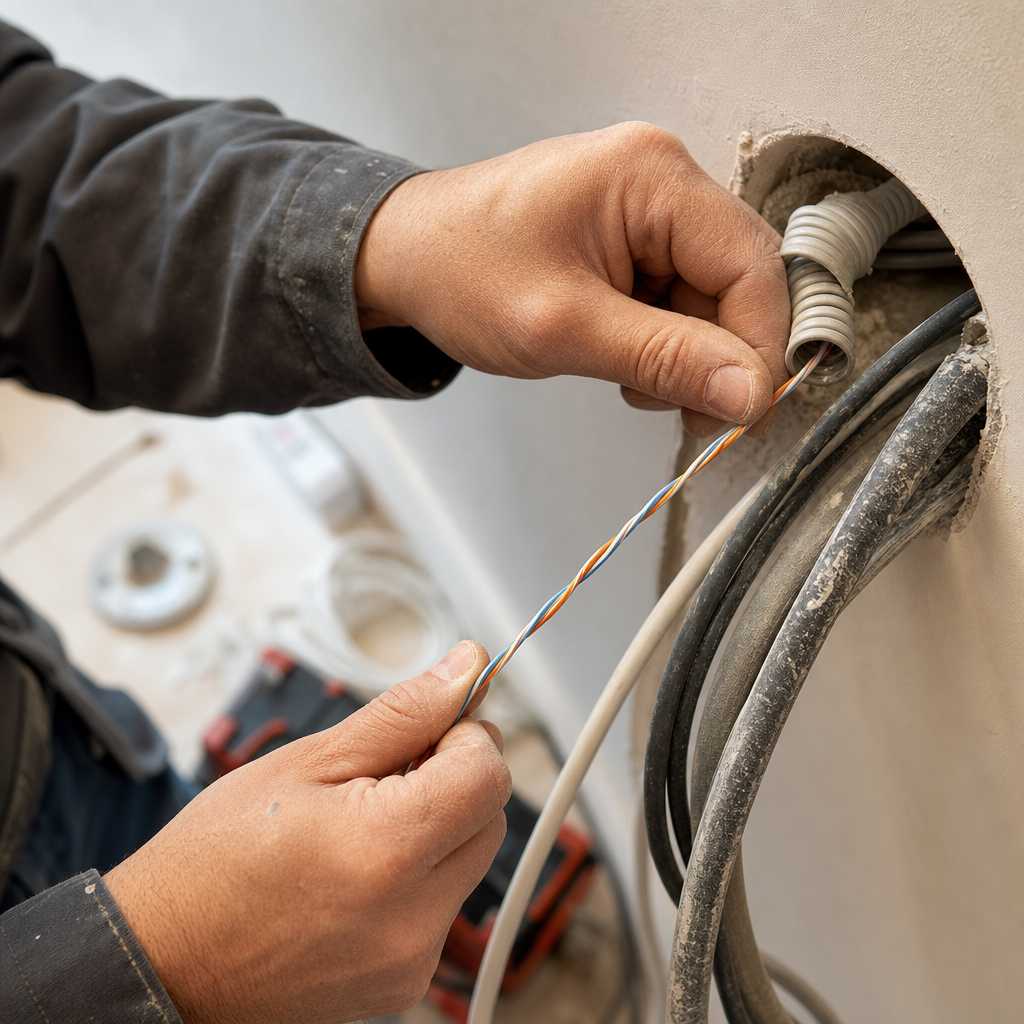
Most property managers underestimate how much their intercom wiring choice affects long-term costs. A two-wire intercom system can cut installation labor by 40 to 60 percent compared to traditional multi-wire setups, simply because it requires far less cable and fewer connection points. For apartment buildings, multi-unit residences, and older properties where running new conduit is expensive or impractical, this matters enormously. This article breaks down exactly how two-wire intercoms work, where they outperform alternatives, and what you need to know before specifying one for your next residential building project.
Table of Contents
- Quick Takeaways
- What Is a Two-Wire Intercom System?
- How Two-Wire Wiring Works in Residential Buildings
- Cost Comparison: Two-Wire vs. Alternatives
- Apartment Intercom Wiring Considerations
- Choosing the Right System for Your Property
- Integration with Access Control and CCTV
- Frequently Asked Questions
- References
Quick Takeaways
| Key Insight | Explanation |
|---|---|
| Two wires handle both power and signal | Modern two-wire systems multiplex audio, video, and power over a single twisted pair, eliminating separate power runs to each unit. |
| Ideal for retrofit projects | Existing telephone or bell wiring in older apartment buildings can often be reused, slashing retrofit costs dramatically. |
| Labor savings are the biggest cost driver | Fewer cable runs mean fewer hours on-site. In a 20-unit building, this can translate to savings of $2,000 to $5,000 in installation labor alone. |
| Not suitable for very long cable runs without amplification | Signal degradation occurs beyond approximately 300 meters without a repeater or signal booster, which adds cost at scale. |
| Supports video intercoms on two-wire bus topology | Many two-wire residential intercom products now carry full-color video signals alongside audio and door release commands. |
| Scalability is straightforward | Adding extra apartment stations to a two-wire bus requires tapping into the existing cable rather than running new dedicated lines per unit. |
| Compatibility varies by brand | Two-wire systems are not universally cross-compatible. Mixing brands on the same bus line frequently causes signal conflicts and unreliable operation. |
What Is a Two-Wire Intercom System?
A two-wire intercom system transmits audio, video, and control signals, as well as low-voltage power, across just two conductors. This is done through a technology called bus wiring or daisy-chain topology. Every apartment station, door panel, and controller connects to the same pair of wires in sequence, rather than requiring a home-run cable back to a central panel for each unit.
The signal multiplexing happens digitally inside each device. Each station on the bus has a unique address, and the controller sends addressed packets so only the correct unit rings or opens a door. In practice, this works reliably in buildings with up to 100 or more units when the system is sized and specified correctly.
This architecture is fundamentally different from older four-wire or multi-wire intercoms, where separate conductors carried power, audio, and video independently. Those systems were expensive to install and even more expensive to expand. The two-wire approach was originally popularized in European residential construction and has become the dominant choice for new apartment builds in many markets.


Bus Topology vs. Star Topology
Bus topology connects all devices along a single cable run, like beads on a string. Star topology runs a dedicated cable from each device back to a central hub. For residential intercom wiring, bus topology wins on installation cost in nearly every scenario involving more than four units. The wiring is simpler, faster to install, and easier to troubleshoot with a multimeter.
Star topology does offer one advantage: a fault at one station does not affect others. On a bus system, a shorted station can disrupt the entire line. A common mistake is skipping bus termination resistors at the end of the cable run, which causes reflection interference and erratic behavior. Always terminate the bus correctly according to manufacturer specifications.
How Two-Wire Wiring Works in Residential Buildings
The physical installation of a two-wire residential intercom starts at the entrance panel, which is typically mounted at the main door or gate. From there, a single twisted pair runs to the first apartment, then loops to the second, and continues floor by floor up the building. The main controller or power supply, usually installed in a lockable cabinet near the building entrance, provides the bus voltage, which is typically 18 to 28 volts DC depending on the manufacturer.
Each indoor apartment station connects directly into the bus line with a simple T-connection. There is no need for individual power supplies at each unit. The door release relay is typically integrated into the entrance panel, so residents can buzz visitors in directly from their apartment handset or touchscreen.
Cable Type and Maximum Run Length
Most two-wire intercom manufacturers specify unshielded twisted pair cable with a minimum conductor size of 0.5mm squared (roughly 20 AWG). Some brands allow thinner cable for short runs but performance degrades noticeably below 0.5mm squared on runs exceeding 100 meters. For buildings taller than six stories, use 0.75mm squared or thicker to maintain reliable signal quality throughout.
The data consistently shows that maximum bus length before signal repeaters are required is approximately 200 to 300 meters total, depending on the system brand. A 20-story high-rise will almost always need at least one signal repeater installed at mid-building. Factor this into your cost estimate upfront rather than discovering it during commissioning.
Pro tip: When planning apartment intercom wiring for a new build, route the two-wire bus through the same conduit pathway used for the building’s structured cabling. This makes future upgrades or fault-finding far easier than chasing wire through finished walls.
Cost Comparison: Two-Wire vs. Alternatives
The financial case for two-wire systems is compelling, but it is not unconditional. The savings come primarily from reduced cable quantity and reduced labor hours. For a 20-unit apartment building, a four-wire video intercom system might require 600 to 800 meters of multi-conductor cable and two to three days of installation labor. A comparable two-wire system typically requires 150 to 250 meters of twisted pair and one day of labor.
IP-based intercoms over Ethernet are increasingly popular, but they introduce a different cost structure: switches, PoE injectors, network configuration, and the need for an IT-literate installer. For property managers who want simple, reliable, and easy-to-maintain residential intercom systems, two-wire analog or hybrid analog-digital systems remain the most cost-effective choice in buildings under 50 units.
| System Type | Estimated Installation Cost (20 Units) | Best For |
|---|---|---|
| Two-Wire Intercom (Bus) | $1,800 to $3,500 installed | Retrofit and new builds up to 100 units, budget-conscious properties |
| Multi-Wire (4+ Conductor) | $3,500 to $6,000 installed | Small buildings where existing multi-wire is already in place |
| IP/Network-Based Intercom | $5,000 to $10,000+ installed | Large or high-end buildings requiring mobile app integration and cloud management |
These ranges are based on standard residential building configurations in the United States and Canada. Labor rates vary significantly by region. The two-wire category consistently delivers the lowest total installed cost for mid-size residential buildings.
Pro tip: Before requesting quotes from installers, confirm whether your building already has existing telephone riser cable. If the cable is in good condition, many two-wire intercom systems can reuse it, reducing your material cost to near zero for the cable portion of the job.
Apartment Intercom Wiring Considerations
Apartment intercom wiring in existing buildings presents challenges that new construction does not. Older buildings often have aluminum wiring, high-resistance splices from decades of repairs, or cable runs through areas that are now inaccessible without major demolition. These factors can cause intermittent signal issues that are frustrating to diagnose and expensive to fix.
In practice, the most reliable approach for retrofit projects is to run entirely new cable rather than reusing old wiring, unless the existing cable has been tested with a cable tester and confirmed to meet resistance and capacitance specifications for the chosen system. Reusing degraded cable to save money is a common mistake that leads to repeat service calls and unhappy residents.
Fire Ratings and Code Compliance
Building codes in most jurisdictions require intercom cabling inside walls to be CL2 or CL3 rated at minimum. In plenum spaces such as above suspended ceilings used as air returns, CMP-rated cable is required. Using the wrong fire rating is a code violation that can result in failed inspections and costly re-wiring. Always verify local requirements with your authority having jurisdiction before purchasing cable.
The National Fire Protection Association’s NFPA 72 standard covers signaling system cabling and is the reference document inspectors use in most US jurisdictions. Familiarity with this standard, or working with an installer who knows it well, is non-negotiable for commercial and multi-family residential projects.
Grounding and Interference
Two-wire intercom buses running through apartment buildings are susceptible to interference from nearby electrical conduit, fluorescent lighting ballasts, and elevator machinery. Twisted pair cable provides inherent common-mode noise rejection, but in high-interference environments, shielded twisted pair cable is worth the modest additional cost. Ground the shield at one end only, typically at the controller, to avoid ground loops that can introduce their own noise.

Choosing the Right System for Your Property
The right two-wire intercom system depends on three variables: number of units, building height, and the level of features residents expect. For a 10-unit building where residents only need audio intercom and door release, a basic two-wire audio system priced under $1,500 installed is entirely adequate. For a 50-unit building where residents expect color video and the ability to view visitors on a touchscreen display, specify a two-wire digital video intercom system with addressable stations.
UnikCCTV carries a range of residential intercom products that include both audio-only and full video two-wire systems. Their catalog also includes wireless intercom options for situations where running any new cable is impossible, such as historic buildings or units above garages. Wireless systems sacrifice some reliability compared to wired bus systems, but modern 900MHz and 2.4GHz wireless intercoms have improved substantially in range and stability.
Features Worth Specifying in 2024
Door release integration is standard on all two-wire systems. Beyond that, look for systems that support multiple entrance panels if the building has a side entrance or parking gate in addition to the main lobby door. Some two-wire systems support up to four entrance panels on the same bus, which covers the majority of residential building configurations.
Lift call integration, which allows visitors to be automatically directed to the correct floor via elevator controls, is available on higher-end two-wire systems and is worth specifying for any building above six stories. It significantly improves the visitor experience without requiring a separate IP network infrastructure.
“The most overlooked factor in residential intercom selection is scalability. Buildings that start with 20 units often expand or reconfigure. A system that cannot add stations without re-cabling from scratch becomes a liability within five years.” – Security Industry Association, Technology Guidance for Residential Access Systems
Integration with Access Control and CCTV
A two-wire intercom system does not have to operate in isolation. For property managers who want a layered security approach, integrating the intercom with a broader access control and CCTV system is both practical and increasingly affordable. UnikCCTV specializes in exactly this kind of multi-system integration, combining intercom systems with smart locks, biometric readers, and CCTV cameras into a single managed security infrastructure.
The integration point between a two-wire intercom and an access control system is typically the dry contact relay output on the entrance panel. This relay can trigger a magnetic lock, electric strike, or smart lock directly. For more sophisticated control, such as logging access events or requiring keypad PIN entry in addition to intercom verification, an external access controller like a proximity card reader connects in parallel with the intercom door release circuit.
CCTV at Entry Points
Even if your two-wire intercom includes a built-in camera in the entrance panel, adding a dedicated CCTV camera at the entrance is best practice for any building where recorded video evidence may be needed. The intercom camera is optimized for live viewing, not recording quality. A separate IP or HD analog CCTV camera provides continuous recording at higher resolution and with wide-angle coverage that the narrow intercom camera lens cannot match.
UnikCCTV’s product range includes CCTV cameras suited for entry point monitoring that work alongside two-wire intercom installations. Pairing these systems gives property managers both the live communication capability of the intercom and the recorded audit trail of a dedicated camera, without requiring complex network integration.
Pro tip: When integrating a two-wire intercom with a smart lock or biometric reader, use a separate 12V or 24V power supply for the lock hardware rather than drawing power from the intercom bus. Sharing power sources is a reliable source of voltage drop problems and erratic lock operation, particularly during peak usage hours in multi-unit buildings.
Frequently Asked Questions
Can I replace an old four-wire intercom with a two-wire system using the existing cable?
In most cases, no. Four-wire systems use separate conductors for specific functions, and a two-wire bus system requires a true twisted pair conductor. However, if the existing cable contains a twisted pair among its conductors, that pair can sometimes be repurposed. Test the existing cable with an insulation resistance tester first. If resistance exceeds the manufacturer’s maximum specification, install new cable rather than troubleshooting degraded wiring.
How many apartments can a single two-wire intercom bus support?
Most residential two-wire intercom systems support between 50 and 250 addressable stations on a single bus, depending on the manufacturer and model. For buildings with more than 100 units, verify the system’s maximum station count and maximum cable length before purchasing. Larger buildings may require multiple bus segments connected through the main controller rather than a single continuous bus run.
Is a two-wire intercom system suitable for outdoor gate access at a residential property?
Yes, provided you select an entrance panel rated for outdoor installation, typically IP54 or higher. The two-wire bus extends naturally to a gate panel, and the door release relay output can drive a gate strike, magnetic gate lock, or gate motor controller. For long cable runs to a perimeter gate exceeding 150 meters, use 0.75mm squared twisted pair cable and verify that the total bus resistance remains within the manufacturer’s specification.
What is the typical lifespan of a two-wire intercom system in a residential building?
A well-installed two-wire intercom system should provide 15 to 20 years of reliable service with minimal maintenance. The most common failure points are entrance panel buttons and cameras, which are exposed to weather and daily mechanical use. Indoor apartment stations rarely fail unless physically damaged. Manufacturers like Urmet, Fermax, and Comelit, which are widely distributed through suppliers like UnikCCTV, offer replacement parts for their two-wire systems for at least 10 years after a product line is discontinued.
Do two-wire intercom systems work with smartphone app access?
Some two-wire digital video intercom systems include a gateway module that connects the bus to a local network and enables smartphone app integration. This is not a standard feature of basic two-wire systems. If mobile app access is a priority, confirm the specific model supports it before purchasing. Alternatively, a separate IP-based door controller with video streaming can be installed in parallel with the two-wire intercom, keeping the intercom for resident-to-visitor communication while the app handles remote access for residents.
How do I troubleshoot a two-wire intercom where one apartment station does not ring?
Start by verifying the station’s address setting matches the configuration in the controller. Mismatched addresses are the most common cause of single-station failures and are easy to fix by reconfiguring the DIP switches or programming menu on the station. If the address is correct, measure bus voltage at the station’s connection point with a multimeter. Voltage below the minimum specification indicates a wiring fault or excessive resistance in the cable run between that station and the previous one on the bus.
Have you installed or managed a two-wire intercom system in a residential building? Share what worked well or what you wish you had known before the project started, your experience helps other property managers make better decisions.
References
- National Fire Protection Association, standards for signaling and communications cabling in buildings
- Statista, market data on global smart building and access control system adoption rates
- Forbes, analysis of property technology investment trends in multifamily residential real estate
- U.S. Department of Energy, guidance on building technology integration and low-voltage systems in residential construction
- Ahrefs Blog, research on how property managers search for building security and intercom solutions online

 No products in the cart.