
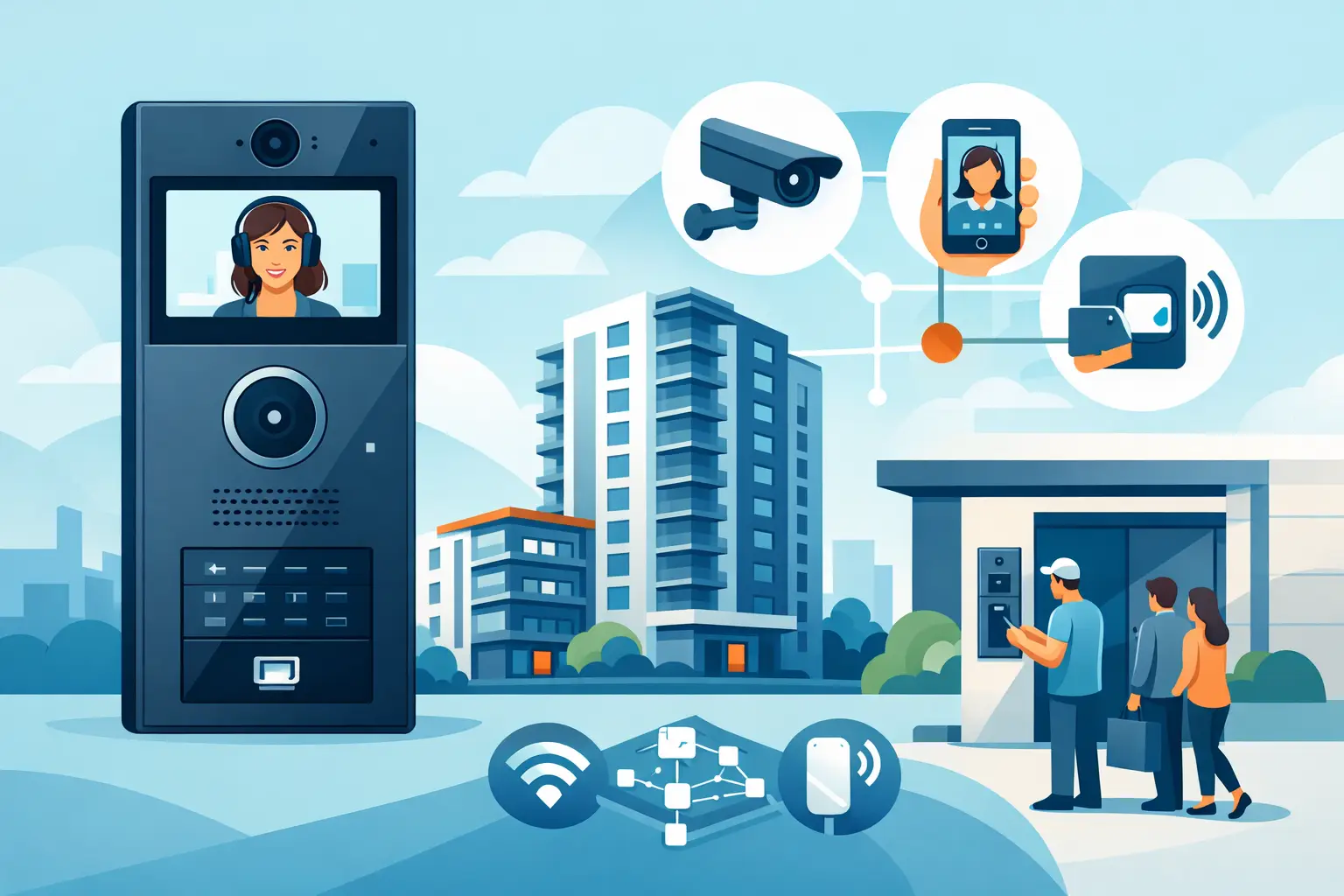
A front entry system usually gets attention only after it starts causing problems – missed visitors, tenant complaints, poor audio, or doors that do not release when they should. That is why the zdl buildinglink 101×7 ip multi-tenant intercom system deserves a closer look from installers, property managers, and anyone responsible for controlling entry in a shared building.
This is not the kind of product you buy on appearance alone. In a multi-tenant environment, the intercom sits at the intersection of access control, resident communication, visitor management, and day-to-day building operations. If one part of that chain is weak, the entire entry process becomes harder to manage.
Where the zdl buildinglink 101×7 ip multi-tenant intercom system fits
The zdl buildinglink 101×7 ip multi-tenant intercom system is best understood as a network-based entry communication platform designed for properties with multiple occupants or suites. In practical terms, that usually means apartment buildings, mixed-use properties, office complexes, student housing, and other sites where a single entrance serves many end users.
The IP side matters. Compared with older analog apartment intercoms, IP architecture can offer more flexibility in how calls are routed, how devices are managed, and how the system is expanded. That does not automatically make it the right fit for every building, but it does make it more attractive when the property already has a structured network environment or needs features that go beyond basic buzzer-and-door-release operation.
For many buyers, the real question is not whether an IP intercom sounds modern. The real question is whether it solves operational problems better than a simpler system. If the property needs remote management, better call handling, easier tenant changes, or integration with other controlled entry hardware, an IP multi-tenant platform starts to make a lot more sense.
What matters most in an IP multi-tenant intercom system
When evaluating any multi-tenant intercom, the hardware itself is only part of the decision. The bigger issue is how the system behaves once it is installed and in daily use.
Audio quality is still the first checkpoint. Fancy features do not help if visitors and residents cannot understand each other at the door. In a busy entrance with traffic noise, wind exposure, or delivery activity, speech clarity becomes a practical requirement, not a luxury.
Call routing is next. A building with multiple tenants needs a system that can direct visitors efficiently to the right resident, office, or suite. If the building has after-hours delivery traffic, rotating staff, or frequent tenant turnover, that call workflow needs to be easy to update.
Door release integration is another major consideration. Most buyers are not shopping for an intercom in isolation. They are trying to coordinate the intercom with electric strikes, magnetic locks, exit devices, access controllers, or gate operators. Compatibility matters because the door hardware often determines how reliable the entire entry point will be.
Then there is administration. On a small site, almost any system can work. On a larger property, management time becomes a cost center. An intercom that is hard to program, awkward to update, or difficult to troubleshoot can create unnecessary service calls and tenant frustration.
Why IP can be an advantage – and when it is not
The strongest case for an IP-based system is flexibility. Networked intercoms can be easier to deploy across larger or more complex properties, especially where centralized management is part of the plan. They also tend to fit better in projects where access control, surveillance, and visitor communication are expected to work together rather than stand alone.
That said, IP is not always the low-effort option. It depends on the building and the installer. A property with weak network infrastructure, limited IT support, or a patchwork retrofit environment may not benefit from an advanced system if the basics are not in place. In those cases, installation planning matters just as much as product selection.
There is also the issue of expectations. Some buyers hear IP and assume every feature will be easier. In reality, IP systems can simplify some tasks while adding complexity elsewhere, especially in credential management, network setup, device addressing, and remote support procedures. For experienced installers, that trade-off may be completely acceptable. For lightly staffed properties, it needs to be considered in advance.
ZDL BuildingLink 101×7 IP multi-tenant intercom system in real property use
A system like the ZDL BuildingLink 101×7 IP multi-tenant intercom system typically appeals to buyers who need better control at shared entrances without moving into a fully custom enterprise platform. That middle ground is important. Many apartment and mixed-use properties need more than a legacy directory panel, but they do not always need an oversized solution with unnecessary layers of complexity.
In an apartment building, the value is usually tied to visitor communication and controlled release at the main entrance. In an office or commercial setting, the same platform may support suite-based call routing while helping reception or tenant staff manage entry more consistently. In a mixed-use property, the challenge often shifts to balancing residential convenience with commercial access rules, delivery traffic, and different operating hours.
This is where system design has to match the building. A neat feature set on paper does not guarantee a clean deployment. Entry count, tenant count, door hardware type, internet availability, indoor station needs, mobile access requirements, and local code considerations all affect whether a product is a strong fit.
Questions to answer before you buy
The best intercom decisions usually come from asking fewer marketing questions and more site questions.
Start with the entrance itself. Is this a single primary door, a vestibule arrangement, a gate, or a multi-door building? Then look at tenant communication. Will calls go to indoor monitors, phones, mobile devices, front desk staff, or some combination? That answer changes the system layout.
Next, think about turnover. In many multi-tenant properties, names, numbers, and access permissions change often. A system that is easy to update saves labor over time. If tenant changes are frequent, administration should be a front-end buying factor, not an afterthought.
You should also confirm lock and access compatibility early. Intercoms often get blamed for door release issues that are really caused by incorrect lock selection, power supply problems, or wiring limitations. The full opening should be treated as one working system.
Finally, decide who will support it after installation. If the property has internal maintenance staff, the management interface needs to be practical for them. If the site depends on outside service, then product availability, replacement parts, and technical support become more important.
Installation planning affects long-term performance
Even a well-matched intercom can disappoint if the installation is rushed. Outdoor station placement, cable path planning, power requirements, network stability, and weather exposure all affect reliability.
For retrofit jobs, existing infrastructure should be evaluated honestly. Reusing old cabling can save money, but only if signal quality and power delivery remain within acceptable limits. Forced reuse of unsuitable wiring often creates service problems later.
For new construction, coordination with the door hardware and access-control scope is essential. The intercom should not be treated as a separate late-stage add-on. When lock hardware, request-to-exit devices, life-safety requirements, and visitor communication are planned together, the result is usually cleaner and easier to maintain.
This is also where distributor support helps. Buyers working through a specialized source such as UnikCCTV often benefit from discussing the full application, not just the model number. That can prevent mismatched parts and reduce delays during installation.
Who should consider this type of system
A product in this category makes the most sense for property managers, installers, and facility teams who need organized entry control at shared doors and want more flexibility than a basic analog tenant station setup provides. It is especially relevant where tenant communication and door release are daily operational tasks, not occasional conveniences.
It may be less appropriate for very small properties with minimal traffic and no growth needs. If a site has only a few users, stable occupancy, and simple door hardware, a more basic solution can sometimes be the better value. Spending more for features that will never be used does not improve security.
The stronger use case is a property that expects change – tenant turnover, delivery volume, staff adjustments, or future expansion. In those environments, the ability to manage the system efficiently can matter as much as the call button at the entrance.
The right intercom is the one that matches the building, the traffic pattern, and the people expected to maintain it. If the zdl buildinglink 101×7 ip multi-tenant intercom system lines up with those realities, it can be a practical step toward tighter entry control and fewer problems at the door.


 No products in the cart.